
Difficult
Everest Base Camp Trek
The world's most iconic trekking route follows the Khumbu Valley through Sherpa villages and Buddhist monasteries to the…
Next Departure
10/10/2026
10 seats left
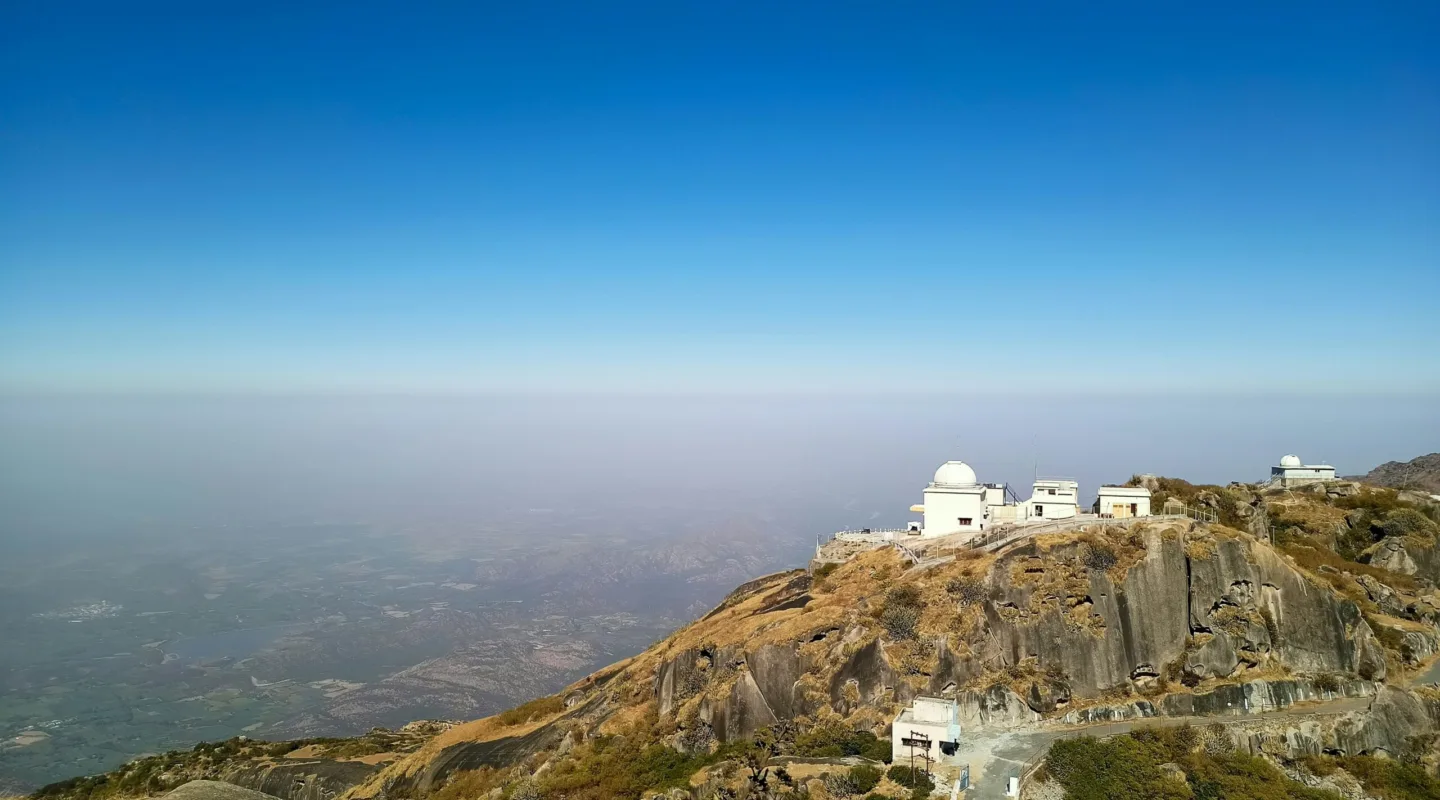
Guru Shikhar, at 1,722 metres, is the highest point of the Aravalli range — geologically among the oldest mountain systems on Earth, older by a considerable margin than the Himalaya, worn down over hundreds of millions of years into the gentler, rounded hills that now define much of Rajasthan’s Mount Abu region. Trekking here offers something genuinely different from India’s younger mountain ranges: a landscape shaped by an almost incomprehensible span of geological time, its granite outcrops smoothed by erosion rather than jagged with youth.
The trek begins near Mount Abu town, Rajasthan’s only hill station and a long-standing retreat from the desert heat of the surrounding plains, and climbs through a landscape of dry deciduous forest interspersed with granite boulders — some balanced in formations that look almost deliberately stacked, a product of differential weathering acting on the Aravalli’s ancient rock over vast timescales. Wildlife here reflects the transition zone between desert and forest that defines much of Rajasthan’s ecology, with sloth bear, leopard, and a wide range of dry-forest bird species recorded within the surrounding Mount Abu Wildlife Sanctuary.
At the summit stands a small temple dedicated to Dattatreya, considered in Hindu tradition an incarnation combining aspects of Brahma, Vishnu, and Shiva, and the shrine remains an active pilgrimage site, drawing visitors from across Rajasthan and neighbouring Gujarat throughout the year, particularly during specific religious festivals. This ongoing devotional use gives Guru Shikhar a genuinely different character from most Indian mountain summits reached primarily for scenic or recreational purposes — the trek here is as much a pilgrimage route for many visitors as a trekking destination.
From the summit platform, the view stretches out across a landscape unlike anywhere else covered by treks further north or south — the rolling, ancient hills of the Aravalli giving way in the distance to the flat expanse of Rajasthan’s desert plains, with Mount Abu’s own lakes and settlements visible in the immediate foreground. On exceptionally clear days, particularly around sunset, the desert plains beyond take on a distinctive golden-brown hue that photographers specifically time visits to capture.
Because the climb is short, requiring only a few hours round trip, and the terrain poses no technical difficulty, Guru Shikhar functions as much as an accessible day activity for visitors to Mount Abu’s broader tourist circuit — which includes the marble-carved Dilwara Jain temples and Nakki Lake — as a standalone trekking destination in its own right. This accessibility, though, shouldn’t diminish the genuine appeal of the site: a summit combining active religious significance, some of the oldest exposed rock formations in the country, and a desert-meets-highland panorama found nowhere else in India’s trekking landscape.
Best visited outside the peak summer months of April to June, when Rajasthan’s plains-adjacent heat can make even a short climb considerably more demanding, Guru Shikhar offers a genuinely worthwhile, low-commitment addition to any visit to Mount Abu, and a rare opportunity to stand atop mountains that predate the Himalaya by hundreds of millions of years.
Trek from Mount Abu town through the wildlife sanctuary to Guru Shikhar summit (1,722m), visit the Dattatreya temple, return the same day.
The world's most iconic trekking route follows the Khumbu Valley through Sherpa villages and Buddhist monasteries to the…
Ladakh's gentlest trek — often called the 'baby trek' — links whitewashed gompas and willow-lined villages across the…
A four-day trek that opens with a mirror-still Himalayan lake and closes with a sunrise summit view spanning…