

Moderate
Laka Glacier Trek From Delhi
An Unforgettable Adventure in the Dhauladhar Range If you're searching for a short yet thrilling Himalayan trek, the…
Bhrigu Lake Trek runs 3 days in Himachal Pradesh, graded Easy to Moderate, from Rs 3,999 per person.
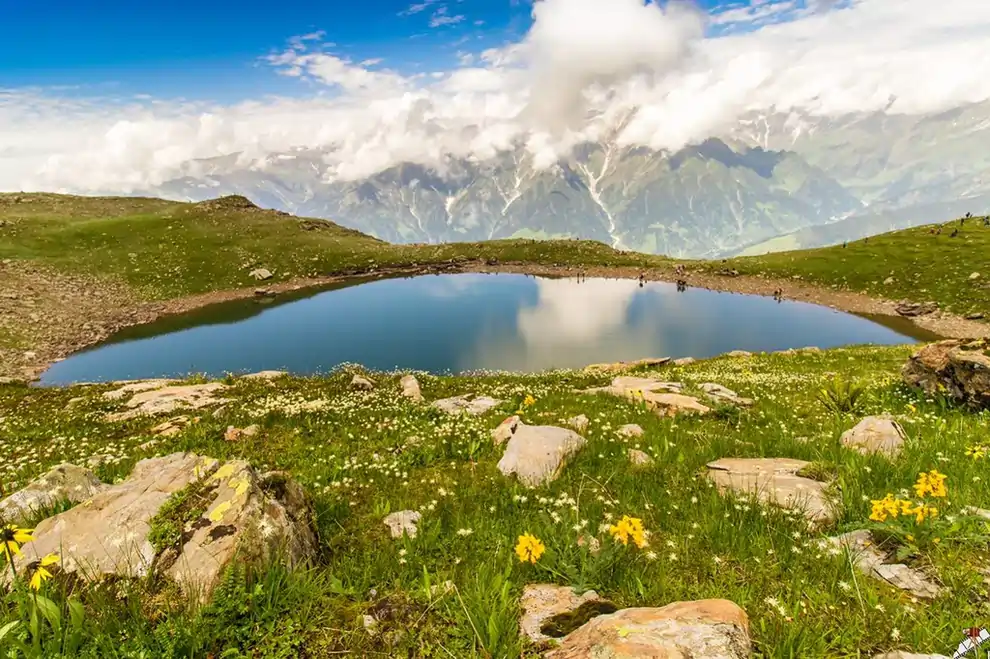
The Bhrigu Lake trek is a short Himalayan walk in the Kullu district of Himachal Pradesh, starting close to Manali and ending at an oval alpine lake at around 4,300 m (14,100 ft). The route moves from oak, deodar and pine forest into wide grassy meadows and then onto open high ground, so the scenery changes every few hours. On clear days the upper trail opens views of Hanuman Tibba, Deo Tibba and the Seven Sisters range. The lake itself sits in a rocky basin and is held sacred locally, with a legend that the sage Bhrigu meditated beside the water. Camps away from town lights give very dark skies on clear nights, and the meadows turn green and colourful from late spring.
At 4,300 m the thin air is the real constraint, so the upper stretch is walked slowly and altitude symptoms are reported early.
The published window is May to June and September to October. Outside it the route becomes a different landscape rather than simply worse weather.
The trek assembles in Manali, and the day numbering runs from that point. Reporting times and the exact pickup point are confirmed on booking. If you are travelling from Delhi, see the separate Bhrigu Lake Trek from Delhi package, which includes the road journey.
This is a realistic first outing, since three days are short enough that fitness is not the barrier. Families with older children and anyone returning to walking after a break fit comfortably. Solo travellers move inside a led group, so the pace is collective rather than personal.
Layers do more work than any single jacket, because the temperature at 4,300 m bears little relation to the trailhead. Footwear decides the day: loose stone and wet ground cause most slips, and a worn sole is the usual reason people struggle on the descent. Carry two litres of water each, a small first-aid kit, a head torch for pre-dawn walking, and food already tested on a training walk.
At 4,300 m altitude illness is the main risk rather than the ground, so walk slowly and report a persistent headache or nausea immediately. A certified leader carries first aid and safety kit and reviews the forecast each morning, so the plan stays provisional until conditions are known. Travel insurance that covers trekking at this altitude is worth the small extra cost and is not part of the price.
The Rs 3,999 price of the Bhrigu Lake Trek covers accommodation on the itinerary, the listed meals, a certified trek leader with support crew, and the safety equipment carried. Excluded from the Bhrigu Lake Trek are travel to the assembly point unless the itinerary says otherwise, personal kit and clothing, insurance, and anything the inclusions list does not name.
Distance is roughly 20 km of walking in total, though operators measure the route in slightly different ways. The lake day is the hard part, with a steady climb on loose, rocky ground. In September and October the air is clear and the views are usually sharpest, though nights get noticeably colder. July and August bring rain, a slippery trail, cloud and landslide risk on the Manali road, so those months are best avoided. In May and June days are mild, meadows are green and snow patches may still lie near the lake. The early trail passes through the area around Kulang and Gulaba, a hill settlement above Manali at about 3,000 m known for its pines and, in winter, deep snow. The walking days are not extremely long, but the lake day is demanding because you reach about 4,300 m, where the air holds less oxygen and every climb feels slower.
Browsing by region or activity is often faster than reading individual pages, so start with Himachal Pradesh and Trekking. The closest alternatives to the Bhrigu Lake Trek are Mcleodganj Triund Trek, Beas Kund Trek and Trek To Indrahar Pass, which suit anyone comparing dates or a slightly different grade.
The Bhrigu Lake trek is a short Himalayan walk in the Kullu district of Himachal Pradesh, starting close to Manali and ending at an oval alpine lake at around 4,300 m (14,100 ft). Local belief holds that the sage Bhrigu meditated beside the water, which is why the lake is regarded as sacred. The trail climbs through forest, crosses open grassy meadows and finishes on a rocky, windswept ridge with wide views of the Pir Panjal and Dhauladhar ranges.
This WDRLUST package runs for three days and two nights, with tent camping, a certified trek leader and the key meals included. Everything starts and ends in Manali, so you can fit it into a longer Himachal trip without taking much time off work. It is a good way to see what a 4,000 m day feels like before attempting a longer trek.
Day 1, Manali to Moridug: Report in Manali at about 10:30 AM for a briefing and introductions with your trek leader. You then travel towards Kulang, the start of the trek, and walk on to the camp at Moridug. A packed lunch is included, and dinner is served at camp.
Day 2, Moridug to Bhrigu Lake: The main day. Start at around 9:30 AM and walk up to the lake, spend time by the water with a packed lunch and return along the same route to camp. Allow about seven to eight hours in total. Dinner is at camp.
Day 3, Moridug to Manali: After breakfast, walk down to the roadhead in around three to four hours, then ride back to Manali, where the trek ends. The detailed itinerary section of this page has timings and meals for each day.
The early trail passes through the area around Kulang and Gulaba, a hill settlement above Manali at about 3,000 m that is known for its pines and, in winter, deep snow. Most standard routes use the Gulaba and Rola Kholi corridor, and your trek leader will confirm exactly where the group walks and camps on each day, since camp locations can vary with conditions.
Above the trees, the path opens into broad grass slopes with grazing animals and views back over the Kullu valley. This is the easiest and most photogenic part of the walk, and it is where most groups take a long break.
The last stretch to Bhrigu Lake is steeper and rockier. The lake sits in a basin with little vegetation around it. Its colour changes with the light and the season, and in colder months it may be partly frozen. Local belief says it never freezes completely, though that is a story rather than something proven.
The most reliable windows are May to June and September to October. In May and June days are mild, meadows are green and snow patches may still lie near the lake. In September and October the air is clear and the views are usually sharpest, though nights get noticeably colder.
July and August bring the monsoon to this part of Himachal. Rain makes the trail slippery, clouds hide the views and landslides on the Manali road are a real concern, so these months are best avoided. From November to April, snow and very low temperatures cover the higher sections, and the trek turns into a winter expedition that needs more experience and equipment. Always check the forecast and local trail conditions before you travel, and accept that your trek leader may change the plan or turn the group around if the weather turns.
Most operators grade this trek easy to moderate, and that is a fair description for a reasonably fit beginner. The walking days are not extremely long, but the lake day is demanding because you reach about 4,300 m, where the air holds less oxygen and every climb feels slower. Expect seven to eight hours on your feet on Day 2, with the final approach being steep and loose underfoot.
Start four to six weeks before your trip. Walk, jog or climb stairs for 30 to 45 minutes, four or five times a week, and add a weekend hike if you can. Squats and lunges help your knees on the descent. As a rough benchmark, many organisers like trekkers to cover about 4 km in around 35 to 40 minutes. You should be able to carry a daypack for several hours comfortably.
Manali sits at about 2,050 m, so spending a night there before the trek helps your body settle. Drink water regularly, walk slowly and tell your trek leader straight away if you develop a headache, nausea, unusual tiredness or dizziness. Do not climb higher with symptoms.
Your WDRLUST package starts in Manali, so you arrange your own travel there. Transport between the Manali meeting point and the trailhead is covered from base camp to base camp. Arrive a day early if you can, to rest and adjust to the altitude.
Trekking poles help a lot on the loose descent. Sleeping bags, mats and tents are provided, but your own inner liner makes the night more comfortable.
Your group is led by a certified trek leader, and the package includes round-the-clock assistance from WDRLUST. You can help the team keep things safe by staying with the group, starting early and respecting turn-around times.
Weather in the mountains changes fast. Mornings are often clear and afternoons cloudy, and thunderstorms can build quickly, so aim to reach the lake before midday. Snow patches may hide the trail early in the season, and a slip on wet or icy rock can hurt, so place your feet carefully and avoid shortcuts. Summit day also carries the greatest altitude risk, so go at a pace that lets you talk in short sentences.
The lake is sacred to local people. Keep your voice low, do not swim in it or throw anything into it, and take your rubbish back with you. Carry out wrappers and tissues, avoid single-use plastic where you can, do not pick flowers and keep a respectful distance from grazing animals and shepherds.
The Bhrigu Lake trek suits first-time trekkers who are fit and curious, friends and small groups, solo travellers who prefer a guided team, and anyone with a limited number of days who still wants to reach a lake above 4,000 m. It is less suitable for people with heart, lung or serious blood pressure conditions unless a doctor approves, and for anyone expecting a purely easy walk. If you want a longer, more remote route, look at the similar treks listed below.
Planning more than one trek? Compare the Triund trek from McLeodganj, the Kheerganga trek and the Sar Pass trek from Kasol.
The Bhrigu Lake Trek runs for 3 days. The day-by-day itinerary above lists each stage, walking distance and overnight stay.
The Bhrigu Lake Trek is graded Easy to Moderate. It suits first-time trekkers with reasonable fitness, though the lake day is long and reaches 4,300 m. Training with 30 to 45 minutes of walking, jogging or stairs four or five times a week for four to six weeks before departure is enough for most people.
The Bhrigu Lake Trek starts at Rs 3,999 per person. The price covers the inclusions listed on this page. Transport to the starting point, personal gear and anything not listed under inclusions are extra.
The route reaches approximately 4,300 m. Walk slowly, drink water and report any headache or nausea to your trek leader.
Group size is capped at Max 12 trekkers per departure, with a certified trek leader. Smaller groups mean faster head counts and more attention on the trail.
The Bhrigu Lake Trek starts from the base location described in the itinerary above. WDRLUST shares exact meeting points, reporting times and transport options on booking confirmation. The nearest major access region is Manali.
Bhrigu Lake is a three-day trek from Manali to a high alpine lake at around 4,300 m, and its unusual feature is that you can reach it without a long approach: the trailhead at Gulaba is an hour from town. For a Bengaluru trekker that makes it one of the most efficient high-altitude options in Himachal.
The trek fee is Rs 3,999 per person:
Expect Rs 19,000 to Rs 26,000 all-in. Because the trek itself is short, the travel is the dominant cost, and the best value comes from combining it with a couple of days in Manali rather than flying in and out around three trekking days.
Rated Easy to Moderate, and the walking is genuinely modest: around 20 km over three days with no technical sections. The qualifier is altitude. You go from Manali at 2,050 m to a camp near 3,400 m on day one, which is fast, and the lake sits above 4,300 m.
The grade describes the terrain, not the effect of height on your body. Bengaluru trekkers are coming from near sea level, and the second night is where mild altitude symptoms usually show up. Walk slowly on the ascent, drink more than feels necessary, and report any headache to your trek leader rather than pushing through.
In July and August the trail between Gulaba and the first camp becomes muddy and the stream crossings run higher in the afternoon. Above the treeline the ground drains better, but the bigger problem is visibility: the lake sits in a bowl and cloud can close it out entirely, which is a disappointing outcome for a three-day effort.
The Manali side of the drive is the other monsoon risk. The Beas valley road is prone to slides, and delays of several hours are routine in heavy rain. If you are flying in from Bengaluru with a fixed return, leave a buffer day at the end.
Fly to Delhi or Chandigarh on a Friday night, road transfer to Manali on Saturday, rest and acclimatise Saturday evening, trek Sunday to Tuesday, then road back to Delhi or Chandigarh on Wednesday and fly home. That is six or seven nights away. If you only have five days, fly into Chandigarh rather than Delhi, which saves a full day of road travel in each direction.
Explore related pages: All treks in Manali · Treks in Himachal Pradesh · Trekking in India · Browse all destinations · All activities.
Report at the assembly point in Manali at 10:30 AM for a briefing and introductions with your trek leader. Collect your packed lunch and travel towards Kulang, the start of the trek, then walk on to the camp at Moridug.
Start at around 9:30 AM. The trail climbs through forest onto high meadows above the Kullu valley, then steepens on rocky ground before the lake. Spend time by the water with your packed lunch, then return along the same route to camp. Aim to reach the lake before midday, as clouds often build in the afternoon.
Start around 9:00 AM. After breakfast, walk down to Kulang on a gentle descent, which takes around 3 to 4 hours, then ride back to Manali. The trek ends at the Manali bus stand.


An Unforgettable Adventure in the Dhauladhar Range If you're searching for a short yet thrilling Himalayan trek, the…
Grahan Trek: A Hidden Gem in the Parvati Valley If you love trekking and want to experience a…
A Hidden Gem in Parvati Valley The Tosh Kutla Trek is a scenic offbeat trail located in the…