
Moderate

Kashmir Great Lakes Trek
Majestic Journey: Kashmir Great Lakes Trek Introduction: Nestled in the pristine valleys of Kashmir, the Great Lakes Trek…
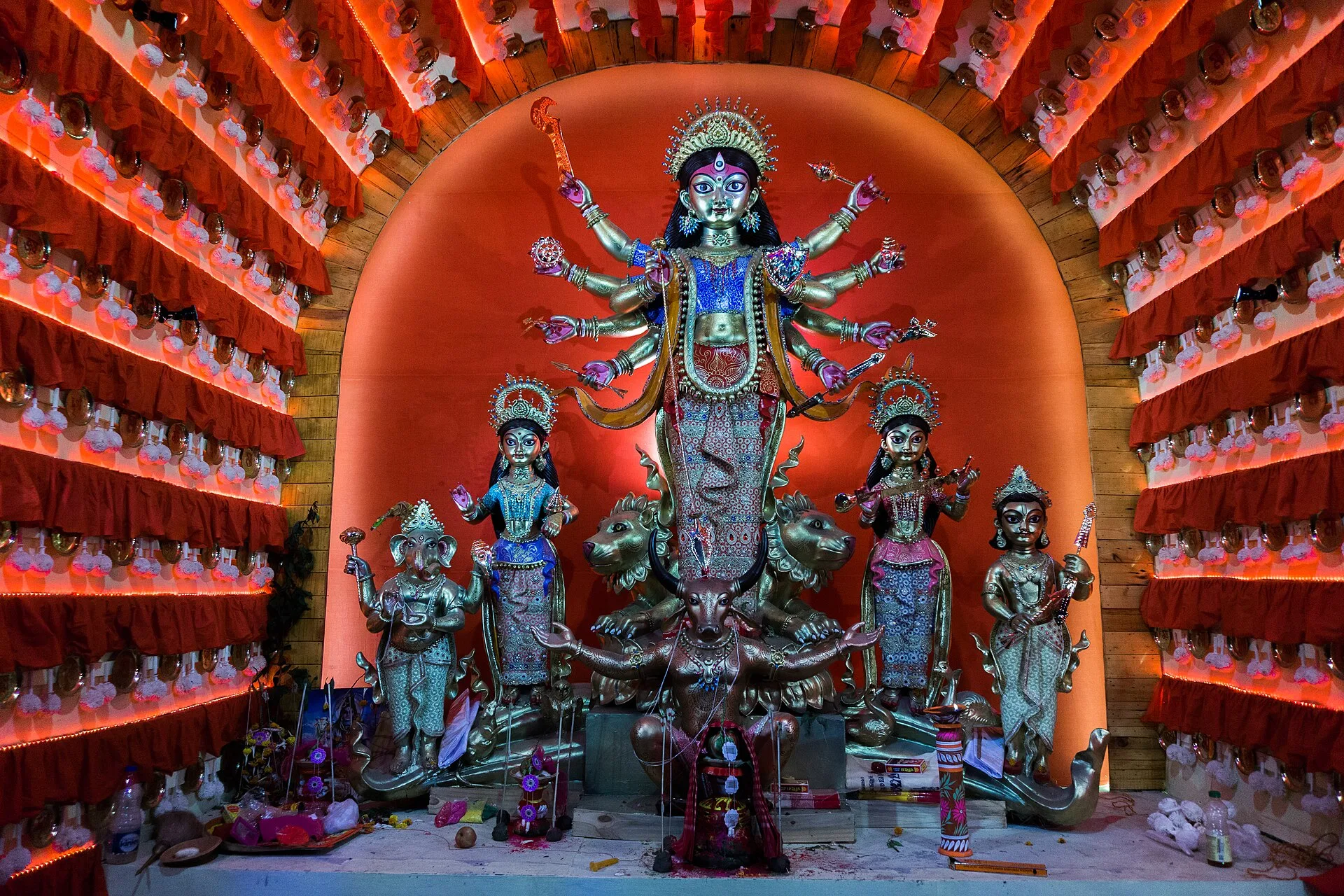
The Durga Puja Kolkata runs 4N/5D from Kolkata, graded Easy, from Rs 9,800 per person. Route: Kolkata – Kumartuli – north and south Kolkata pandal circuit – Belur Math – Kolkata.
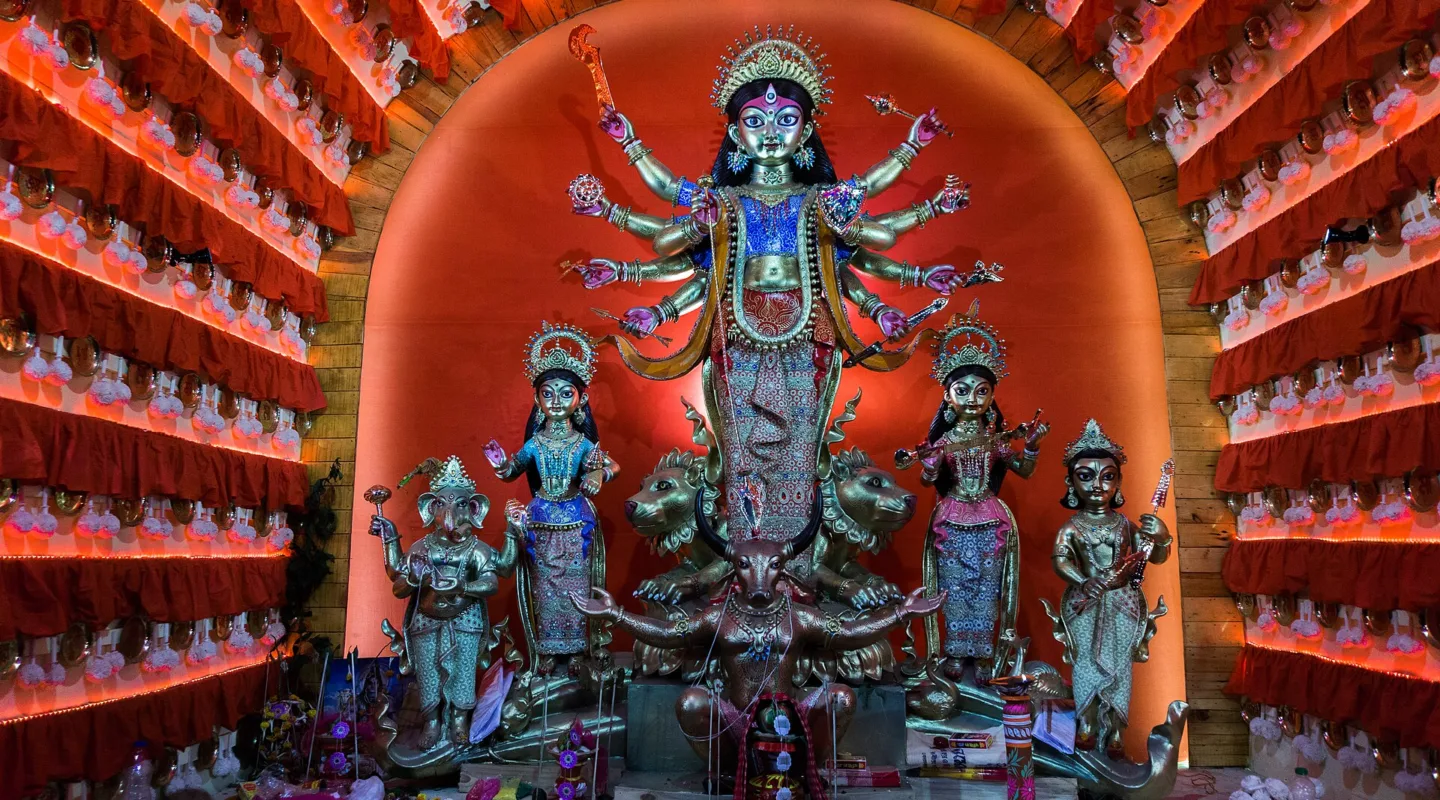
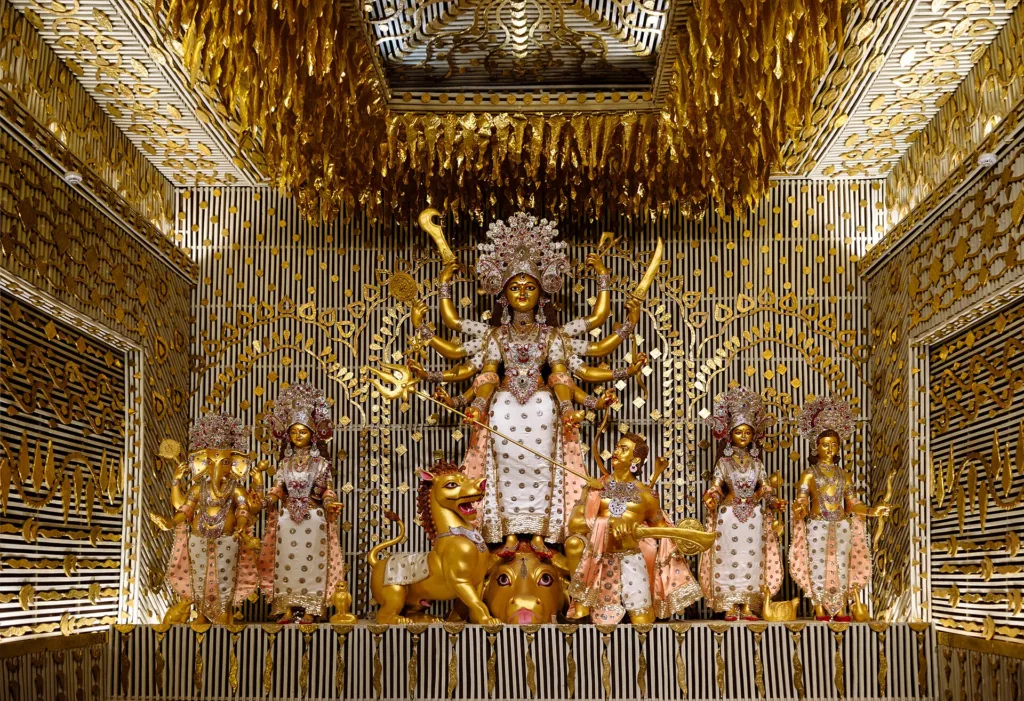
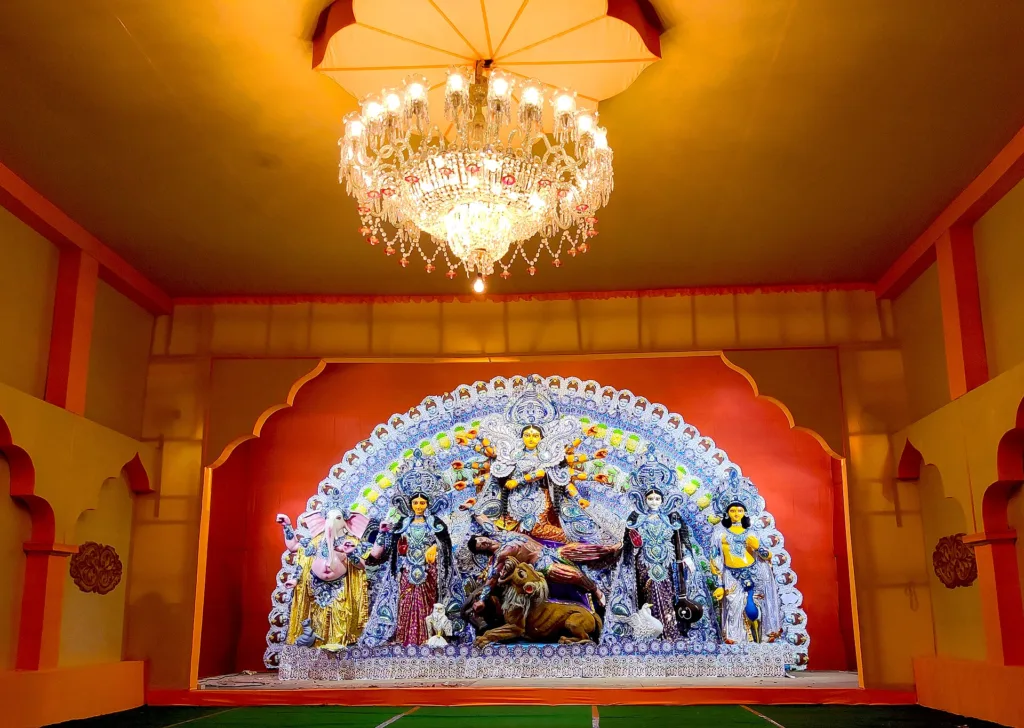
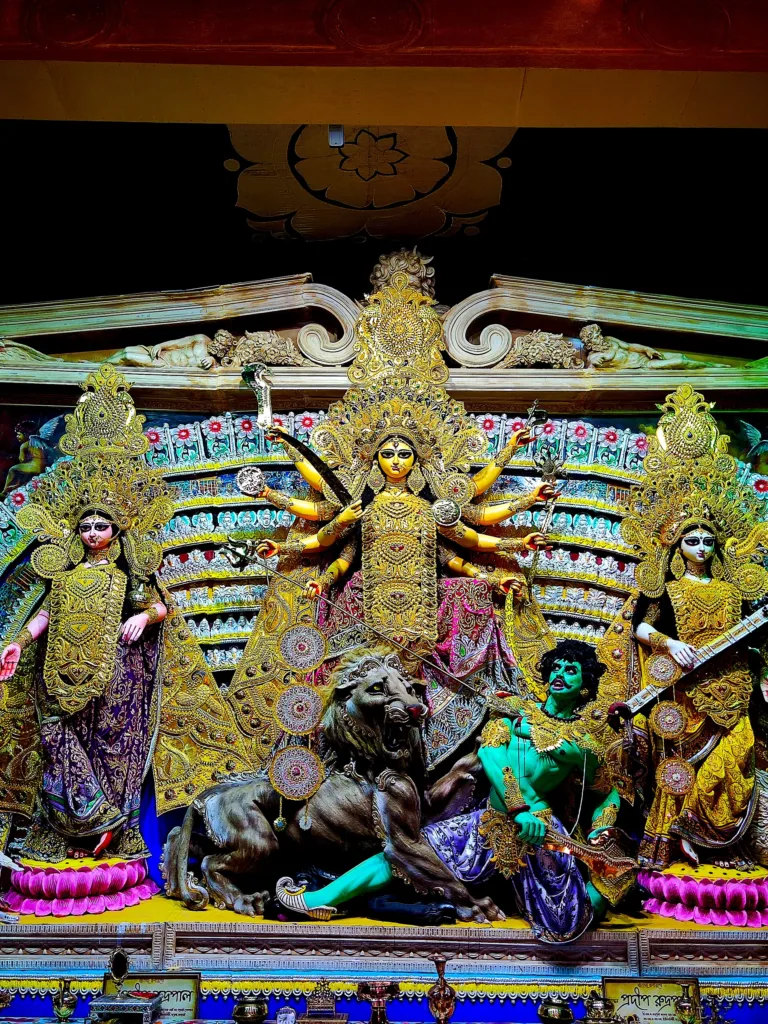
Durga Puja is Kolkata’s defining festival, and in 2021 UNESCO inscribed it on the Representative List of the Intangible Cultural Heritage of Humanity. It celebrates the goddess Durga’s victory over the buffalo demon Mahishasura, and it is observed in the Hindu month of Ashwin, which usually falls across late September and October. The festival proper runs from Shashthi to Dashami, five days that end with the immersion of the idols in the Hooghly river.
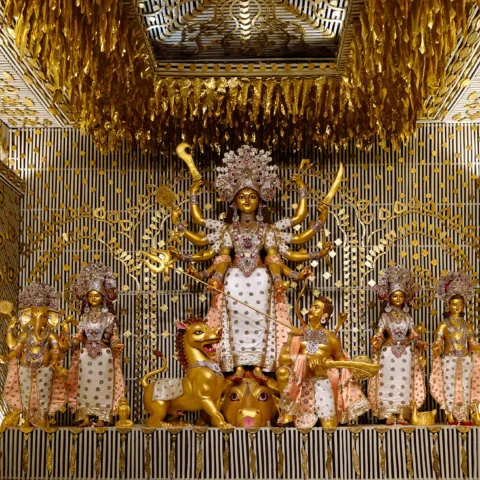
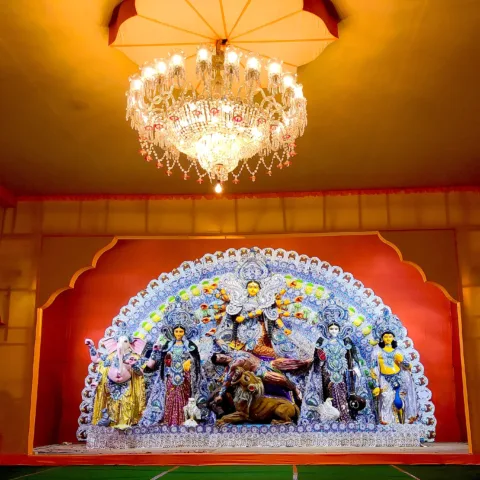
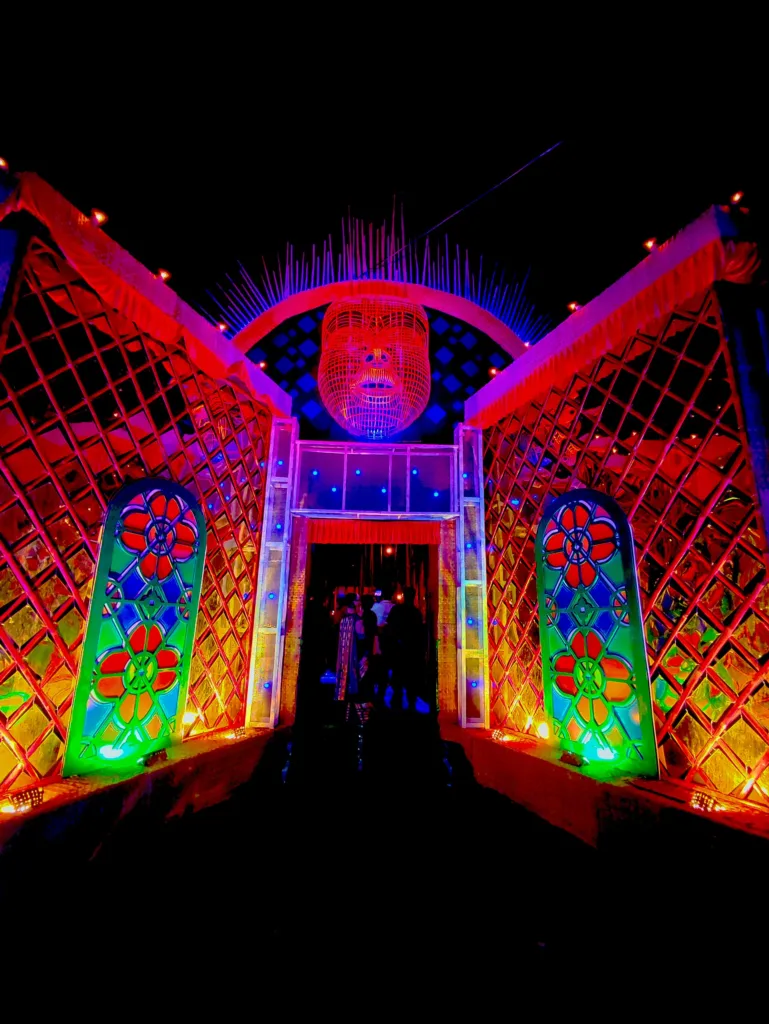
The form the festival takes in Kolkata is what makes it remarkable. Rather than a single temple ritual, the city builds thousands of temporary pandals, each housing a Durga idol commissioned for that year alone, and neighbourhoods compete on scale, theme and craft. The idols are made in Kumartuli, the potters’ quarter in north Kolkata where clay is worked on the riverbank for months beforehand, and the finished figures are carried through the streets to their pandals. The pandal structures themselves are built from bamboo, cloth and paper and are dismantled after the festival, so nothing of them survives the year.
The city is the stage. West Bengal is centred on the Hooghly, the distributary of the Ganga on which Kolkata grew, and the festival follows the river: the idols are brought to the ghats and immersed there on Dashami. North Kolkata holds the older, more traditional pandals around Shobhabazar and Bagbazar, while the south has the large contemporary installations. Belur Math, the headquarters of the Ramakrishna Mission across the river in Howrah, is a quieter counterpoint and is worth a half day. You can see the wider state on our destinations page.
Day one is arrival and an evening walk through the nearest pandals. Day two is Kumartuli in the morning and the north Kolkata circuit in the evening, when the pandals are lit. Day three is the south Kolkata circuit, which is where the largest installations are. Day four is Belur Math and the river, then the Dashami immersion at the ghats. Day five is departure.
Distances in Kolkata are short but the traffic is heavy, and during Puja the roads around the big pandals are closed to vehicles. The group travels by a mix of coach and walking, and the walking stretches are the point rather than a compromise. North to south across the city is about 15 kilometres, but a pandal circuit of eight or ten stops will take a full evening.
This trip suits travellers who want to see a city festival at full volume, and photographers who want the night light and the crowds. There is no walking of consequence beyond the pandal circuits and no altitude. It is a good fit for solo travellers, since the group format and the shared meals make it easy to settle in, and for anyone who has seen the monuments and wants the living city instead.
The price covers four nights of accommodation in Kolkata on twin sharing, breakfast and dinner on all days, the airport or station transfers both ways, the pandal circuits by coach and on foot, the Kumartuli and Belur Math visits, and a trip captain throughout.
Durga Puja is observed in the Hindu month of Ashwin, which usually falls across late September and October, so the Gregorian dates move each year. The festival proper runs from Shashthi to Dashami, five days that end with the immersion of the idols. This trip is built around those five days, so the departures that fall inside that window are the ones to book.
It is graded easy. Kolkata is at sea level on the Hooghly delta, so there is no altitude concern at all. The walking is the main demand: the pandal circuits are done largely on foot through crowds, and a full evening can mean several kilometres at a slow pace.
A basic level. There is no trekking and no climb, but the pandal circuits involve standing and walking for long stretches in crowds, often late into the evening. If you can walk for three or four hours with breaks and are comfortable in a crowd, you are fit enough.
Yes. Shared accommodation on twin sharing, a trip captain throughout and communal meals make it easy for solo travellers, and the group format means you are never on your own in the crowds unless you want to be. Couples and friend groups also fit well.
Four nights in a hotel in Kolkata on twin sharing, chosen for access to the pandal circuits rather than for luxury. Rooms have attached bathrooms and hot water. Singles who want a room to themselves can pay a single supplement, subject to availability during Puja week, when the city fills up.
Indian citizens need no permit for Kolkata. Foreign nationals need a standard tourist visa, applied for before travel. Mobile coverage in Kolkata is good, but it slows badly around the big pandals when the crowds peak, and the networks can be congested on Dashami. Treat the circuit evenings as partly offline and download what you need in advance.
Explore related pages: All trips in West Bengal · Browse all destinations · All activities · Kolkata destination guide · Darjeeling destination guide · Trekking in India.
Photo credits. Photographs on this page are from Wikimedia Commons and are used under the licences listed below. Each image is credited to its photographer; the licence terms apply to reuse of the image.
Majestic Journey: Kashmir Great Lakes Trek Introduction: Nestled in the pristine valleys of Kashmir, the Great Lakes Trek…
Hampta Valley Snow Trek Winter transforms Hampta Valley into a breathtaking wonderland, where nature's beauty is on full…
Spiti Valley Spiti Valley The Land of Raw Beauty and High-Altitude Adventures Introduction Nestled in the cold desert…