
Easy
Kheerganga Trek
Nestled in the heart of the Parvati Valley, the Kheerganga trek beckons adventurers with promises of natural wonders…
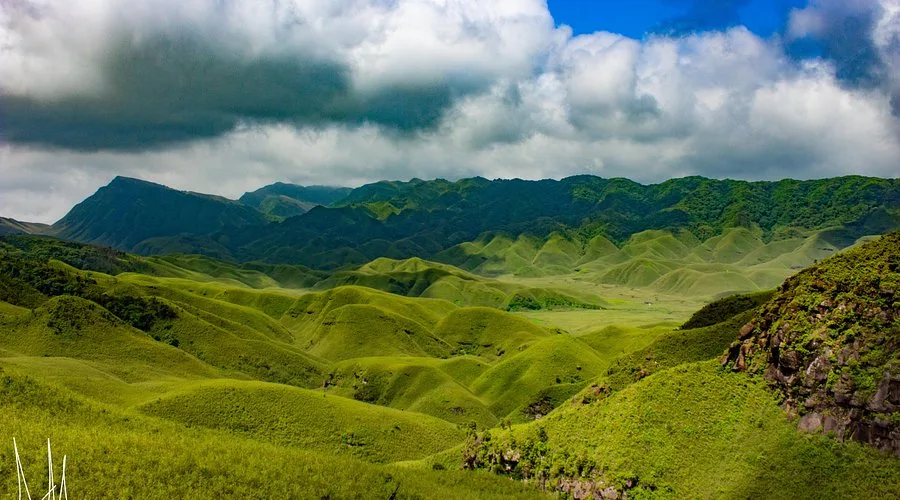
Dzukou Valley sits in a part of India that remains, for most trekkers elsewhere in the country, almost entirely unfamiliar — a high-altitude valley straddling the Nagaland-Manipur border, reached through the hill town of Kohima, and known primarily for a phenomenon found almost nowhere else in India: a dense, short-lived bloom of the Dzukou lily, a flower endemic to this single valley, found in no other location on Earth, that carpets the meadow in white and pink blossoms for a window of only a few weeks each June and July.
The trek begins at Zakhama or Viswema village near Kohima, climbing through dense subtropical and later temperate forest that feels notably different from the Himalayan treeline typical of most Indian mountain trails — the Northeast’s distinct monsoon-fed ecology produces a dense, moisture-laden forest canopy, with bamboo groves and rhododendron intermixed in a combination rarely seen together elsewhere in the country. Local Angami and Naga communities have long held Dzukou Valley in considerable regard, both for its natural beauty and its role as seasonal grazing and foraging ground.
The approach itself involves a steep, sustained climb through forest before the trail crests a ridge and the valley opens out with genuine suddenness — a wide, gently undulating bowl of rolling green hills entirely different in character from anything found in the Himalaya or Western Ghats, closer in feel to highland moorland than typical Indian mountain terrain. Bamboo-thatched rest huts, maintained by local trekking associations, provide basic overnight shelter within the valley itself, a welcome resource given the region’s genuine remoteness and unpredictable weather.
Outside the brief lily-blooming window, Dzukou Valley retains its own quieter appeal — a landscape of low rolling hills covered in a distinctive short grass interspersed with black-stemmed rhododendron bushes, streams threading through the valley floor, and a stillness that reflects just how few visitors, relative to India’s more established Himalayan trekking circuits, make the journey to this corner of the Northeast. Trekkers who do visit often describe an almost otherworldly quality to the landscape, closer in feel to parts of Scotland or New Zealand than anywhere else typically associated with Indian mountain trekking.
Weather in the valley shifts quickly and can turn genuinely harsh with little warning, given its exposed, high-altitude position and the Northeast’s generally unpredictable monsoon patterns — experienced local guides are essential, both for navigation across terrain with few obvious landmarks in mist, and for reading changing conditions that first-time visitors to this specific ecology would have no basis for anticipating.
For trekkers who have already covered India’s more established Himalayan, Western Ghats, or desert-mountain trekking circuits and are looking for something genuinely different — a landscape, culture, and ecology found nowhere else in the country — Dzukou Valley offers exactly that: a remote highland valley, a rare endemic flower found only within its boundaries, and a trekking experience shaped entirely by Northeast India’s distinct geography and Naga hill culture.
Arrive at Kohima, drive to Zakhama village. Briefing and gear check.
Steep climb through forest to the rim of Dzukou Valley, descend into the valley to the rest-hut campsite.
Full day exploring the valley's meadows and streams (lily bloom visible in season, June-July).
Descend back to Zakhama and drive to Kohima for onward journey.
Nestled in the heart of the Parvati Valley, the Kheerganga trek beckons adventurers with promises of natural wonders…
A gentle cultural trek through the UNESCO-listed rice fields and pine-dotted hills of the Apatani tribal homeland in…
A genuine 6,000-metre summit within reach of trekkers with the right conditioning — Ladakh's most accessible high-altitude expedition…