
Moderate
Brahmatal Trek
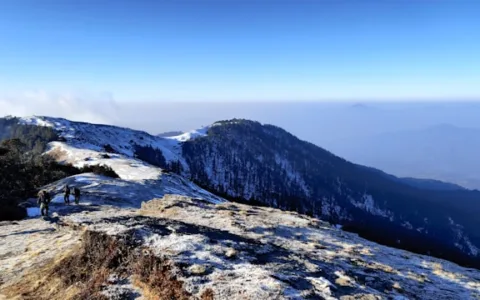
A winter wonderland trek to a sacred frozen lake, framed by uninterrupted views of Mt. Trishul and Nanda…
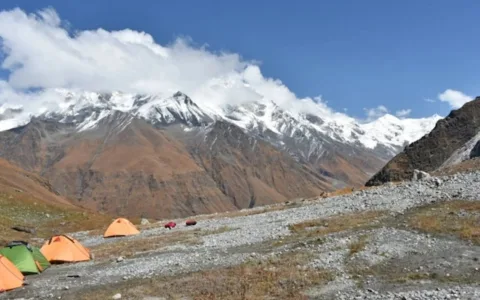
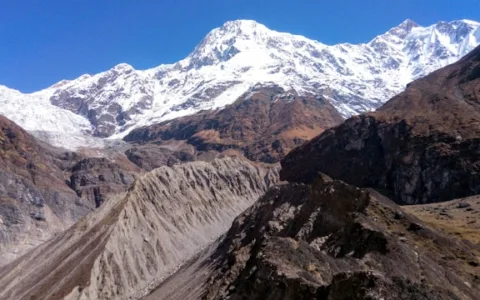
Few treks in India combine pilgrimage and wilderness quite as directly as Gaumukh Tapovan. The route follows the same path used for centuries by pilgrims heading to Gaumukh — literally “Cow’s Mouth” — the point where the Ganga emerges from beneath the Gangotri Glacier, before continuing well beyond the pilgrim trail into the high-altitude meadow of Tapovan, directly beneath the sheer granite spire of Mt. Shivling. It’s a trek that starts crowded with devotion and ends in near-total solitude.
The journey begins at Gangotri town itself, home to one of the four sacred Char Dham temples, where the trail follows the Bhagirathi river upstream through a landscape that shifts quickly from pine forest to open, boulder-strewn valley. Bhojwasa, the trek’s first major camp, sits within a grove of Himalayan birch — the same bark once used across the subcontinent as writing paper for ancient manuscripts — and offers the first clear views of the glacial valley ahead.
Gaumukh itself, reached the following morning, is treated with genuine reverence by the steady stream of pilgrims who make it this far and no further. Standing before the glacier’s blackened, debris-covered snout, watching the Ganga’s icy source water emerge in a churn of grey meltwater, is a moment most trekkers describe as unexpectedly moving regardless of personal faith — a tangible encounter with the literal origin point of a river considered sacred to over a billion people.
Where the pilgrim trail ends, the trek continues. The route beyond Gaumukh grows noticeably rougher, crossing moraine and loose boulder fields alongside the glacier itself, with occasional short scrambles required to maintain the trail. This is where the crowds thin dramatically, and by the time the trail reaches Tapovan, most days see only a handful of trekking groups rather than the steady stream present at Gaumukh.
Tapovan’s reward is immediate and overwhelming: a vast, undulating meadow at nearly 4,400 metres, grazed by wild blue sheep, directly beneath Shivling’s near-vertical granite face — a peak considered by many mountaineers among the most beautiful in the entire Himalaya, its symmetrical pyramid shape giving it the alternative name “Matterhorn of India.” Camping here, with Shivling catching alpenglow at dawn and dusk, is widely regarded as one of the most spectacular high-altitude experiences available anywhere in Uttarakhand.
Sadhus — Hindu ascetics who spend entire summers meditating in small stone shelters scattered across the Tapovan meadow — are a distinctive feature of this trek, their presence lending the landscape a genuinely different atmosphere from most other Himalayan base camps. Trekkers occasionally exchange a few words with these long-term residents, offering a small window into a form of high-altitude asceticism that has continued here for generations.
Because the trail beyond Gaumukh crosses genuinely unstable glacial moraine and involves sustained altitude above 4,000 metres for several days, this trek demands solid fitness and, ideally, some prior high-altitude experience. Inner Line Permits and forest department clearances are mandatory given the trek’s proximity to the India-China border area, and every reputable operator handles this paperwork well in advance.
Arrive at Gangotri (3,100m). Temple visit, permit processing, and briefing.
Trek along the Bhagirathi river through birch forest to Bhojwasa.
Visit Gaumukh, the source of the Ganga, then climb the moraine to the meadow of Tapovan (4,463m) beneath Mt. Shivling.
Rest and exploration day around the meadow, views of Shivling and Bhagirathi peaks.
Descend back down the moraine to Bhojwasa.
Final descent along the river back to Gangotri.
Weather contingency day.
Drive from Gangotri to Uttarkashi.
Onward journey from Uttarkashi/Dehradun.
A winter wonderland trek to a sacred frozen lake, framed by uninterrupted views of Mt. Trishul and Nanda…
A challenging high-altitude crossing linking the Har Ki Dun and Yamunotri valleys, culminating in a steep, technical pass…
One of the oldest recorded trekking routes in the Kumaon Himalaya, following the Pindar river through traditional villages…