Moderate
Brahmatal Trek
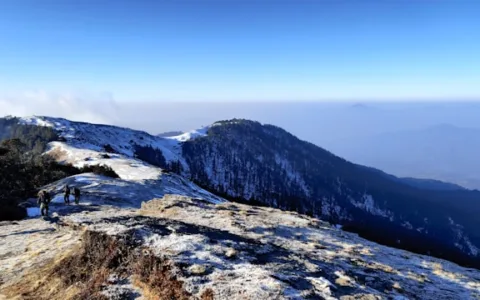
A winter wonderland trek to a sacred frozen lake, framed by uninterrupted views of Mt. Trishul and Nanda…
Dayara Bugyal Trek runs 4 days in Uttarakhand, graded Easy, from Rs 6,200 per person.
The short access time from Uttarkashi — itself only a five to six hour drive from Dehradun — makes Dayara Bugyal one of the most time-efficient meadow treks available in the Garhwal Himalaya, delivering scale and mountain views that many longer, harder treks in the region don’t necessarily surpass. Bugyal, in the local Garhwali dialect, refers to the vast, rolling alpine meadows found across Uttarakhand’s higher valleys — and Dayara Bugyal is widely regarded as one of the finest examples in the entire state. Winter transforms Dayara Bugyal into one of Uttarakhand’s most popular snow treks, the meadow blanketed in a smooth, largely untouched layer of snow that makes for excellent, low-risk snow-walking practice — gentle enough gradients that groups can experiment with basic snow skills, including short stretches of controlled sliding, without the steeper technical demands of higher passes further into the Himalaya. From the higher points of the meadow, views extend to Bandarpoonch, Kala Nag, Draupadi ka Danda, and Jaonli — a wall of snow peaks that rings the meadow’s northern edge and gives Dayara a genuinely amphitheatre-like feel despite the ease of reaching it. The trek begins at Barsu or Raithal, two small villages a short drive from Uttarkashi, each offering a slightly different approach to the same meadow. What sets Dayara apart from many similarly sized meadows elsewhere in the Garhwal Himalaya is its sheer scale and the completeness of the panorama it offers. A huge, gently undulating expanse of grassland spread across several square kilometres at over 3,000 metres, it has been used for generations by local villagers as summer grazing ground for sheep and cattle, and remains one of the least commercially developed high-meadow treks within easy reach of Uttarkashi.
At 3,000 m the thin air is the real constraint on the Dayara Bugyal Trek, so the upper stretch is walked slowly and altitude symptoms are reported early.
The Dayara Bugyal Trek assembles at Dehradun, and the day numbering runs from that point. Reporting times and the exact pickup point for the Dayara Bugyal Trek are confirmed on booking.
The Dayara Bugyal Trek is a realistic first outing, since its 4 days are short enough that fitness is not the barrier. Families with older children and anyone returning to walking after a break fit the Dayara Bugyal Trek comfortably. Solo travellers move inside a led group on the Dayara Bugyal Trek, so the pace is collective rather than personal.
Layers do more work than any single jacket on the Dayara Bugyal Trek, because the temperature at 3,000 m bears little relation to the trailhead. Footwear decides the day on the Dayara Bugyal Trek: loose stone and wet ground cause most slips, and a worn sole is the usual reason people struggle on the descent. Carry two litres of water each on the Dayara Bugyal Trek, a small first-aid kit, a head torch for pre-dawn walking, and food already tested on a training walk.
At 3,000 m on the Dayara Bugyal Trek, altitude illness is the main risk rather than the ground, so walk slowly and report a persistent headache or nausea immediately. A certified leader carries first aid and safety kit on the Dayara Bugyal Trek and reviews the forecast each morning, so the plan stays provisional until conditions are known. Travel insurance that covers trekking at this altitude is worth the small extra cost and is not part of the Dayara Bugyal Trek price.
The Rs 6,200 price of the Dayara Bugyal Trek covers accommodation on the itinerary, the listed meals, a certified leader with support crew, applicable permits and entry fees, and the safety equipment carried. Excluded from the Dayara Bugyal Trek are travel to the assembly point unless the itinerary says otherwise, personal kit and clothing, insurance, and anything the inclusions list does not name.
This has made it a frequent recommendation for trekkers building experience before attempting more demanding winter routes like Kedarkantha or Brahmatal. Both routes climb through dense forests of oak, deodar, and rhododendron, and the transition from forest to open meadow — usually reached within a single day’s walk — is one of the trek’s most striking moments, the trail opening abruptly from shaded woodland into a huge, sunlit expanse of rolling grassland with almost no warning. Because the meadow itself is so expansive, campsites can be positioned with considerable flexibility, and most operators choose spots specifically angled toward this peak panorama for sunrise and sunset. Because the trek requires only a single significant day of climbing and no technical terrain at any point, it works well for families, first-time trekkers, and groups with limited time who still want a genuine high-altitude meadow experience with a serious mountain backdrop.
Browsing by region or activity is often faster than reading individual pages, so start with Uttarakhand. The closest alternatives to the Dayara Bugyal Trek are Har Ki Dun Valley Trek, Brahmatal Trek and Rupin Pass Trek, which suit anyone comparing dates or a slightly different grade.
Dayara Bugyal Trek
Bugyal, in the local Garhwali dialect, refers to the vast, rolling alpine meadows found across Uttarakhand’s higher valleys — and Dayara Bugyal is widely regarded as one of the finest examples in the entire state. A huge, gently undulating expanse of grassland spread across several square kilometres at over 3,000 metres, it has been used for generations by local villagers as summer grazing ground for sheep and cattle, and remains one of the least commercially developed high-meadow treks within easy reach of Uttarkashi.
The trek begins at Barsu or Raithal, two small villages a short drive from Uttarkashi, each offering a slightly different approach to the same meadow. Both routes climb through dense forests of oak, deodar, and rhododendron, and the transition from forest to open meadow — usually reached within a single day’s walk — is one of the trek’s most striking moments, the trail opening abruptly from shaded woodland into a huge, sunlit expanse of rolling grassland with almost no warning.
What sets Dayara apart from many similarly sized meadows elsewhere in the Garhwal Himalaya is its sheer scale and the completeness of the panorama it offers. From the higher points of the meadow, views extend to Bandarpoonch, Kala Nag, Draupadi ka Danda, and Jaonli — a wall of snow peaks that rings the meadow’s northern edge and gives Dayara a genuinely amphitheatre-like feel despite the ease of reaching it. Because the meadow itself is so expansive, campsites can be positioned with considerable flexibility, and most operators choose spots specifically angled toward this peak panorama for sunrise and sunset.
Winter transforms Dayara Bugyal into one of Uttarakhand’s most popular snow treks, the meadow blanketed in a smooth, largely untouched layer of snow that makes for excellent, low-risk snow-walking practice — gentle enough gradients that groups can experiment with basic snow skills, including short stretches of controlled sliding, without the steeper technical demands of higher passes further into the Himalaya. This has made it a frequent recommendation for trekkers building experience before attempting more demanding winter routes like Kedarkantha or Brahmatal.
Local legend also attaches a note of caution to the meadow’s undisturbed character — villagers hold that Dayara’s pristine grassland is protected by a local deity, and traditionally avoid grazing livestock in certain sections out of respect for this belief, a practice that has, incidentally, helped preserve pockets of the meadow’s ecology in a near-untouched state compared to more heavily grazed bugyals elsewhere in the region.
Because the trek requires only a single significant day of climbing and no technical terrain at any point, it works well for families, first-time trekkers, and groups with limited time who still want a genuine high-altitude meadow experience with a serious mountain backdrop. The short access time from Uttarkashi — itself only a five to six hour drive from Dehradun — makes Dayara Bugyal one of the most time-efficient meadow treks available in the Garhwal Himalaya, delivering scale and mountain views that many longer, harder treks in the region don’t necessarily surpass.
The Dayara Bugyal Trek runs for 4 days. The day-by-day itinerary above lists each stage, walking distance and overnight stay.
The Dayara Bugyal Trek is rated Easy by WDRLUST. It suits first-time trekkers with reasonable fitness. Training with 45 to 60 minutes of cardio three times a week for six weeks before departure is enough for most people.
The Dayara Bugyal Trek starts at Rs 6,200 per person. The price covers the inclusions listed on this page. Transport to the starting point, personal gear and anything not listed under inclusions are extra.
The route reaches approximately 3,000 m. Walk slowly, drink water and report any headache or nausea to your trek leader.
Group size is capped at Max 18 trekkers per departure, with a certified trek leader. Smaller groups mean faster head counts and more attention on the trail.
The Dayara Bugyal Trek starts from the base location described in the itinerary above. WDRLUST shares exact meeting points, reporting times and transport options on booking confirmation. The nearest major access region is Uttarakhand.
Dayara Bugyal is a high alpine meadow in Uttarakhand above Barsu village, at around 3,000 m, and it is one of the gentlest Himalayan treks available. The appeal is the meadow itself, which opens out into a wide grassland with the Garhwal peaks behind it.
The trek fee is Rs 6,200 per person:
Expect Rs 20,000 to Rs 27,000 all-in. The Dehradun transfer is the awkward part; flying into Dehradun saves a full day in each direction when seats are available.
Rated Easy, correctly. Total walking is around 12 to 14 km over the trek with 900 m of gain spread over two days, and the trail through the forest is well defined. There is no technical ground and the altitude stays below 3,400 m.
It is one of the few Himalayan treks where a fit beginner with the right gear is entirely comfortable. In winter, the snow version adds difficulty in proportion to how recent the snowfall is.
In winter the meadow can hold deep snow, and the trail through the forest is marked by the group rather than by any path. A fresh fall makes the day twice as hard and shortens the route.
In monsoon the forest sections are muddy and leeches appear. The meadow drains well, but cloud regularly hides the Garhwal peaks that make the view. Winter is the more reliable experience if you can handle the cold.
Fly to Dehradun via Delhi, sleep, drive to Barsu the next day, trek three or four days, return to Dehradun, and fly out. The trip takes seven or eight nights out of the city. It pairs well with Kedarkantha or Har Ki Dun, which use the same Dehradun gateway.
Explore related pages: All treks in Uttarakhand · Browse all destinations · All activities.
Drive from Uttarkashi to Barsu village (2,100m). Briefing and gear check.
Trek through oak and rhododendron forest into the open meadow of Dayara Bugyal (3,048m).
Explore the meadow and its viewpoints towards Bandarpoonch, descend back towards Barsu.
Final descent and drive back to Uttarkashi/Dehradun.
A winter wonderland trek to a sacred frozen lake, framed by uninterrupted views of Mt. Trishul and Nanda…
One of the oldest recorded trekking routes in the Kumaon Himalaya, following the Pindar river through traditional villages…
A pilgrimage-turned-trek to the source of the Ganga at the snout of the Gangotri Glacier, ending on a…