Moderate

Kasol Grahan Trek
Kasol Grahan Trek – Explore the Hidden Trails of Parvati Valley If you’re looking for a trek that…
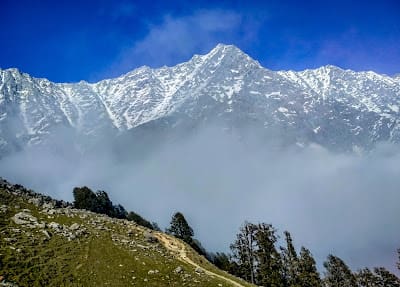
The Triund trek climbs from the hill town of McLeodganj to a grassy ridge at around 2,850 m (about 9,300 ft), facing the snow-streaked Dhauladhar range. Below you, the Kangra valley spreads out in patches of green and brown. It is a short, steep walk through oak and rhododendron forest, and it has become one of the most popular first treks in Himachal Pradesh for a good reason: you get a proper mountain view, a night in a tent and a sunrise from the ridge without needing days of leave or earlier experience.
This WDRLUST package runs for two days and one night. You gather at the Dharamkot base camp on the first morning, walk up to Triund at an easy pace with a trek leader, camp on the ridge and walk back down the next day. Dinner, a bonfire, evening tea and breakfast are part of the plan, so you can spend your energy on the trail and the view rather than on logistics.
Day 1, Dharamkot to Triund: Meet the team at the Dharamkot base camp at around 10:00 AM, hear the safety briefing and start walking. Expect about four to five hours at a relaxed pace, with breaks for water and photographs. You reach Triund before sunset, settle into the tents and spend the evening around the bonfire with dinner.
Day 2, Triund to Dharamkot: Wake up for the sunrise, have breakfast and pack up. The return follows the route you took up, mostly downhill, and ends back at Dharamkot in the evening. The detailed day-wise plan is in the itinerary section of this page.
Dharamkot is a small hill village above McLeodganj, known for its quiet lanes and cafés. From here the trail enters the forest and climbs steadily to the temple clearing at Gallu, which many trekkers use as an alternative starting point. Beyond Gallu the path gets steeper and rockier, passing a forest checkpoint and the Magic View café roughly halfway up. Above that point the trees thin out, the trail zigzags up open slopes, and the ridge appears at the top.
Triund is a broad, grassy shoulder rather than a summit. Tents are pitched along the ridge, and the ground drops away steeply on either side. On clear days you see the Dhauladhar peaks to the north and the plains of Kangra to the south. Beyond Triund, the trail continues towards Laka Got and the Snowline café, and further on towards the Indrahar Pass. Those sections need more time, an earlier start and better weather, so they are not part of this package.
McLeodganj is the base for the trek and is worth a day of your own. It is home to the Dalai Lama’s residence and temple complex, Tibetan cafés, shops and monasteries, and Bhagsu waterfall is a short walk away. If you arrive a day early, you can use it to rest and acclimatise gently.
The trek can be done for much of the year, but conditions change a lot with the season. March to June is warm and green, with clear mornings, though afternoons can be hot on the lower slopes in May and June. September to early December usually brings the clearest views, crisp air and cold nights. October and November are especially popular for sunsets.
Avoid or plan carefully for the monsoon in July and August. Heavy rain makes the trail slippery, increases the chance of landslides and often hides the mountains in cloud. In January and February, snow can cover the upper trail and nights at the top fall well below freezing. If you do go in winter, you will need proper warm layers and shoes with good grip, and the team may change plans if conditions are unsafe.
In any season, start early. Clouds often roll in by midday, and the weather in the Dhauladhar can change quickly. Check the forecast the day before and follow your trek leader’s advice on the day.
Triund is usually rated easy, and it is often used as a first trek. It is still a climb: you gain around 900 to 1,000 m of height in a short distance, so the path is steep in several sections. Most reasonably fit beginners need around four to five hours going up and two to three hours coming down. The lower forest section is gentle, and the stretch above the halfway point is the tiring part.
You do not need earlier trekking experience, but you should be comfortable walking uphill for a few hours with a daypack. A few weeks of preparation make a big difference. Walk briskly, jog or climb stairs for 30 to 40 minutes, four or five times a week, and add a short weekend hike if you can. Strengthening your legs with squats and lunges helps with the descent, which is hard on the knees.
Altitude sickness is unlikely at under 3,000 m, but nights can be cold and breezy. Drink water regularly and tell your trek leader if you feel dizzy, sick or unusually breathless.
Plan to reach McLeodganj the evening before, or early on the morning of the trek, so that you are at the Dharamkot base camp by 10:00 AM.
Sleeping bags, mats and tents are provided by the team, so you do not need to carry them. Keep your bag light, since you will be carrying it uphill.
A trek leader walks with the group, and the team looks after camp and meals. A few simple habits keep everyone safe. Stay with the group, start early, avoid walking in the dark, and do not run down the slopes, as loose stones are common. Keep a safe distance from the edges of the ridge, especially at night.
Triund is busy, and the ridge suffers when visitors are careless. Carry all your waste back down, including wrappers, bottles and tissues, and avoid single-use plastic where you can. At the forest checkpoint, carry a valid photo ID and be ready for a bag check and a short registration, and note that a small entry fee may apply, which can change from time to time. Alcohol and open fires outside the camp are not allowed, and the forest department can enforce this. Keep music at a low volume, respect the locals and leave the wildflowers and wildlife alone.
This trek suits first-time trekkers, friends and families with older children, solo travellers who prefer to walk with a group, and city visitors who want a short break in the mountains. It is also a good warm-up for longer Himalayan treks. It is less suited to anyone looking for solitude or a remote route, because Triund is popular and the ridge can be crowded on weekends and holidays.
No. It is rated easy and is a common first trek. The path is steep in the upper half, so walk slowly, take breaks and carry only what you need.
The package takes two days and one night. Most beginners need four to five hours to climb up and two to three hours to come down, plus time for rest stops.
March to June and September to early December are the most comfortable months. The monsoon in July and August and deep winter in January and February need extra caution because of rain, slippery trails and snow.
The package includes camping at Triund top, dinner on Day 1, a bonfire and evening tea, breakfast on Day 2, trekking equipment such as sleeping bags, sleeping mats and dome tents, and a trek leader.
Personal expenses and any sports or activities not covered in the inclusions are not part of the package. Lunch on Day 1 is not listed in the inclusions, so carry snacks or buy food at the tea stalls on the trail.
Mobile signal is reliable in McLeodganj but patchy on the trail and often missing at the top. ATMs are available in McLeodganj, so withdraw cash before you start and keep some for tea stalls and small expenses.
Yes. Solo travellers are welcome and walk with the group and the trek leader, so you are not on the trail alone. The path is also busy, which adds to the sense of safety.
The risk is low because the ridge is under 3,000 m. Drink water, walk at a steady pace and tell your trek leader about headaches, nausea or dizziness.
Beyond Triund, the trail continues to Laka Got and the Snowline, and then to the Indrahar Pass. These sections are harder, need more time and depend on snow and weather, so they are not part of this package.
Meet the team at the Dharamkot base camp at 10:00 AM, less than 2 km from McLeodganj. After a short briefing, start the climb through oak and rhododendron forest, passing the Gallu temple clearing, a forest checkpoint (carry a valid photo ID) and the Magic View area roughly halfway. The path gets steeper in the upper half before opening onto the Triund ridge.
Walk at an easy pace, stop for water and photographs, and aim to arrive before sunset. Settle into the tents, watch the light fade on the Dhauladhar range, and gather around the bonfire for evening tea and dinner. Lights out around 10:00 PM.
Wake early for sunrise over the ridge, then have breakfast and pack up. Descend by the same route, which is mostly downhill and quicker than the climb. Go slowly on loose stones, as the descent is hard on the knees. The trek ends back at Dharamkot in the evening.

Kasol Grahan Trek – Explore the Hidden Trails of Parvati Valley If you’re looking for a trek that…
Kareri Lake Trek: A Himalayan Odyssey to Alpine Bliss Nestled in the Dhauladhar Range of the Indian Himalayas,…
An Unforgettable Adventure in the Dhauladhar Range If you're searching for a short yet thrilling Himalayan trek, the…