
Moderate

Sar Pass Trek From Delhi
Sarpass Trek, Kasol Sar pass is one of the most fascinating and amazing places in the amazing Parvati…
The Kullu Dussehra runs 4N/5D from Kullu, graded Easy, from Rs 9,800 per person. Route: Kullu – Naggar – Manali – Kullu.
Kullu Dussehra is not the Dussehra most of India knows. Across the plains the tenth day of Ashwin ends with the burning of Ravana’s effigy and the festival closes. In Kullu it opens. The rath of Lord Raghunath is drawn across the Dhalpur maidan on Vijayadashami itself, and for the seven days that follow the valley’s deities arrive in palanquins to pay their respects, turning a town of about twenty thousand people into the centre of a fair that draws four to five lakh visitors.
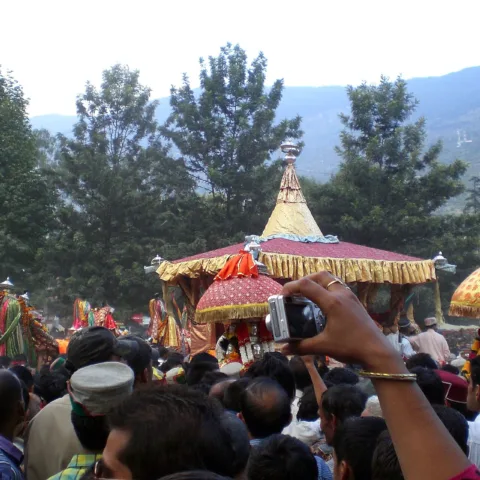
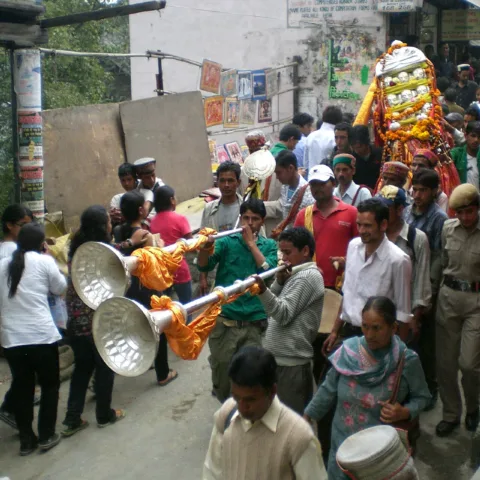
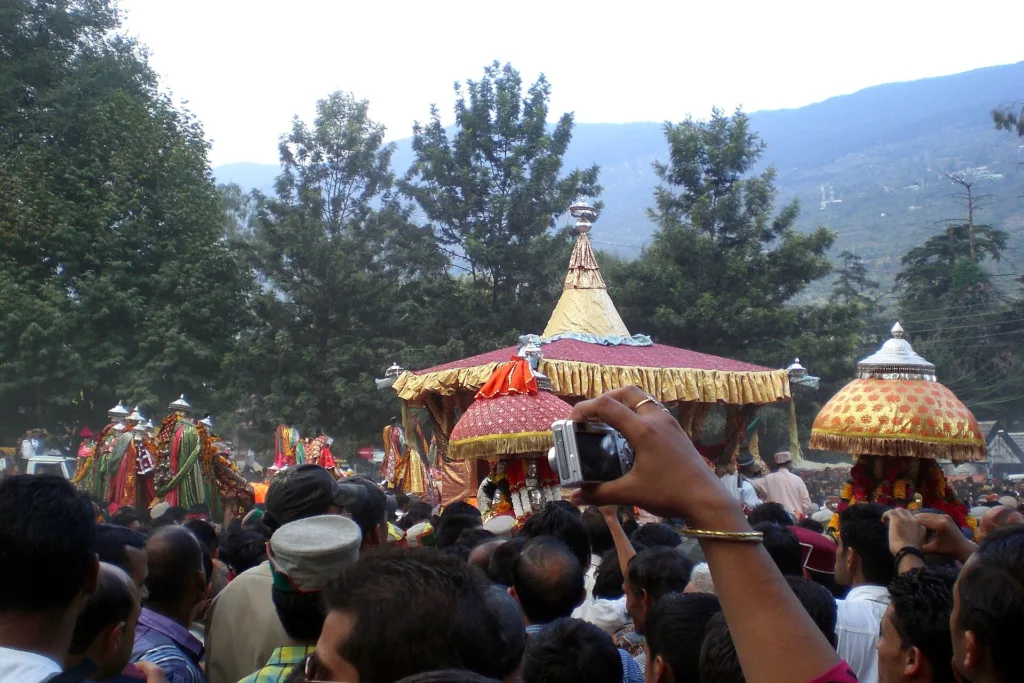
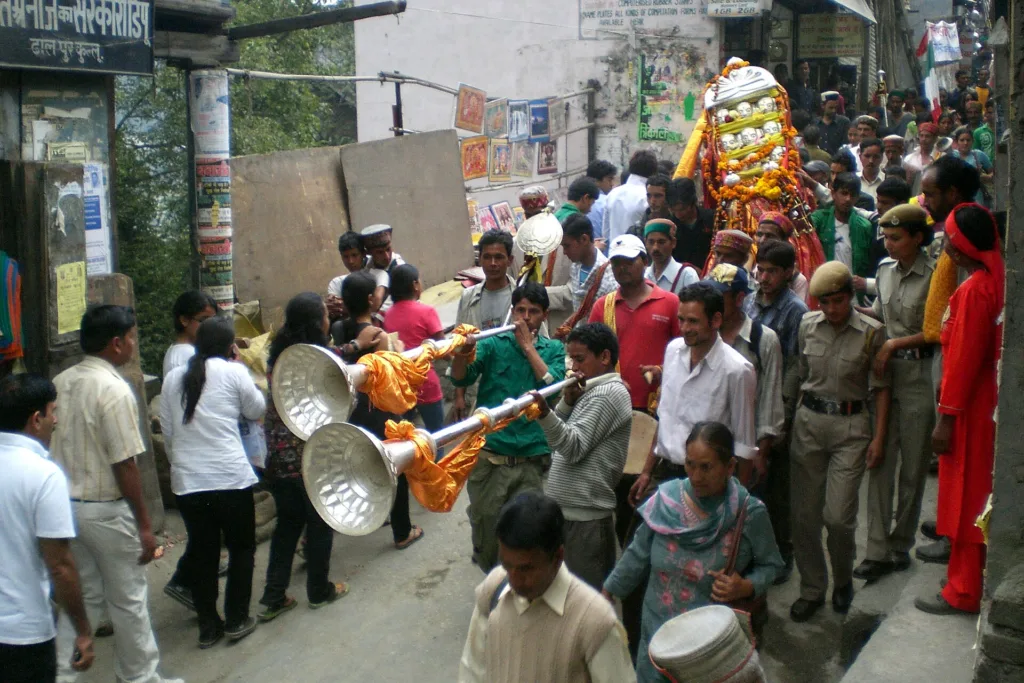
This is the practical difference for a traveller: if you have seen Dussehra in Delhi or Varanasi, you have not seen this. There is no effigy here, and no Ramlila stage of the kind the plains keep. What there is instead is a gathering of devtas — the village gods of the Kullu valley, each carried down from its own temple on a palanquin with its own musicians — assembling on one field for a week.
The festival is usually dated to the seventeenth century and to Raja Jagat Singh, the Kullu ruler who is said to have installed the image of Raghunath in the temple above the maidan after a period of drought and illness in the valley. Whatever the exact sequence, the deity became the presiding god of the state, and the Dussehra that grew around him became an affair of the whole valley rather than of one town. The rath — a tall wooden chariot — is pulled by rope, and on the final day the image is carried to the Beas and a bonfire of grass and wood is lit on the riverbed in the Lanka Dahan, the one moment the festival shares with the plains.
The devtas are the heart of it. Between two and three hundred village deities are brought to Dhalpur, some from a morning’s walk away and some from across the valley. Each arrives with its own gur or shaman, its musicians and its order of precedence, and the Jaleb — the formal procession in which the deities move across the ground in rank — is the ceremony worth arranging your day around. The order is not decorative. It is a surviving record of how the valley’s villages rank themselves against one another, and it has been argued over for centuries.
Kullu town itself sits at roughly 1,200 metres on the right bank of the Beas, with the Dhalpur maidan flat in the middle of it and the deodar slopes rising on both sides. The valley runs north from here towards Manali, and the road up it passes Naggar, which was the seat of the Kullu rajas before the capital moved down to Kullu. Naggar castle, built in the fifteenth century in the Kath-kuni idiom of timber and stone, still stands above the village, and the Nicholas Roerich art gallery is a short walk from its gate.
October in the valley is clear and cool, with the monsoon gone and the apple harvest coming in. Mornings are sharp, afternoons are warm in the sun, and the light on the deodar is the reason photographers plan this week a year ahead. Manali, at about 2,050 metres and an hour and a half up the road, is colder and busier, and makes a good counterweight to the crowds on the maidan.
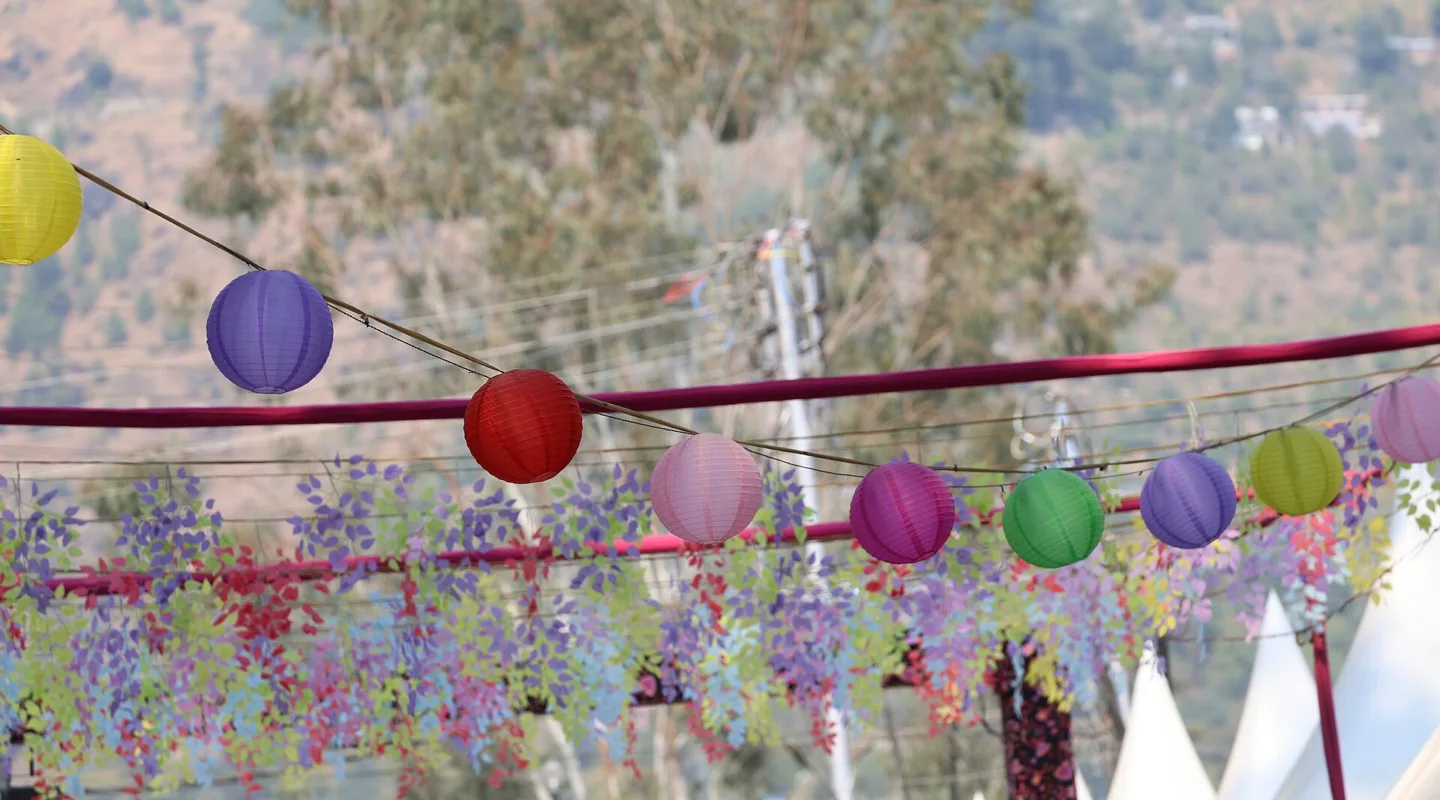
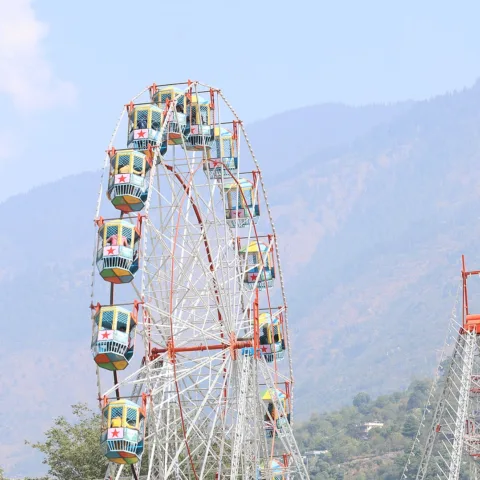
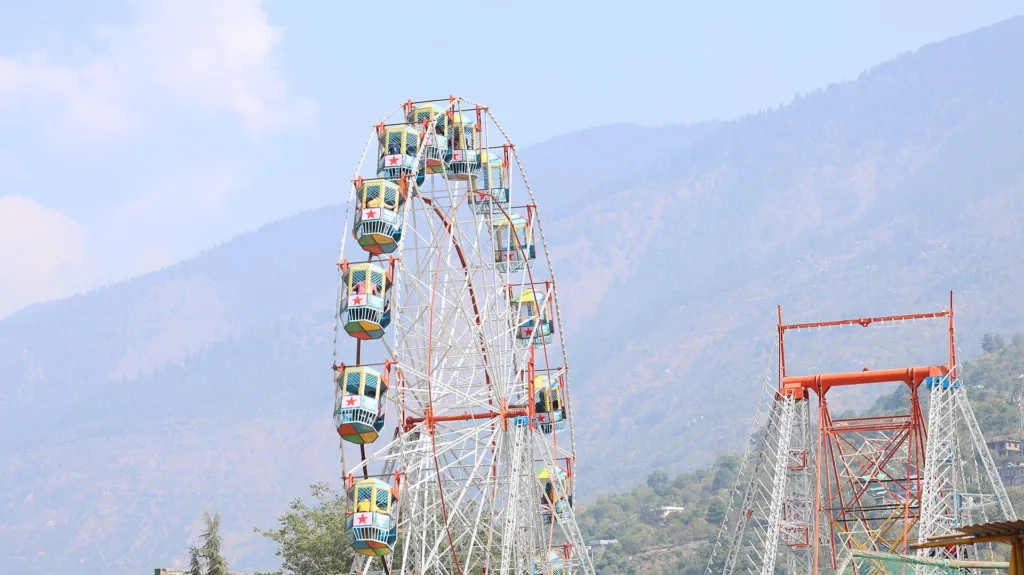
It is worth being clear about what the week is like on the ground. Dhalpur is loud, dusty and packed in the evenings, and the fairground beside it — the giant wheel, the food stalls, the bangles and the plastic toys — is exactly as Indian fairs are. The craft and handloom stalls and the international folk-dance performances are staged on the same ground. If you want the village form of the festival rather than the staged one, the smaller devta processions in the lanes around the maidan in the mornings are where to look.
The trip is based in Kullu, ten kilometres from Bhuntar airport, and everything in the first three days happens within walking distance of the maidan. Day one is arrival and the evening on Dhalpur. Day two is the rath yatra and the Jaleb, which between them take most of the daylight. Day three is the quieter side of the festival — the morning processions in the old town, the Raghunath temple above the ground, and the craft stalls — before the drive up the valley in the afternoon.
The fourth day goes north to Naggar and Manali. Naggar castle and the Roerich gallery in the morning, then the climb to Manali and the old town around the Hidimba temple and the deodar grove at Dhungri. The fifth day returns to Kullu along the Beas for the closing ceremonies and the Lanka Dahan on the riverbed, which is the one part of the week that has a fixed hour and a large crowd.
Driving distances are short. Bhuntar to Kullu is about ten kilometres, Kullu to Naggar about twenty-five, Naggar to Manali about twenty. What makes them slow is the festival traffic: the road through Kullu narrows to a single lane in practice during the week, and a twenty-minute run can take an hour in the evening.
This trip suits travellers who want a festival they cannot see anywhere else in India, and who are willing to spend a week on one ground rather than move between sights. It is also a good introduction to Himachal for anyone who has only seen Shimla or Manali in summer, because the valley in October is at its best.
It is less suited to anyone who wants a quiet holiday. Dhalpur in the evening is a crowd, the noise carries, and the hotel is a short walk from the fairground. Photographers should come for the mornings, when the light is low and the palanquins are moving through the lanes rather than posed on the field.
The price covers four nights in a hotel in Kullu on twin sharing, breakfast and dinner daily, all road transport from Bhuntar airport or the Kullu bus stand and back, the drives to Naggar and Manali, a local guide for the festival days, and the entry and parking costs on the maidan.
It does not cover the journey to Himachal, lunch, or the extras at the fair. Budget separately for the craft stalls, which are good and not cheap, and for the Manali ropeway if you take it.
Kullu Dussehra begins on Vijayadashami, the tenth day of the bright half of Ashwin, and runs for about seven days at the Dhalpur maidan in Kullu. Because the date follows the lunar calendar it moves each year, falling in October in most years. We confirm the year’s dates before departure and tell the group in the pre-trip note.
It is graded easy. Kullu town sits at roughly 1,200 metres and Manali at about 2,050 metres, both well below the level at which altitude illness is a concern. The walking is on town lanes and the flat maidan, with some uneven ground at the fair.
A basic level. There is no trekking. The demands are standing and walking through a crowded fairground for several hours at a stretch, and being out in the evening when it turns cold. If you can manage a long day on your feet, you are fit enough.
Yes. Twin-sharing accommodation, a trip captain throughout and communal meals make it easy for solo travellers, and the group format means you have company at the ceremonies. Couples and families travel on the same departure.
Four nights in a hotel in Kullu on twin sharing, chosen for walking distance to the Dhalpur maidan rather than for a view. Rooms have attached bathrooms and hot water. Singles who want a room to themselves can pay a single supplement, subject to availability.
Indian citizens need no permit for Kullu. Foreign nationals need a standard tourist visa, applied for before travel. Mobile coverage in Kullu town and along the valley to Manali is reliable for calls and data. The network gets congested on the maidan itself during the evening ceremonies, so photographs and messages are easier to send afterwards.
Explore related pages: All trips in Himachal Pradesh · Browse all destinations · All activities · Kullu destination guide · Cultural tours in India.
Photo credits. Photographs on this page are from Wikimedia Commons and are used under the licences listed below. Each image is credited to its photographer; the licence terms apply to reuse of the image.
Sarpass Trek, Kasol Sar pass is one of the most fascinating and amazing places in the amazing Parvati…
The Indrahar Pass grants you to unwind within the great thing about the mighty Dhauladhar range of Himalayas.…
Moon Peak Expedition – Conquer the Heights of the Dhauladhar Range The Moon Peak Expedition is a thrilling…