Easy
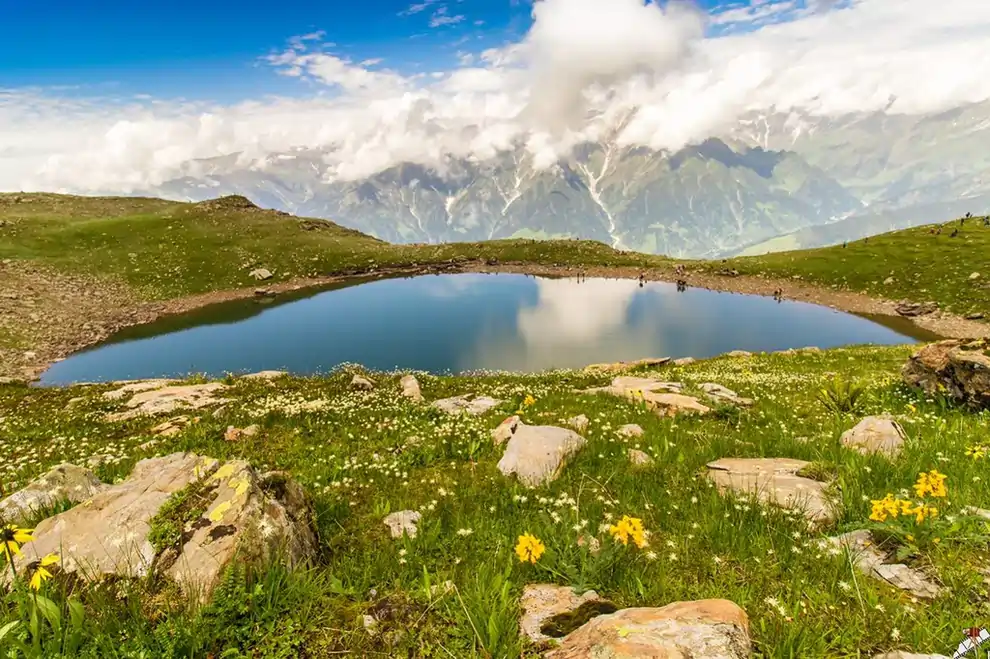
Bhrigu Lake Trek
A 3-day, 2-night guided Bhrigu Lake trek from Manali to a sacred alpine lake at about 4,300 m,…
Hampta Pass Trek runs 5 days in Himachal Pradesh, graded Easy, from Rs 5,499 per person.
The pass crossing: A steep climb on the third day ends at the narrow saddle, with views of snow peaks on one side and the Lahaul valley on the other. You camp beside a stream at Jobra, in the meadow of Balu ka Ghera, below the pass at Shea Goru and on the Chandra River at Chatru. Wildflowers and old forest: Between Jobra and Balu ka Ghera the trail passes through oak and pine forest, then opens onto meadows with seasonal flowers in July and August. Shea Goru: A high, quiet campsite on the Lahaul side with a river running past and rock walls on all sides. By road: Manali is roughly 540 to 550 km from Delhi, and overnight buses usually take 12 to 15 hours. Clothing: Quick-dry layers, a fleece, a warm padded jacket, a rain jacket or poncho, thermals for the nights, a warm hat, gloves and a spare set of clothes Footwear: Waterproof trekking shoes with a firm grip, spare socks and slippers or sandals for camp. Health and safety: Personal medication, a small first-aid kit, sunscreen, sunglasses, lip balm, moisturiser, insect repellent and an emergency whistle Balu ka Ghera: A broad glacial meadow at around 3,600 m, ringed by peaks and crossed by streams. Day 4, Shea Goru to Chatru: A walk down the Lahaul side along the river, with several stream crossings, to the camp at Chatru on the banks of the Chandra. Day 5, Chandratal and return: An optional excursion to Chandratal Lake, followed by the drive back to Manali by way of Rohtang Pass.
At 4,270 m the thin air is the real constraint on the Hampta Pass Trek, so the upper stretch is walked slowly and altitude symptoms are reported early.
The published window for the Hampta Pass Trek is mid-June to September, with early October possible in a dry year. Outside that window the Hampta Pass Trek becomes a different landscape rather than simply worse weather.
The Hampta Pass Trek assembles at Delhi, and the day numbering runs from that point. Reporting times and the exact pickup point for the Hampta Pass Trek are confirmed on booking.
The Hampta Pass Trek is a realistic first outing, since its 5 days are short enough that fitness is not the barrier. Families with older children and anyone returning to walking after a break fit the Hampta Pass Trek comfortably. Solo travellers move inside a led group on the Hampta Pass Trek, so the pace is collective rather than personal.
Layers do more work than any single jacket on the Hampta Pass Trek, because the temperature at 4,270 m bears little relation to the trailhead. Footwear decides the day on the Hampta Pass Trek: loose stone and wet ground cause most slips, and a worn sole is the usual reason people struggle on the descent. Carry two litres of water each on the Hampta Pass Trek, a small first-aid kit, a head torch for pre-dawn walking, and food already tested on a training walk.
At 4,270 m on the Hampta Pass Trek, altitude illness is the main risk rather than the ground, so walk slowly and report a persistent headache or nausea immediately. A certified leader carries first aid and safety kit on the Hampta Pass Trek and reviews the forecast each morning, so the plan stays provisional until conditions are known. Travel insurance that covers trekking at this altitude is worth the small extra cost and is not part of the Hampta Pass Trek price.
The Rs 5,499 price of the Hampta Pass Trek covers accommodation on the itinerary, the listed meals, a certified leader with support crew, applicable permits and entry fees, and the safety equipment carried. Excluded from the Hampta Pass Trek are travel to the assembly point unless the itinerary says otherwise, personal kit and clothing, insurance, and anything the inclusions list does not name.
Two valleys in one trek: The climb out of the green Hampta Valley and the descent into the barren Lahaul side is the real draw. Chandratal Lake: An optional excursion by road to a high-altitude lake whose colour changes with the light. Chatru and the Chandra River: A camp on the riverbank in a dramatic, open landscape that feels very different from where you began. Day 3, Balu ka Ghera to Shea Goru via Hampta Pass: The big day. The Hampta Pass trek crosses the Pir Panjal range at roughly 4,270 m (about 14,000 ft) and links two very different valleys. You finish in Lahaul, where the land turns dry, rocky and wide open, with the Chandra River running through it. Day 2, Jobra to Balu ka Ghera: A day of steady walking through forest beside the stream, with a stop at Chika on the way, ending in the alpine meadow of Balu ka Ghera. You leave early, climb to the pass at about 4,270 m, then descend steeply to the Shea Goru campsite. By air: The nearest airport is Kullu-Manali Airport at Bhuntar, about 50 km from Manali. Mules carry the main luggage, so pack light and keep your daypack for water, snacks, a rain jacket and a warm layer The trek is typically done from mid-June to September , and some seasons stretch into early October. Monsoon rain and landslides can also affect the road between Manali and Jobra, so delays are possible. You start in the forested Kullu side near Manali, where pine, oak and meadow flowers cover the slopes.
Browsing by region or activity is often faster than reading individual pages, so start with Manali and Trekking. The closest alternatives to the Hampta Pass Trek are Bhrigu Lake Trek, Beas Kund Trek and Friendship Peak Expedition, which suit anyone comparing dates or a slightly different grade.
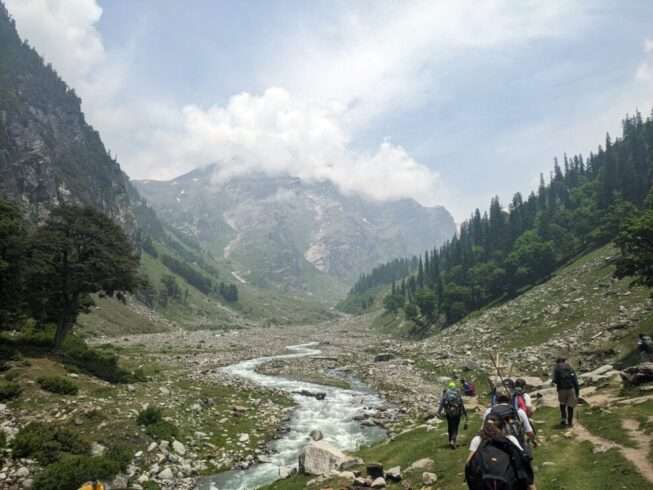
The Hampta Pass trek crosses the Pir Panjal range at roughly 4,270 m (about 14,000 ft) and links two very different valleys. You start in the forested Kullu side near Manali, where pine, oak and meadow flowers cover the slopes. You finish in Lahaul, where the land turns dry, rocky and wide open, with the Chandra River running through it. Few Himalayan treks pack such a sharp change of scenery into so few days.
This is a five-day package that starts and ends at the base in Manali. You camp beside a stream at Jobra, in the meadow of Balu ka Ghera, below the pass at Shea Goru and on the Chandra River at Chatru. The route was once used by shepherds and herders moving between the valleys, and parts of the trail still follow their old paths. It suits fit beginners who are ready for one long, demanding day, and it also appeals to experienced trekkers who want a short pass crossing.
Day 1, Manali to Jobra: A drive of around an hour takes you from Manali to Jobra, where you set up camp. In the evening there is a gentle acclimatisation walk along the Rani Nala stream.
Day 2, Jobra to Balu ka Ghera: A day of steady walking through forest beside the stream, with a stop at Chika on the way, ending in the alpine meadow of Balu ka Ghera. Expect around five to six hours on the trail.
Day 3, Balu ka Ghera to Shea Goru via Hampta Pass: The big day. You leave early, climb to the pass at about 4,270 m, then descend steeply to the Shea Goru campsite. Plan for nine hours or more on your feet.
Day 4, Shea Goru to Chatru: A walk down the Lahaul side along the river, with several stream crossings, to the camp at Chatru on the banks of the Chandra.
Day 5, Chandratal and return: An optional excursion to Chandratal Lake, followed by the drive back to Manali by way of Rohtang Pass. The trek ends in Manali. The full plan, with timings and meals, is in the itinerary section of this page.
The name Balu ka Ghera roughly means a ring of sand, a reference to the open ground at the head of the valley. It sits at around 3,600 m near a glacier, and nights are cold even in midsummer. This is where you first feel the altitude, so rest well and drink plenty of water. The pass itself is a narrow gap between rocky ridges. The way up mixes scree and, early in the season, snow, and the steep descent on the far side is hard on the knees, so trekking poles are worth carrying. Altitudes quoted for the campsites vary a little between sources, so treat all figures here as approximate.
The trek is typically done from mid-June to September, and some seasons stretch into early October. In late June and early July there can still be snow on the pass, which makes the climb more demanding and the stream crossings colder. July and August bring green meadows and flowers, but also rain and cloud, particularly on the Manali side, with swollen streams and slippery sections. September usually offers clearer skies and steadier weather, with lower water in the streams.
Winter and early spring are not suitable. Heavy snow covers the pass, the road to Chatru is usually closed and the route is considered unsafe for regular groups. Monsoon rain and landslides can also affect the road between Manali and Jobra, so delays are possible. Check the forecast before you travel and follow your trek leader’s decision if conditions change.
The trek is rated moderate. Most days involve four to six hours of walking, but the third day is much harder. You climb from about 3,600 m to the pass at about 4,270 m, then lose a great deal of height on a steep, rocky descent. That day can take nine hours or more, so it is the one to prepare for.
There are also stream crossings, some on stepping stones and some through cold, knee-deep water. The risk is greater in July and August, when the water runs higher and faster. Your guide will choose the safest place to cross.
Start building fitness at least four to six weeks before you go. Aim for brisk walking, jogging or stair climbing for 40 minutes, four or five times a week, and add a loaded backpack on weekends. Leg strength helps with the descent, so include squats and lunges. If you have a heart, lung or blood pressure condition, speak to a doctor before you book.
The package starts at the base in Manali, and transport to and from the base camp is not included, so you will need to arrange this yourself. Plan to arrive a day early, since a late bus can cost you the first day.
Trekking poles, boots and personal gear are not included in the package, so bring your own or rent them in Manali.
Your team includes a certified guide and support staff, and a first-aid kit travels with the group. Even so, a few habits matter more here than on lower treks. Stay with the group and walk at the pace the guide sets. Do not trek after dark. Cross streams only where the guide points, and unbuckle your rucksack hip belt first so you can slip it off if you fall.
The pass day needs an early start. Weather in the high Himalaya often turns in the afternoon, with cloud, wind or rain, so you want to be over the top and descending by midday. If your guide turns the group back or changes the plan, treat it as a safety decision rather than a disappointment.
Altitude is part of the picture too. You sleep at about 3,600 m the night before the pass, so tell your guide about any headache, nausea or breathlessness. Do not climb higher with symptoms that are getting worse.
The Hampta and Lahaul landscapes are fragile. Carry out all your waste, including wrappers and tissues, avoid single-use plastic, keep to existing paths on the meadows and do not pick flowers. Keep noise down at camp, and respect local shepherds and their animals.
The Hampta Pass trek suits fit first-time trekkers who want a proper pass crossing, friends and small groups, and solo travellers who prefer a guided group. It also works well for experienced trekkers who have only a week free. It is less suitable for anyone with a heart or lung condition, people who dislike cold nights or river crossings, or those looking for a very easy walk with no steep climbing.
If you are comparing options, these related Hampta treks may help:
The Hampta Pass Trek runs for 5 days. The day-by-day itinerary above lists each stage, walking distance and overnight stay.
The Hampta Pass Trek is rated Moderate by WDRLUST. It suits trekkers with some prior walking experience and steady fitness. Training with 45 to 60 minutes of cardio three times a week for six weeks before departure is enough for most people.
The Hampta Pass Trek starts at Rs 5,499 per person. The price covers the inclusions listed on this page. Transport to the starting point, personal gear and anything not listed under inclusions are extra.
The route reaches approximately 4,270 m. Walk slowly, drink water and report any headache or nausea to your trek leader.
Group size is capped at Max 12 trekkers per departure, with a certified trek leader. Smaller groups mean faster head counts and more attention on the trail.
The Hampta Pass Trek starts from the base location described in the itinerary above. WDRLUST shares exact meeting points, reporting times and transport options on booking confirmation. The nearest major access region is Manali.
Most people searching for the Hampta Pass Trek are not in Manali. They are in Bengaluru, planning a five-day window around a weekend, and the questions that decide the booking are not the ones a generic trek page answers. This section covers the four that come up most: the real all-in cost from Bengaluru, which months are genuinely safe, what “moderate” means on this specific trail, and what happens when it rains.
The trek fee is Rs 5,499 per person. That is the number on the booking page, and it is not the number that leaves your account. A realistic all-in budget from Bengaluru looks like this:
In practice, a Bengaluru trekker should plan on Rs 20,000 to Rs 28,000 all-in for the Hampta Pass Trek, of which the trek fee is roughly a quarter. The single biggest variable is airfare, and the single biggest saving is booking the flight eight or more weeks out. If you can only take five days off, flying into Chandigarh rather than Delhi usually saves a full day of road travel in each direction, which is often worth the higher fare.
The trek runs mid-June to early October. Within that window the experience changes sharply:
Outside mid-June to early October the pass is generally not run as a commercial trek. Do not book a departure in late October or November on the assumption that it will go ahead.
Hampta Pass is graded Moderate, and that grade is accurate but incomplete. The daily distances are not long, roughly 25 km over the trek, and there is no technical climbing. What makes it feel harder than the grade is the pass day: a long, sustained climb to about 4,270 m followed by a steep descent into Lahaul, all in one day, often starting before dawn. Altitude is the other factor. You go from Manali at about 2,050 m to a camp at 3,600 m in two days, which is fast enough that some trekkers feel the height on the second night.
If you trek regularly in the Western Ghats around Bengaluru, you have the leg strength for this. What you do not have is altitude exposure, and that is the part to prepare for. Three to four weeks of regular cardio before departure, plus a deliberate slow pace on the climb to Balu ka Ghera, makes the difference.
Rain on the Hampta Pass Trek is not a reason to cancel, but it changes the day. The trail between Jobra and Balu ka Ghera crosses several streams and a section of slippery rock; in heavy rain these become the slowest part of the route. The pass day itself is usually above the weather, but the descent into Lahaul on wet rock demands care. Operators running in July and August build in buffer time and will hold a group at camp rather than push through a landslide-prone section. Carry a proper rain shell rather than a poncho, dry bags for your sleeping bag, and footwear with real grip. If your dates are fixed to the monsoon and you are not comfortable with uncertainty on the road leg, the Sar Pass Trek runs in a similar window with a shorter approach.
Fly Bengaluru to Delhi or Chandigarh on a Friday night or early Saturday. Take the road transfer to Manali the same day, arriving by evening. Report for the trek the following morning. On the return, the trek typically ends at Chatru or Jobra with a transfer back to Manali, so plan to fly out the day after the trek ends rather than the same evening. That sequence needs five nights away from Bengaluru for a five-day trek, which is the honest arithmetic most people miss when they book.
Explore related pages: All treks in Manali · Treks in Himachal Pradesh · Trekking in India · Browse all destinations · All activities.
Meet the team in Manali and drive to Jobra, the start of the trail, through pine forest. Set up camp beside the stream, then take a gentle acclimatisation walk along the Rani Nala in the evening. Transport to and from the base camp in Manali is not included in the package, so arrange your own way to the meeting point.
Follow the Rani Nala through oak and pine forest, with a stop at Chika on the way, and climb gradually to the open alpine meadow of Balu ka Ghera. This is the last campsite before the pass, and the nights are cold, so layer up early and drink plenty of water.
The big day. Leave early so you are over the top before the afternoon weather turns. Climb steeply to Hampta Pass, with snow peaks on one side and the Lahaul valley on the other, then descend a long, rocky slope to the Shea Goru campsite. Trekking poles help a lot on the descent.
Walk down the dry, open Lahaul side along the river, with several stream crossings. Your guide will choose the safest crossing points. Reach Chatru on the banks of the Chandra River and camp for the night.
An optional excursion by road to Chandratal Lake, at about 4,300 m, depending on road and weather. Then drive back to Manali by way of Rohtang Pass. The trek ends in Manali.


A 3-day, 2-night guided Bhrigu Lake trek from Manali to a sacred alpine lake at about 4,300 m,…
Beas kund Trek Introduction: Nestled in the heart of the Himalayas, the Beas Kund trek stands as a…
Introduction Nestled in the lap of the Himalayas, the Hampta Pass Trek stands as a testament to the…