
Moderate

Savandurga Trek
Introduction to Savandurga trek Overview: Savandurga hill, standing at an elevation of 1,226 meters above sea level, is…
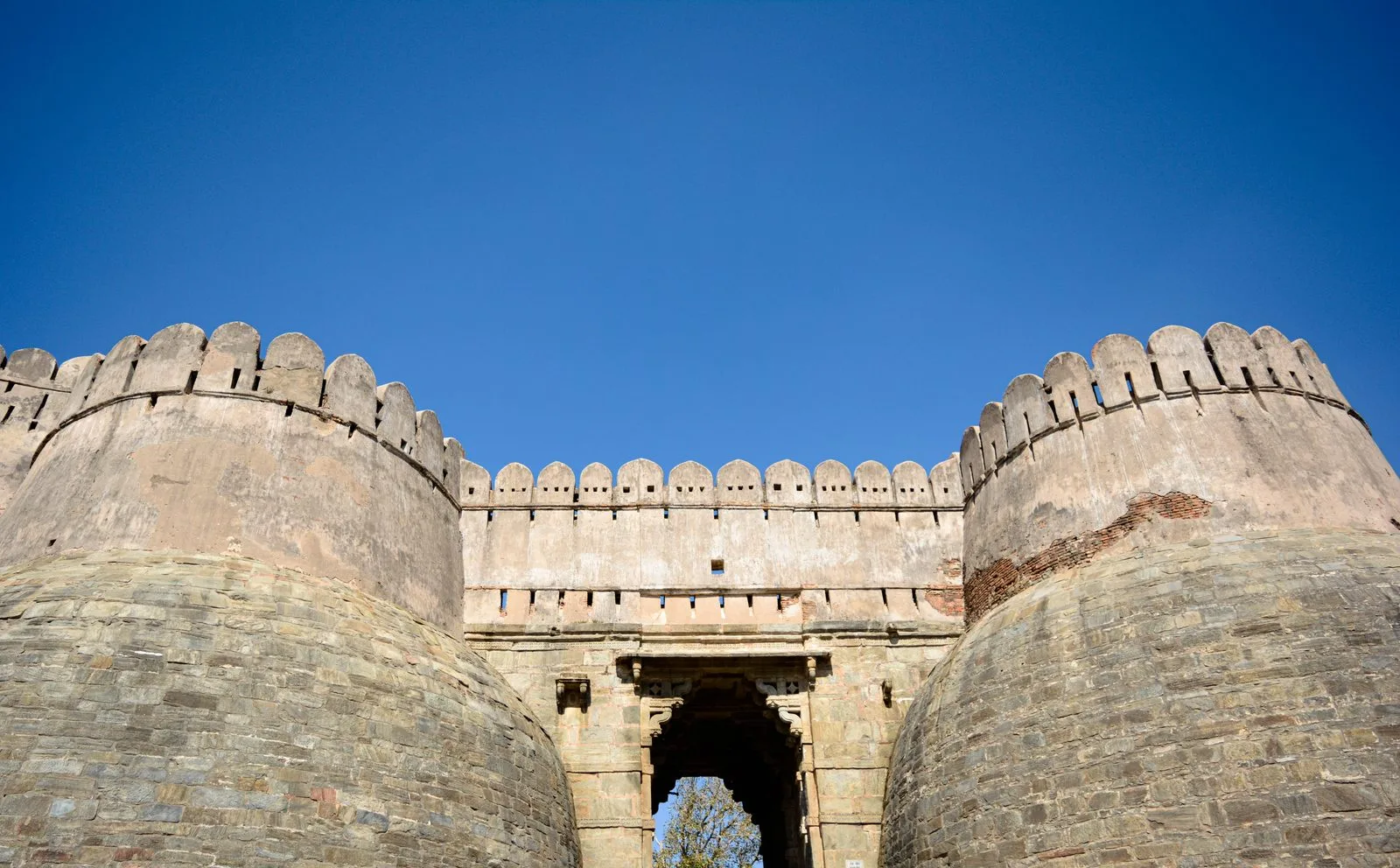
Kumbhalgarh Fort Trek runs 2D/1N from Udaipur, graded Easy, from Rs 4,200 per person. Route: Udaipur – Kelwara – Kumbhalgarh Fort ramparts – Badal Mahal – Kumbhalgarh Wildlife Sanctuary – Ranakpur – Udaipur.
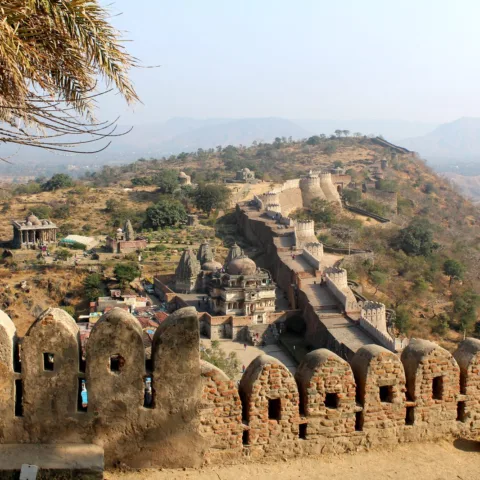
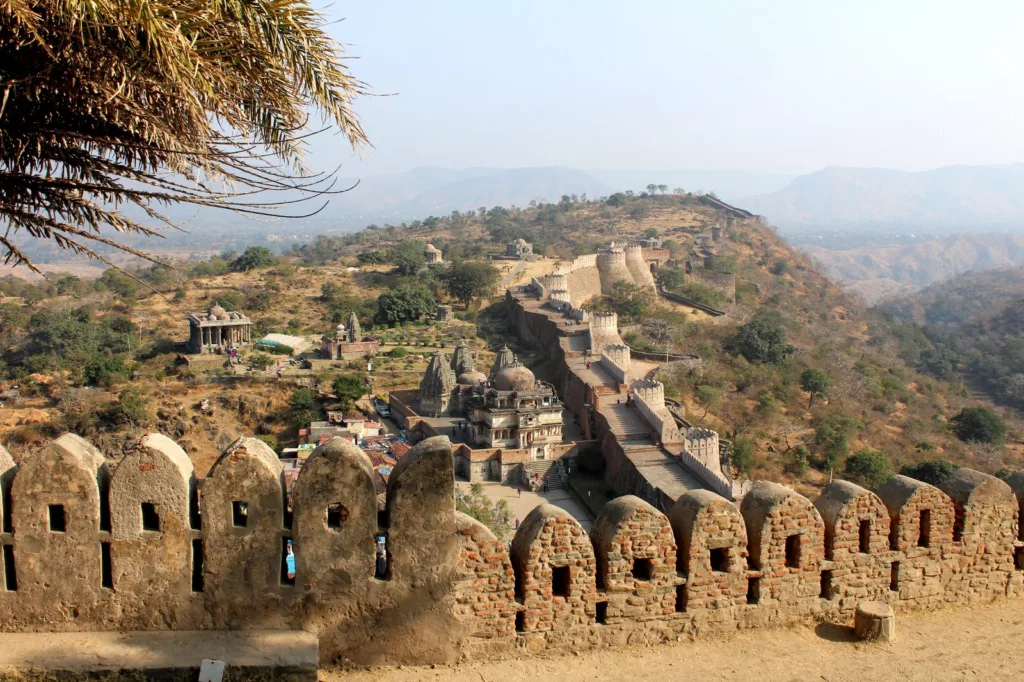
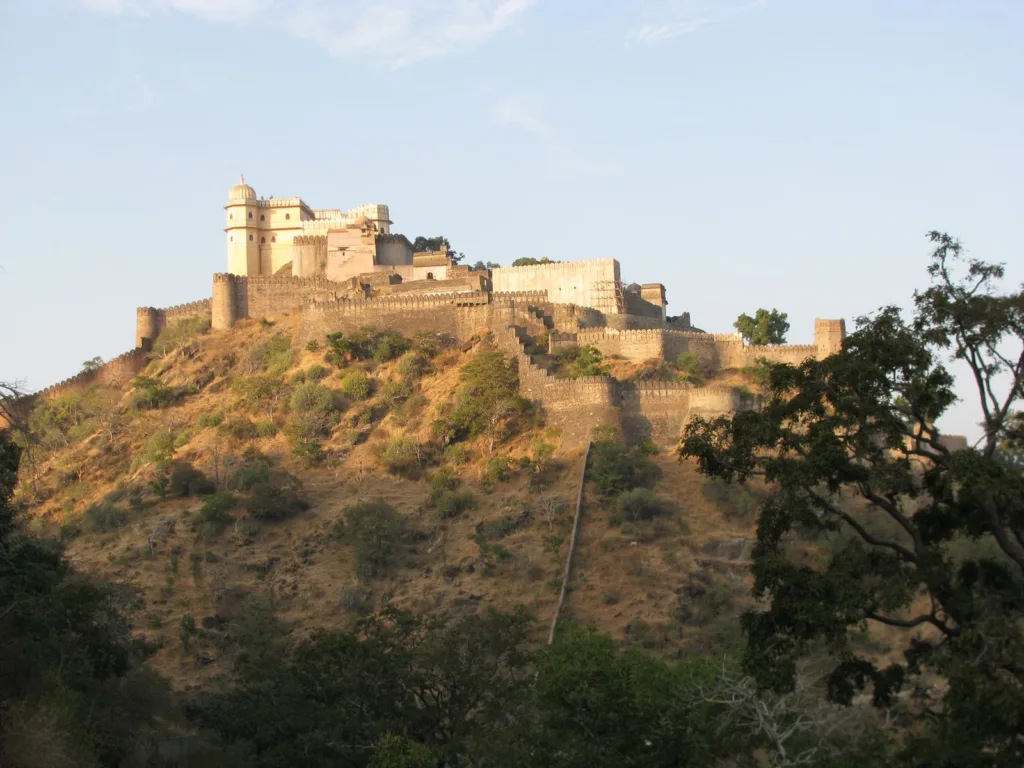
This is a walking trip built around a wall, and the wall is the reason to come. Kumbhalgarh’s fortification runs for something close to 36 kilometres along the Aravalli ridge, which makes it one of the longest continuous defensive walls in the world after the Great Wall of China. Walking a stretch of it, with the battlements on one side and a several-hundred-metre drop on the other, is a different experience from climbing a peak. There is no summit to reach, no altitude to acclimatise to, and no technical ground. The work is in the length of the day, not in the difficulty of any single step.
Rajasthan is usually sold through its cities, and the Aravallis are the part of the state that gets left out. The range is old and low and heavily eroded, more a line of rocky ridges than a mountain chain, and Kumbhalgarh sits at roughly 1,100 metres on one of the highest of them. That elevation is enough to take the edge off the plains heat, which is why the fort was built there and why the forest around its base has survived as the Kumbhalgarh Wildlife Sanctuary.
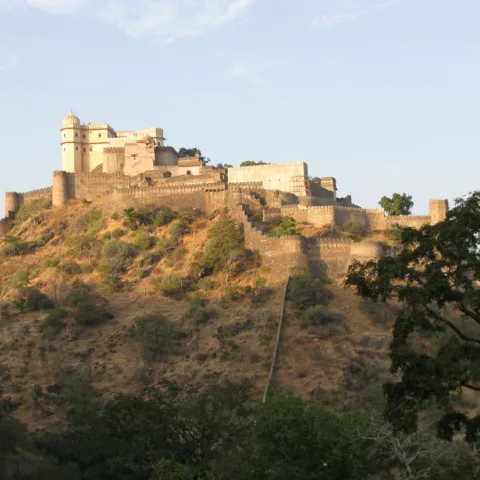
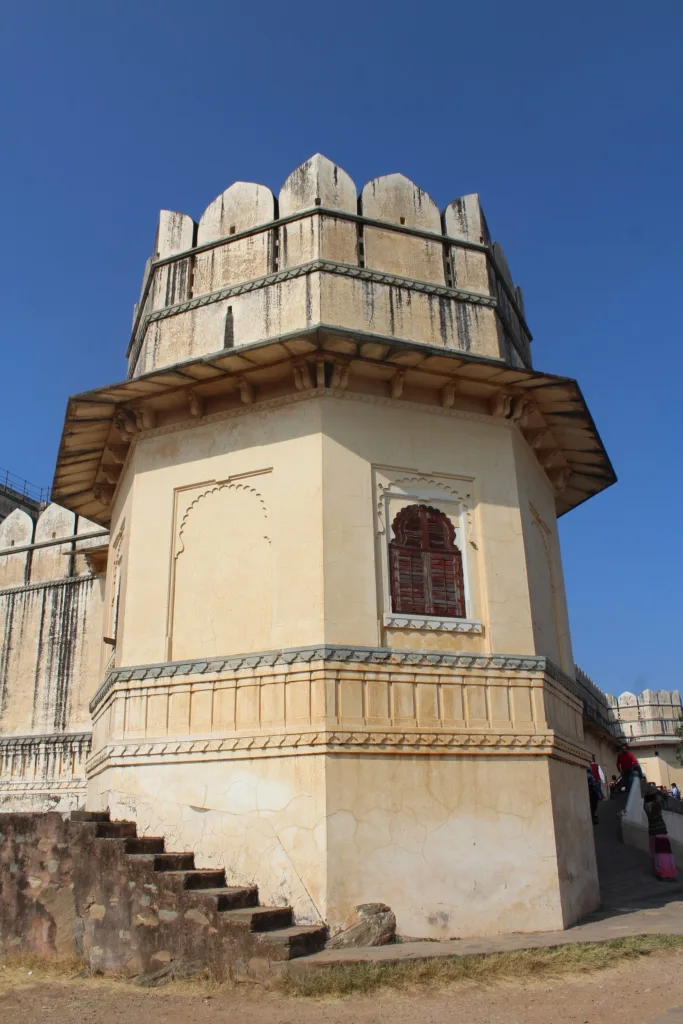
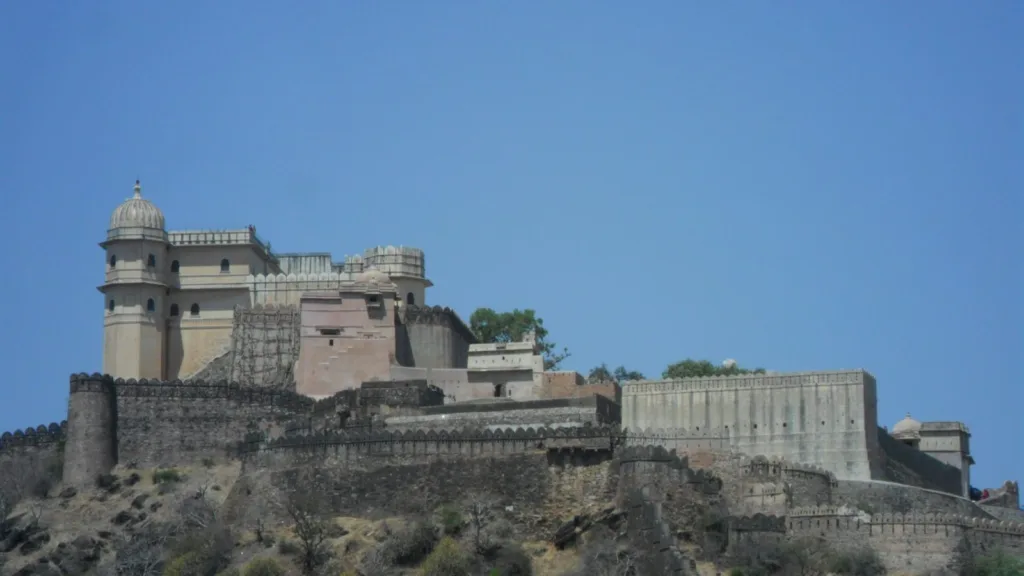
The fort itself was raised in the fifteenth century by Rana Kumbha of Mewar, and it is the place Maharana Pratap was born in 1540. Inside the walls are the remains of several hundred temples, the great majority of them Jain, along with palaces, granaries and stepwells, most of them in the condition that several centuries of neglect leave things in. At the top stands the Badal Mahal, the Palace of Clouds, which looks out over the whole ridge. It is a fort that was stormed only once in its history, and the walk up to the Badal Mahal makes the reason obvious: the approach is long, exposed and easy to hold from above.
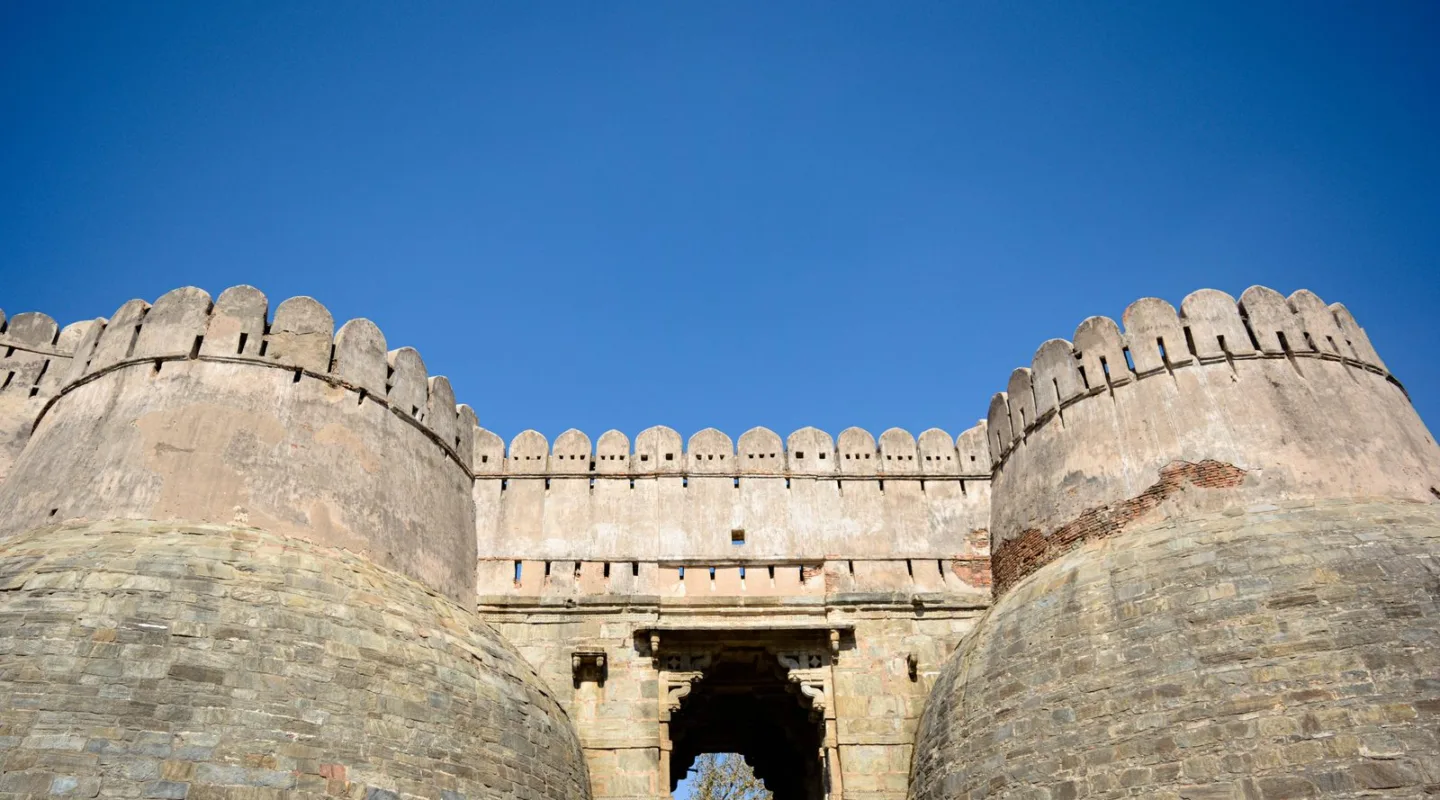
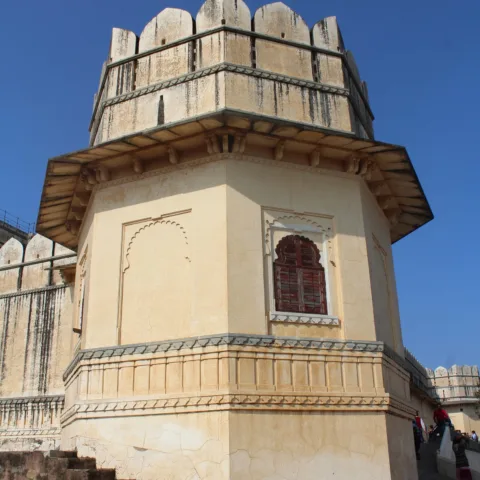
The first day is the fort. You come in through Ram Pol, the main gate, and work up through the outer gates and the ruined settlement inside them. From there the walk follows the curtain wall north towards the Badal Mahal, past the point where the wall runs out along a spur with the sanctuary falling away below it. The surface is stone and hard-packed earth, and parts of the wall-walk are unfenced, so this is not a place to walk in a loose line or to stop for a photograph with your back to the drop.
The second morning moves below the fort. Kumbhalgarh Wildlife Sanctuary covers the slopes on the western side, and the trails through it are wide forest tracks rather than footpaths, cut through dry deciduous woodland of dhok, khair and bamboo. This is wolf and sloth bear country, and four-horned antelope and leopard are resident, though on a morning walk in a group you should expect to see birds and langurs rather than anything large. Permits are required and the forest department controls entry, which is part of what the trip fee covers.
The drive back to Udaipur goes by way of Ranakpur, where the fifteenth-century Jain temple complex – all white marble, 1,444 carved pillars, no two of them the same – sits in a fold of the same hills. It is a twenty-minute stop that most fort trips skip because of the detour, and it is worth the hour.
Anyone who can walk eight to ten kilometres in a day over stone and uneven ground will manage this comfortably. There is no exposure that requires a rope, no scrambling, and the total height gained across both days is modest, since the fort sits on the ridge rather than above it. What it asks for is footwear with grip and a reasonable head for heights on the wall-walk sections.
It suits people who want history with their walking, and it suits mixed groups – couples, families with teenage children, and older walkers – better than a summit trek would. Solo travellers fit the group format easily. If you are looking for sustained climbing and big altitude, this is not that trip; the Rajasthan and Mewar fort treks are about distance, heat management and what you are walking through.
The Rs 4,200 covers one night in a homestay near Kelwara on twin and triple sharing, breakfast on both days and dinner on the first, all transport from Udaipur in an air-conditioned vehicle, the fort entry fees, the sanctuary permit, and a trip captain throughout. GST at 5%, lunches, insurance, and anything not listed under inclusions are extra. The one cost people underestimate is water: two days on a ridge in Rajasthan runs through three to four litres a day, and the fort has no reliable supply beyond what is sold at the gate.
October to March is the window. Days are warm but walkable, nights near Kelwara drop to single figures in December and January, and the light on the ridge is clear. April to June is too hot to walk the exposed wall comfortably in the middle of the day. July to September brings the monsoon, when the Aravallis turn green and the sanctuary is at its best, but the stone wall-walk becomes slippery and the forest department restricts some trails.
It is graded Easy. There is no technical ground, no rope work and no sustained steep climb, because the fort sits on the ridge rather than above it. The demands are distance and heat: around eight to ten kilometres of walking across the two days, much of it on stone, with very little shade. Anyone used to a full day on their feet will be comfortable.
The fort stands at roughly 1,100 metres above sea level. That is well below any threshold where altitude illness is a concern, and there is nothing to acclimatise to. The elevation matters for a different reason: it takes the edge off the plains heat and gives the ridge its evening breeze, which is why the Badal Mahal was built where it was.
Yes. The group format, the shared homestay and a trip captain throughout make it straightforward, and the pace leaves room to talk to the rest of the group. Couples and families also fit well, which is unusual for a trek departure and is one of the reasons this trip exists.
A homestay near Kelwara, the small town at the base of the fort, on twin and triple sharing. The properties used are simple and family-run rather than resort-style, with hot water and basic meals, and they put you ten minutes from the gate rather than an hour away in Rajsamand.
Yes, entry to Kumbhalgarh Wildlife Sanctuary is controlled by the forest department and a permit is required; it is included in the trip fee and arranged by the trip captain. Mobile coverage is reliable in Kelwara and around the fort gate, patchy on the ridge and largely absent on the forest tracks inside the sanctuary. Download what you need before you leave Udaipur.
Kumbhalgarh sits in Rajsamand district, about 85 km from Udaipur, on one of the highest ridges of the Aravallis at roughly 1,100 m. WDRLUST runs it as a two-day walking trip with weekly Friday departures from Udaipur, built around the fort wall and the sanctuary below it.
The trip price is Rs 4,200 per person:
Plan on Rs 5,000 to Rs 5,900 all-in. Coming from Delhi or Mumbai, add the return fare to Udaipur, which is the largest single line in the budget and worth booking early.
Day one is six to seven kilometres on the fort, most of it on the wall-walk and the gate approaches, with perhaps 200 m of gain spread across the day. Day two is three to four kilometres on forest tracks inside the sanctuary, which is flat by comparison. Total is under twelve kilometres across two days, and the climb is never sustained.
The thing to know is that the surface is the difficulty, not the distance. The wall-walk is old stone, worn smooth in the middle and loose at the edges, and parts of it are unfenced. Walking poles help more here than they would on a mountain trail.
Rajasthan’s problem is not rain, it is the sun and the dry air. On the ridge there is almost no shade between the gates, and the stone throws heat back at you. The trip is timed to put the exposed sections in the early morning and late afternoon, with the middle of the day spent inside the fort’s structures or back at the homestay.
Water is the other thing. Four litres a day per person is not an exaggeration on this route, and the only reliable supply is at the fort gate and in Kelwara. Carry it rather than assuming you will buy it on the wall.
The standard shape is a morning departure from Udaipur, arrival at Kelwara by midday, an afternoon on the ramparts finishing at the Badal Mahal for the late light, a night at the homestay, a forest morning on day two, Ranakpur on the way back, and a Udaipur drop by evening. Because the drive is short, this trip does not eat a night in transit the way a Himalaya departure does, which is why two days is enough.
Explore related pages: All trips in Rajasthan · Browse all destinations · All activities · Rajasthan destination guide · Trekking in India.
Photo credits. Photographs on this page are from Wikimedia Commons and are used under the licences listed below. Each image is credited to its photographer; the licence terms apply to reuse of the image.
Introduction to Savandurga trek Overview: Savandurga hill, standing at an elevation of 1,226 meters above sea level, is…
A four-day trek that opens with a mirror-still Himalayan lake and closes with a sunrise summit view spanning…
Overview of the Dev Deepawali Varanasi 2025 Dev Deepawali Varanasi 2025 runs 5 days in India, graded Moderate,…