
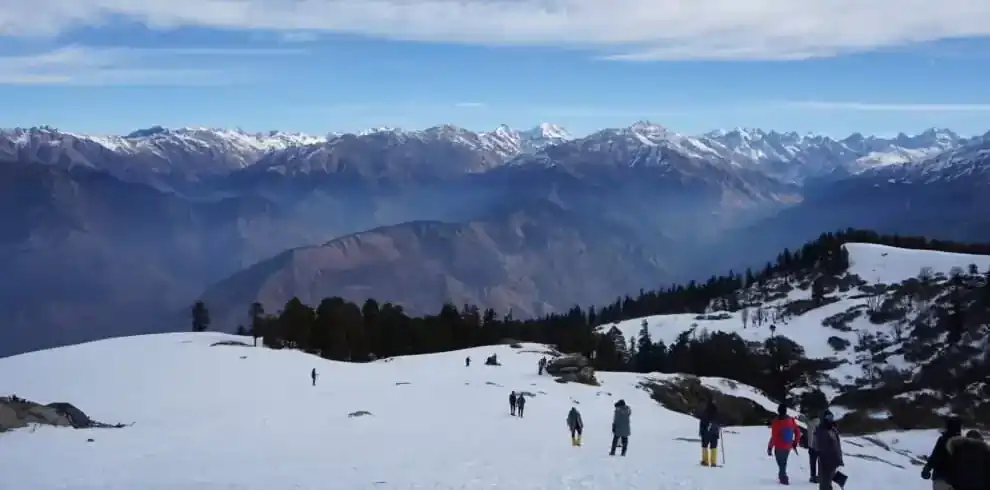
Every November, the same thing happens across the Uttarakhand winter treks corridor of the Garhwal Himalaya. The monsoon is three weeks gone, the air has that scrubbed, dust-free clarity that photographers chase, and then a western disturbance rolls in and dusts the high ridges white. By the time the photographs hit social media, half of India has decided it wants to stand on a summit in the snow — and the December fixed departures are already two-thirds gone.
So let us be useful before the rush. Here is what the snow season actually looks like in Uttarakhand right now, which of our winter routes suit which kind of trekker, and — the part most trek pages skip — what “snow trek” honestly means in November versus late December.
The honest version first
November is a shoulder month, not full winter. Above roughly 3,500 m you will find the season’s first light snow. The villages and lower camps where most winter treks begin — Sankri, Lohajung, Barsu, Pantwari — usually sit on bare trail through the month.
If your reason for going is guaranteed walking on snow, book for late December through February. If your reason is clear skies, empty trails and the first taste of cold, November is genuinely the best-value window of the year.
How snow arrives on Uttarakhand winter treks, month by month
Uttarakhand snowfall does not switch on. It climbs down the mountain. The highest shrines and peaks start collecting snow in late October. The band between 2,500 and 3,000 metres — where Chopta, Auli and the upper meadows sit — typically sees its first proper cover from late November into December. Below 2,000 metres, towns like Nainital and Mussoorie may go an entire winter without meaningful snow.
| Altitude band | First snow | What it means for your trek |
|---|---|---|
| Above 3,500 m | Late Oct onward | Summit ridges and high passes whitened; full winter gear from here |
| 2,500–3,000 m | Late Nov to Dec | Meadows and upper camps take cover; this is the “snow trek” band most people picture |
| 2,000–2,500 m | Dec to Feb, stronger spells | Trail-level snow in good winters, patchy in poor ones |
| Below 2,000 m | Rare | Base villages and roadheads usually stay clear all season |
That table is the single most useful thing you can carry into a booking decision. It is also why two people can do “a winter trek in Uttarakhand” in the same week and come back with completely different stories.
1. Kedarkantha — the summit most first-timers picture
Kedarkantha Trek
5 daysModerateFrom ₹5,999
If a snow trek in India has a default answer, it is this one, and the reputation is deserved rather than manufactured. The route starts at Sankri inside the Govind Pashu Vihar National Park area of Uttarkashi district and climbs through pine and oak forest, past Juda ka Talab — a small forest lake that freezes over in winter and gives the second day its whole character — and out onto open snow meadows below the summit at around 3,800 m.
What makes it work as a first winter summit is the shape of the effort: four days of steady climbing and acclimatisation before a single early summit push, then a descent to Hargaon. The altitude is real but not extreme, and the reward is disproportionate — on a clear day you get several well-known Garhwal peaks in one sweep rather than one photogenic cone.
Our listing grades it Easy to Moderate at five days from ₹5,999 per person. In practice the summit day is the honest test: a pre-dawn start, real cold, and a ridge that can be wind-scoured ice. Waterproof boots with genuine grip and gaiters are not optional in December and January.
Kedarkantha is the trek people book for the photograph. It is the descent — four hours of knees and slush and quiet — that they actually remember.
2. Brahmatal — the one with the view that never stops
Brahmatal Trek
6 daysModerateFrom ₹9,500
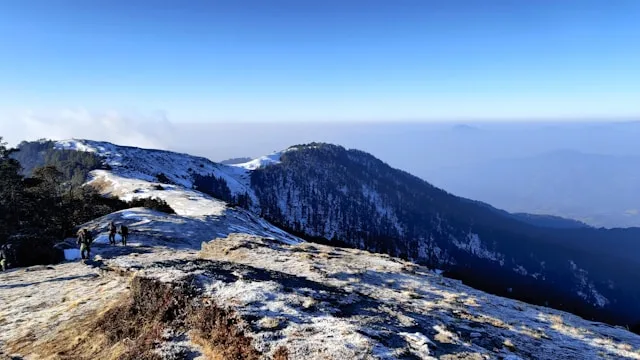
Brahmatal’s advantage over almost every other winter route in the region is structural: the big mountains are visible for most of the trek, not saved for a final reveal. Trishul and Nanda Ghunti stand directly across the valley in a panorama unobstructed enough that this has become one of the most photographed winter treks in the Garhwal Himalaya.
The lake itself — the trek’s emotional centrepiece, usually reached on day three — is a modest frozen tarn tucked into a natural bowl and ringed with rhododendron. Groups tend to pause there for a long rest before the final morning push to Brahmatal Top.
Start point is Lohajung, the pass village that also serves Roopkund and the Ali-Bedni meadows. That matters for a practical reason: the local guides here know this route intimately and read snow stability and weather shifts that a first-time visitor simply cannot. Solo winter attempts on this trail are strongly discouraged, and rightly so.
Six days, Moderate, from ₹9,500 per person. The extra day over Kedarkantha buys you the thing that makes Brahmatal worth it — time at altitude with the peaks in front of you rather than a single summit morning.
3. Dayara Bugyal — the gentlest way into snow
Dayara Bugyal Trek
4 daysEasyFrom ₹6,200
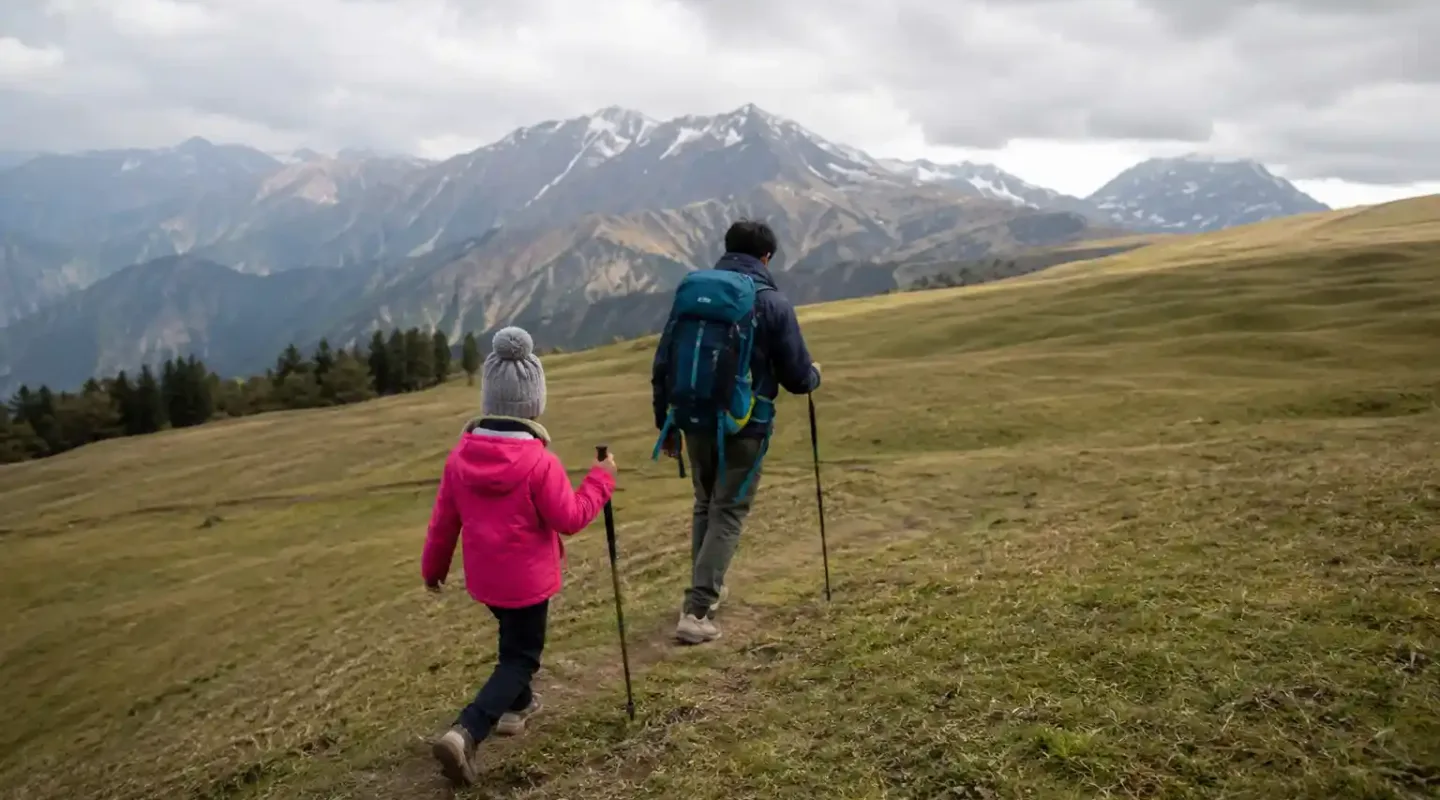
Of everything on this list, Dayara is the one we would hand to a family, a group of friends with mixed fitness, or anyone doing their first cold-weather trek. The access is short — Uttarkashi is five to six hours from Dehradun, and the start is a further short drive to Barsu or Raithal — and the payoff is a grassland expanse spread across several square kilometres at over 3,000 metres.
In winter the meadow takes on a smooth, largely untouched layer of snow, and the gradients are gentle enough that groups can practise basic snow skills — including short controlled slides — without any of the steeper technical demands of a higher pass. It is where people learn to walk on snow rather than survive it.
The panorama rings the meadow’s northern edge like an amphitheatre: Bandarpoonch, Kala Nag, Draupadi ka Danda, Jaonli. And because the meadow is still used by villagers as summer grazing ground, it has stayed one of the least commercially developed high-meadow treks within easy reach of Uttarkashi.
Four days, Easy, from ₹6,200 per person, max group of 18.
4. Chopta–Chandrashila — the most efficient panorama in India
Chopta Chandrashila Trek
4 daysEasyFrom ₹6,500
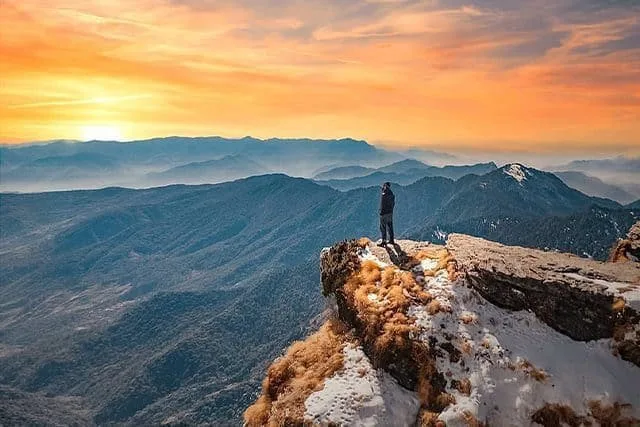
Most Himalayan summit points demand a multi-day approach through remote wilderness before they let you see anything. Chandrashila does not. It is reachable as a single push from Chopta, which is why its reward-to-effort ratio is arguably unmatched in the Indian Himalaya: an unbroken 360-degree sweep that includes Nanda Devi, Trishul, Kedarnath, Bandarpoonch and Chaukhamba, all together on a clear morning.
The first major landmark is Tungnath, part of the revered Panch Kedar circuit of five Shiva temples in Garhwal and the highest of them. Above it, the ridge continues to Chandrashila. A short detour to Deoriatal — a still, forest-ringed lake reflecting the same Chaukhamba massif — can be added with a spare day and makes a gentler bookend to the trip.
Chopta’s “Mini Switzerland of India” label is hyperbolic, but not entirely without reason: a small meadow-village of rolling grassland and dense conifer forest at a comfortable altitude, functioning as base for one of the state’s most rewarding short treks.
Four days, Easy, from ₹6,500 per person. Note that Chopta sits in the 2,500–3,000 m band, so its first proper snow usually arrives from late November into December — this is the trek on the list where a December booking makes the biggest visual difference.
5. Nag Tibba — the weekend snow summit
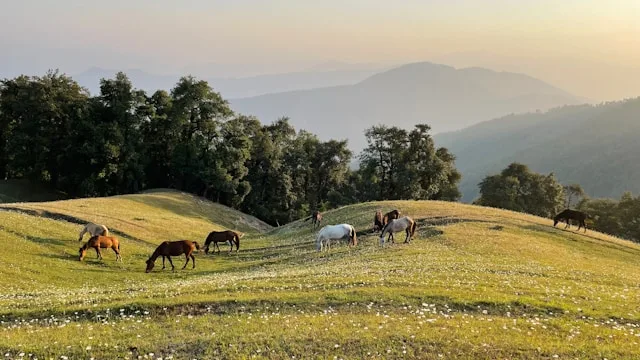
Nag Tibba Trek
2 daysEasyFrom ₹3,200
Nag Tibba means “Serpent’s Peak” in the local Garhwali dialect, named for a small temple near the summit dedicated to a snake deity worshipped by villages in the surrounding valleys as a protector of livestock. At 3,022 m it is modest by Himalayan standards — and yet, by a considerable margin, the most popular weekend trek in Uttarakhand.
The reason is simple: proximity to Dehradun and Mussoorie, a two-day itinerary that fits a weekend, and a summit panorama that punches far above its altitude. Base camp sits in a forest clearing roughly two-thirds of the way up, comfortably reached in four to five hours from Pantwari, leaving the rest of the day free. The summit ridge delivers uninterrupted views of the Bandarpoonch massif and the Gangotri range, with glimpses toward Kedarnath and Chaukhamba on especially clear days.
From late December through February the same trail becomes a snow trek, with the summit ridge and surrounding forest under a light, manageable cover. No specialised mountaineering equipment — sturdy boots and, on icier stretches, basic micro-spikes. One cultural note worth respecting: the small Nag Tibba temple sits just below the true summit, and groups of every faith traditionally pause there briefly before continuing.
Two days, Easy, from ₹3,200 per person. This is the cheapest honest introduction to Himalayan snow available from Delhi.
Which one should you actually book?
| Trek | Days | Grade | Max group | From | Best for |
|---|---|---|---|---|---|
| Kedarkantha | 5 | Moderate | — | ₹5,999 | A first proper snow summit |
| Brahmatal | 6 | Moderate | 15 | ₹9,500 | Big-peak views without a summit obsession |
| Dayara Bugyal | 4 | Easy | 18 | ₹6,200 | Families and mixed-fitness groups |
| Chopta–Chandrashila | 4 | Easy | 18 | ₹6,500 | Maximum panorama, minimum days |
| Nag Tibba | 2 | Easy | 20 | ₹3,200 | A weekend from Delhi, low commitment |
A rough rule that holds up: pick by the constraint, not the photograph. Two days free and a Delhi base means Nag Tibba. Four days and a mixed group means Dayara or Chopta. Five or six days and a genuine summit ambition means Kedarkantha or Brahmatal. Choosing the hardest trek your calendar allows is how people end up miserable at altitude instead of happy at altitude.
The four things people get wrong in the cold
- Boots. Waterproof with real grip, broken in before the trip. This is the item that ruins more winter treks than any other.
- Layers, not bulk. Quick-dry trousers, spare socks, warm hat, gloves, neck warmer — and a dry set kept strictly for camp. Cold is usually wet in disguise.
- Battery and network. Signal drops away before Sankri, and cold flattens phone batteries fast. Carry a power bank inside your jacket, not in the pack.
- Respect the turnaround. Guides call descents early for a reason. The mountain will still be there next year.
The seats question
All five routes run as fixed departures with seat counts published live on the site, which means you can see exactly what is left before you commit rather than after. Group caps are small — 15 to 20 depending on route — and the December–January window is short. If a departure is showing seats today, it is genuinely open; if it is showing a low number, that number is real.
Browse the full calendar at wdrlust.in/trip — 96 treks across 31 destinations, with prices published in full before you pay.
Frequently asked
Is there snow on Uttarakhand treks in November?
Only above roughly 3,500 metres in most years. Higher ridges pick up first light snow from late October, but the trekking corridors most people book — Sankri, Lohajung, Barsu, Pantwari — usually stay on bare trail through November. Reliable trail-level snow builds from late December into January and February.
Which is the easiest winter trek for a first-timer?
Dayara Bugyal (4 days, Easy, from ₹6,200) and Nag Tibba (2 days, Easy, from ₹3,200) are the gentlest entries. Kedarkantha is graded Easy to Moderate on our listing and is the most popular first snow summit, but its summit day is a genuinely early, cold start.
Do I need special equipment for a snow trek?
For the treks here, no technical mountaineering gear is required. Waterproof boots with grip, warm layers, and micro-spikes for icy stretches on Nag Tibba’s summit ridge are enough. Anything involving ropes, crampons and ice axes is a different grade of trip entirely.
Why do winter departures fill up early?
Group caps are small — 12 to 20 people on these departures — and the December–January window is short. Seats on our fixed departures are live on the site, so the number showing is the number actually left.
Sources & further reading
- WDRLUST trek listings — Kedarkantha, Brahmatal, Dayara Bugyal, Chopta Chandrashila, Nag Tibba (prices, durations and grading as published).
- Seasonal snowfall patterns by altitude — Uttarakhand snowfall calendar 2026.
- Post-monsoon and early-winter trekking conditions — Best autumn treks in the Indian Himalayas, 2026 guide.
Read next
The Other November Season: Why the Western Ghats and the Northeast Are at Their Best Right Now
While the Himalaya takes its first snow, the Western Ghats and the Northeast are in their single best month of the year. Five routes in the south and east — Tadiandamol, Dudhsagar, Kodaikanal, Nongriat and Dzukou Valley — with real prices and departure dates.
