
Moderate
Markha Valley Trek
Ladakh's most iconic village-to-village trek crosses two high passes and follows the Markha river past whitewashed monasteries, all…
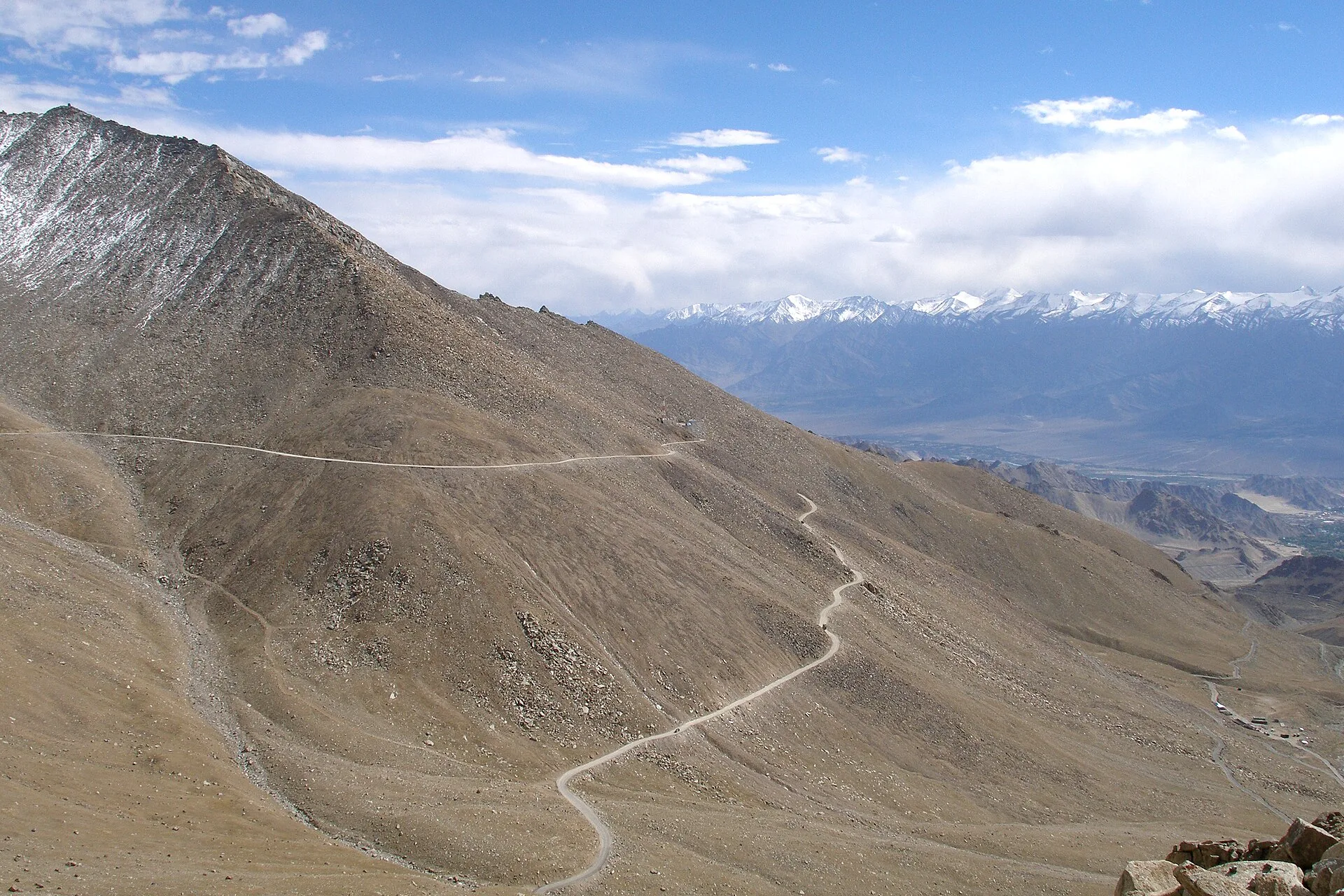
The Ladakh Road Trip runs 6N/7D from Leh, graded Moderate, from Rs 19,500 per person. Route: Leh – Khardung La – Nubra – Pangong – Chang La – Leh.
This is a high-altitude road trip across the Trans-Himalaya, and the whole itinerary is built around one principle: go higher gradually. Leh sits at about 3,500 metres, and the passes on this route top 5,000. Two full days of acclimatisation in Leh before the first pass is not padding. It is the difference between a good trip and a ruined one.
The route runs from Leh over Khardung La into the Nubra valley, east along the Shyok to Pangong Tso, and back to Leh over Chang La. It is roughly 700 km of mountain driving, on roads that are among the highest motorable in the world.
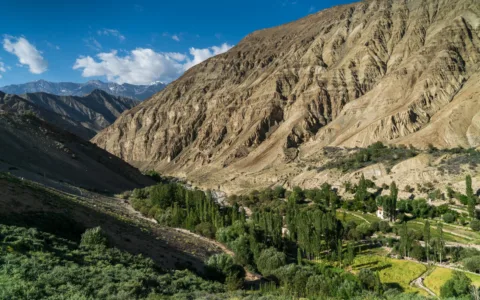
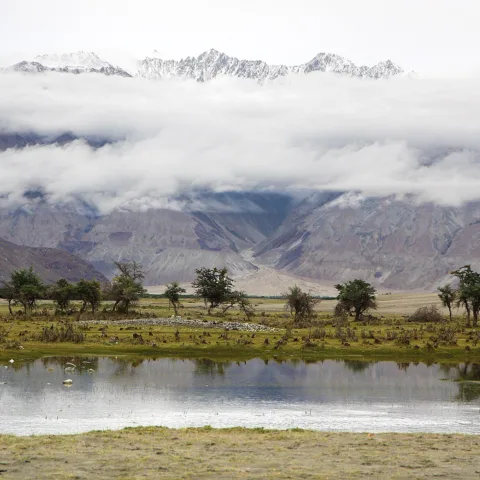
Ladakh is a high-altitude desert, and the landscape is the point. The mountains are ochre and bare, the valleys are green only where a stream runs, and the light changes the colour of everything through the day. The Indus valley around Leh is the lowest and most settled part of it, with the monasteries at Thiksey, Shey and Hemis strung along the river.
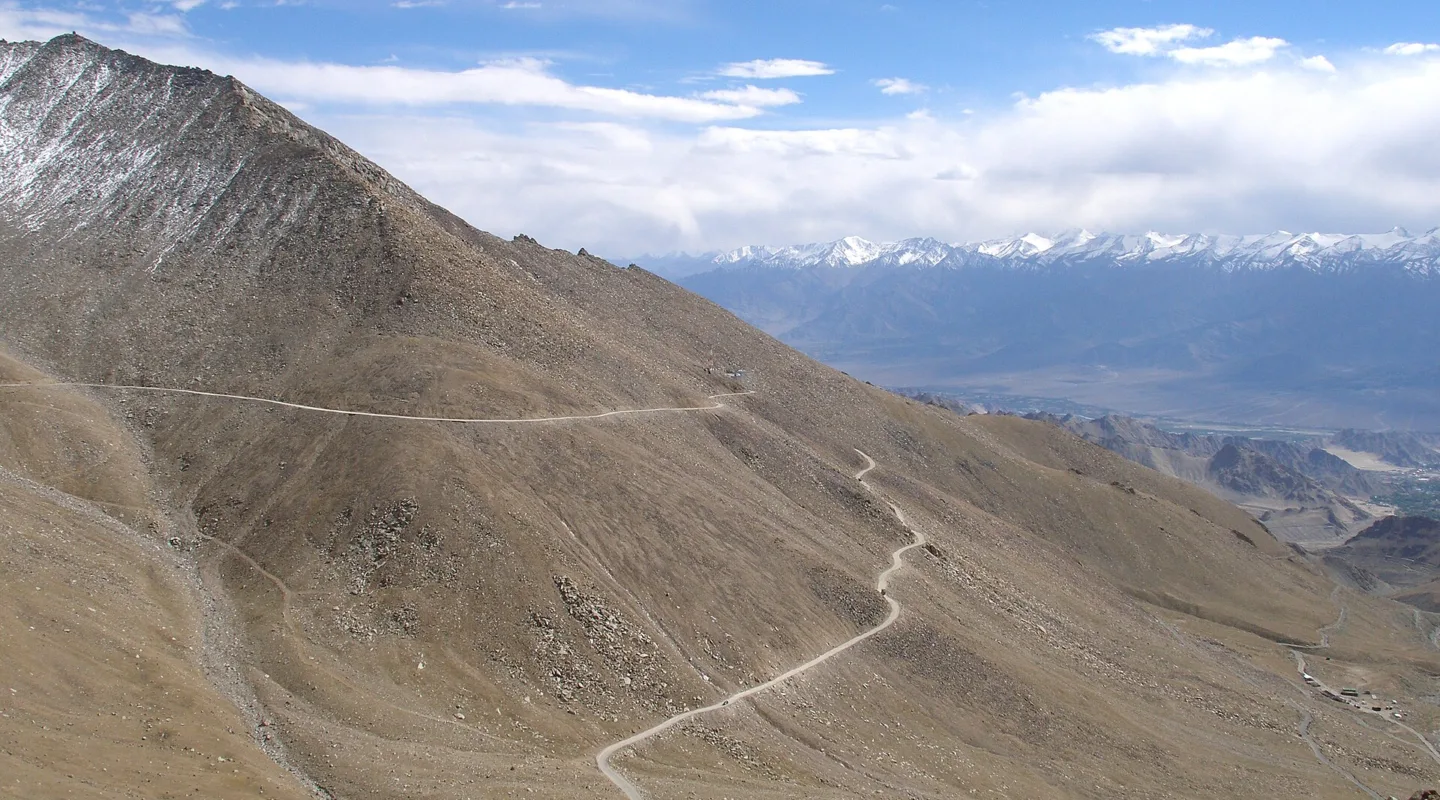
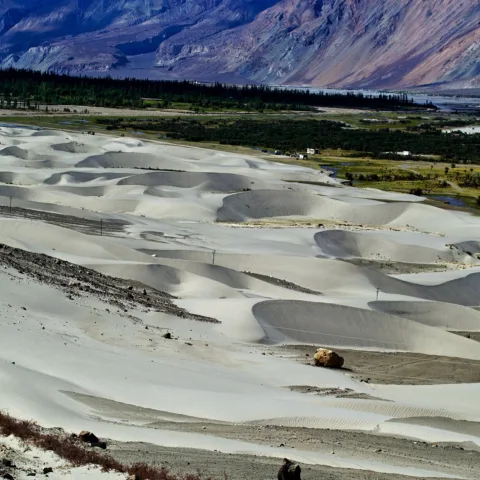
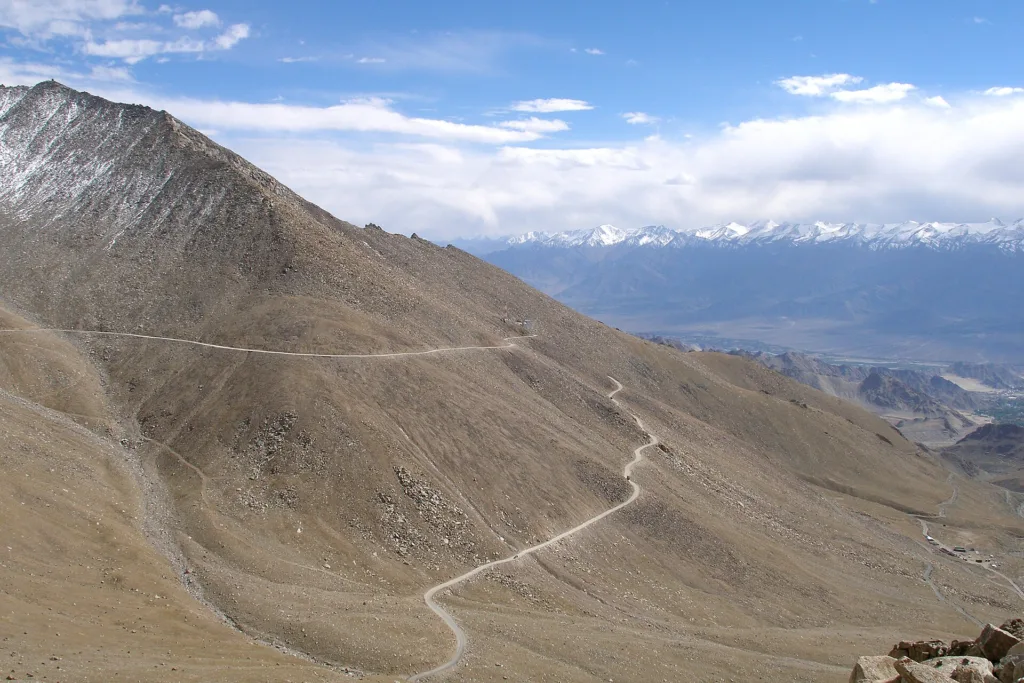
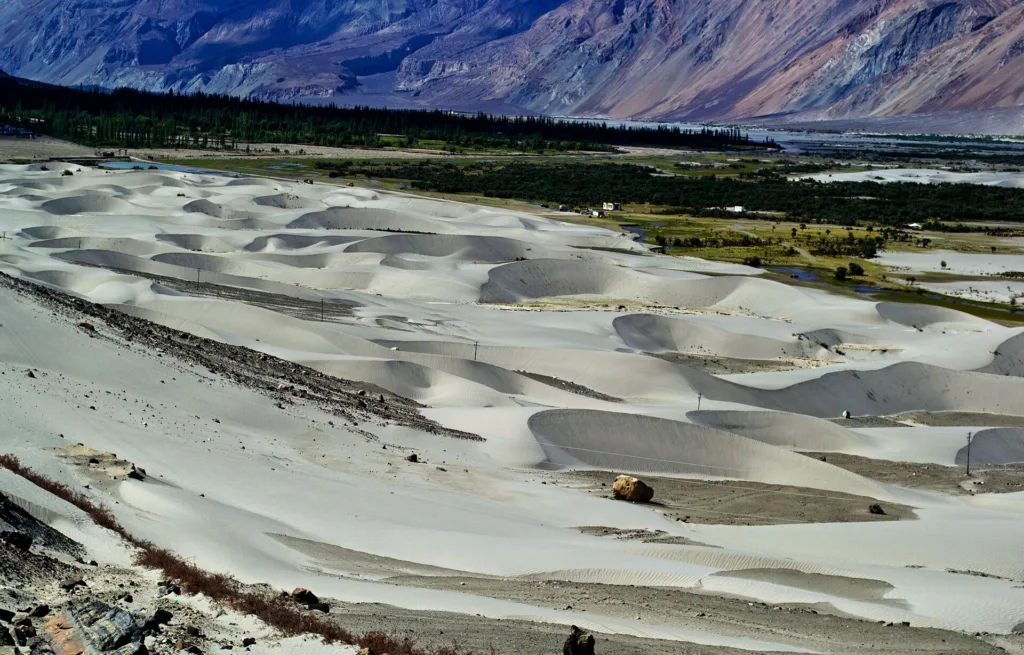
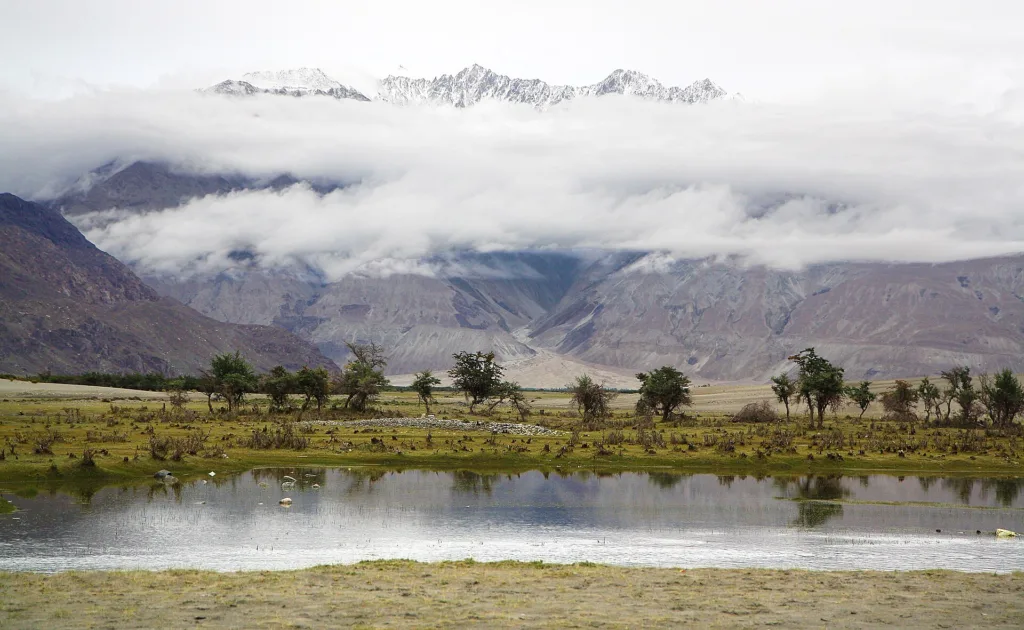
Khardung La, on the road north out of Leh, is one of the highest motorable passes in the world. The road over it climbs through switchbacks from the Indus valley and drops into the Nubra, which is a different world: warmer, lower, with apricot orchards, the Shyok river, and the cold-desert sand dunes at Hunder where Bactrian camels are still kept. Diskit, the main town of the Nubra, has a monastery of the same name with a large Maitreya statue above it.
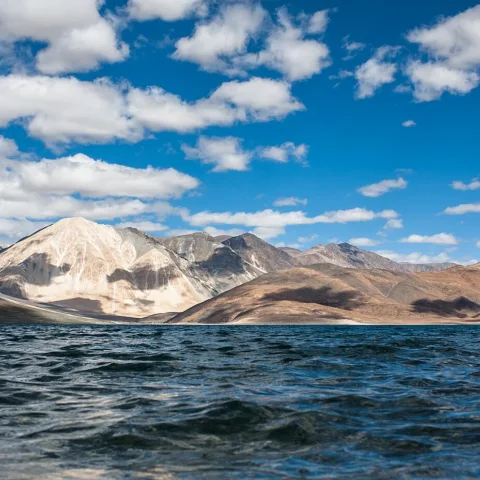
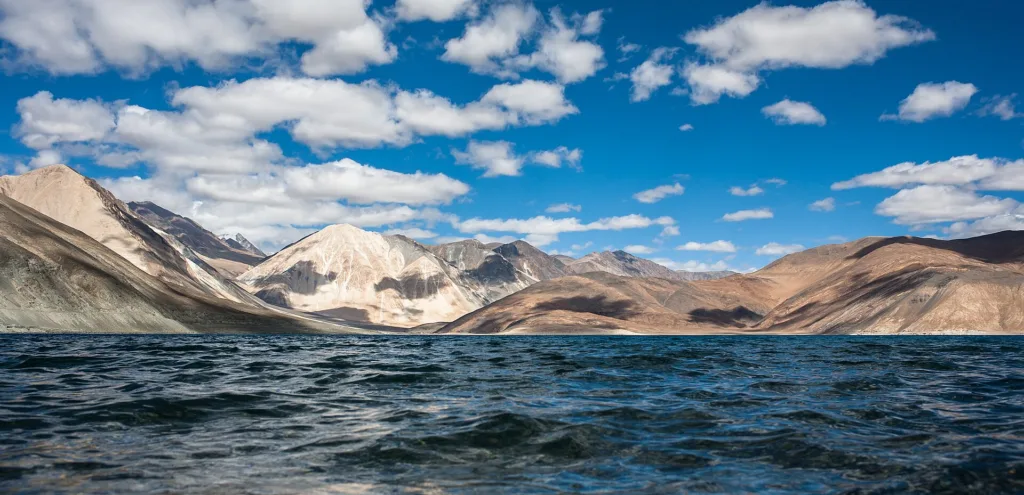
Pangong Tso is the other end of the trip. It is a brackish lake at about 4,350 metres, roughly 134 km long, and it straddles the Line of Actual Control — about two-thirds of it lies in Tibet. The water changes colour through the day, from grey to a deep blue, and the far shore is a range of bare brown mountains. The road from Nubra to Pangong runs along the Shyok, and it is the most dramatic stretch of the trip when it is open.
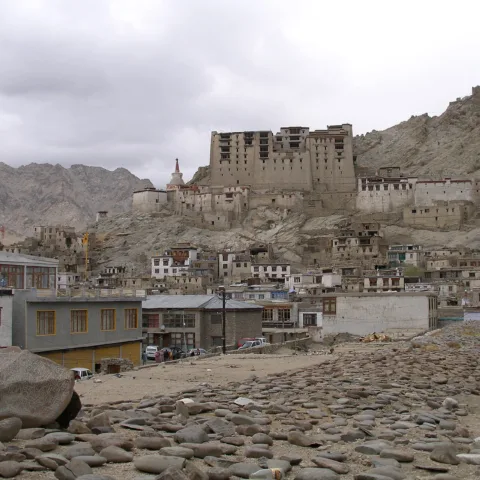
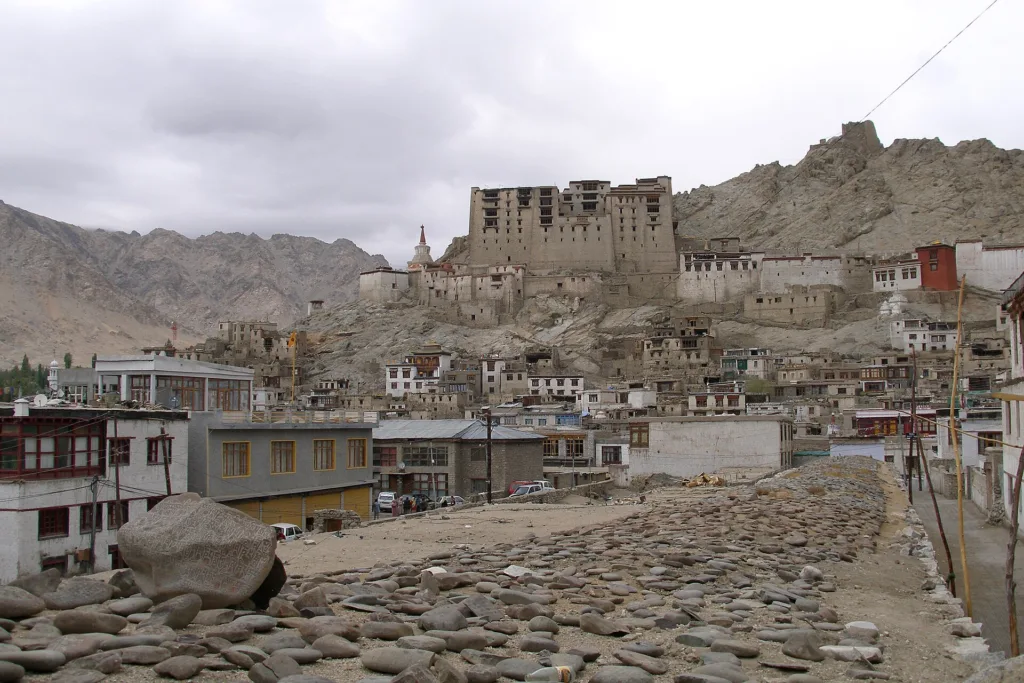
The return to Leh is over Chang La, the second of the high passes. Leh itself is worth the time: the old town below Leh Palace, the Shanti Stupa above it, and the bazaar, which is the only place of any size in the region.
The trip starts and ends at Leh, which is reached by air from Delhi, Mumbai and Srinagar. The first two days are deliberately light: a short walk on the first afternoon, and gentle sightseeing by car on the second, with the Shanti Stupa, Leh Palace and the market. Nothing strenuous, and no pass.
The third day is the Indus valley monasteries — Thiksey, Shey and Hemis — which are at valley level and add no altitude. The fourth day crosses Khardung La into the Nubra, with the night at Hunder or Diskit. The fifth day runs along the Shyok to Pangong, with the night in a camp near the lake. The sixth day returns to Leh over Chang La. The seventh day is departure.
The Nubra and Pangong sectors both need an Inner Line Permit, which we arrange for the group. The Shyok road between Nubra and Pangong is sometimes closed, and on those days the route returns to Leh and goes out to Pangong the following morning; the itinerary is adjusted on the ground rather than cancelled.
This trip suits travellers who want the big Ladakh landscapes without committing to a trek, and who are willing to respect the altitude. It is a strong fit for photographers, for road-trip travellers, and for anyone who has done the Himachal circuit and wants the next step up.
It is graded moderate, and the grade is about altitude rather than walking. There is no trekking, but there is a lot of time in a vehicle on rough roads, and two nights above 3,500 metres. It is not suitable for travellers with uncontrolled heart or lung conditions, and we ask about this before confirming a booking.
The price covers six nights of accommodation in Leh, Nubra and Pangong on twin sharing, breakfast and dinner on all days, and all road transport from Leh and back, in a four-wheel-drive vehicle. The full list is set out below.
It does not cover the journey to Leh, lunch, or the optional extras. Budget separately for those, and for shopping and tips.
June to September, when Khardung La, Chang La and the Shyok road are open and the passes are clear. The trip does not run in winter, when the high passes close. We confirm the road status before each departure and adjust the itinerary on the ground if the Shyok road is shut.
It is graded moderate, and the grade is about altitude rather than walking. Leh sits at about 3,500 metres, Khardung La and Chang La top 5,000, and Pangong Tso is at about 4,350 metres. There is no trekking, but there is a lot of time in a vehicle on rough roads and two nights above 3,500 metres.
A reasonable general level, and more importantly a willingness to respect the altitude. The first two days in Leh are deliberately light. Drink more water than you think you need, avoid alcohol for the first two days, and tell the trip captain immediately if you have a headache that will not shift. Oxygen cylinders and a pulse oximeter travel with the group.
Yes. Twin-sharing accommodation, a trip captain throughout and communal meals make it easy for solo travellers, and the group format means you have company on the long drives. Couples and friends travel on the same departure.
Six nights on twin sharing: three in a hotel in Leh, one in a guesthouse or hotel in the Nubra, and one in a camp near Pangong Tso. Rooms have attached bathrooms and hot water in Leh and the Nubra. The Pangong camp is simpler, with limited hot water and no reliable charging, which is normal for the lake.
Indian citizens need an Inner Line Permit for the Nubra and Pangong sectors, which we arrange for the group. Foreign nationals need a standard tourist visa and the same permits. Mobile coverage in Leh is reliable for calls and data. There is no usable signal in the Nubra or at Pangong, so tell people at home before you leave Leh.
Explore related pages: All trips in Ladakh · Browse all destinations · All activities · Leh destination guide · Road trips in India.
Photo credits. Photographs on this page are from Wikimedia Commons and are used under the licences listed below. Each image is credited to its photographer; the licence terms apply to reuse of the image.
Ladakh's most iconic village-to-village trek crosses two high passes and follows the Markha river past whitewashed monasteries, all…
Ladakh's gentlest trek — often called the 'baby trek' — links whitewashed gompas and willow-lined villages across the…
A genuine 6,000-metre summit within reach of trekkers with the right conditioning — Ladakh's most accessible high-altitude expedition…