
Moderate
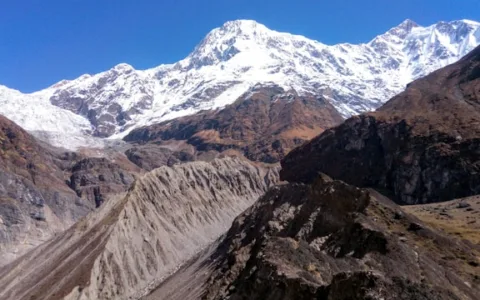
Pindari Glacier Trek
One of the oldest recorded trekking routes in the Kumaon Himalaya, following the Pindar river through traditional villages…
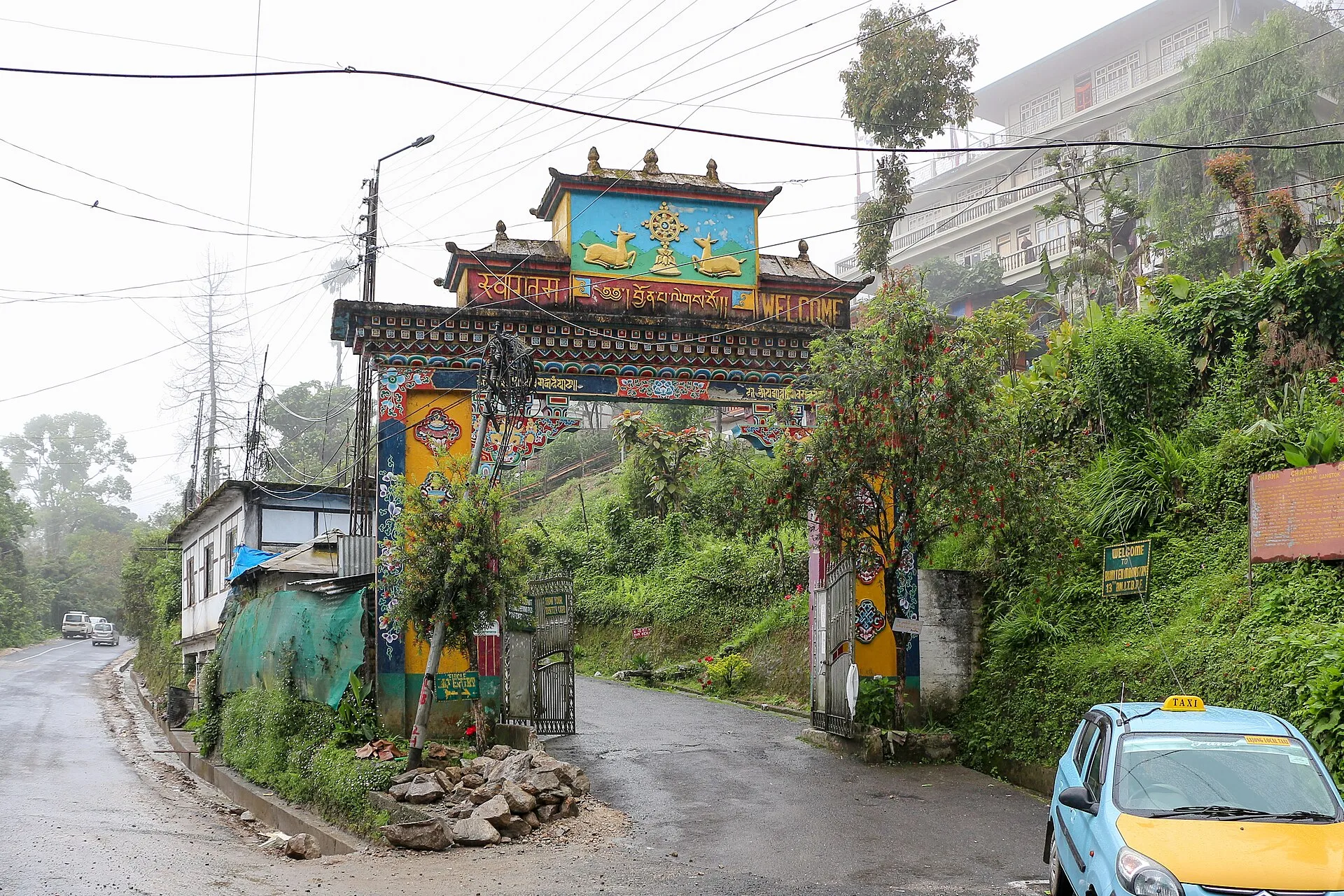
The Losar Festival Sikkim runs 4N/5D from Gangtok, graded Easy, from Rs 11,500 per person. Route: Bagdogra – Gangtok – Rumtek – Tsuklakhang – Gangtok.
Losar is the Tibetan new year, and in Sikkim it is kept by the Bhutia and Tibetan communities with a seriousness that the tourist calendar rarely notices. The monasteries close their year with Gutor, a run of days of prayer and masked dance intended to drive out the misfortunes of the old year, and Losar begins the morning after. To be in a Sikkimese gompa for that turn of the year is a different experience from visiting the same building in April.
The state has its own new year as well, and it is worth knowing the difference. Losoong, kept by the Bhutia after the harvest in December, and Namsoong, kept by the Lepcha, are the Sikkimese new years proper. Losar follows the Tibetan lunisolar calendar and falls in February or early March. Both are real, and both are celebrated, but this trip is built around Losar.
Losar is older than Buddhism in Tibet. It grew out of a Bon winter rite in which juniper and cedar were burned as incense, and the smell of juniper smoke in a Sikkimese courtyard in February is the oldest continuous element of the festival. The Buddhist overlay came later, and the monastery ceremony that now precedes the new year — Gutor — is the elaborate part.
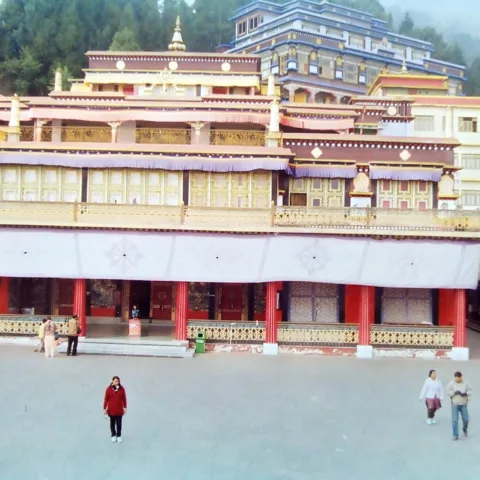
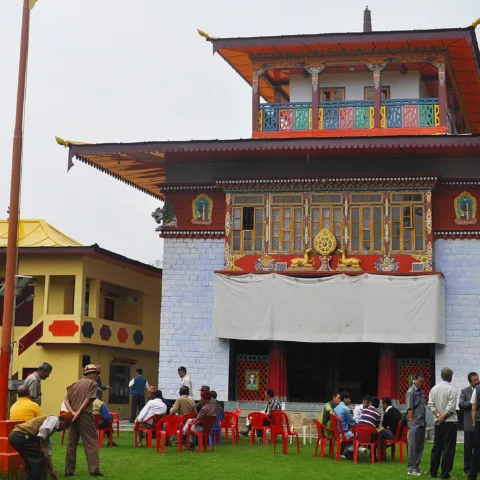
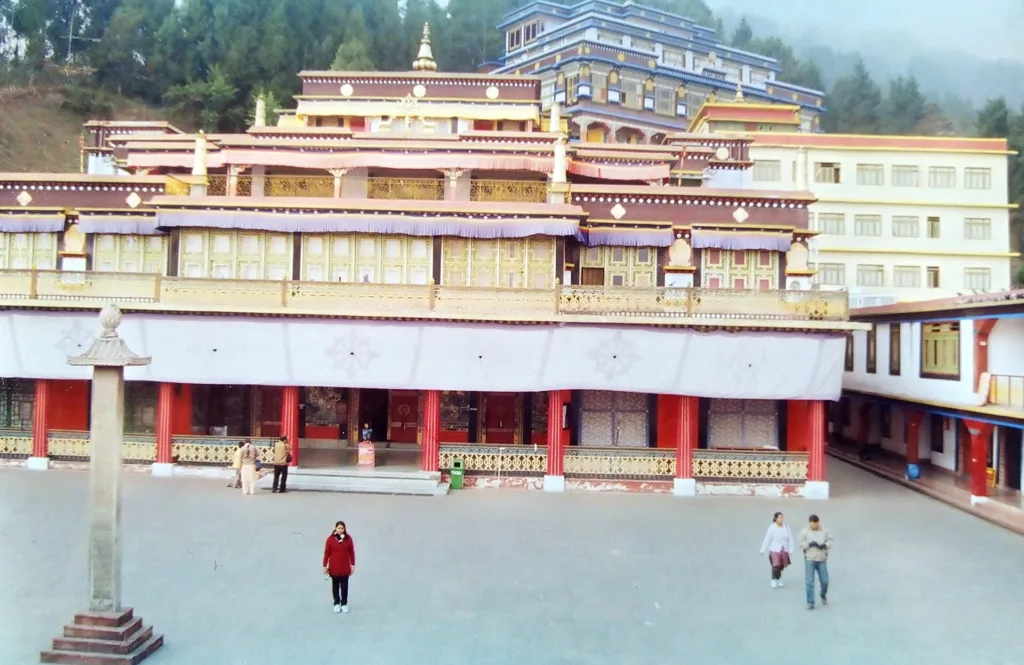
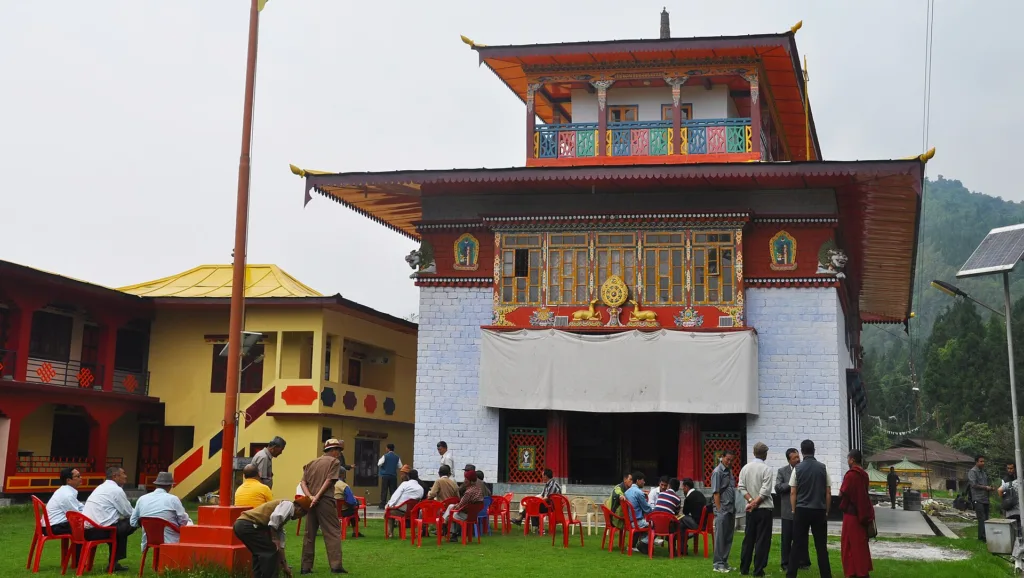
Gutor runs over several days, with the last two carrying the Chaam, the masked dance performed in the monastery courtyard. The masks are the wrathful deities, and the dance is not a performance for visitors: it is a ritual whose purpose is to expel the year’s accumulated ill fortune, and the final day ends with a torma — a cone of dough and butter — being carried out and burned. Rumtek, about 24 kilometres from Gangtok, keeps the most elaborate Gutor in the state. Phodong, in North Sikkim, keeps a smaller and more intimate one. Pemayangtse in West Sikkim has its own, and Tsuklakhang, the former royal chapel inside the palace compound in Gangtok, is the most accessible.
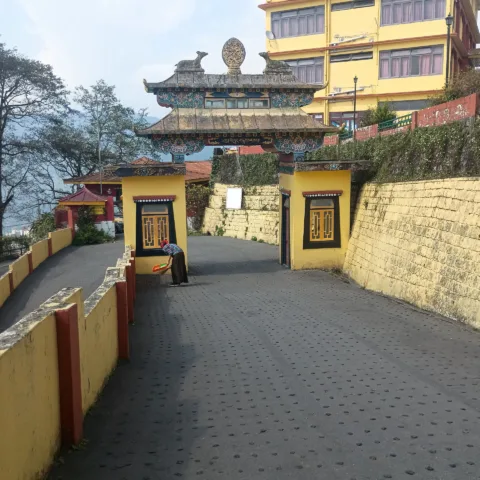
Rumtek is the seat of the Karma Kagyu lineage, and the monastery that stands there now was built after 1959, when the sixteenth Karmapa came to Sikkim. The original Rumtek, a much smaller building, is a short walk below the present one. The complex is a working institution with a shedra, a monastic college, and a nunnery, and at Losar the courtyards are full in a way they are not at any other time of year.
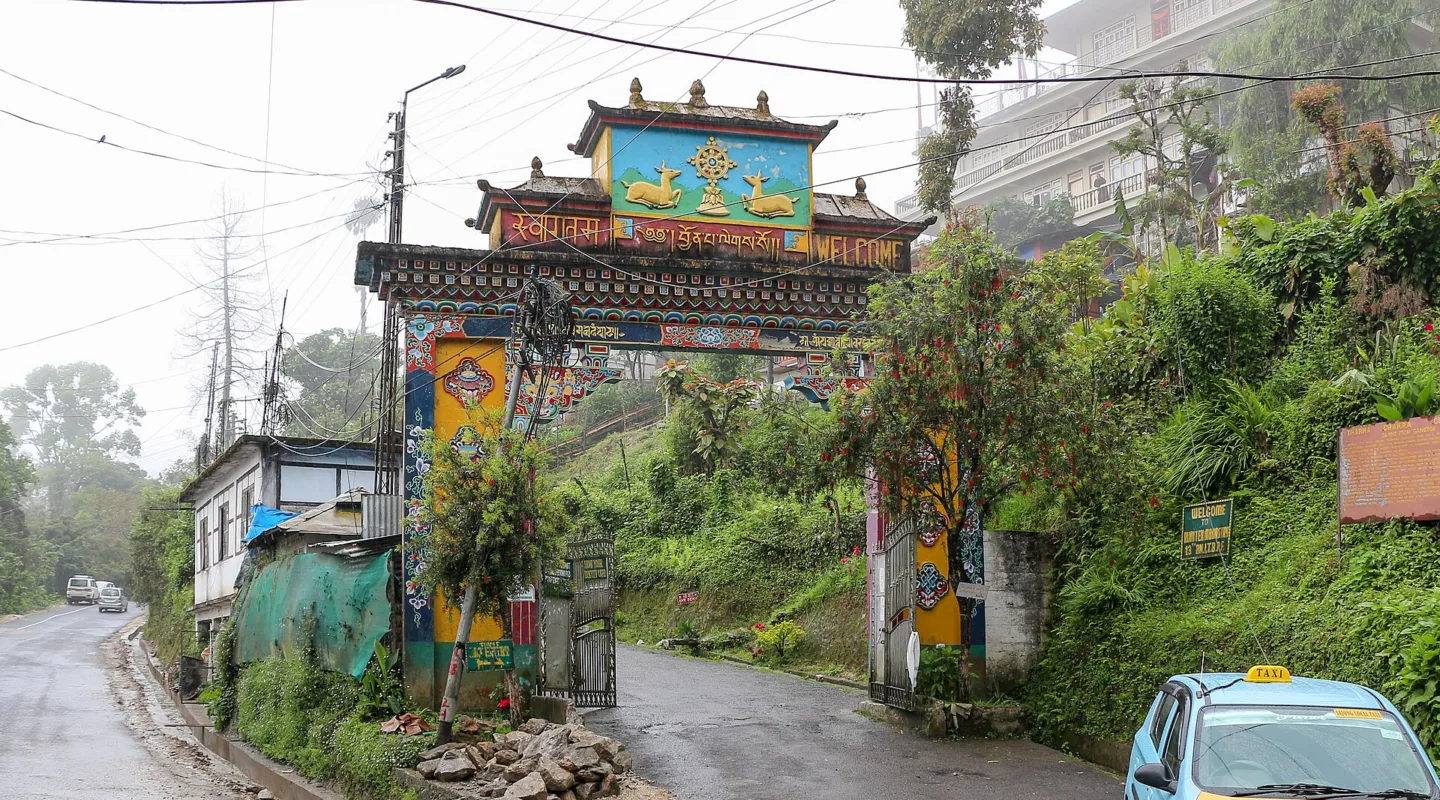
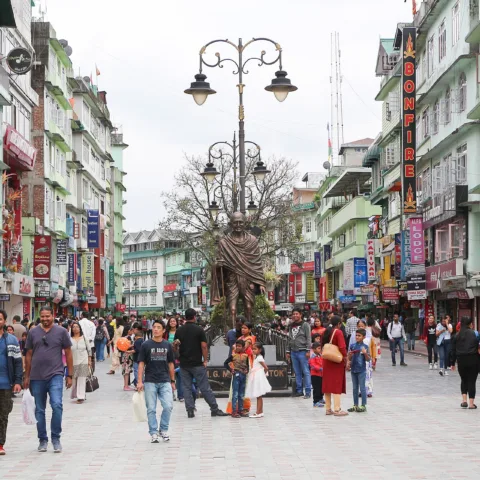
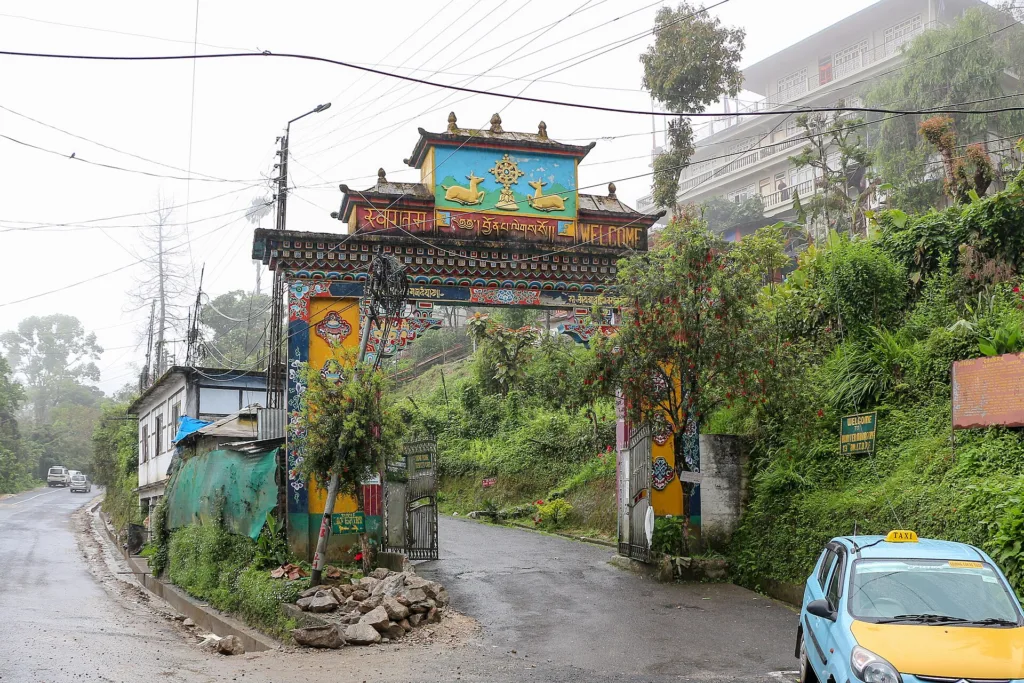
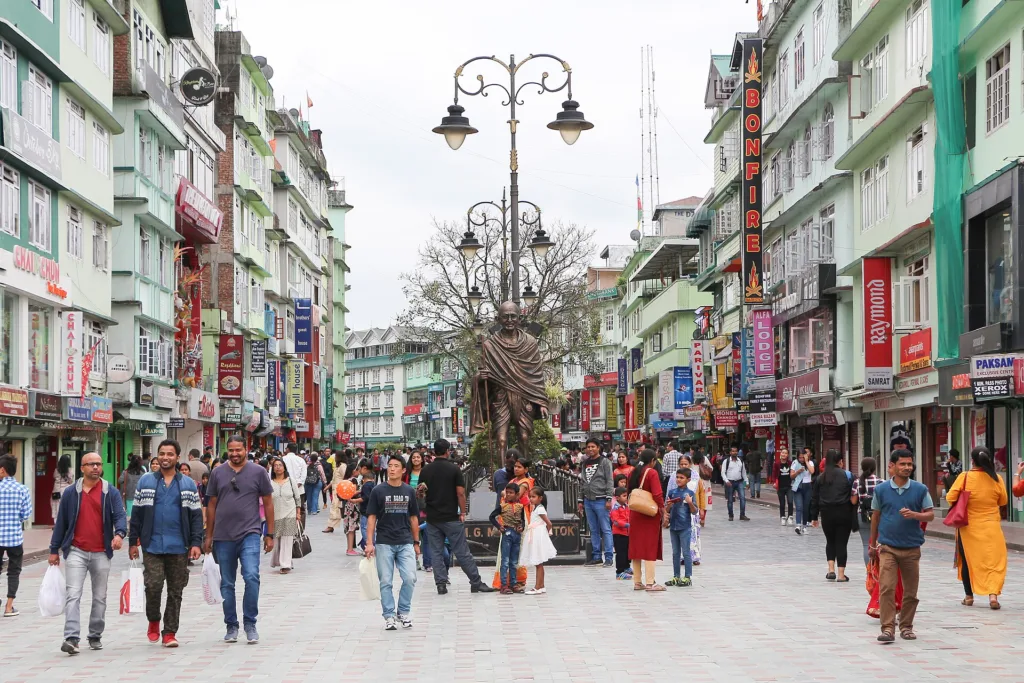
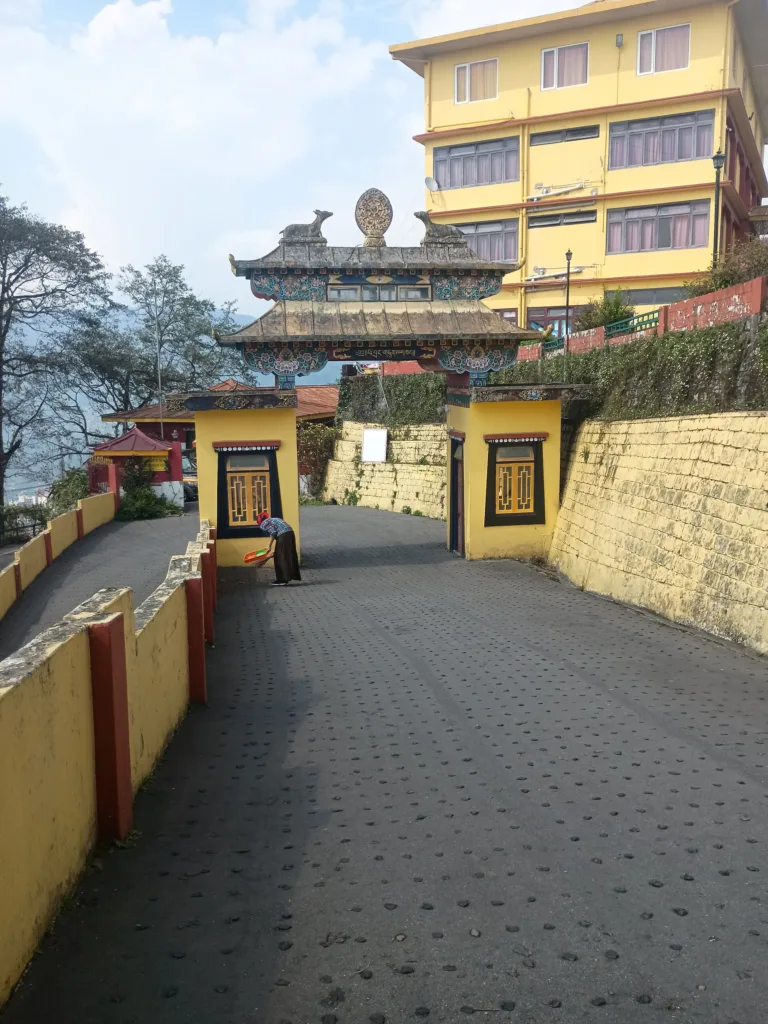
Gangtok itself is built along a ridge at about 1,650 metres, with M.G. Marg running through the middle as a pedestrian street and the town falling away steeply on both sides. Tsuklakhang, the palace chapel, sits above the town and holds the royal tombs. Enchey monastery, on the hill above the town on the other side, was founded in the nineteenth century on a site associated with the mahasiddha Lama Druptob Karpo, and its own Chaam later in the year is one of the state’s larger ones.
February in Sikkim is cold and clear. Days are sunny and can be pleasant in the sun; nights drop close to freezing in Gangtok and well below it higher up. Snow is possible on the Nathu La road and at Tsomgo Lake, and the road to Phodong can be affected. This is not a season for trekking, and the trip does not pretend otherwise — it is a monastery and town trip, with short walks.
The group flies or drives into Bagdogra and climbs to Gangtok, about 124 kilometres and four to five hours by road along the Teesta. The first evening is in Gangtok. The second day goes to Rumtek for the Gutor Chaam and returns to the town for the Tsuklakhang prayers. The third day is the Losar morning itself at Tsuklakhang and Enchey, with the town at its most celebratory.
The fourth day runs north towards Phodong, the drive following the Teesta gorge and turning up into North Sikkim. In February the road is usually open as far as Phodong and Mangan, though it can be closed by snow beyond. The fifth day returns to Bagdogra for the flight out.
Distances are short and the driving is slow. Gangtok to Rumtek is 24 kilometres but takes an hour. Gangtok to Phodong is about 38 kilometres and takes close to two hours, more if the road is being repaired, which it often is.
This trip suits travellers who want a Himalayan Buddhist festival rather than a Himalayan view, and who are content to spend their days in monastery courtyards in the cold. It also suits photographers: the Chaam at Rumtek is one of the few occasions in India when masked dance, low winter light and a working monastery come together.
It is not a family trip for young children, and it is not for anyone who wants warm weather. The days are short, the courtyards are cold, and much of the value is in sitting still and watching a ritual you may not fully understand. If that sounds like a waste of a holiday, this is the wrong week.
The price covers four nights in a hotel in Gangtok on twin sharing, breakfast and dinner daily, all road transport from Bagdogra and back including the Rumtek and Phodong drives, monastery offerings at each gompa visited, a local guide who knows the Chaam calendar, and the permits for the North Sikkim drive.
It does not cover the flight to Bagdogra, lunch, or the optional Tsomgo Lake day. Budget separately for the monastery shops, which sell thangka and butter lamps, and for warm clothing if you arrive under-prepared.
Losar follows the Tibetan lunisolar calendar and falls in February or early March. In 2027 it begins on 7 February, ushering in the Year of the Fire Sheep. The Gutor ceremonies that precede it run over the days before, and the Chaam is danced on the last two of those days. We confirm the year’s dates before departure and tell the group in the pre-trip note.
It is graded easy. Gangtok sits at about 1,650 metres and Rumtek at about 1,500, both well below the level at which altitude illness is usually a concern. The walking is on town streets and monastery courtyards, with steps at Tsuklakhang and Enchey.
A basic level. There is no trekking. The demands are standing through long ceremonies in the cold, steps up to the monasteries, and several hours of driving on hill roads. If you can manage a cold day on your feet, you are fit enough.
Yes. Twin-sharing accommodation, a trip captain throughout and communal meals make it easy for solo travellers, and the group format gives you company at the ceremonies. Couples travel on the same departure.
Four nights in a hotel in Gangtok on twin sharing, within walking distance of M.G. Marg. Rooms have attached bathrooms and hot water. Singles who want a room to themselves can pay a single supplement, subject to availability.
Indian citizens need no permit for Gangtok, Rumtek or Phodong. Foreign nationals need a standard tourist visa, applied for before travel, and an inner line permit is required for parts of North Sikkim — we arrange the permits for the Phodong drive. Mobile coverage in Gangtok and Rumtek is reliable for calls and data. The signal weakens on the North Sikkim road beyond Mangan, so download what you need before you leave.
Explore related pages: All trips in Sikkim · Browse all destinations · All activities · Gangtok destination guide · Cultural tours in India.
Photo credits. Photographs on this page are from Wikimedia Commons and are used under the licences listed below. Each image is credited to its photographer; the licence terms apply to reuse of the image.
One of the oldest recorded trekking routes in the Kumaon Himalaya, following the Pindar river through traditional villages…
Bhongir Fort Trek, a single-day climb from Hyderabad up a granite monolith to a 10th-century Chalukya fort. Rock-cut…
In the lap of the Pir Panjal range lies the mesmerizing Hampta Valley, once a passage for horse-herders…