

Moderate
Tosh Kutla Trek
A Hidden Gem in Parvati Valley The Tosh Kutla Trek is a scenic offbeat trail located in the…
Kasol Tosh Kheerganga runs 4 days in Himachal Pradesh, graded Easy, from Rs 2,799 per person.
Chalal forest walk: A relaxed two-hour walk along the river and through conifer forest to the quiet village of Chalal, a good warm-up for the days ahead. Main trekking distance: about 12 km each way on the Barshaini to Kheerganga trail, plus shorter walks around Kasol, Chalal and Tosh Footwear: Sturdy trekking shoes with good grip, plus slippers or sandals for camp and the hot spring Other essentials: A water bottle, energy bars, a torch or headlamp with spare batteries, a quick-dry towel, a toiletry kit, tissues, a trash bag and a power bank Riverside camping in Kasol: Fall asleep to the sound of the Parvati River, surrounded by pine and deodar forest. Clothing: Quick-dry layers, a fleece, a warm jacket, a rain jacket or poncho, thermals for cold nights, a warm hat, gloves and a spare set of clothes Tosh village and waterfall: Wander through narrow lanes of wooden houses, then walk to the Tosh waterfall with views across the valley. By road: Overnight buses run from Delhi to Bhuntar and Kasol, usually taking 12 to 14 hours. By rail: Chandigarh is a common stop on the way, with buses running onward to Bhuntar and Kasol. The Kheerganga climb: A forested trail with streams, wooden bridges, the Rudranag waterfall and open slopes that lead up to the meadow. Natural hot spring: A soak in the sulphur-rich spring at Kheerganga is the reward most trekkers remember longest. Bags: A 50 to 65 L rucksack with a rain cover, plus a small daypack Night under the stars: Camp in the meadow, with a bonfire, music and a sky that is very dark and very full of stars on clear nights.
Kheerganga sits at the end of the Parvati valley trail beyond Barshaini, and the walk is usually done as an overnight. The route from Barshaini to Kheerganga covers about 12 km and passes through Rudranag before the final climb. There are hot springs at Kheerganga, which is the reason the spot became a trekking destination rather than a through-route. Tosh village is a short drive from Barshaini, and the walk to Kheerganga starts from the same road head. Kasol is the valley’s main town and the usual base before heading up to Barshaini. Camps at Kheerganga are basic, and the site sits above the tree line on an open meadow.
At this height the limit on the Kasol Tosh Kheerganga is fitness and heat rather than oxygen, which makes the descent the part people underestimate.
The published window for the Kasol Tosh Kheerganga is April to June and September to November. Outside that window the Kasol Tosh Kheerganga becomes a different landscape rather than simply worse weather.
The Kasol Tosh Kheerganga assembles at Delhi, and the day numbering runs from that point. Reporting times and the exact pickup point for the Kasol Tosh Kheerganga are confirmed on booking.
The Kasol Tosh Kheerganga is a realistic first outing, since its 4 days are short enough that fitness is not the barrier. Families with older children and anyone returning to walking after a break fit the Kasol Tosh Kheerganga comfortably. Solo travellers move inside a led group on the Kasol Tosh Kheerganga, so the pace is collective rather than personal.
Heat and sun are bigger risks than cold on the Kasol Tosh Kheerganga, so a cap, sunscreen and more water than feels necessary matter most. Footwear decides the day on the Kasol Tosh Kheerganga: loose stone and wet ground cause most slips, and a worn sole is the usual reason people struggle on the descent. Carry two litres of water each on the Kasol Tosh Kheerganga, a small first-aid kit, a head torch for pre-dawn walking, and food already tested on a training walk.
The main risks on the Kasol Tosh Kheerganga at this height are slips on wet sections and dehydration on exposed stretches, both prevented by steady pacing. A certified leader carries first aid and safety kit on the Kasol Tosh Kheerganga and reviews the forecast each morning, so the plan stays provisional until conditions are known. Travel insurance that covers trekking at this altitude is worth the small extra cost and is not part of the Kasol Tosh Kheerganga price.
The Rs 2,799 price of the Kasol Tosh Kheerganga covers accommodation on the itinerary, the listed meals, a certified leader with support crew, applicable permits and entry fees, and the safety equipment carried. Excluded from the Kasol Tosh Kheerganga are travel to the assembly point unless the itinerary says otherwise, personal kit and clothing, insurance, and anything the inclusions list does not name.
From Bhuntar, taxis and local buses cover the roughly 31 km to Kasol. Day 3 has a steady climb; the other days are easy walking
Browsing by region or activity is often faster than reading individual pages, so start with Delhi/Chandigarh and Trekking. The closest alternatives to the Kasol Tosh Kheerganga are Kasol Kheerganga Trek, Mcleodganj Triund Trek and McLeodGanj Triund Bir, which suit anyone comparing dates or a slightly different grade.
The Kasol Tosh Kheerganga trek, often shortened to KTK, strings together three of the best-loved stops in Himachal Pradesh’s Parvati Valley. You start in Kasol, a riverside village at about 1,640 m (5,400 ft) on the banks of the Parvati River. You move up to Tosh, a hillside village at around 2,400 m (7,900 ft) with carved wooden houses and wide mountain views. And you finish at Kheerganga, a high meadow at roughly 2,960 m (9,700 ft), where a natural hot spring waits at the end of the climb.
Over four days and three nights you get campfires, village walks, forest trails, waterfalls and a night above the tree line, without needing any earlier high-altitude experience. If you want a first Himalayan trek that is rewarding but not punishing, this is one of the most popular ways to do it.
Day 1, Kasol and Chalal: Arrive in Kasol, settle into the riverside camp and warm up with the Chalal walk. The evening is for the bonfire, music and a hot vegetarian dinner.
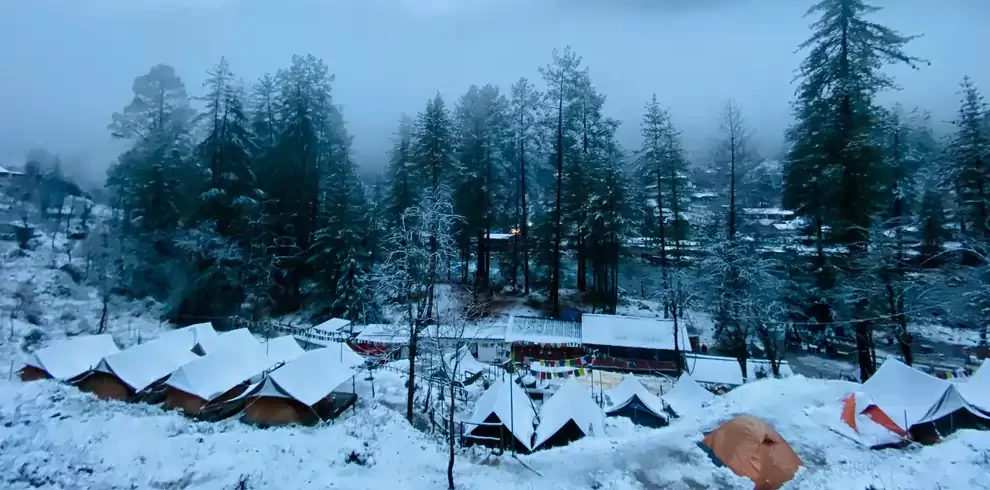
Day 2, Tosh: After breakfast you travel up to Tosh, walk to the waterfall and explore the village. The camp at Tosh sits among the hills with open views.
Day 3, Kheerganga: The main trekking day. You reach the Barshaini trailhead, climb about 12 km through forest and meadow, and arrive at Kheerganga in time for the hot spring and sunset.
Day 4, Descent: Watch the sunrise over the meadow, have breakfast and walk back down to Barshaini, where the trek ends. The full day-wise plan, with timings and meals, is in the itinerary section of this page.
Kasol is a relaxed riverside village with small cafés, bakeries and shops selling woollens and handicrafts. It is a comfortable place to ease into the altitude. If you arrive early, a short walk along the river costs nothing and sets the mood for the trek.
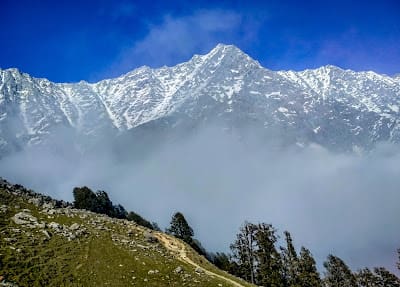
Tosh is the last village in this part of the valley, perched on the right bank of the Parvati River. Its dark wooden houses, terraced fields and views of snow-streaked ridges make it feel far from any city. Evenings are cool and quiet, and the village is a favourite for photography at sunrise and sunset.
Kheerganga is a high meadow with a small Shiva temple and a group of natural hot springs. Local belief holds that Lord Shiva meditated here for a very long time, which is why the place draws pilgrims as well as trekkers. The hot water is a welcome comfort after the climb, though the pools can be crowded in peak season, so early morning or evening is the best time to go in.
The trail is most pleasant from April to June, when days are warm, nights are cool and the forests are green, and again from September to November, when skies are clear and the air is crisp. July and August bring heavy monsoon rain to the Parvati Valley. Landslides and swollen streams are common, trails turn slippery and views are often hidden by cloud, so these months are best avoided. In winter the upper trail can hold snow and nights at Kheerganga fall well below freezing, which needs extra gear and caution.
Always check the weather forecast and ask the trek team about trail conditions before you set out.
Most reasonably fit beginners find the Kasol Tosh Kheerganga trek moderate. The climb from Barshaini rises roughly 860 m over about 12 km, so the gradient is gentle for long stretches, with a few steeper sections in the forest. Expect around five to six hours of walking on the way up and three to four hours coming down.
You do not need previous trekking experience, but you should be comfortable walking for several hours with a daypack. Walking, jogging or stair climbing for 30 to 40 minutes, four or five times a week, for a few weeks before you travel will make the climb noticeably easier. At under 3,000 m, altitude sickness is uncommon, but drink plenty of water and tell your guide if you feel unwell.
Your WDRLUST package begins in Kasol, so you will need to arrange your own travel there. Aim to arrive in the morning so that Day 1 can run as planned.
Trekking poles, boots and jackets are not included in the package, so bring your own or rent them in Kasol.
Your trek team includes a qualified guide and support staff, and a first-aid kit travels with the group. Even so, a few habits keep everyone safe: stay with the group on the trail, avoid walking after dark, cross streams only where the guide points the way and do not drink from untreated water sources.
The Parvati Valley is a fragile mountain environment. Carry out everything you carry in, including wrappers and tissues, avoid using plastic bottles where possible and respect local customs, especially around temples and in the villages. Keep music at a polite volume away from camp and do not pick plants or disturb wildlife.
This trek suits first-time trekkers, friends and small groups, solo travellers who prefer the safety of a guided group, and anyone who wants a short Himalayan escape of about four days. It is less suited to people who want a remote, high-altitude challenge, since the trail is popular and the camps can be busy in season.
For a shorter or longer option, compare the two-day Kheerganga trek, the Sar Pass trek from Kasol, the Triund trek and the Hampta Pass trek.
The Kasol Tosh Kheerganga runs for 4 days. The day-by-day itinerary above lists each stage, walking distance and overnight stay.
The Kasol Tosh Kheerganga is rated Moderate by WDRLUST. It suits trekkers with some prior walking experience and steady fitness. Training with 45 to 60 minutes of cardio three times a week for six weeks before departure is enough for most people.
The Kasol Tosh Kheerganga starts at Rs 2,799 per person. The price covers the inclusions listed on this page. Transport to the starting point, personal gear and anything not listed under inclusions are extra.
The route reaches approximately 1,640 m. Walk slowly, drink water and report any headache or nausea to your trek leader.
Group size is capped at Max 12 trekkers per departure, with a certified trek leader. Smaller groups mean faster head counts and more attention on the trail.
The Kasol Tosh Kheerganga starts from the base location described in the itinerary above. WDRLUST shares exact meeting points, reporting times and transport options on booking confirmation. The nearest major access region is Kasol.
This route combines Kasol, Tosh and Kheerganga in four days, at altitudes from 1,600 m up to 2,960 m. It is the most complete short introduction to the Parvati valley available, and it includes the hot spring at Kheerganga.
The trek fee is Rs 2,799 per person:
Plan on Rs 19,000 to Rs 26,000 all-in, with stays counted separately. The fee is low because accommodation is not bundled.
Rated Moderate. The Kheerganga day is the hardest at 12 to 13 km with 1,300 m of gain, and the Tosh and Kasol sections are short walks. Across four days that is a reasonable total load.
The rocky Kheerganga trail is busy with mule traffic, which slows you down and requires attention on the descent. The Tosh walk is a gentle climb through the village terraces.
Monsoon turns the Kheerganga trail into a rocky, muddy slog with leeches on the forest sections. The Barshaini road is the most vulnerable part of the itinerary and closures are common in July and August.
Because the plan moves between three villages using road transfers, a closure can cost you a whole segment. If you are on a fixed return flight from Delhi, allow a buffer day at the end.
Fly to Bhuntar or drive from Delhi or Chandigarh, then four days across Kasol, Tosh and Kheerganga, then reverse. The whole thing runs to six or seven nights out of the city. It is the most efficient way to see the valley in one trip.
Explore related pages: All treks in Kasol · Treks in Himachal Pradesh · Trekking in India · Browse all destinations · All activities.
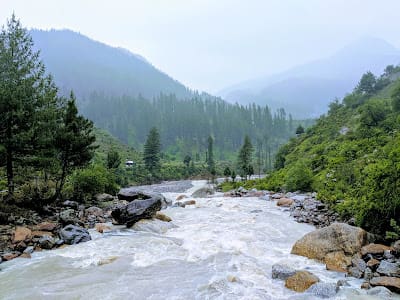
Arrive in Kasol in the morning, check in at the riverside camp and rest after your journey. Once you are settled, set out on an easy two-hour walk along the Parvati River and through conifer forest to the quiet village of Chalal. It is a gentle introduction to the valley and a good way to start adjusting to the altitude.
Return to camp for an evening bonfire, music and a hot vegetarian dinner.
After breakfast, travel up to Tosh. Local transport between Kasol and Tosh is not included in the package.
Walk through the lanes of Tosh, past dark wooden houses and terraced fields, and continue to the Tosh waterfall with views across the Parvati Valley. Return to camp to rest, then gather around the bonfire for music and a hot vegetarian dinner.
Start early with a good breakfast, then head to Barshaini, the trailhead for Kheerganga. Local transport to Barshaini is not included in the package.
The trail climbs about 12 km through forest, past streams, wooden bridges, small tea stalls and the Rudranag waterfall, before opening onto the meadow at Kheerganga. Walk at a steady pace, stop often for water and snacks, and enjoy the changing views.
At the top, soak in the natural hot spring, visit the small Shiva temple and settle into camp. Dinner and a bonfire under the stars finish the day.
Wake up to sunrise over the meadow, have breakfast and take a last look at the valley. Descend by the same trail to Barshaini, where the trek and the package end. The walk down takes around three to four hours.
Local transport from Barshaini back to Kasol is not included. Plan your onward journey for the evening or the following day to leave a comfortable buffer.


A Hidden Gem in Parvati Valley The Tosh Kutla Trek is a scenic offbeat trail located in the…
An Unforgettable Adventure in the Dhauladhar Range If you're searching for a short yet thrilling Himalayan trek, the…
Sissu Manali Trip : A Journey Through Nature’s Paradise If you're craving a blend of majestic mountains, pristine…