Easy
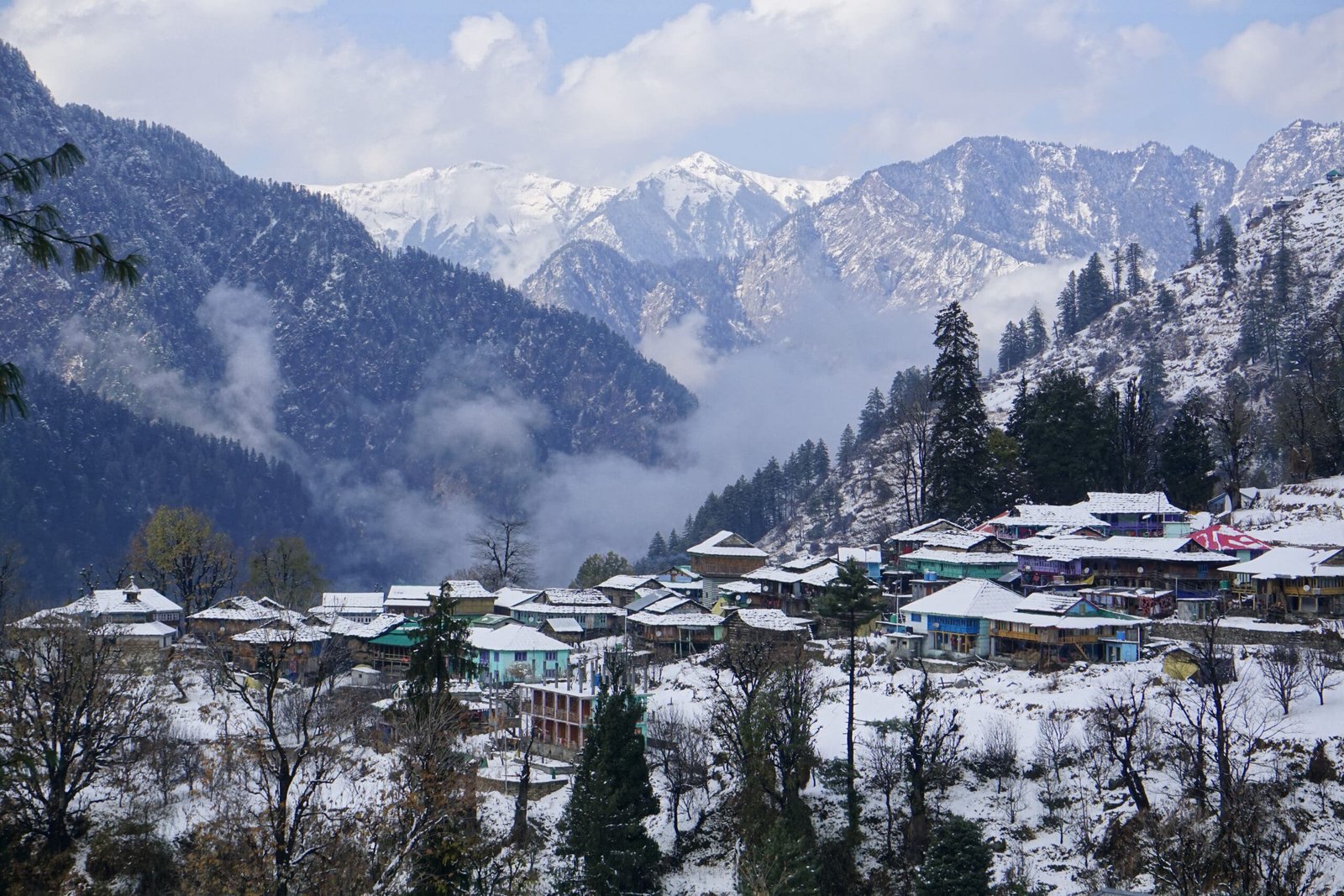
Grahan Trek Kasol
Grahan Trek: A Hidden Gem in the Parvati Valley If you love trekking and want to experience a…
Winter Spiti Trip From Delhi runs 9 days in Himachal, graded Moderate, from Rs 16,999 per person.
The Winter Spiti trip from Delhi takes you through the Kinnaur and Spiti valleys on the Hindustan-Tibet Road, with stays in Chitkul, Tabo, Kaza and Kalpa and a team leader with you throughout. Route: Delhi, Shimla, Chitkul, Nako, Tabo, Dhankar, Kaza, Kalpa, Shimla, Delhi Highest villages visited: Langza, Hikkim and Komic at around 4,400 to 4,500 m Chitkul: The last inhabited village before the Tibet border, with stone and wood houses and a snow-covered valley floor. Footwear: Waterproof snow boots with good grip, plus comfortable indoor shoes or slippers Hikkim, Komic and Langza: Some of the highest villages in the world with road access, including Hikkim’s famous post office and Langza’s large Buddha statue. Kalpa: Apple orchards, quiet lanes and sweeping views of the Kinner Kailash range. From here you travel to Hikkim, where you can post a card from one of the world’s highest post offices, to Komic and Langza, and to Key Monastery, perched on a hilltop at around 4,100 m. Tabo Monastery: Founded in 996 CE and known for its ancient murals, it is among the oldest continuously functioning Buddhist monasteries in India. Cash: Carry enough cash for tips, lunches and small purchases, because ATMs can be out of order in Kaza Key Monastery and Chicham Bridge: Spiti’s largest monastery, followed by one of the highest suspension bridges in Asia. Health: Personal medication, a basic first-aid kit and moisturiser, as the air is very dry Nako: A high village with a lake that is often frozen in winter and a small cluster of old temples. After days in the high desert, its apple orchards, pine forests and views of the Kinner Kailash range feel soft and green, and it makes a pleasant last night before the return to Shimla.
The Winter Spiti Trip From Delhi is graded Moderate, and on a trip of this kind the effort is in the days of travel and walking rather than in any single climb.
The published window for the Winter Spiti Trip From Delhi is December to February Difficulty: Moderate. Outside that window the Winter Spiti Trip From Delhi becomes a different landscape rather than simply worse weather.
The Winter Spiti Trip From Delhi assembles at Delhi, and the day numbering runs from that point. Reporting times and the exact pickup point for the Winter Spiti Trip From Delhi are confirmed on booking.
The Winter Spiti Trip From Delhi suits people who already walk but have not necessarily trekked, since its 9 days ask for stamina rather than skill. A fit beginner who prepares gets through the Winter Spiti Trip From Delhi; someone treating it as a stroll does not. Solo travellers move inside a led group on the Winter Spiti Trip From Delhi, so the pace is collective rather than personal.
The Winter Spiti Trip From Delhi runs over 9 days, and the days are built around travel, sightseeing and the places named in the itinerary rather than a single objective. Because the Winter Spiti Trip From Delhi is a fixed departure, the order of stops is set by the operator and can shift if a road or a site is closed.
Expect early starts on the Winter Spiti Trip From Delhi, because the driving legs are long and the stops are timed to reach each place before it closes. Carry a day bag on the Winter Spiti Trip From Delhi for the hours between stops, and keep the main luggage in the vehicle.
The Rs 16,999 price of the Winter Spiti Trip From Delhi covers accommodation on the itinerary, the listed meals, a certified leader with support crew, applicable permits and entry fees, and the safety equipment carried. Excluded from the Winter Spiti Trip From Delhi are travel to the assembly point unless the itinerary says otherwise, personal kit and clothing, insurance, and anything the inclusions list does not name.
Layers: Thermal tops and bottoms, fleece, a heavy down or padded jacket and a windproof outer layer Extremities: Insulated gloves, a woollen cap, a balaclava or neck gaiter, and warm woollen socks Sun protection: Sunglasses with UV protection, sunscreen and lip balm, since snow glare is strong Power: Power banks and spare batteries, which drain faster in the cold, and a torch or headlamp The return runs through Kinnaur to Kalpa, then to Shimla and back to Delhi by overnight bus. Dhankar Monastery: A cliffside monastery with a view over the meeting point of the Spiti and Pin rivers. The frozen Spiti River: A sight you can only see in the deepest winter. You spend the first night at Chitkul, then cross into Spiti via Nako to reach Tabo. Nako’s lake is often frozen in winter, and the village is a good place to stretch your legs and take photographs. The effort comes from the cold, the altitude and long drives rather than from walking Dhankar sits higher, on a ridge above the confluence of the Spiti and Pin rivers, and its fort-like monastery has one of the best views in the valley. From there the journey follows the Hindustan-Tibet Road, climbing through Narkanda and Rampur into the Kinnaur region. This trip is for travellers who want a winter adventure and are comfortable with long drives, basic rooms and cold temperatures. After Dhankar you reach Kaza, which becomes your base for three nights while you explore the high villages and the monasteries of the valley.
Browsing by region or activity is often faster than reading individual pages, so start with Delhi/Chandigarh and Adventure Activities. The closest alternatives to the Winter Spiti Trip From Delhi are Kasol Kheerganga Trek, Mcleodganj Triund Trek and McLeodGanj Triund Bir, which suit anyone comparing dates or a slightly different grade.
In winter, Spiti Valley becomes one of the quietest and most dramatic places in India. Rivers freeze into pale ribbons, monasteries stand out against white slopes, and villages at 4,000 m and above sit under deep snow. The Winter Spiti trip from Delhi takes you through the Kinnaur and Spiti valleys on the Hindustan-Tibet Road, with stays in Chitkul, Tabo, Kaza and Kalpa and a team leader with you throughout.
This is a nine-day journey, including two overnight travel days from and to Delhi. It is a road trip rather than a trek, but the cold, the altitude and the winter road conditions make it a real adventure. If you want Spiti without the summer crowds, this is the season for it.
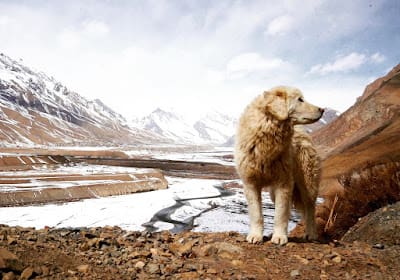
Summer Spiti is dry, brown and busy. Winter Spiti is white, still and far less visited. Snow-covered passes, frozen streams, smoke rising from village houses and crisp blue skies make the landscape look like a different place. Because few travellers make the journey, the monasteries and villages feel calm, and conversations with locals are slower and warmer.
Winter is also when the valley is at its most traditional. Families spend months indoors around the stove, and life follows the rhythm of the season. You are seeing Spiti as the people who live there know it for much of the year.
You leave Delhi by overnight Volvo and reach Shimla at dawn. From there the journey follows the Hindustan-Tibet Road, climbing through Narkanda and Rampur into the Kinnaur region. You spend the first night at Chitkul, then cross into Spiti via Nako to reach Tabo. After Dhankar you reach Kaza, which becomes your base for three nights while you explore the high villages and the monasteries of the valley. The return runs through Kinnaur to Kalpa, then to Shimla and back to Delhi by overnight bus.
Spiti can also be approached from Manali, but that route usually closes after the first heavy snow. In winter the Shimla and Kinnaur approach is the reliable way in, which is why this trip uses it. You will find the day-wise plan, with timings, altitudes and meals, in the itinerary section of this page.
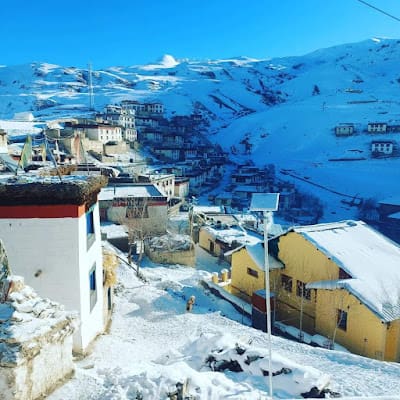
Chitkul, at roughly 3,450 m, is where the road runs out. The valley floor is white, the houses are small and sturdy, and the air is very thin and clear. The next day’s drive to Nako, at about 3,660 m, takes you across a harsh, windswept landscape. Nako’s lake is often frozen in winter, and the village is a good place to stretch your legs and take photographs.
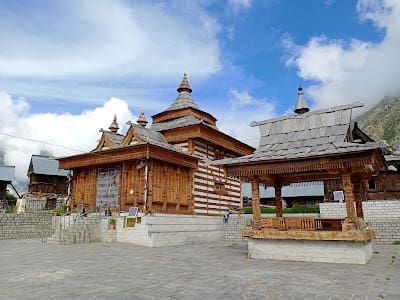
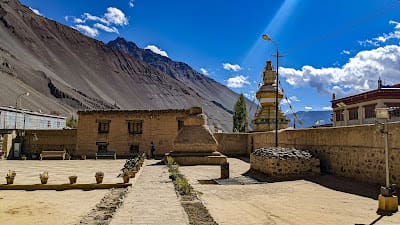
Tabo, at about 3,050 m, is home to a monastery complex founded over a thousand years ago. Its inner halls are decorated with murals and stucco figures, and visiting in winter means you are likely to have them almost to yourself. Dhankar sits higher, on a ridge above the confluence of the Spiti and Pin rivers, and its fort-like monastery has one of the best views in the valley.
Kaza, at about 3,800 m, is the main town of Spiti and your base for three nights. From here you travel to Hikkim, where you can post a card from one of the world’s highest post offices, to Komic and Langza, and to Key Monastery, perched on a hilltop at around 4,100 m. A stop at the Chicham Bridge completes the circuit with a view across a deep gorge.
Kalpa is lower and warmer, at around 2,960 m. After days in the high desert, its apple orchards, pine forests and views of the Kinner Kailash range feel soft and green, and it makes a pleasant last night before the return to Shimla.
Winter in Spiti is cold in a way most travellers have not experienced. Daytime temperatures often stay near or below freezing, and nights frequently fall well below -10 degrees Celsius, with the coldest weeks going lower still. Snow can close sections of road for hours or days, and black ice is common on shaded stretches.
Because of this, the schedule is a plan rather than a promise. Drive times can be longer than expected, and your team leader may change the order of stops to keep the group safe. Wood and gas heaters, extra blankets and hot meals are part of how local stays handle the cold, but electricity and running water can be limited, and pipes sometimes freeze. Travellers who come with a flexible mindset enjoy the trip most.
You gain height steadily from Shimla (about 2,200 m) to Chitkul (3,450 m) and then Kaza (3,800 m), with day trips to villages above 4,400 m. That gradual rise helps, but altitude sickness is still possible. Drink plenty of water, eat regular meals, avoid alcohol, move slowly on arrival and sleep well. Headaches, nausea, unusual tiredness or breathlessness at rest are signs to tell the team leader about straight away.
Oxygen is available around the clock in case of an emergency. If you have a heart, lung or blood-pressure condition, or if you are unsure about altitude medication, speak to your doctor before you book.
Keep your phone and camera batteries inside your jacket until you need them. Shoot in the golden hour after sunrise, when the snow turns pink and the monasteries glow. Use a polarising filter or sunglasses lens over your phone camera on bright days to cut glare, and clean your lens often, as breath fogs it quickly in the cold.
This trip is for travellers who want a winter adventure and are comfortable with long drives, basic rooms and cold temperatures. It suits friends, couples and solo travellers who enjoy offbeat places. It is not recommended for people with serious heart or respiratory problems, or for anyone who dislikes unpredictable schedules.
Looking for another season or route? See our Spiti Valley trip.
If you also want a trek in the same state, see the Hampta Pass trek, the Sar Pass trek from Kasol, the Triund trek and the Kheerganga trek.
The Winter Spiti Trip From Delhi runs for 9 days. The day-by-day itinerary above lists each stage, walking distance and overnight stay.
The Winter Spiti Trip From Delhi is rated Moderate by WDRLUST. It suits trekkers with some prior walking experience and steady fitness. Training with 45 to 60 minutes of cardio three times a week for six weeks before departure is enough for most people.
The Winter Spiti Trip From Delhi starts at Rs 16,999 per person. The price covers the inclusions listed on this page. Transport to the starting point, personal gear and anything not listed under inclusions are extra.
The best time is December to February. Outside that window, weather, snow or monsoon conditions can change the route or the schedule.
The route reaches approximately 4,000 m. Walk slowly, drink water and report any headache or nausea to your trek leader.
The Winter Spiti Trip From Delhi starts from the base location described in the itinerary above. WDRLUST shares exact meeting points, reporting times and transport options on booking confirmation. The nearest major access region is Delhi/Chandigarh.
This is the Delhi-departure winter Spiti trip, where the road transfer to the hills is bundled into the nine-day itinerary. The destination is the same: the Spiti valley under snow, with Kaza at its centre.
The package fee is Rs 16,999 per person:
Expect Rs 32,000 to Rs 43,000 all-in. The winter gear is a fixed cost you cannot avoid and cannot rent cheaply at that altitude.
Rated Moderate. Driving, not walking, is the effort. The real demands are cold tolerance and altitude: you spend days at 3,500 to 4,200 m, and the dry cold air dehydrates you faster than the heat of the plains does.
Because the Delhi transfer is bundled, you arrive in the hills already tired from an overnight bus. In winter that matters more than in summer, because fatigue plus cold plus altitude is a poor combination for the first two days.
Snow closes roads, and in winter Spiti that can mean a change of route rather than a cancellation. Rockfall in the Sutlej gorge is a real hazard, and vehicles travel in convoy on the narrower sections.
Chains are standard equipment for the operator, not an optional extra. If a quote does not mention winter tyres or chains, ask before booking.
Fly to Delhi, join the departure, nine days in the hills, return to Delhi, fly home. Eleven or twelve nights away from Bengaluru is the honest figure. This is a proper holiday, not a long weekend, and the buffer days on the return matter more in winter than at any other time of year.
Explore related pages: All treks in Delhi/Chandigarh · Adventure Activities in India · Browse all destinations · All activities.
Report at the Delhi pick-up point in the evening for the overnight Volvo to Shimla, departing at around 9:30 PM. Keep a warm layer within reach and try to sleep, because tomorrow is a long driving day.
Reach Shimla early in the morning and transfer to your Tempo Traveller for the long drive along the Hindustan-Tibet Road. The route passes Kufri and Narkanda, then drops through Rampur into the Kinnaur valley, with the Sutlej River beside you for long stretches. Lunch is at a roadside stop and is not included.
Reach Chitkul by evening and explore the last Indian village before the Tibet border, now under a blanket of snow. Dinner and overnight stay in Chitkul.
Have an early breakfast and begin the drive into Spiti. The road climbs through stark, windswept scenery to Nako, where you can walk to the lake, often frozen in winter. Continue to Tabo, arriving by evening, and visit Tabo Monastery, founded in 996 CE and known for its ancient murals. Check in for dinner and an overnight stay.
After breakfast, drive towards Dhankar. Visit Dhankar Monastery, set high above the meeting point of the Spiti and Pin rivers. Continue to Kaza, the main town of Spiti, and arrive by evening. Check in, rest and let your body adjust to the altitude.
After breakfast, drive up to the high villages above Kaza. Langza is known for its large Buddha statue and for marine fossils in the surrounding hills. At Hikkim, send a postcard home from one of the world's highest post offices. Komic is one of the highest villages in the world with road access. Stop for a hot drink at a village cafe where one is open, then return to Kaza. Snow can block the last stretches of road, so your team leader will decide how far the vehicle can go.
After breakfast, visit Key Monastery, the largest monastery in Spiti, perched on a hilltop. Continue to the Chicham Bridge, one of the highest suspension bridges in Asia, spanning a deep gorge. Return to Kaza in the afternoon to rest and pack for the long drive tomorrow.
Check out after an early breakfast, as this is a long driving day and you want to reach Kalpa before dark. The road retraces part of the route through Spiti, then returns to Kinnaur and climbs to Kalpa, where apple orchards and pine forests replace the high desert. Lunch on the way is not included. Enjoy views of the Kinner Kailash range if the sky is clear.
After breakfast, check out and begin the drive to Shimla. Take your time with photographs and goodbyes along the way. Reach Shimla in the evening and board the overnight Volvo to Delhi.
Reach Delhi in the morning, and the trip ends here. You go home with photographs, new friends and memories of a place that stays with you long after the snow has melted.
Grahan Trek: A Hidden Gem in the Parvati Valley If you love trekking and want to experience a…
Beas kund Trek Introduction: Nestled in the heart of the Himalayas, the Beas Kund trek stands as a…
A two-day, one-night Triund trek from McLeodganj with camping on the ridge, Dhauladhar views, a bonfire dinner and…