

Easy
Andaman Islands Beach Trip
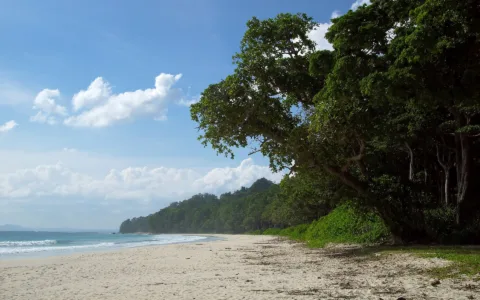
Andaman Islands beach trip, 7D/6N from Port Blair, graded Easy, from Rs 23,500. Radhanagar, Elephant Beach, Neil Island…
Next Departure
27/11/2026
12 seats left
The Shigmo Festival Goa trip runs 3N/4D from Panaji, graded Easy, from Rs 6,800 per person. Route: Panaji – Ponda – Margao – Panaji.
Shigmo, or Shigmotsav, is Goa’s spring festival, kept in the Hindu month of Phalgun, which puts it in March most years and occasionally spills into early April. It runs about a fortnight and marks the end of the rabi harvest — the last of the paddy is in, the fields are being readied, and the villages come out. It is not the Carnival. The February Carnival is a Catholic, pre-Lenten street party; Shigmo is the Konkani harvest festival of the temple villages, and the two sit at opposite ends of the season. See all <a href=”https://wdrlust.in/destinations/goa/”>trips in Goa</a>, or browse the <a href=”https://wdrlust.in/destination/”>full destination index</a>.
It begins with Naman, the invocation of the local folk deities on the village maand — the temporary stage put up for the fortnight — to the beat of the ghumat, dhol, mhadle and tashe. From there the fortnight runs through folk forms that belong to the Konkan: Ghode Modni, the horse dance; Fugdi, danced in a circle by women; Goff, in which dancers weave coloured cords into a rope as they move; and Talgadi. Each village keeps its own order of things, and the maand is the centre of it.
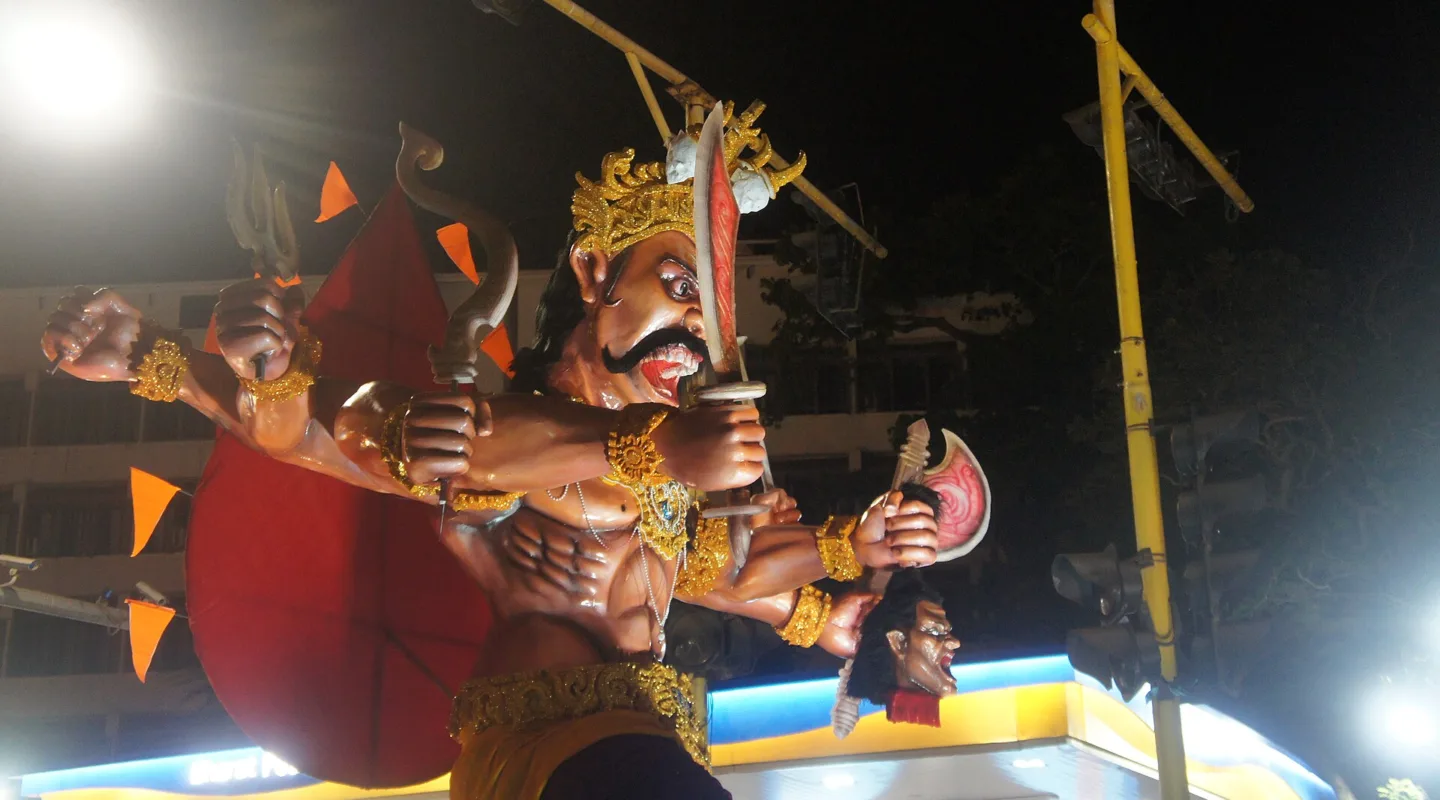
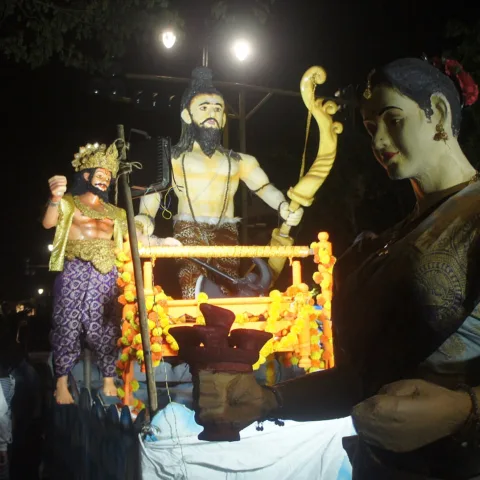
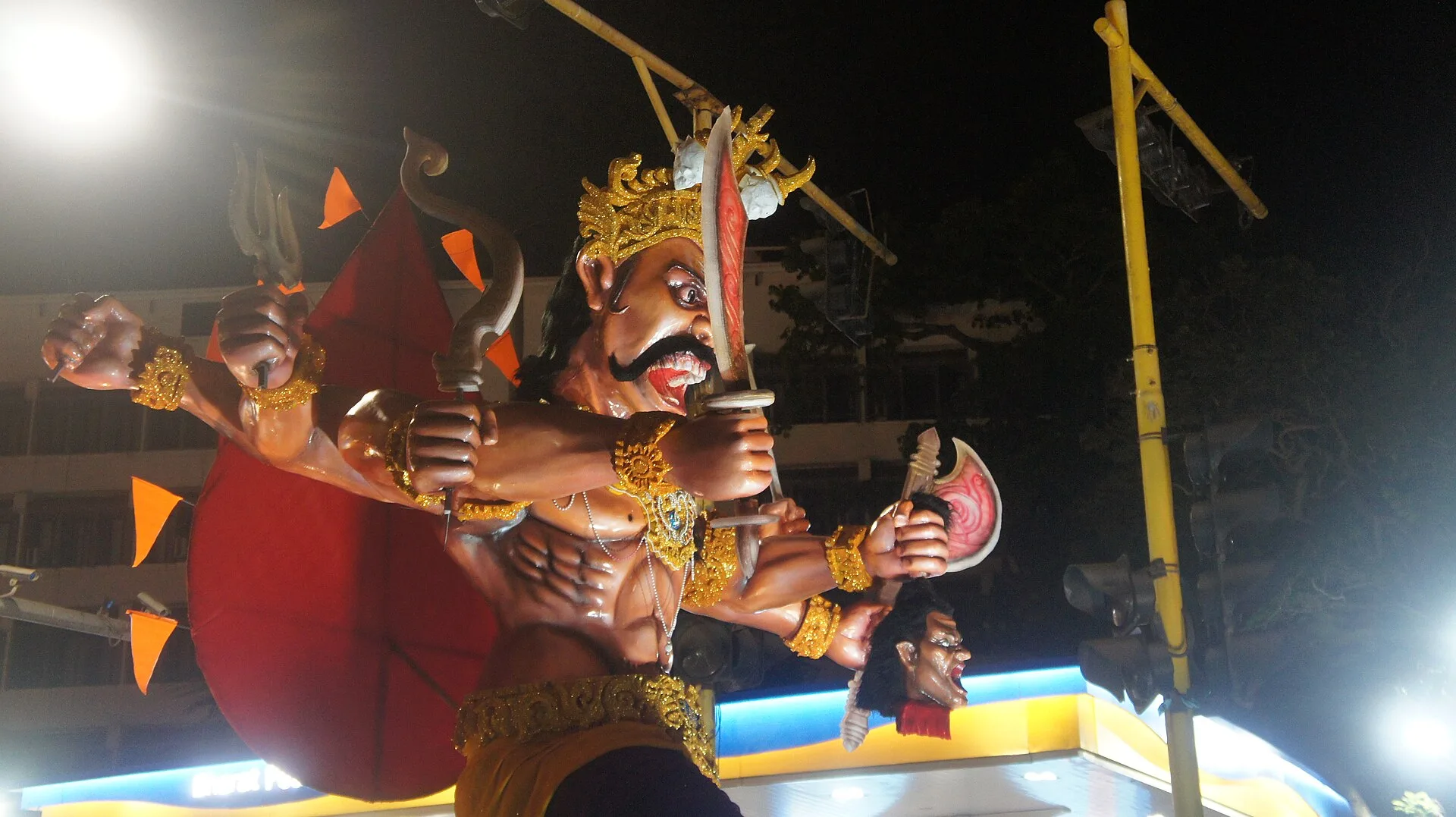
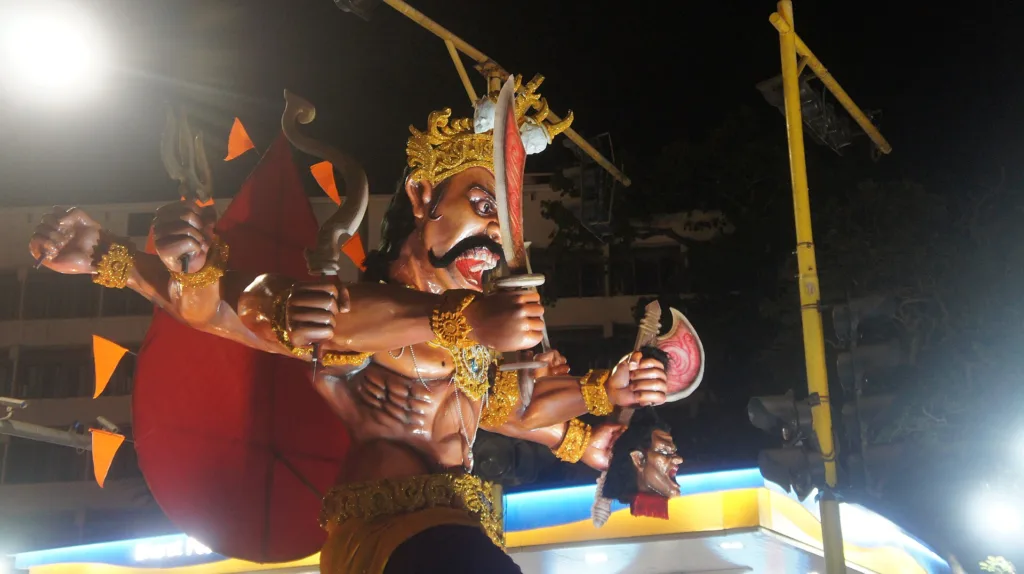
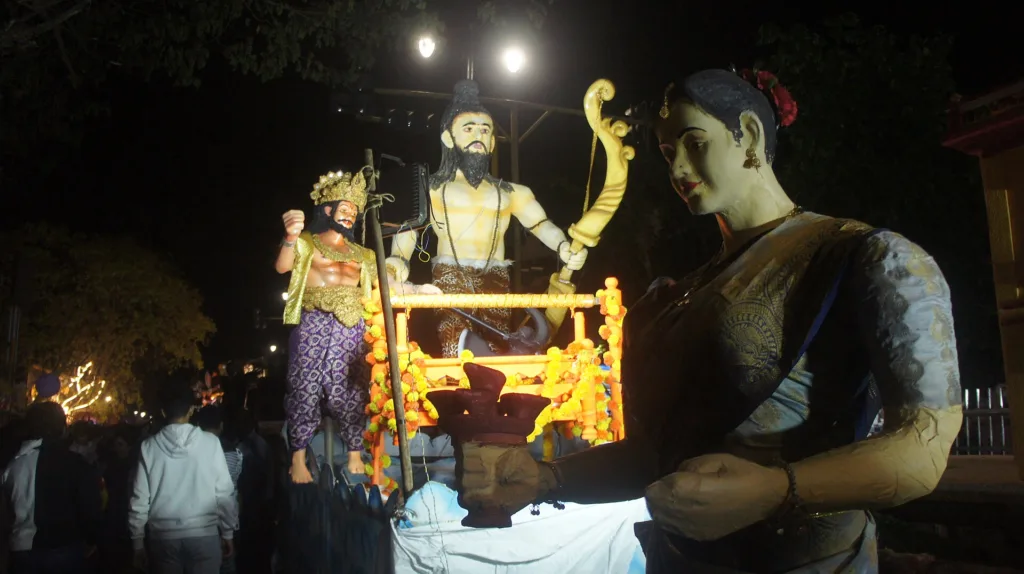
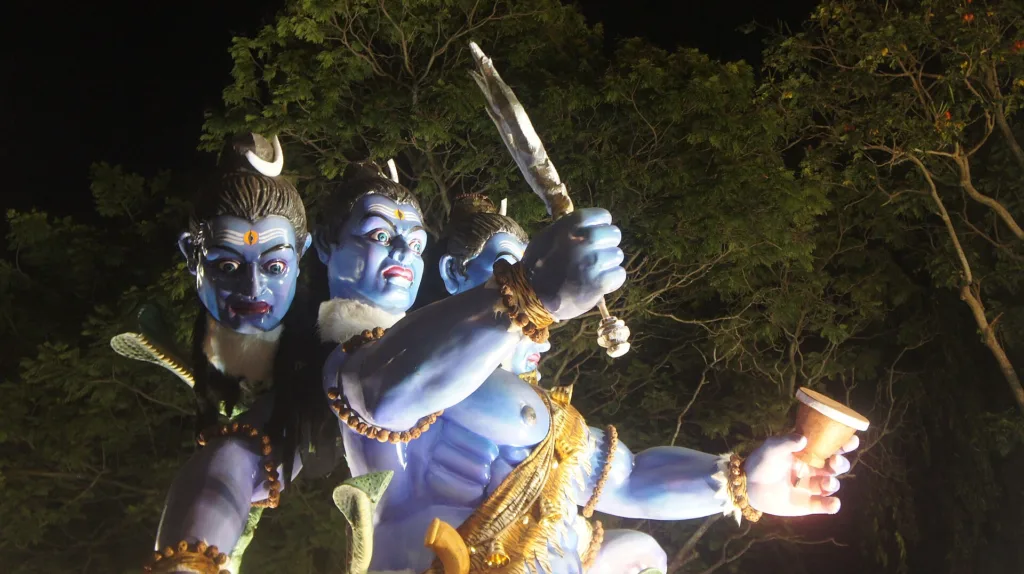
Goa has two Shigmos. Dhakla, the younger or smaller one, is kept in Tiswadi, Ponda and around Calangute; Thorla, the elder, in Bardez, Bicholim and Pernem. The state tourism department adds the parades — float processions with folk troupes and romtamell groups through Panaji, Ponda, Mapusa, Margao and Vasco. That is a departure from the village form, but it is the easiest way for a visitor to see the whole range of it in one evening, and the troupes on the floats are the same village performers.
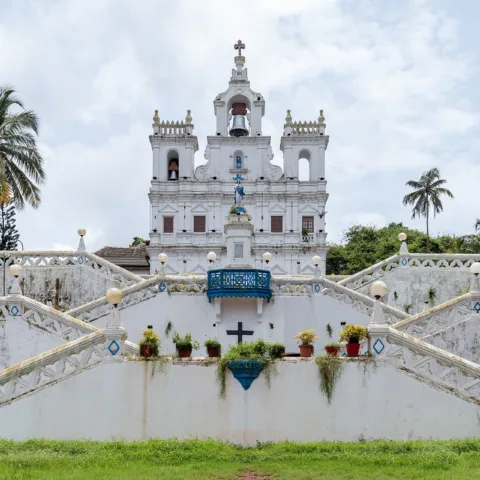
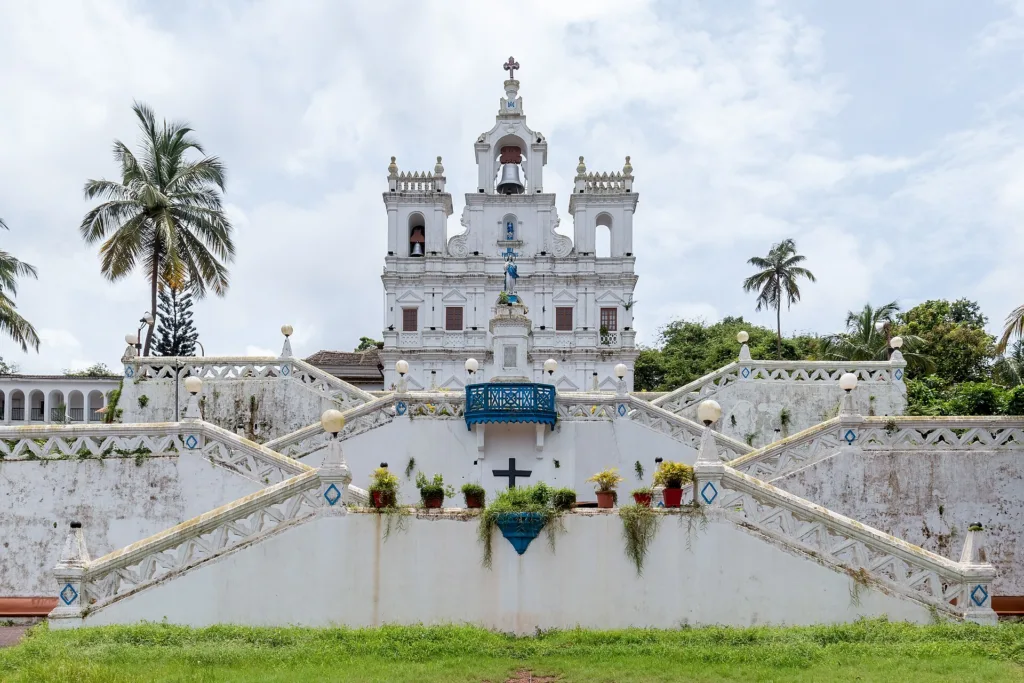
Panaji is the base. The capital sits on the Mandovi estuary, and the Latin quarter of Fontainhas runs up the hill behind it in ochre, indigo and green. The Church of Our Lady of the Immaculate Conception was first raised in 1541 and rebuilt in its present form in 1619, and its white facade above the square is the image most people carry of the city. In Shigmo week the square and the riverfront are where the parade forms up.
The food is part of the fortnight. Shigmo falls at the end of the rabi harvest, so the village tables carry what has just come in: rice, coconuts, jaggery and the local vegetables, cooked in the Saraswat and Konkani styles that Goa keeps better than almost anywhere on the coast. A harvest lunch at a spice farm in Ponda is the easiest way to eat that way without gatecrashing a household, and the farms themselves — betel nut, cardamom, pepper, nutmeg — are a good half-day in their own right.
It is worth knowing what Shigmo is not. It is not a tourist festival with a fixed programme and a ticket desk. The village observances are set by each committee, the dates shift with the lunar month, and the parades are the state’s addition to a rural calendar. That means the trip is built around a fortnight rather than a single date, and the exact villages and maands we visit are confirmed close to departure once the committees publish their schedules. What does not change is the shape of it: Naman at the start, the folk forms through the middle, and the parades at the end.
The loop is short and stays in the central belt. Panaji to Ponda is about 30 kilometres southeast, on the road that climbs into the laterite hills where most of the temple villages sit. Ponda is the heart of Dhakla Shigmo, and the maands there are the ones worth being at: the troupes rehearse for weeks and perform for the village, not for a crowd of visitors.
From Ponda the route drops south to Margao in Salcete, the commercial capital of the south, where the parade is a bigger, more public affair. The return to Panaji is along the Mandovi. Across the four days the driving is under 150 kilometres, which leaves the time where it should be — at the maand, on the parade route and at the table.
This is for travellers who want Goa outside the beach: the villages, the temple maands, the folk forms and the food. Photographers do particularly well, because the parade is colour and movement in a way that is hard to find elsewhere in India in March. Culture travellers who have seen the big northern festivals will find this one much smaller and much more local.
Solo travellers fit the group format easily, and couples do too. It is a poor fit for anyone who wants a beach holiday with a festival attached — the days are in the villages and the evenings are on the parade route, and there is no beach time built in. It is also not a trek.
The price covers three nights in Panaji on twin sharing, breakfast and dinner daily, all road transport from Panaji and back, the Ponda and Margao transfers, a Konkani harvest lunch at a spice farm, a trip captain throughout, and the arrangements for the village maand visits. It does not cover flights or trains to Goa, lunch on the other days, or anything not listed.
Shigmo is kept in the Hindu month of Phalgun, which falls in March in most years and occasionally runs into early April. The fortnight’s dates are set by the village committees and the state tourism department each year, and the parades are scheduled inside that window. We confirm the year’s dates before departure and tell the group in the pre-trip note.
It is graded easy. Goa is at sea level, so there is no altitude concern at all, and the walking is flat: village lanes, the parade route and the Fontainhas streets. The only uneven ground is the laterite paths around the maands.
A basic level. There is no trekking and no climb. The demands are standing through a parade for two or three hours, walking village lanes in the heat, and being out in the evening. If you can manage a long day on your feet in humid weather, you are fit enough.
Yes. Shared accommodation on twin sharing, a trip captain throughout and communal meals make it easy for solo travellers, and the group format means you have company on the parade route. Couples also fit well.
Three nights in a hotel in Panaji on twin sharing, chosen for proximity to the riverfront and Fontainhas rather than for a beach location. Rooms have attached bathrooms and hot water. Singles who want a room to themselves can pay a single supplement, subject to availability.
Indian citizens need no permit for Goa. Foreign nationals need a standard tourist visa, applied for before travel. Mobile coverage across Panaji, Ponda and Margao is reliable for calls and data, and it holds in the villages. The network gets congested on the parade route itself, so photographs are easier to send afterwards.
Explore related pages: All trips in Goa · Browse all destinations · All activities · Panaji destination guide · Trekking in India.
Photo credits. Photographs on this page are from Wikimedia Commons and are used under the licences listed below. Each image is credited to its photographer; the licence terms apply to reuse of the image.
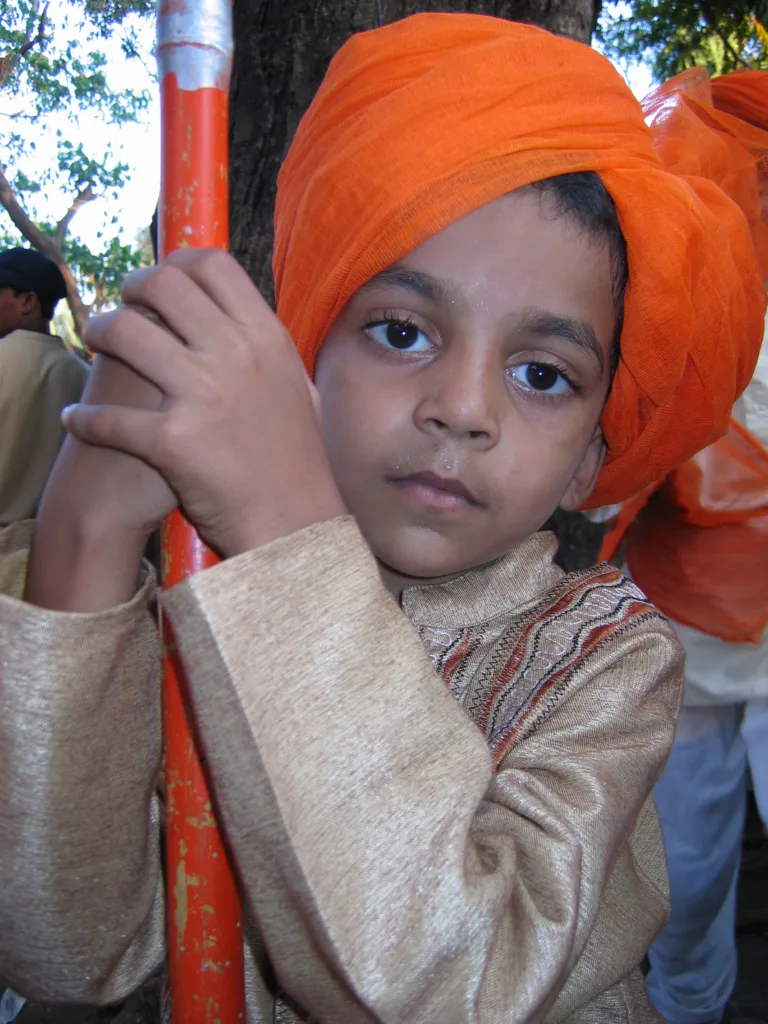
Andaman Islands beach trip, 7D/6N from Port Blair, graded Easy, from Rs 23,500. Radhanagar, Elephant Beach, Neil Island…
A 2-day Kheerganga trek from Kasol: a 12 km climb from Barshaini to a Parvati Valley meadow at…
Uttarakhand road trip, 5N/6D from Delhi, graded Easy, from Rs 11,500. Rishikesh, Chopta and Tungnath, Auli and Nainital…