
Easy
Bijli Mahadev Trek
A short, temple-topped ridge walk above the Kullu Valley, famous for a lightning-struck Shiva lingam and one of…
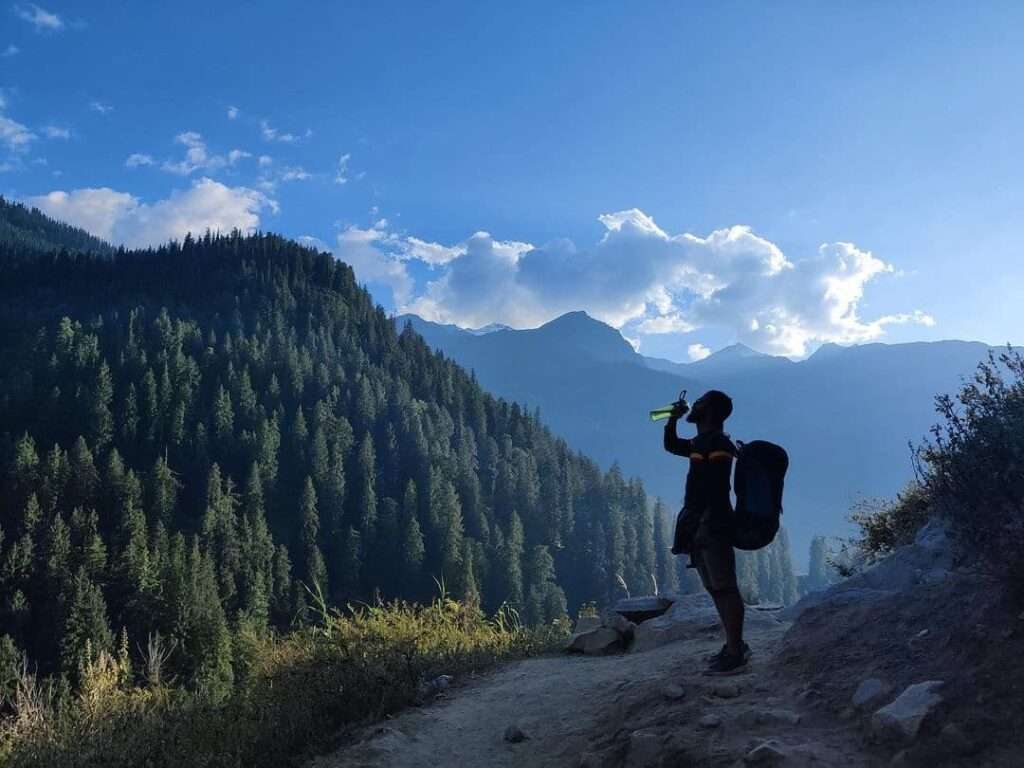
The Kheerganga trek is a short, popular walk in the Parvati Valley of Himachal Pradesh. It starts at the roadside village of Barshaini, at about 2,100 m (6,900 ft), and climbs roughly 12 km through pine and deodar forest, past streams and a waterfall, to a high meadow called Kheerganga at around 2,960 m (9,700 ft). At the top, a group of natural hot springs and a small Shiva temple wait for you, with open views across the valley.
This WDRLUST version of the trek is built for people with limited time. You begin from Kasol, a riverside village at about 1,640 m (5,400 ft), spend one night in a tent at Kheerganga and walk back down the next morning. It is a compact plan, so it suits first-time trekkers, friends looking for a weekend escape and anyone who wants a night in the mountains without taking a week off work.
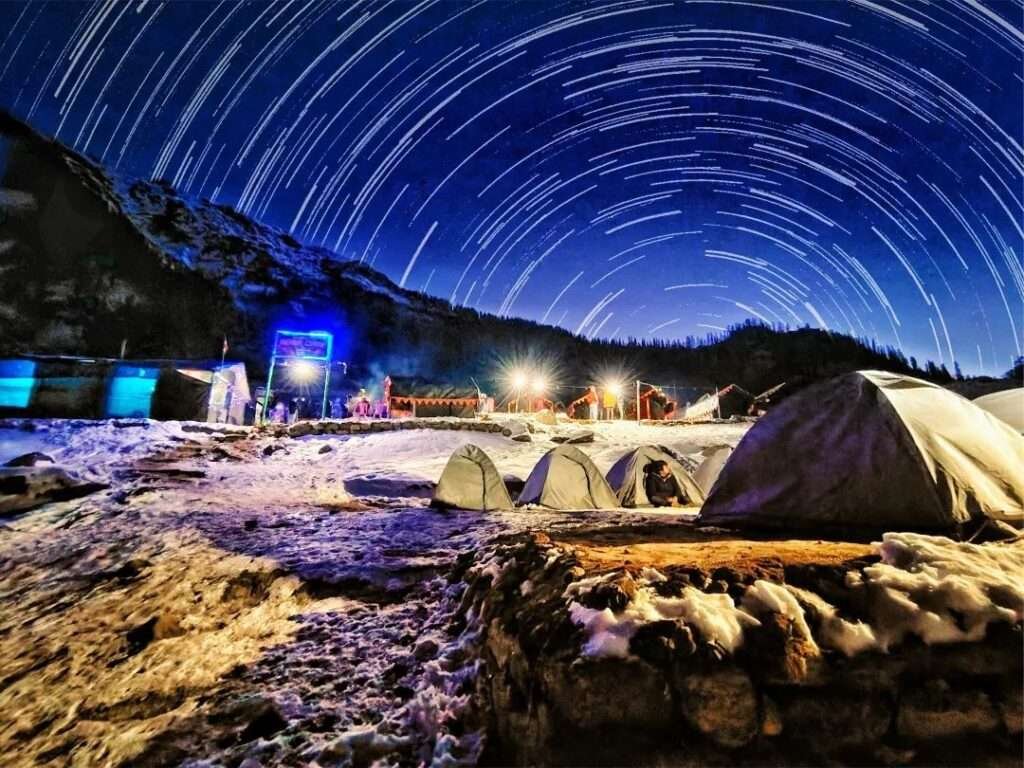
Day 1, Kasol to Barshaini to Kheerganga: After breakfast at the camp in Kasol, you drive to Barshaini and begin the trek. The trail covers about 12 km and gains roughly 860 m. Most people take four to six hours depending on pace and the number of stops. At the top you can visit the hot spring, settle into your tent, have dinner and sit around the bonfire.
Day 2, Kheerganga to Barshaini: Wake up to the morning views, have breakfast and walk back down the same trail. The descent usually takes around three to four hours. The trek ends at Barshaini. The detailed day-wise plan, with timings and meals, is in the itinerary section of this page.
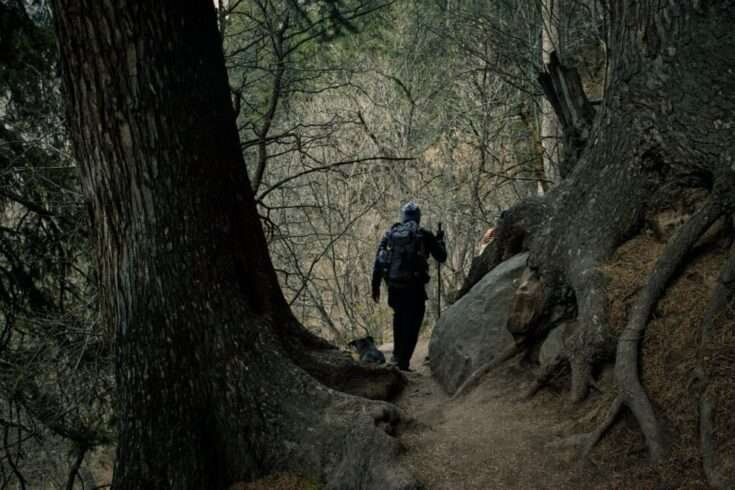
From Barshaini, the path crosses the Parvati River on a bridge and then starts to climb. The first section runs through the village of Barshaini and its apple orchards, then moves into forest. Expect a mix of stone steps, dirt paths and a few rocky sections. The gradient is steady rather than brutal, with short steeper pitches that tire the legs more than the lungs.
The village of Nakthan, roughly the middle of the walk, is a common place to rest. Further up, the trail crosses side streams on small wooden bridges and passes near the Rudranag waterfall. In the last stretch the trees thin out and the meadow opens up. Kheerganga itself is a flat grassy shelf with tents, small eateries, the temple and the hot spring pools.
Because the route is popular and clearly marked, it is hard to lose the path in daylight. In rain or low cloud, though, the surface turns slippery and visibility drops, so stay with your guide.
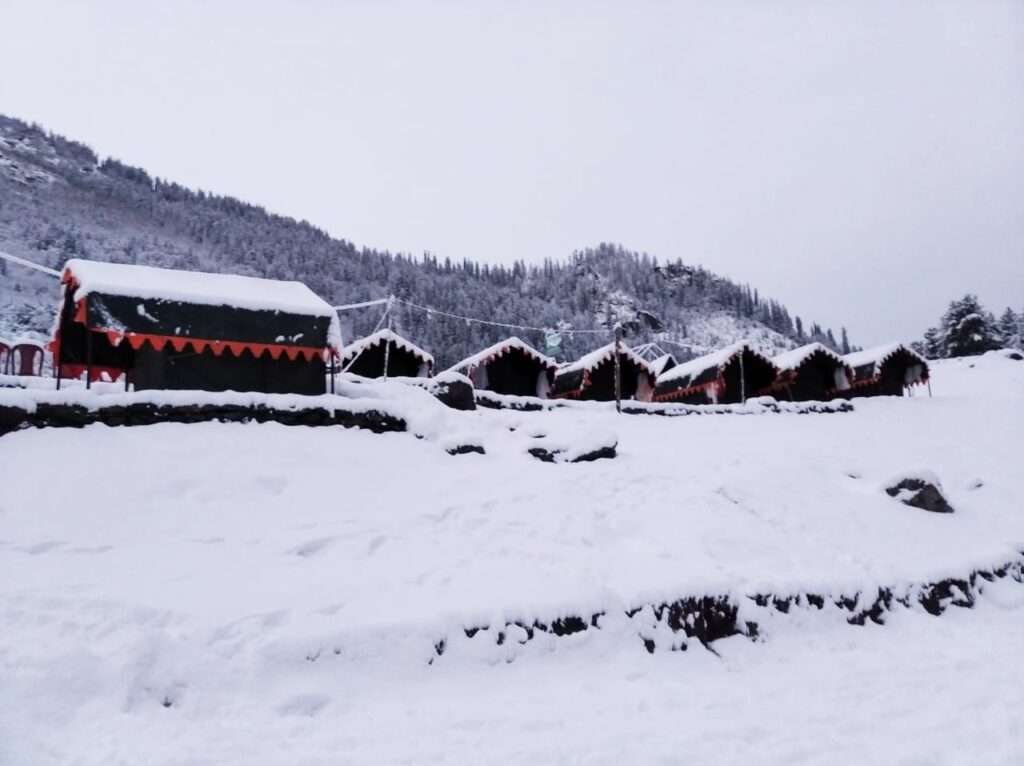
The most comfortable windows are April to June, when days are mild and the forest is green, and September to November, when skies are usually clear and the air is crisp. In the first half of the season, patches of old snow can linger near the top, and the nights are still cold.
July and August bring heavy monsoon rain to the Parvati Valley. Landslides on the road, swollen streams, slippery trails and thick cloud are common, and the weather can change quickly. Many trekkers avoid these months, and any plan in this period should depend on local advice and the latest forecast.
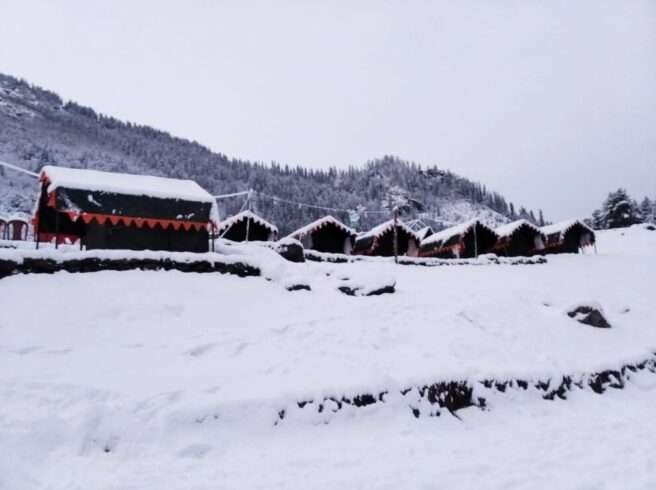
December to February is winter. The upper trail can be covered in snow and ice, and nights at Kheerganga fall well below freezing. You need proper winter layers and extra caution, and the trek may be changed or called off if conditions are poor. Whatever the season, check the forecast just before you travel and ask the team about trail conditions.
Most reasonably fit people find the Kheerganga trek easy to moderate. There are no technical sections and no need for equipment such as ropes or crampons in the main season. The effort comes from the length of the climb: about 12 km uphill with a pack, usually taking around four to six hours. The walk down is quicker but hard on the knees.
The highest point is under 3,000 m, so altitude is not a big concern for most people, though it can still affect some. If you have a heart or lung condition, or have had altitude trouble before, speak to a doctor before booking.
Your trek begins in Kasol, so plan your own travel there and try to arrive the day before or early in the morning, so Day 1 can begin on time. Confirm with the team at the time of booking how the Kasol to Barshaini transfer is arranged.
Sleeping bags, mattresses and tents are covered under the trek equipment listed in the inclusions, so you do not need to carry them. Keep your pack light, since you carry it for 12 km.
Keep a steady pace, drink water often and do not rush the climb. Stay on the marked trail, avoid walking after dark and take extra care on wet stones near streams and waterfalls. Stay with your group, listen to your guide and tell them early if you feel unwell.
The hot spring pools are shared, so take care when entering. The water is hot, and the steps can be slippery. Avoid staying in for long periods, do not go in if you feel dizzy or have been drinking alcohol, and keep valuables out of reach.
Kheerganga is a popular spot, and its fragile meadow takes a lot of footfall. Carry out all your rubbish, including wrappers and tissues, avoid single-use plastic where you can and keep soap and shampoo out of the springs and streams. Respect the temple and local customs, keep music low and do not pick plants or disturb animals.
This plan suits first-time trekkers, friends and small groups, solo travellers who prefer the structure of a guided group and anyone who wants a night in the Himalaya with limited time. It is a less natural fit for people looking for a remote, quiet or high-altitude experience, since the trail is busy in season and the meadow has plenty of other campers. If you want more time in the valley, look at the longer options listed at the end of this page.
No. It is usually rated easy to moderate. The trail is well used and has no technical sections, but it is a long climb, so basic fitness and a few weeks of walking practice help a great deal.
This package runs for two days with one night in a tent at Kheerganga. Day 1 is the climb from Barshaini, and Day 2 is the walk back down.
April to June and September to November are the most comfortable. The monsoon months of July and August bring landslides and slippery trails, and winter brings snow and very cold nights.
The package includes accommodation in tents, dinner and breakfast, and trek equipment such as sleeping bags, mattresses, utensils and tents. The itinerary also lists a bonfire and a guide for the trek.
GST at 5 percent is not included, and neither are costs arising from unforeseen conditions beyond the team’s control. The listing also notes that necessary permits are an exclusion, so confirm with the team what you need to arrange before you travel. Lunch is not part of the listed meals, so carry snacks or buy food at the tea stalls on the way.
Mobile coverage is generally usable in Kasol but patchy on the trail and often weak or absent at Kheerganga, depending on the operator. Do not rely on UPI or card payments on the trek. Withdraw cash in Kasol or Bhuntar before you start, because there are no ATMs on the route.
Yes. Solo travellers are welcome to join the group, so you walk with a guide and other trekkers rather than by yourself.
The risk is low because the highest point is around 2,960 m, but it is not zero. Drink water, walk steadily and tell your guide if you get a headache, nausea or dizziness. If symptoms get worse, going down is the safest response.
Generally yes, if you take simple precautions. The water is very hot in places, the surface can be slippery and the pools are shared, so enter slowly, limit your time and avoid going in if you feel unwell or very tired. Early morning and late evening tend to be quieter.
If you want a different format, these related plans cover the same part of the Parvati Valley:
After breakfast at the camp in Kasol, get ready and drive to Barshaini, the trailhead for Kheerganga. From here the trail climbs about 12 km along the Parvati valley, through pine and deodar forest, past small tea stalls, streams, the village of Nakthan and the Rudranag waterfall. Walk at a steady pace, drink water often and stop for snacks. Lunch is not listed in the meals, so carry food or buy it at the tea stalls on the way.
At the top, take a dip in the natural hot spring, settle into your tent, and finish the day with dinner and a bonfire.
Wake up to the morning light over the meadow, have breakfast and take a last look at the valley. Walk back down the same trail to Barshaini, where the trek ends. Go slowly on the steep and loose sections, since the descent is hard on the knees.
A short, temple-topped ridge walk above the Kullu Valley, famous for a lightning-struck Shiva lingam and one of…
AMK - Alang Madan Kulang Trek Nestled in the heart of the Sahyadri Range in Maharashtra, the Alang…
Conquer the Heights of Spiti Valley If you’re craving a high-altitude adventure, the Kanamo Peak Trek is an…