
Moderate
Pindari Glacier Trek
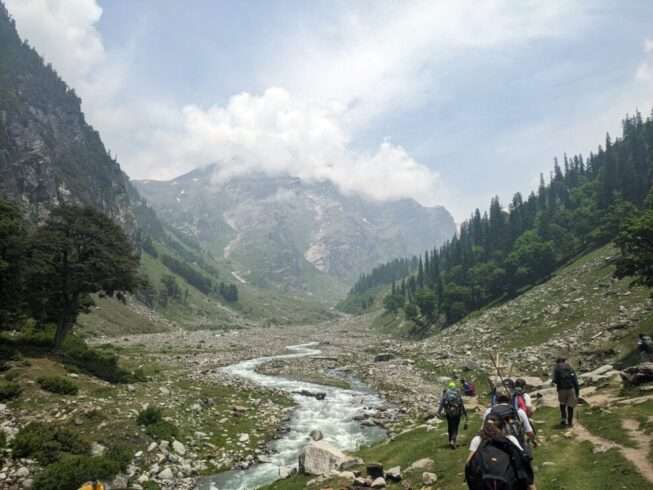
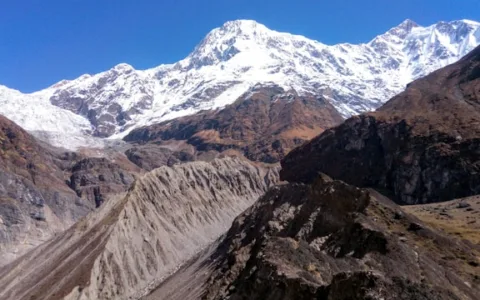
One of the oldest recorded trekking routes in the Kumaon Himalaya, following the Pindar river through traditional villages…
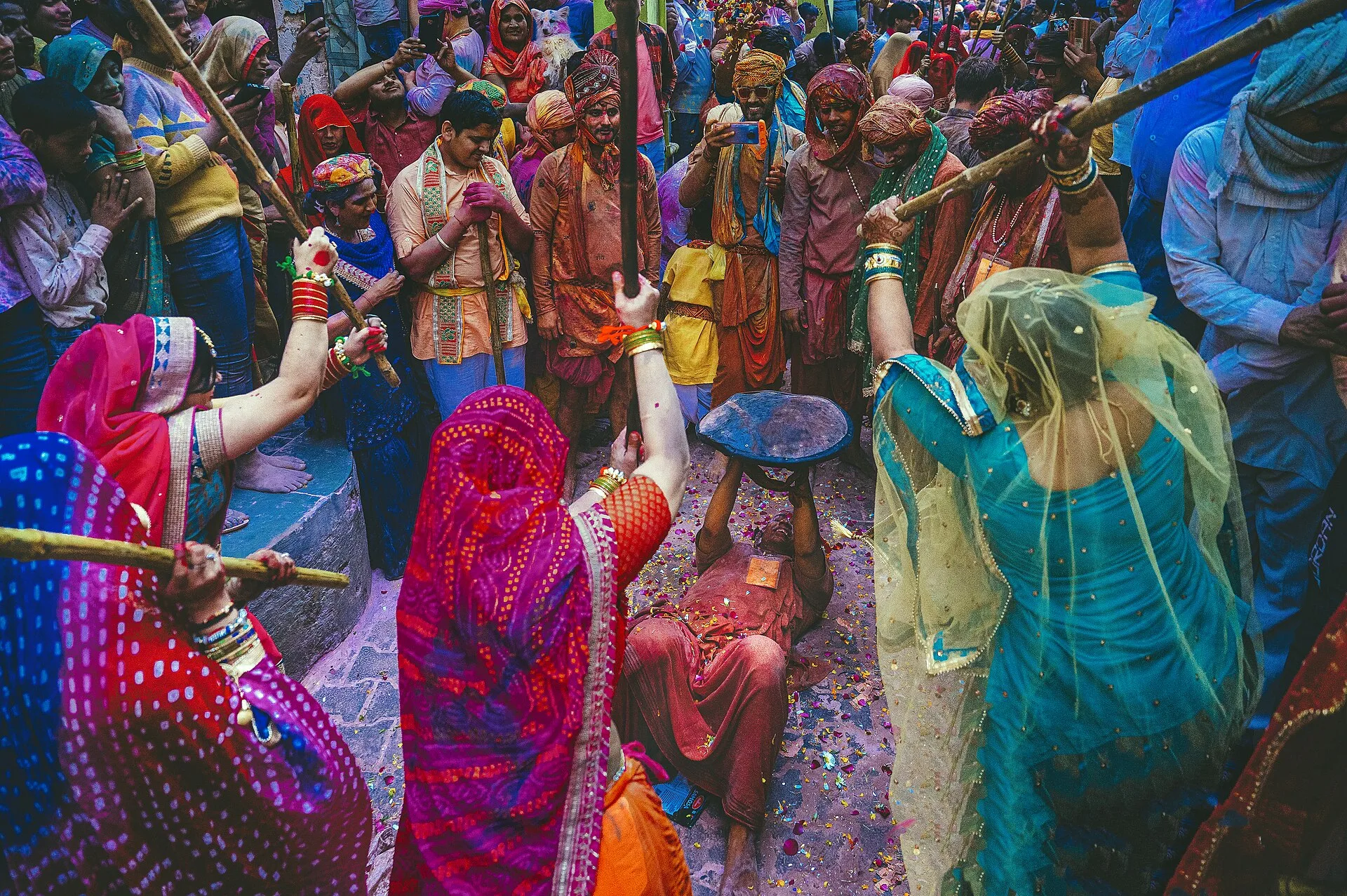
Lathmar Holi Braj runs 4D/3N from Delhi, graded Easy, from Rs 6,800 per person. Route: Delhi – Mathura – Barsana – Nandgaon – Vrindavan – Govardhan – Delhi.
The Braj region is the flat, dusty, intensely cultivated country south of Delhi where the Yamuna runs between Mathura and Agra. It is not dramatic landscape. What makes it distinct is density: within a radius of about forty kilometres sit Mathura, Vrindavan, Govardhan, Gokul, Barsana and Nandgaon, each attached to a specific episode in the Krishna stories, and each with its own festival calendar. The villages are built around temple tanks and narrow lanes, and the fields between them are mustard and wheat in February.
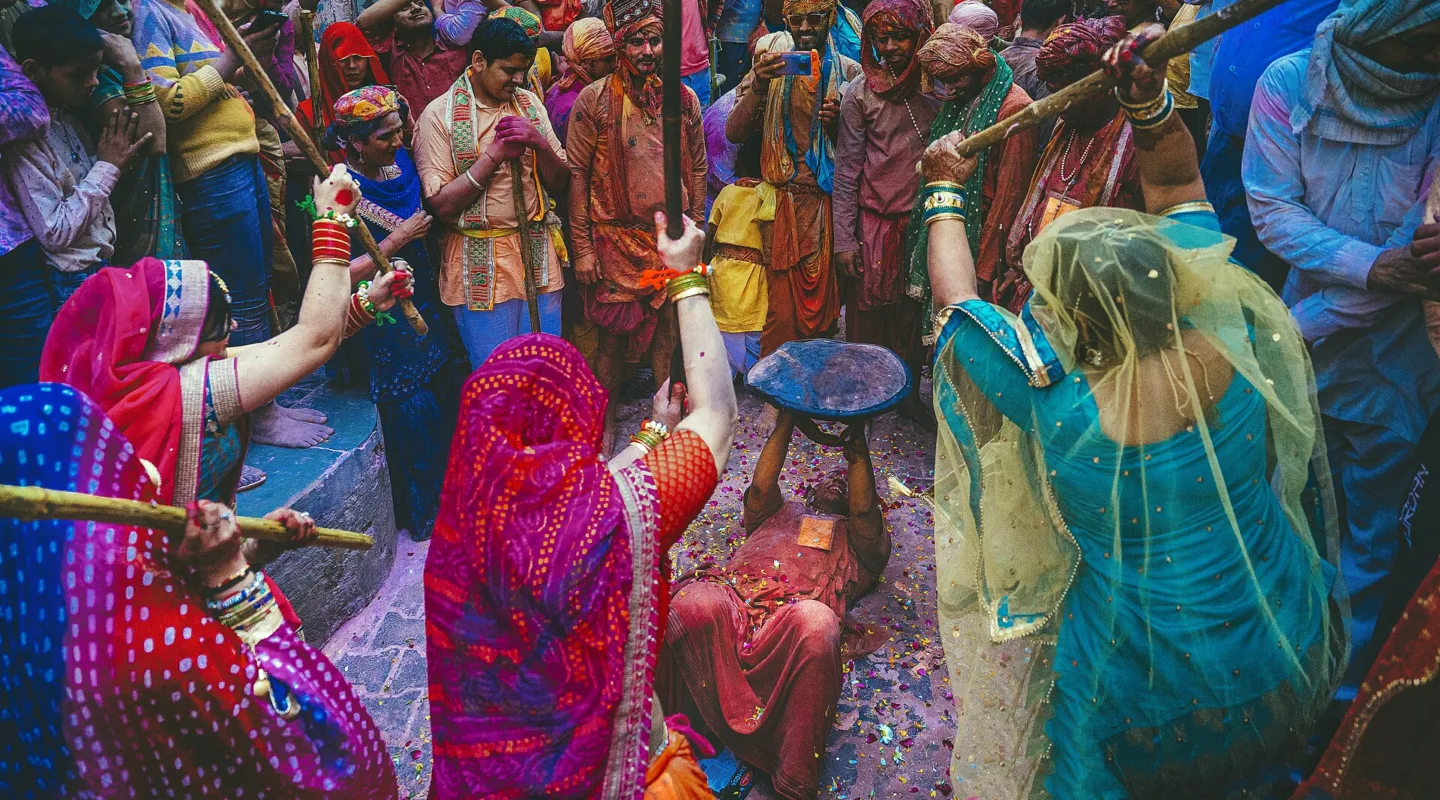
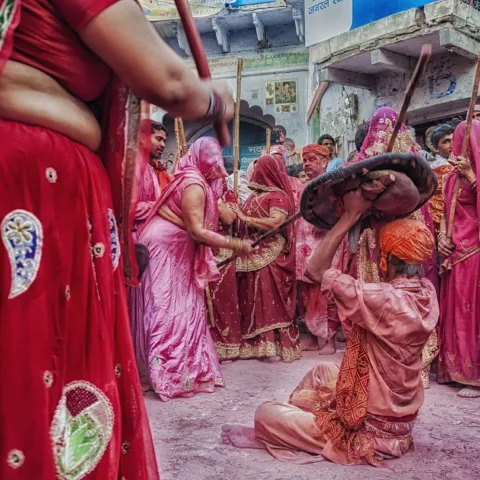
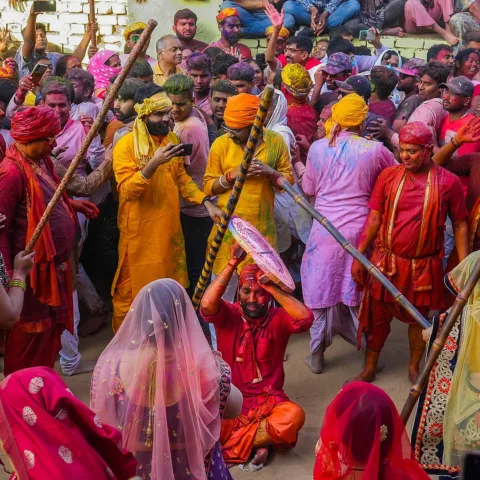
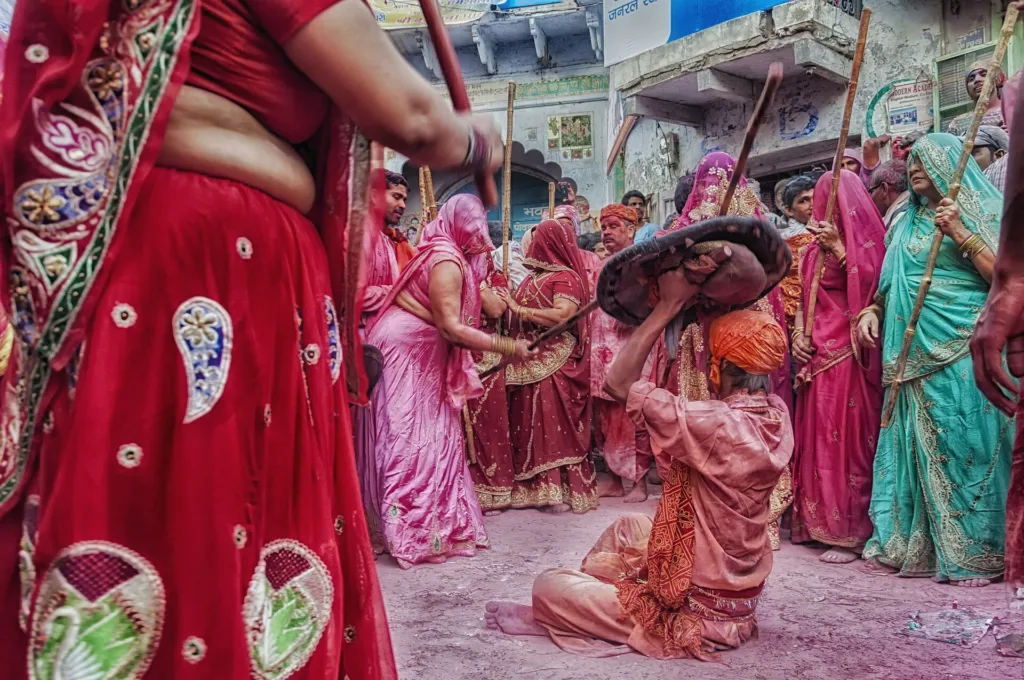
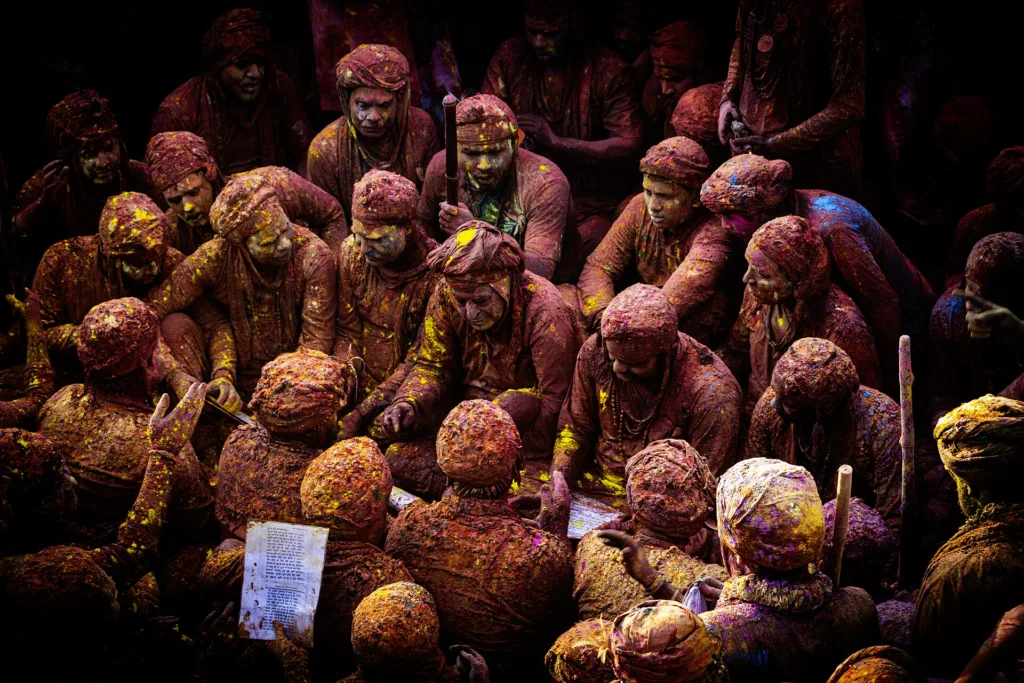
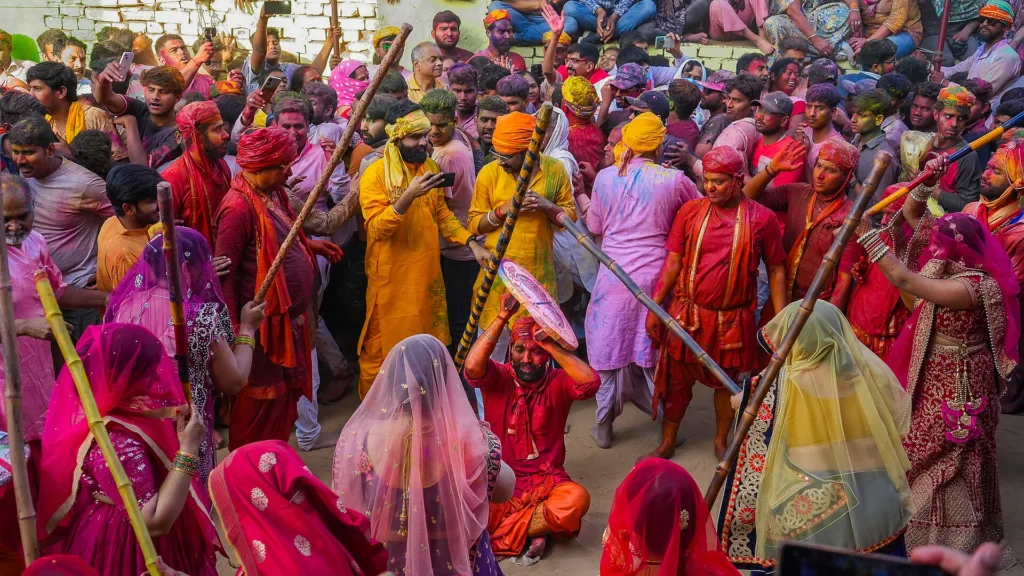
Lathmar Holi is the festival of two of those villages, and it is the one that visitors come furthest to see. Barsana is Radha’s village; Nandgaon, about eight kilometres away, is Krishna’s. The tradition reverses the usual order of Holi. The women of Barsana take up lathis, the long bamboo staves used for threshing, and chase the men who have come over from Nandgaon. The men carry shields and try to protect themselves, and anyone caught is made to dress in women’s clothes and dance. It is play, but it is played hard, and the crowd is enormous.
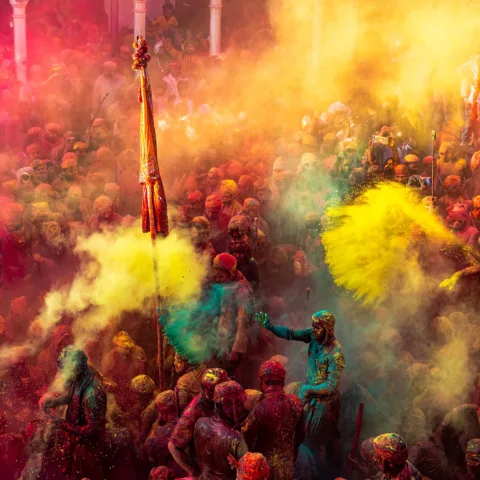
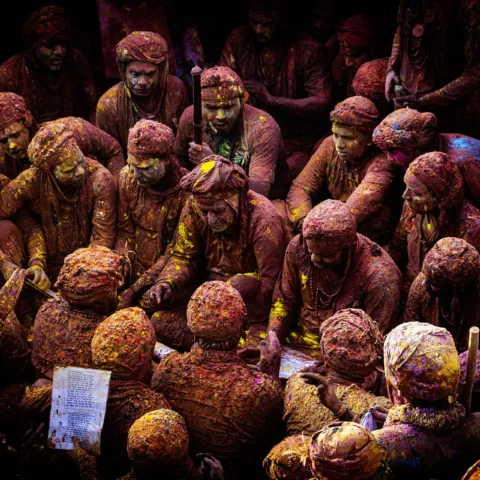
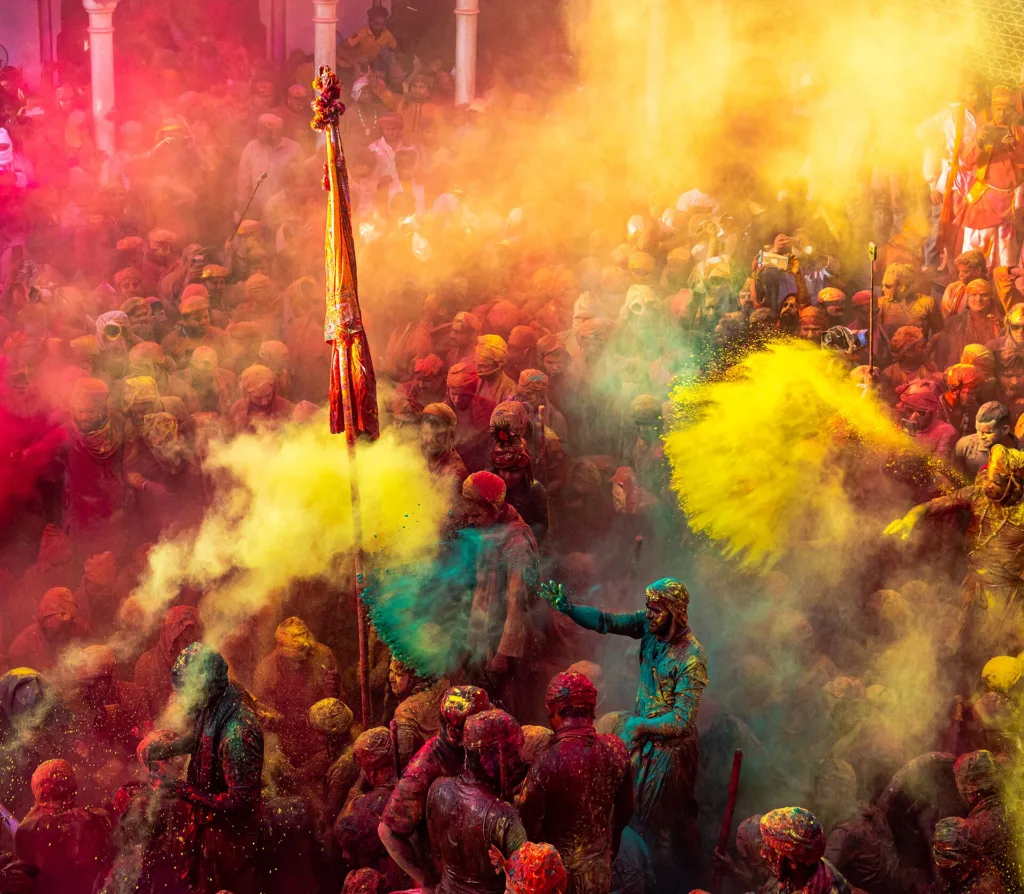
The colour comes first. Days before the lathi play, the men of Nandgaon travel to Barsana and are met with coloured water and powder at the Radha Rani temple, which sits on a hill above the village with a long flight of steps up to it. The lathmar itself happens in the lanes below and in the temple courtyard, and then the whole thing reverses a few days later when the women of Barsana go to Nandgaon. The dates fall roughly a week before Holi proper, so the trip is built around that window rather than around the main Holi day.
Delhi to Mathura is about 150 km on the Yamuna Expressway, a drive of two and a half to three hours. We use Mathura as the base because it sits at the centre of the circuit and has the only reliable hotel stock in the region. Barsana is about 40 km north-west of Mathura, Nandgaon about 8 km further on, and Vrindavan and Govardhan are both within 25 km of the city.
The first day is the drive down and an evening in Vrindavan, which is the most built-up of the Braj towns and the easiest introduction. The second day is the Lathmar Holi day at Barsana: an early start, because the lanes fill by mid-morning and the police close the approach roads to vehicles. We walk in from the outer parking and spend the day between the Radha Rani steps and the lanes below. The third day covers Nandgaon and Govardhan, including the Kusum Sarovar and the long embankment around the hill.
The return is on the fourth morning, back up the expressway to Delhi. Traffic on the expressway is heavy on Sunday evenings, so the plan brings the group back by early afternoon rather than late.
This trip suits travellers who want to see a festival that is genuinely local rather than staged for visitors, and who can handle dense crowds in narrow lanes. The walking is easy but the standing is not: the Lathmar day involves several hours on your feet in a moving crowd. It works for photographers with a wide lens and for anyone interested in the Braj cultural landscape. It is not suitable for young children, for anyone unsteady on their feet, or for travellers who dislike being touched and jostled.
The price covers three nights of hotel accommodation in Mathura on twin sharing, all road transport from Delhi in a private vehicle, breakfast and dinner daily, a local Braj guide for the festival days, and the parking and access arrangements at Barsana and Nandgaon.
Lathmar Holi is played in February or March, roughly a week before Holi proper, with the colour ceremony at Barsana a few days earlier still. The dates follow the lunar calendar and shift each year, so confirm them before booking. The rest of the Braj circuit can be visited at any time, but the lathi play only happens on those days.
It is graded Easy. There is no trekking and no altitude. The walking is on flat ground, but the Lathmar day means several hours standing and moving slowly in a dense crowd in narrow lanes, which is more tiring than the distance suggests.
No. Ordinary fitness is enough. You should be comfortable standing for long stretches and walking a kilometre or two at a time. Anyone who finds crowds difficult, or who has a heart condition, should think carefully before joining the Lathmar day.
Yes. Solo travellers are welcome and are paired in twin sharing with another traveller of the same gender, or can pay a single supplement. The group moves together through the village, which is the safest way to experience the crowd.
Three nights in a mid-range hotel in Mathura on twin sharing, with attached bathrooms and hot water. Mathura has the most reliable hotel stock in the Braj region; Barsana and Nandgaon have very little, which is why the trip is based in the city and drives out each day.
Mobile coverage is good across Mathura, Vrindavan and Barsana, though data slows badly when the festival crowds peak. No permit is needed for Indian nationals. Foreign nationals should carry their passport and visa. Drones are not permitted at the festival sites.
Start with the Uttar Pradesh destination hub for the rest of our trips in the state, or browse all destinations and all activities. If you are still deciding what kind of trip suits you, the trekking section explains how we grade difficulty, and the Barsana and Nandgaon guide covers the practical detail on getting there and when to go.
Photo credits. Photographs on this page are from Wikimedia Commons and are used under the licences listed below. Each image is credited to its photographer; the licence terms apply to reuse of the image.
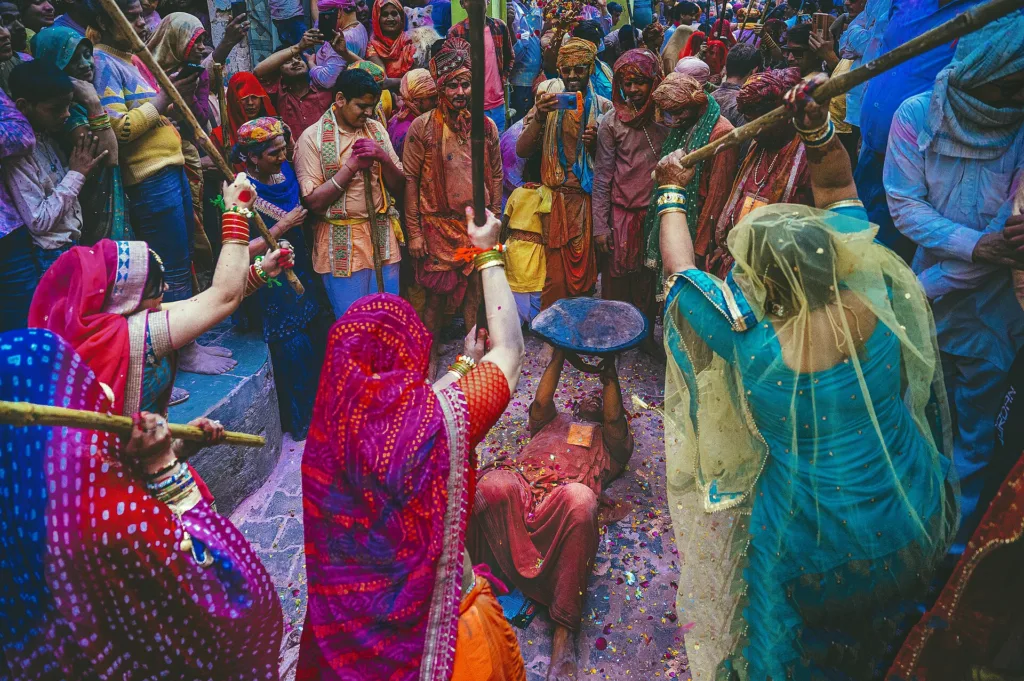
One of the oldest recorded trekking routes in the Kumaon Himalaya, following the Pindar river through traditional villages…
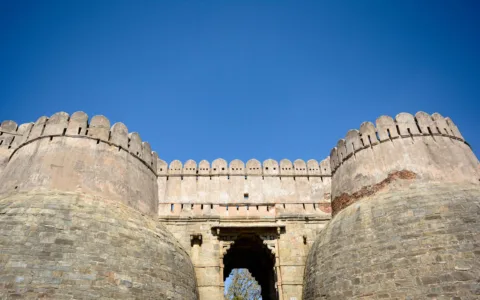
Kumbhalgarh Fort Trek, 2D/1N from Udaipur. Walk the 36 km Aravalli ramparts to Badal Mahal, plus a Kumbhalgarh…
Introduction Nestled in the lap of the Himalayas, the Hampta Pass Trek stands as a testament to the…