
Difficult
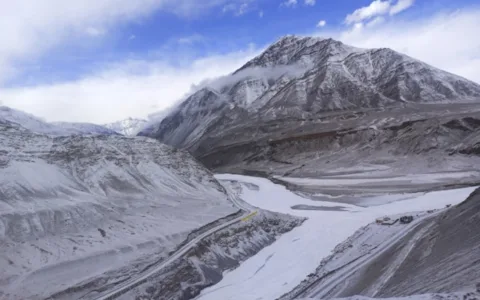
Chadar Trek — Frozen Zanskar River
Walk on a sheet of ice laid over the Zanskar river in the depths of a Ladakhi winter…
If there is one trek that captures the particular blend of stark landscape and living Buddhist culture that draws people to Ladakh, it’s the Markha Valley trek. Unlike higher, more technical Ladakhi routes, Markha Valley is built around a chain of inhabited villages strung along the Markha river, meaning trekkers sleep in family-run homestays rather than tents for much of the route, and the trek doubles as a window into a way of life that has changed remarkably little despite Ladakh’s growing tourism economy.
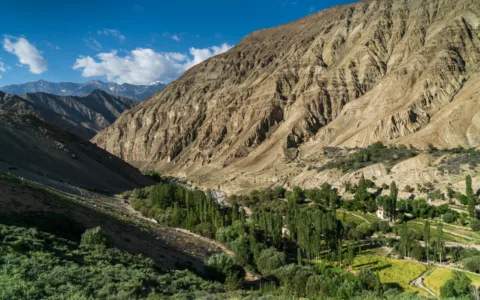
The trek typically begins at Chilling or Zingchen, near Leh, and crosses the Ganda La pass early on before dropping into the Markha valley proper. From here, the trail follows the river through a series of villages — Skiu, Markha, Umlung, Hankar — each built around small monasteries, chortens, and mani walls that trekkers pass on the correct side according to Buddhist tradition, a small daily ritual that becomes second nature within a day or two. Barley fields, a startling green against the surrounding brown desert slopes, ring each village, irrigated by meltwater channels that have been maintained by hand for generations.
Markha village itself, roughly the trek’s midpoint, is the valley’s largest settlement and home to a small monastery affiliated with the Hemis lineage, one of the most significant Buddhist institutions in Ladakh. Staying overnight here, trekkers often get the chance to sit in on evening chanting or simply share butter tea with a homestay family, and these unscripted cultural encounters are frequently what people remember longer than the passes themselves.
The trek’s dramatic centrepiece, though, is Kang Yatse, a 6,400-metre peak that dominates the skyline above Hankar and Nimaling, the high summer grazing meadow where the valley trek and technical Kang Yatse climbing expeditions typically diverge. Nimaling itself, a vast open pasture at over 4,700 metres used by nomadic herders through the summer, offers one of the widest unobstructed mountain panoramas in the entire trek, with Kang Yatse’s twin summits visible for a full day’s walk in either direction.
From Nimaling, the trek crosses its second and higher pass, Kongmaru La, at 5,260 metres — a demanding but non-technical climb rewarded with views stretching back over the Markha valley and forward towards the Indus, with the Karakoram range faintly visible on exceptionally clear days. The descent from Kongmaru La is long and knee-testing, dropping through a narrow, colourful gorge of eroded rock formations before emerging near Hemis, home to Ladakh’s largest and wealthiest monastery.
Markha Valley works well as a first Ladakhi trek precisely because it balances genuine high-altitude challenge — two passes above 4,900 metres — with the comfort and cultural richness of homestay accommodation and a well-established trail infrastructure. Best attempted between June and September when the high passes are clear of snow, it remains, deservedly, the single most trekked route in Ladakh.
Arrive in Leh (3,500m). Rest day for acclimatisation.
Local sightseeing and short walks to aid acclimatisation.
Drive to Zingchen, trek to Yurutse village.
Cross Ganda La pass (4,970m) and descend to Skiu village on the Markha river.
Trek along the Markha river, passing several small villages, to Markha village.
Trek to Hankar and climb to the high pasture of Nimaling (4,700m), views of Kang Yatse.
Cross Kongmaru La (5,260m), the trek's high point, and descend to Chogdo.
Trek out to Hemis monastery and drive back to Leh.
Walk on a sheet of ice laid over the Zanskar river in the depths of a Ladakhi winter…
Ladakh's gentlest trek — often called the 'baby trek' — links whitewashed gompas and willow-lined villages across the…