
Difficult
Stok Kangri Expedition
A genuine 6,000-metre summit within reach of trekkers with the right conditioning — Ladakh's most accessible high-altitude expedition…
Sham Valley has earned an affectionate nickname among Ladakhi trekking guides — the “baby trek” — not as a dismissal but as an accurate description of just how gentle and accessible it is compared to almost every other trekking route in the region. Where treks like Markha Valley or Stok Kangri demand serious altitude tolerance and multi-day exposure above 4,500 metres, Sham Valley stays comfortably within village-to-village terrain, rarely climbing above 3,700 metres, making it one of the very few genuine Ladakhi treks suitable for families, older trekkers, or complete first-timers to high-altitude walking.
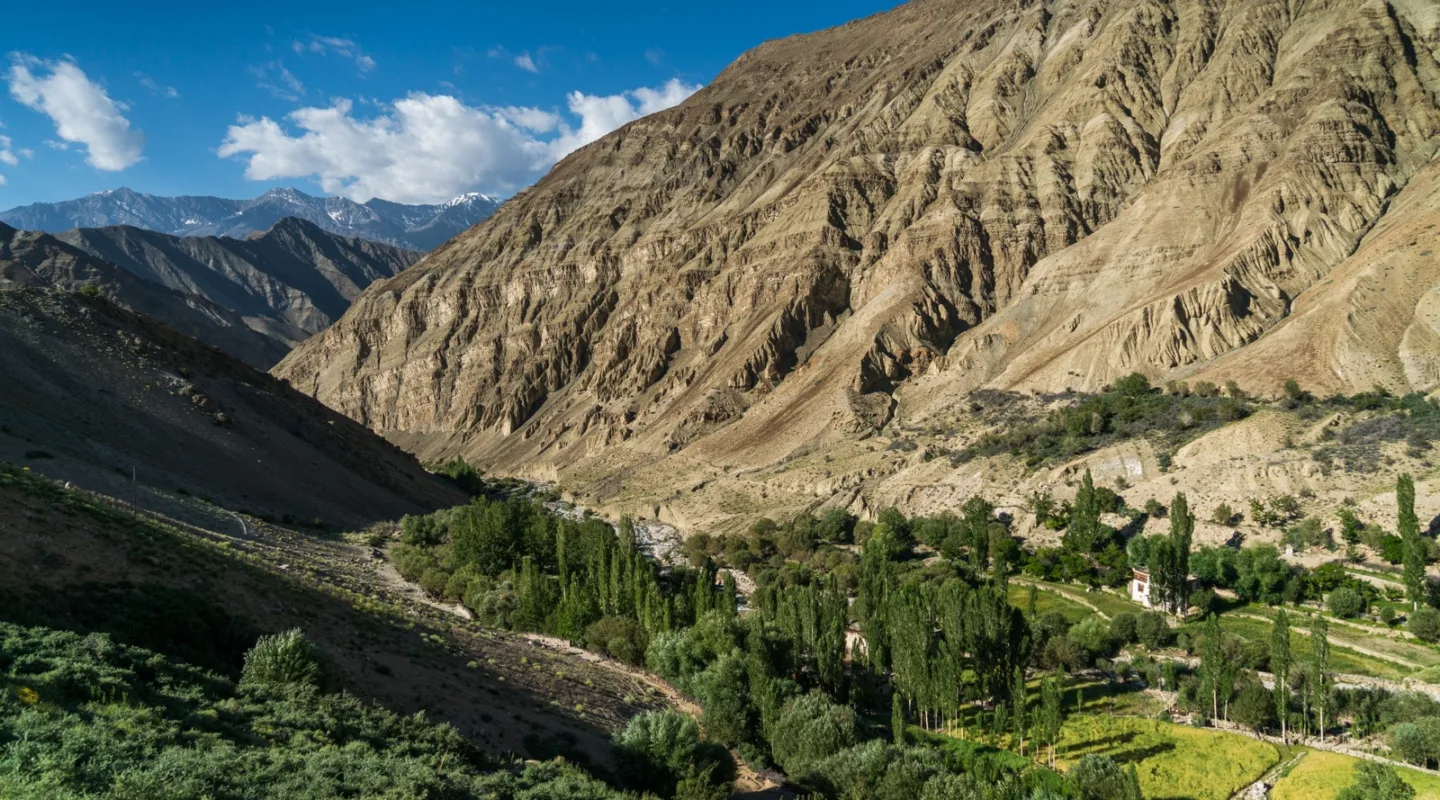
“Sham” itself refers to the lower, sun-facing side of the Indus Valley downstream from Leh, historically considered the more fertile and hospitable stretch of Ladakh compared to the harsher upper reaches further from the river. This agricultural gentleness defines much of the trek’s character — the route links a string of small, prosperous villages, their fields of barley and mustard irrigated by centuries-old channel systems, willow trees lining the pathways between houses built in the traditional whitewashed Ladakhi style.
The trek typically begins at Likir, home to one of Ladakh’s most significant monasteries, its distinctive 23-metre gold-painted statue of Maitreya Buddha visible from a considerable distance across the valley. From here the trail climbs gently over a low ridge to Yangthang, a small farming village where homestay accommodation is common, offering trekkers a genuine, unhurried glimpse into daily Ladakhi domestic life — sharing butter tea, watching barley being threshed by hand, or simply sitting in a family courtyard as the day’s chores continue around them.
Continuing through Hemis Shukpachan — named for the ancient juniper grove considered sacred by the village and protected from cutting for centuries — the trail passes some of the oldest trees in the entire region, their gnarled forms standing in stark contrast to the otherwise barren, rocky hillsides typical of Ladakh’s high-altitude desert landscape. The village itself is known for its apricot orchards, and depending on the season, trekkers are often invited to sample fresh or dried apricots directly from local families.
The trek’s final stretch typically passes through Ang and concludes at Temisgam, another village anchored by its own smaller but architecturally distinctive monastery and a modest royal palace, a reminder of the region’s history as a patchwork of small Ladakhi kingdoms before unification. Throughout the route, chortens and mani walls mark the trail at regular intervals, and the low-key, unhurried pace of the trek gives ample time to appreciate these details rather than rushing past them toward a distant pass or peak.
Because altitude gain is modest and daily walking distances short, Sham Valley works particularly well as either a gentle introduction to Ladakh trekking before attempting something more demanding, or as a standalone cultural trek for visitors more interested in village life and Buddhist heritage than high-altitude challenge. Homestay accommodation throughout most of the route also means the trek carries a distinctly warmer, more social character than the tented camps typical of harder Ladakhi treks — an easy, genuinely rewarding way to experience the region’s culture at close range.
Drive from Leh to Likir monastery, trek over a low ridge to the village of Yangthang.
Trek to Hemis Shukpachan, known for its ancient sacred juniper grove and apricot orchards.
Trek via Ang village to Temisgam, home to a small monastery and royal palace.
Drive from Temisgam back to Leh.
A genuine 6,000-metre summit within reach of trekkers with the right conditioning — Ladakh's most accessible high-altitude expedition…
Ladakh's most iconic village-to-village trek crosses two high passes and follows the Markha river past whitewashed monasteries, all…
Walk on a sheet of ice laid over the Zanskar river in the depths of a Ladakhi winter…