
Moderate
Langtang Valley Trek
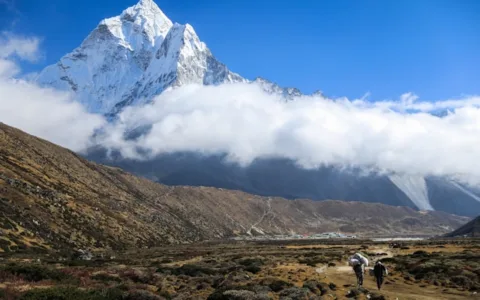
Overview of the Langtang Valley Trek The Langtang Valley Trek is a 8-day, 7-night moderate trek in Nepal…
Next Departure
27/11/2026
12 seats left
The Nepal Kathmandu Pokhara Road Trip runs 6N/7D from Kathmandu, graded Easy, from Rs 26,500 per person. Route: Kathmandu – Bandipur – Pokhara – Kathmandu.
This is a road trip through the middle hills of Nepal, and it is deliberately short on distance. Kathmandu to Pokhara is about 200 kilometres, and the drive takes most of a day because the Prithvi highway follows the Trishuli and then the Marsyangdi through country that is mountains and river gorges rather than plain. Over seven days the trip covers that road, the hill town of Bandipur in between, and four days in the Kathmandu valley.
Nepal is not India and the trip treats it as a foreign country, because it is one. Currency, permits, visa and the travel documents are all different, and the group crosses at a land border or flies in. What makes it worth the border crossing is that the two countries share a Himalayan geography and almost nothing else: the Kathmandu valley’s Newar cities are a distinct architectural tradition, and the middle hills are a different landscape from anything on the Indian side of the range.
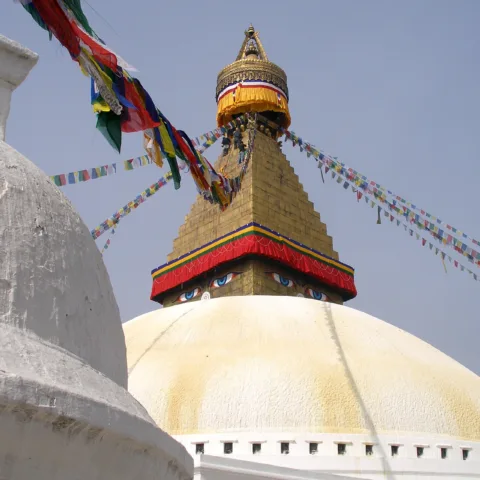
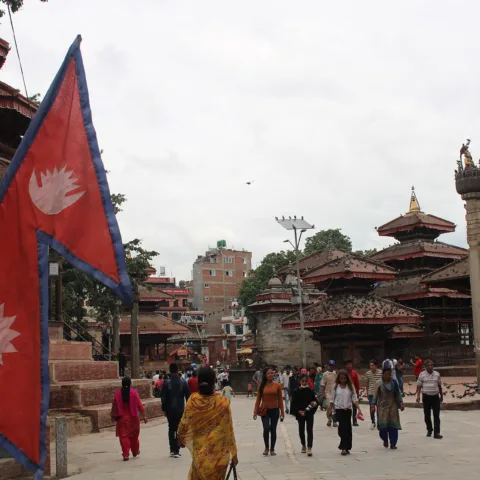
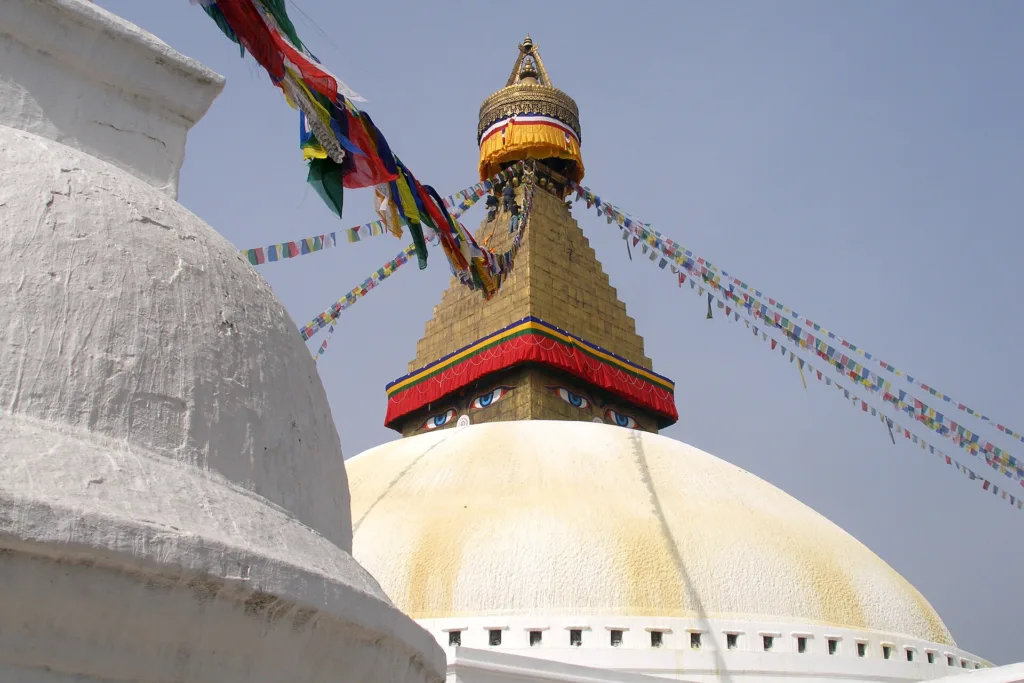
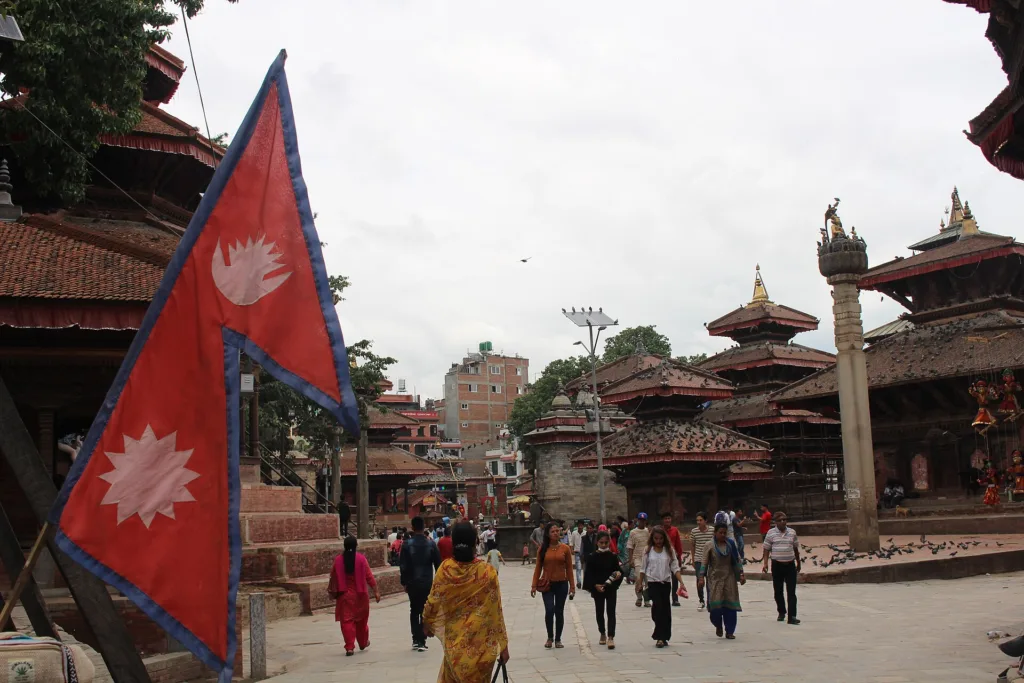
The Kathmandu valley held three Malla kingdoms — Kathmandu, Patan and Bhaktapur — each with its own Durbar square, and the rivalry between them produced the densest concentration of temple architecture in the Himalaya. The Kasthamandap, the wooden pavilion that gave Kathmandu its name, stood on the Durbar square until the 2015 earthquake; the reconstruction has been slow and contested. Boudhanath, the great stupa north-east of the city, is one of the largest in the world and the centre of Tibetan Buddhism in exile in Nepal, with monasteries ringing the circumambulation route.
The 2015 Gorkha earthquake damaged a great deal of this, and a visitor should know what they are looking at. Some temples have been rebuilt in their original form, some have been rebuilt in concrete, and some are still propped. Patan’s Durbar square and Bhaktapur have come back well. The reconstruction is part of the story now, not a distraction from it.
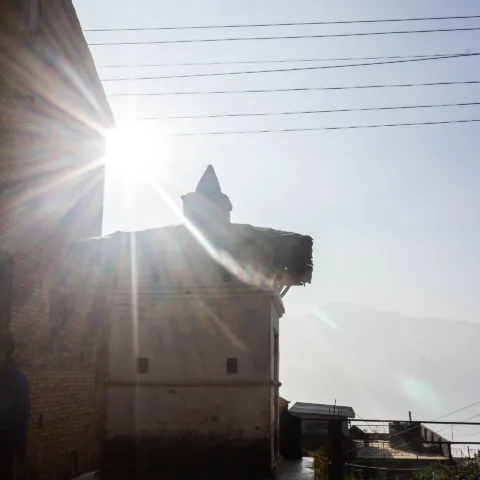
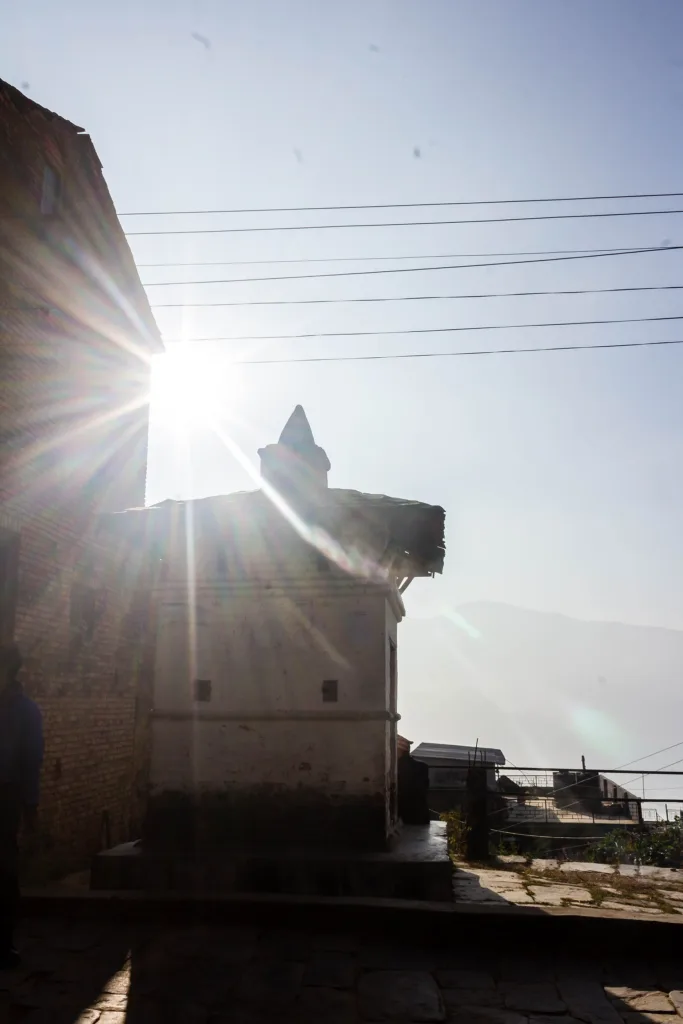
Between the two cities, the Prithvi highway follows the Trishuli river and then climbs into the hills. Bandipur sits on a ridge above the highway at about 1,030 metres, a Newar trading town that was bypassed when the road was built below it, and which has therefore kept its main street of nineteenth-century Newar houses almost intact. The car-free bazaar runs along the ridge with the Himalaya visible to the north on a clear day.
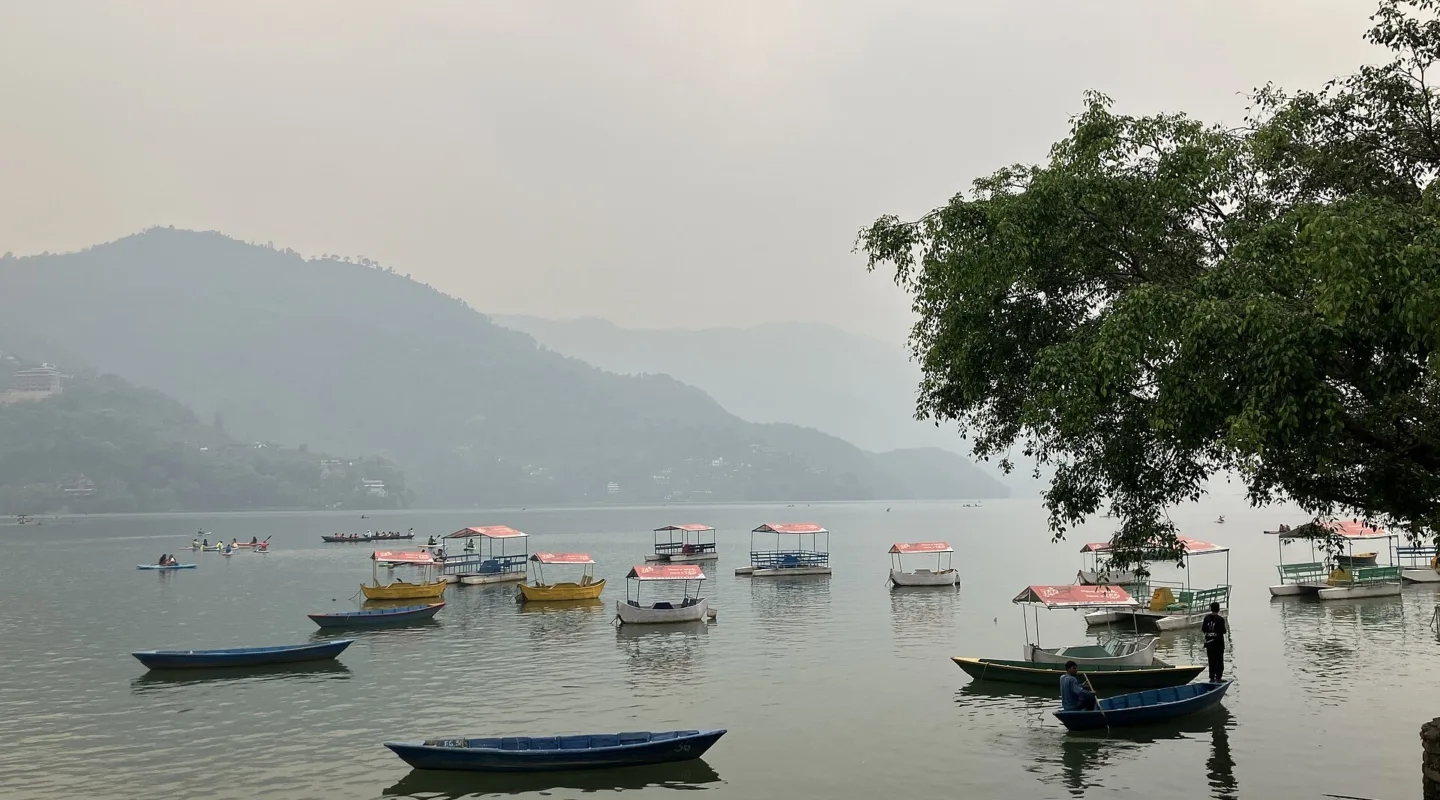
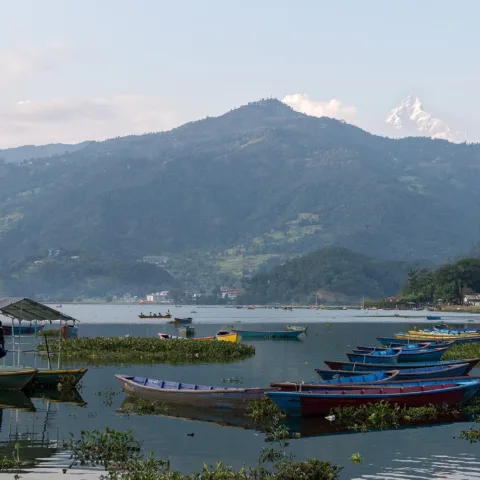
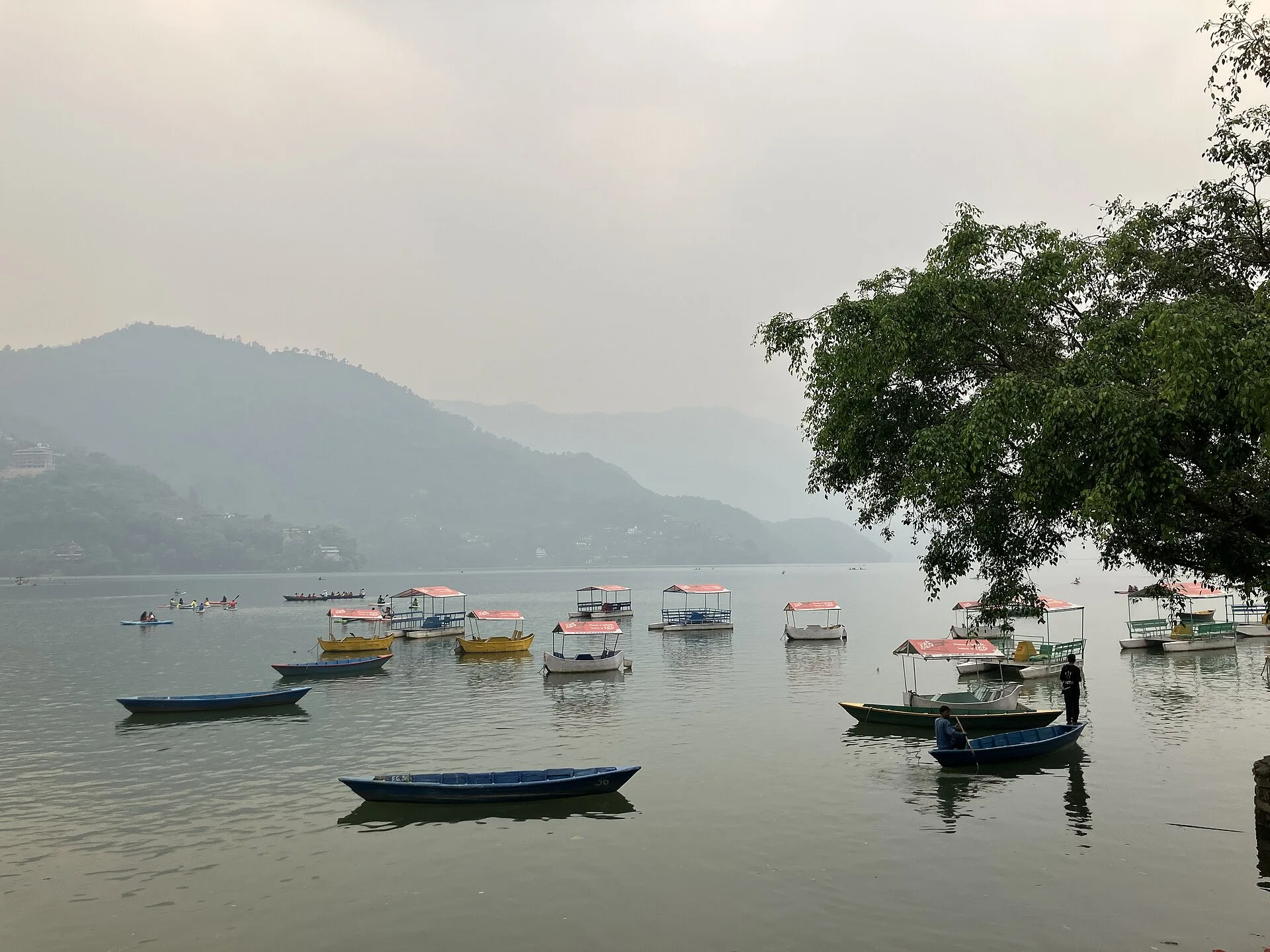
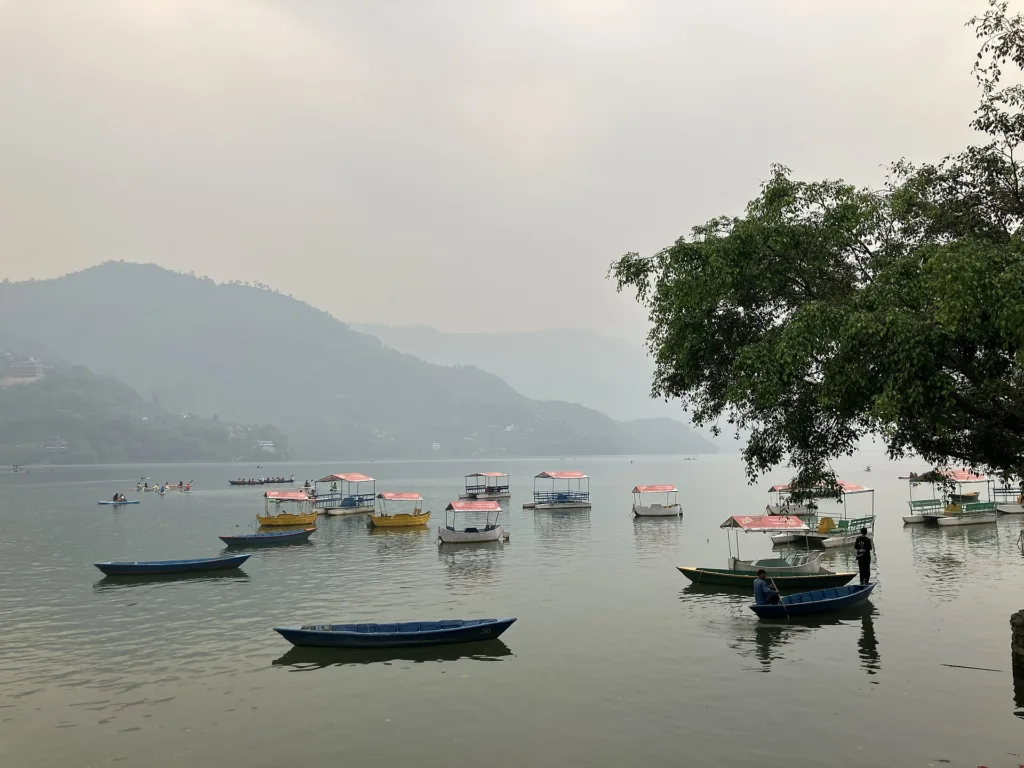
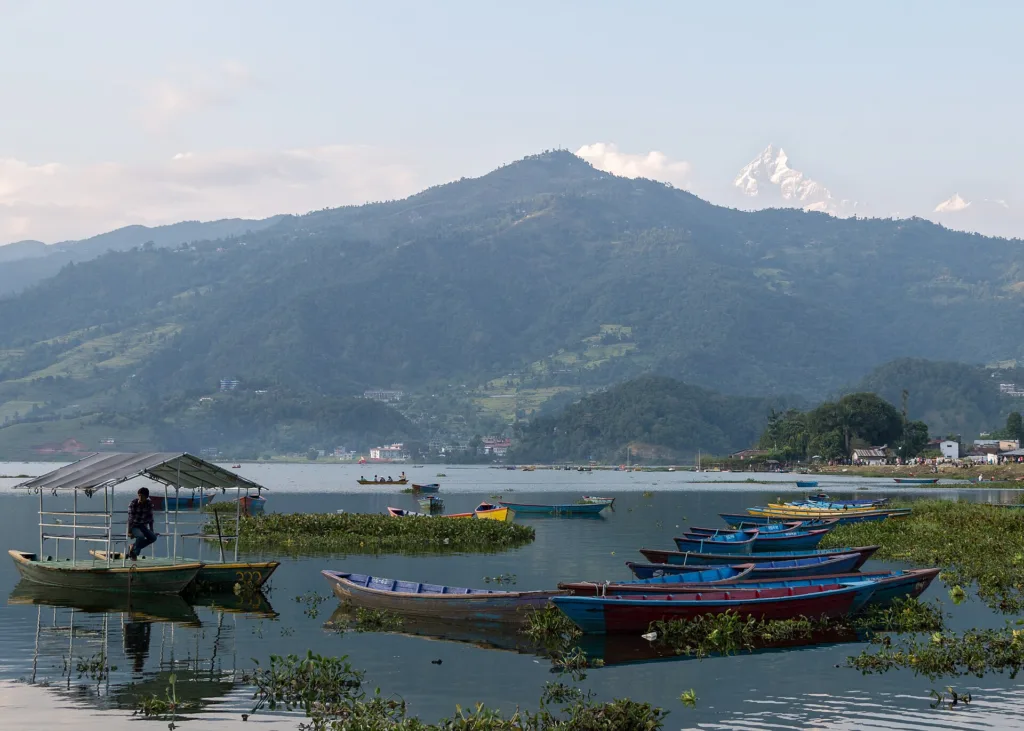
Pokhara is the other half of the trip. The town sits at about 820 metres on the shore of Phewa Lake, and the Annapurna massif — Annapurna I, Machhapuchhre, Annapurna South and the rest — stands across the valley, close enough that the scale is difficult to take in. Machhapuchhre, the fishtail, is the peak that defines the skyline. The lake is about four kilometres long, with the Tal Barahi temple on an island in it and the World Peace Pagoda on the ridge above the far shore.
The road trip is best in October to November, after the monsoon, when the air is clear and the mountains are visible from Pokhara and Bandipur. February to April is the second window, with rhododendron in flower on the hills and more haze in the valleys. The monsoon months are green and the mountains are usually hidden.
The group arrives in Kathmandu and spends the first two days in the valley: Kathmandu Durbar square and Boudhanath on day one, Patan and Bhaktapur on day two. The third day drives the Prithvi highway west to Bandipur, about 145 kilometres and five hours, and the evening is on the ridge. The fourth day continues to Pokhara, about 75 kilometres and two and a half hours, with the afternoon on Phewa Lake.
The fifth day is Pokhara: sunrise at Sarangkot on the ridge above the town, then the Peace Pagoda and the lake in the afternoon. The sixth day drives back to Kathmandu, about 200 kilometres and seven hours, and the seventh day is departure.
The Prithvi highway is a two-lane road with heavy truck traffic and it takes longer than the distance suggests. Landslides close it for hours during and after the monsoon, which is one reason the trip runs in the dry months.
This trip suits travellers who want the Himalaya without trekking, and who are interested in the valley cities as much as in the mountains. It suits photographers — the light on the Annapurna range at sunrise from Sarangkot is the single best-known view in Nepal, and it earns the reputation.
It is not a trekking trip and should not be sold as one. There is no altitude above about 1,600 metres anywhere on the itinerary, and the walking is in cities and on the lake shore. It also does not suit anyone who wants to move fast: the driving days are long and the road does not allow for more.
The price covers six nights in hotels in Kathmandu, Bandipur and Pokhara on twin sharing, breakfast and dinner daily, a private air-conditioned vehicle with a driver for the whole route, fuel, tolls and parking, all Durbar square and monument entry fees, the boat on Phewa Lake, and a local guide in the Kathmandu valley.
It does not cover the flight to Kathmandu, lunch, the Nepal visa fee, or the optional Sarangkot paragliding. Budget separately for the visa on arrival, which is paid in foreign currency or by card at Tribhuvan airport.
October to November, after the monsoon, when the air is clear and the Annapurna range is visible from Pokhara and Bandipur. February to April is the second window, with rhododendron in flower on the hills and more haze in the valleys. The monsoon months from June to September are green but the mountains are usually hidden and the highway is prone to landslides.
It is graded easy, and there is no altitude concern anywhere on the itinerary. Kathmandu sits at about 1,400 metres, Bandipur at about 1,030, Pokhara at about 820 and Sarangkot at about 1,600. All of these are well below the level at which altitude illness is a concern. The walking is in cities, on the lake shore and up short flights of steps.
A basic level. There is no trekking. The demands are two long driving days of seven hours on a mountain highway, early starts for the sunrise at Sarangkot and the kora at Boudhanath, and walking the Durbar squares. If you can manage a long day in a car, you are fit enough.
Yes. Twin-sharing accommodation, a trip captain throughout and communal dinners make it easy for solo travellers, and the group is capped at fourteen. Couples and friends travelling together do the same itinerary.
Six nights in hotels on twin sharing — three in Kathmandu, one in Bandipur and two in Pokhara. They are comfortable three-star properties chosen for position, in Thamel, on the Bandipur ridge and on Lakeside. Rooms have attached bathrooms and hot water. Singles who want a room to themselves can pay a single supplement, subject to availability.
Indian citizens need no visa for Nepal and can travel on a passport or an election card. Foreign nationals need a visa, available on arrival at Tribhuvan airport or in advance. No trekking permit is required on this route, since it stays on the highway and in the cities. Mobile coverage in Kathmandu, Bandipur and Pokhara is good for calls and data, and it holds along most of the Prithvi highway apart from the deeper gorges.
Explore related pages: All trips in Nepal · Browse all destinations · All activities · Kathmandu destination guide · Road trips in India.
Photo credits. Photographs on this page are from Wikimedia Commons and are used under the licences listed below. Each image is credited to its photographer; the licence terms apply to reuse of the image.
Overview of the Langtang Valley Trek The Langtang Valley Trek is a 8-day, 7-night moderate trek in Nepal…
The world's most iconic trekking route follows the Khumbu Valley through Sherpa villages and Buddhist monasteries to the…
A classic Nepal trek through Gurung villages, rhododendron forest, and hot springs, culminating in a natural amphitheatre of…