
Easy
Chopta Chandrashila Trek
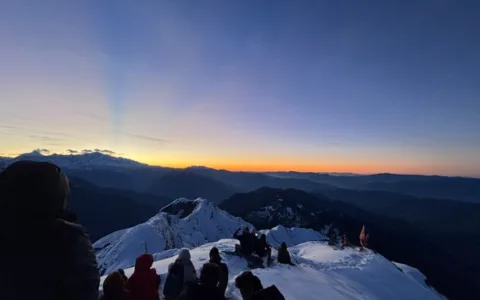
Often called the 'Mini Switzerland of India', this short trek combines the high-altitude Tungnath temple with a sunrise…
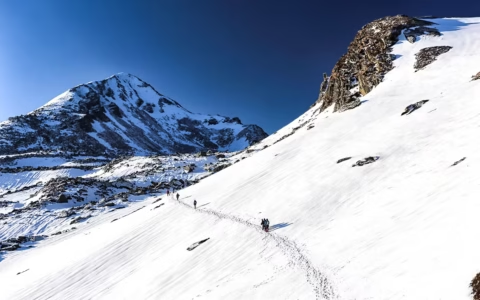
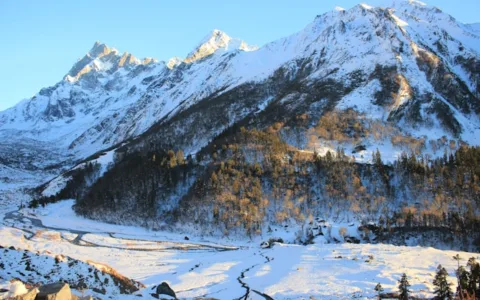
Brahmatal Trek owes its name to a legend that Lord Brahma, the Hindu creator god, meditated beside this small alpine lake, and the setting does feel suited to contemplation: a modest, frozen tarn tucked into a natural bowl, with Mt. Trishul (7,120m) and Nanda Ghunti (6,309m) rising directly across the valley in a panorama so unobstructed it has made this one of the most photographed winter treks in the Garhwal Himalaya. Unlike many high-altitude routes that keep the best views hidden until a final summit push, Brahmatal offers Himalayan giants in near-constant view for most of the trek.
The route begins at Lohajung, a small pass village that also serves as the gateway to Roopkund and the Ali-Bedni meadows, and climbs steadily through dense forests of oak and rhododendron. In winter these forests take on a particular hush — snow-laden branches, footprints of the occasional Himalayan pheasant, and a silence broken mainly by the crunch of boots on fresh powder. The village of Bekaltal, roughly a day into the trek, sits beside another small frozen lake and offers the first proper glimpses of the high peaks beyond the treeline.
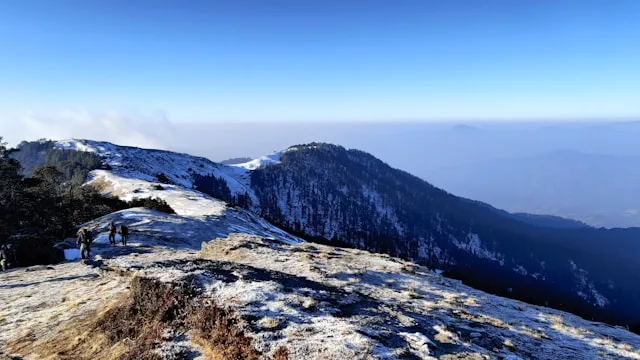
What distinguishes Brahmatal among Uttarakhand’s winter treks is the balance it strikes between accessibility and reward. The trail gains altitude gradually, and the trek is graded moderate rather than difficult precisely because there is no single brutal summit day — instead, the high point, Brahmatal Top at roughly 3,800m, is reached via a satisfying but manageable climb, rewarding trekkers with a full 360-degree view that includes Trishul, Nanda Ghunti, Mrigthuni, and on very clear days, glimpses towards the Chaukhamba massif.
Snow conditions vary considerably by month. December offers fresh, deep powder and the most dramatic photography, but also the coldest nights; February and early March typically bring firmer, more consolidated snow that is easier underfoot and slightly milder temperatures, making it the preferred window for first-time winter trekkers. Crampons or micro-spikes are standard equipment throughout the season, since even gentle gradients become treacherous under ice.
The frozen lake at Brahmatal itself is the trek’s emotional centrepiece — a flat white disc ringed by rhododendron, usually reached on the third day, where groups typically pause for an extended rest before the final push to Brahmatal Top the following morning. Local guides, most of them from Lohajung and neighbouring villages, know this route intimately and can read snow stability and weather shifts that would be invisible to a first-time visitor, which is part of why solo winter attempts on this trail are strongly discouraged.
For trekkers who want the drama of a full snowbound Himalayan expedition without committing to an eight- or nine-day itinerary, Brahmatal has become something of a benchmark — short enough to fit a long weekend, demanding enough to feel earned, and blessed with mountain views that punch well above its moderate rating.
Arrive at Lohajung (2,438m). Briefing and gear check.
Trek through oak and rhododendron forest to the frozen lake of Bekaltal (2,942m).
Climb through snow-laden forest to Brahmatal base camp, first views of Trishul and Nanda Ghunti.
Early summit push to Brahmatal Top (3,800m) for panoramic views. Descend to a lower camp.
Long descent back through Bekaltal to Lohajung village.
Drive from Lohajung to Kathgodam for onward journey.
Often called the 'Mini Switzerland of India', this short trek combines the high-altitude Tungnath temple with a sunrise…
A remote Kumaon expedition to the base of five sacred peaks said to mark the Pandavas' final cooking…
A gentle cradle-shaped valley steeped in Mahabharata legend, ringed by the Swargarohini peaks and home to some of…