
Difficult

Moon Peak Expedition
Moon Peak Expedition – Conquer the Heights of the Dhauladhar Range The Moon Peak Expedition is a thrilling…
The Pushkar Camel Fair runs 3N/4D from Jaipur, graded Easy, from Rs 7,200 per person. Route: Jaipur – Ajmer – Pushkar – Jaipur.
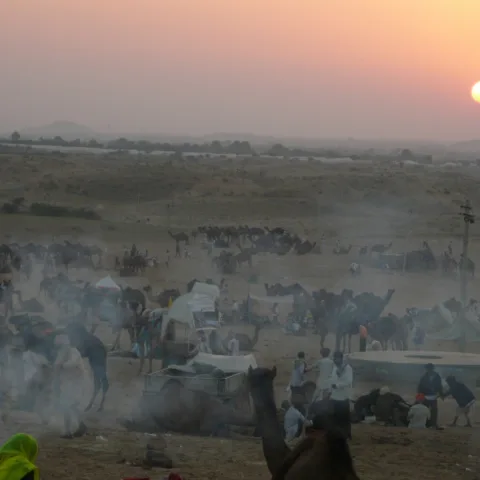
The Pushkar Camel Fair is Rajasthan’s largest livestock and cultural gathering, held every year in the small temple town of Pushkar in Ajmer district. It is anchored to the Hindu lunar month of Kartik rather than to a fixed Gregorian date, and it closes on Kartik Purnima, the full moon night of that month. In 2026 the fair runs from 17 to 24 November, with Kartik Purnima falling on 24 November. Because the lunar calendar periodically inserts an extra month, the fair can shift by up to a fortnight from one year to the next, which is why the dates are announced rather than assumed.
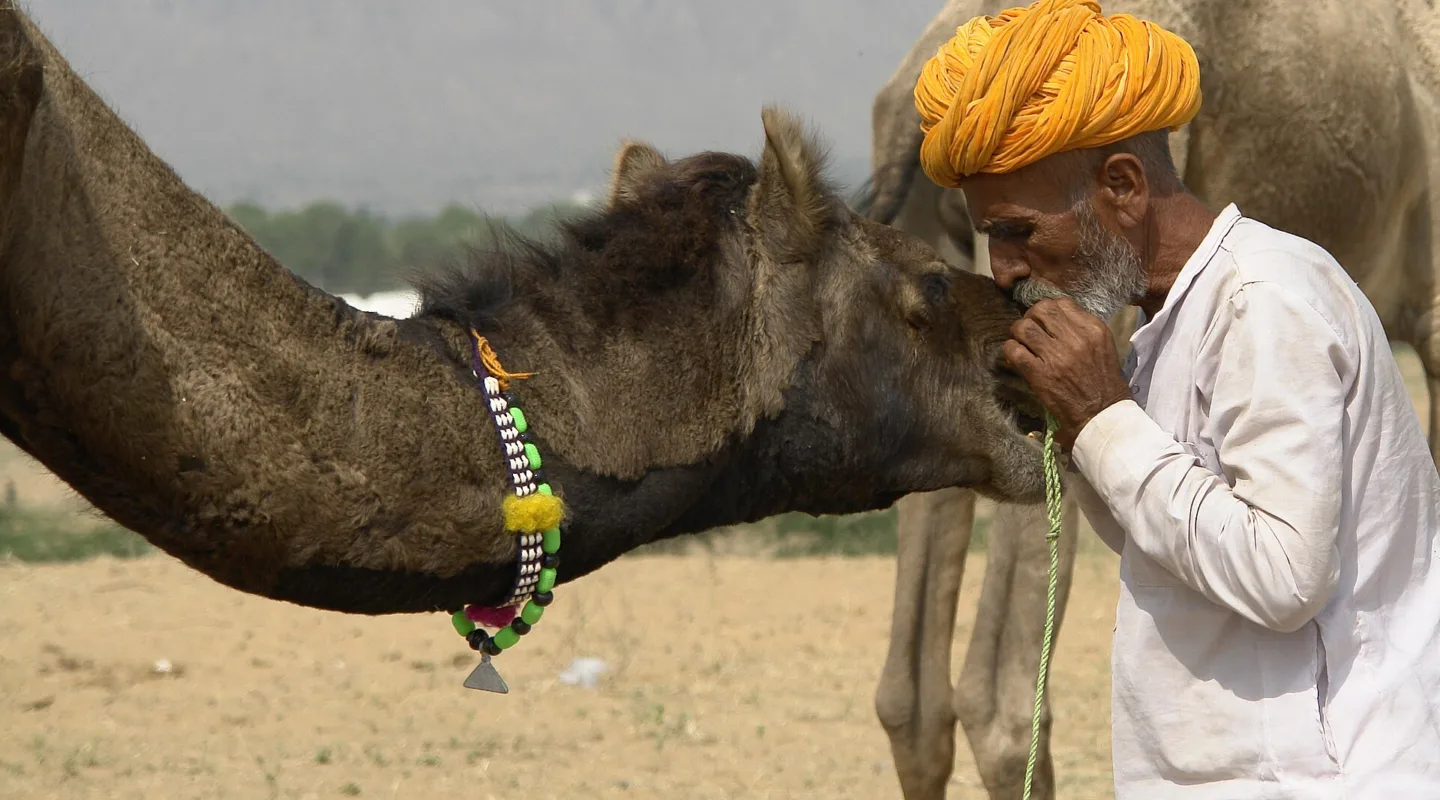
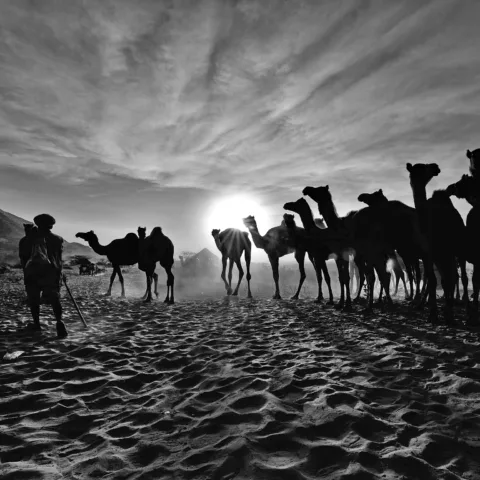
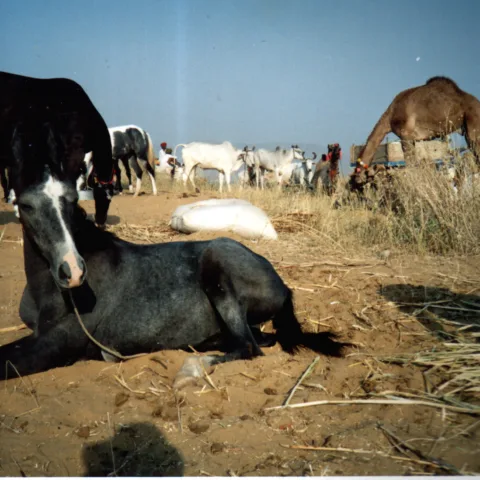
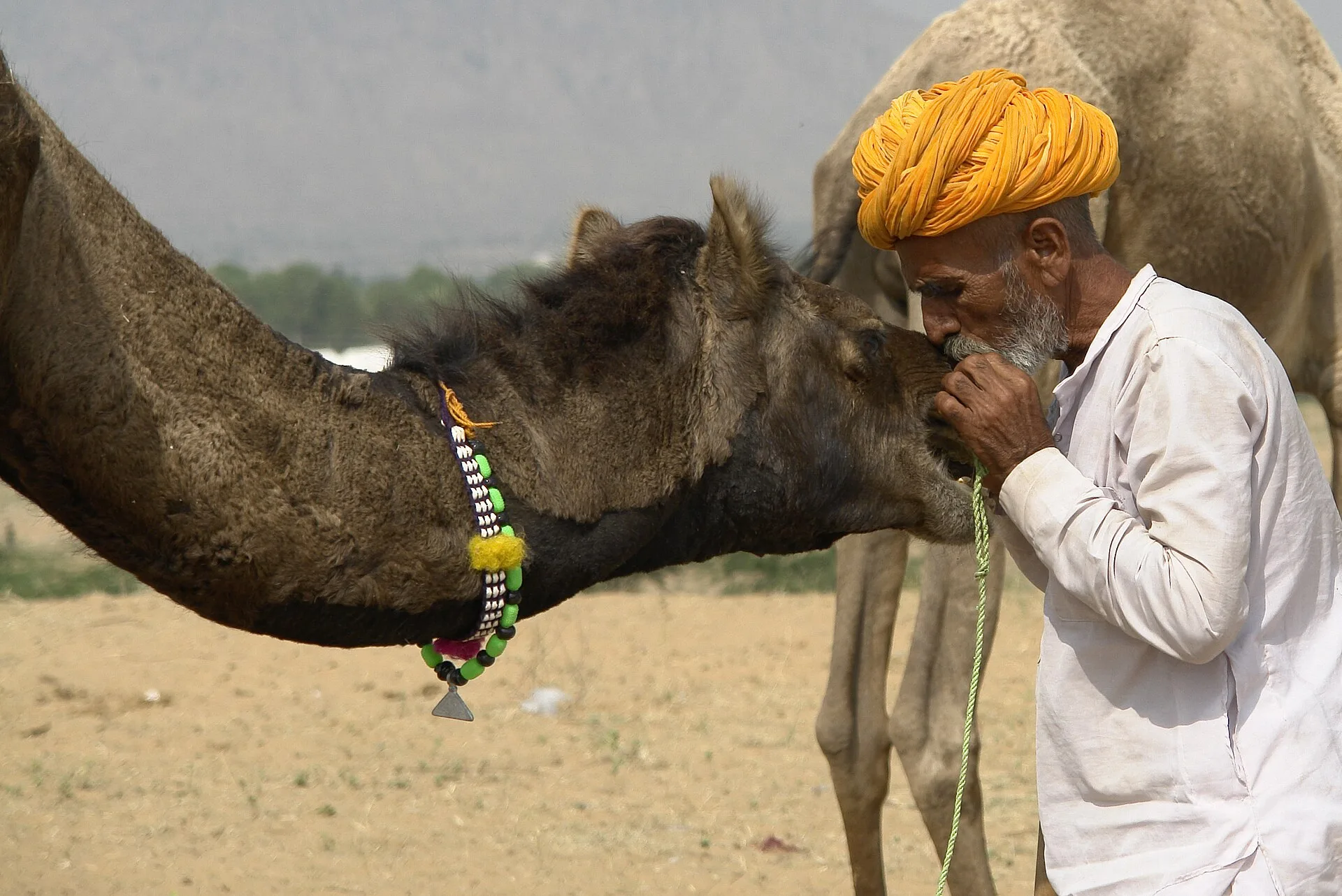
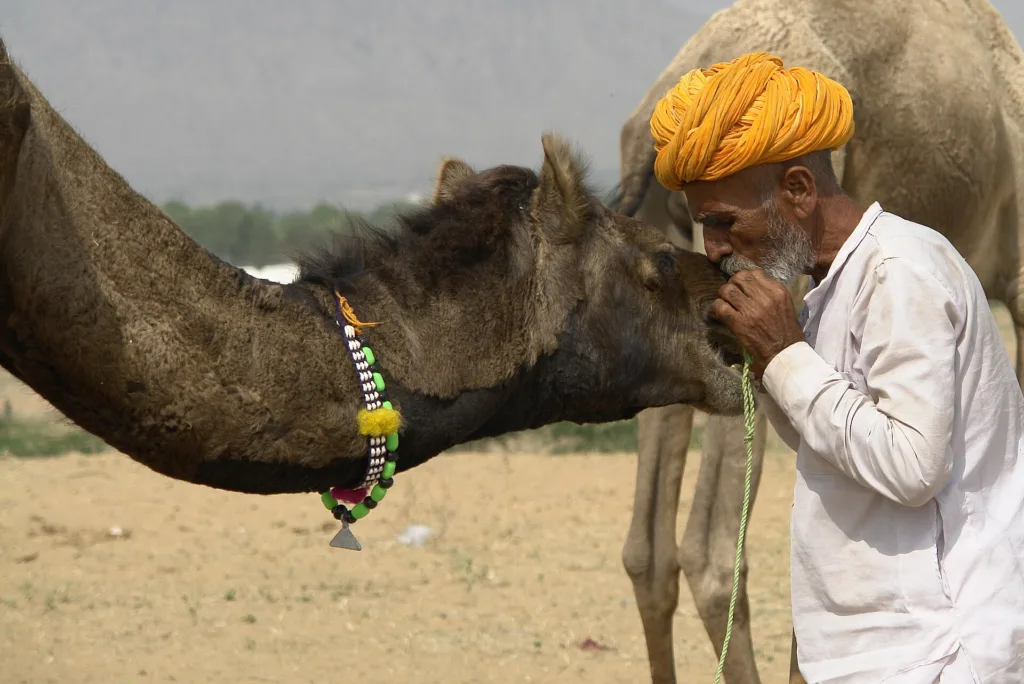
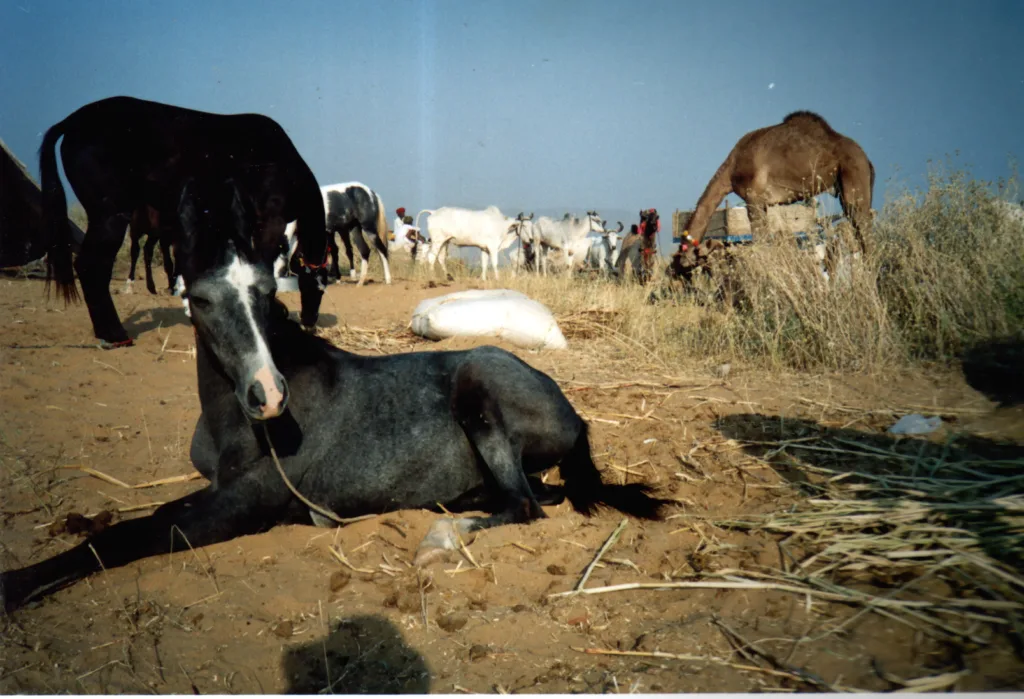
The fair grew out of two traditions meeting in one place. The first is the Kartik Purnima pilgrimage to Pushkar Lake, which is centuries old: pilgrims come to bathe in the lake on the full moon, and the town’s Brahma Temple, one of very few in India dedicated to Brahma, makes it a site of real religious weight. The second is the seasonal livestock market that pastoral communities hold after the monsoon, when the animals are in good condition and the desert has greened. Rabari and Raika herders have long brought camels, horses and cattle here to trade. Rajasthan Tourism began layering organised competitions and cultural programming on top in the late twentieth century, and the result is a fair that is part market, part pilgrimage and part festival.
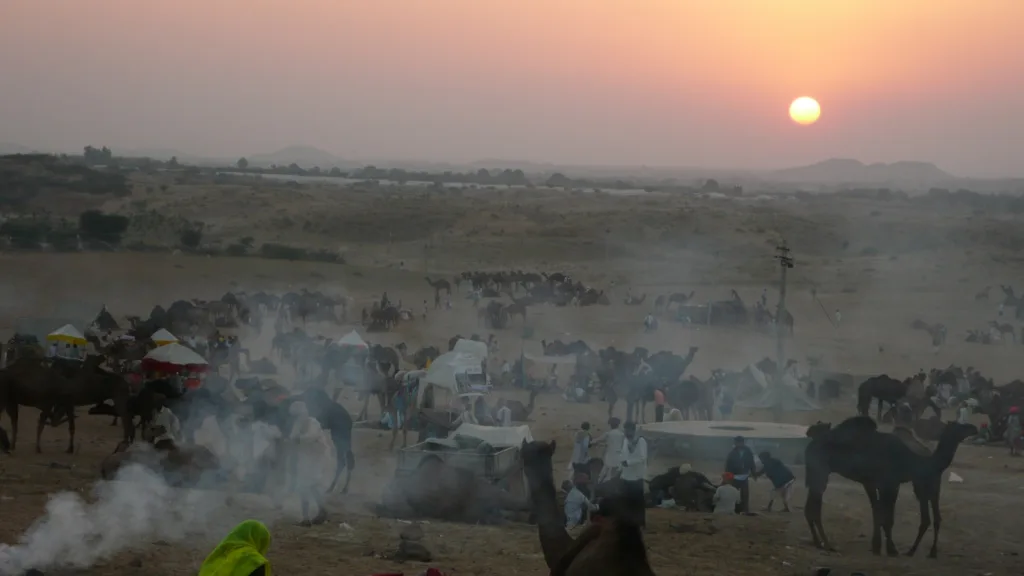
The geography shapes the experience. Rajasthan around Pushkar is dry, sandy and ringed by low Aravalli ridges, and the fairground sits on open ground at the edge of town while the lake and the ghats sit at its centre. That split matters: the livestock trading and the camel competitions happen on the mela ground, while the bathing rituals and the temple crowds happen at the lake. The two run in parallel for the whole week, and the balance between them shifts as the week goes on. You can see the wider state on our destinations page.
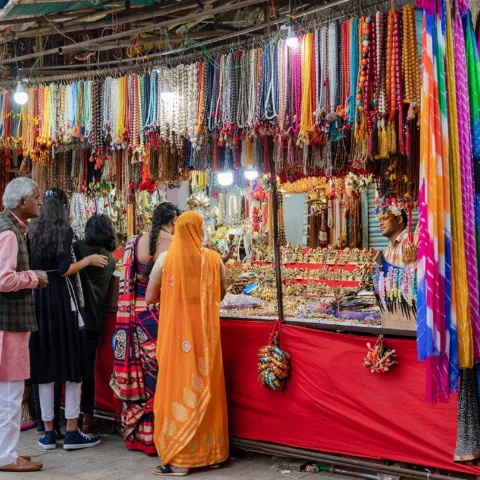
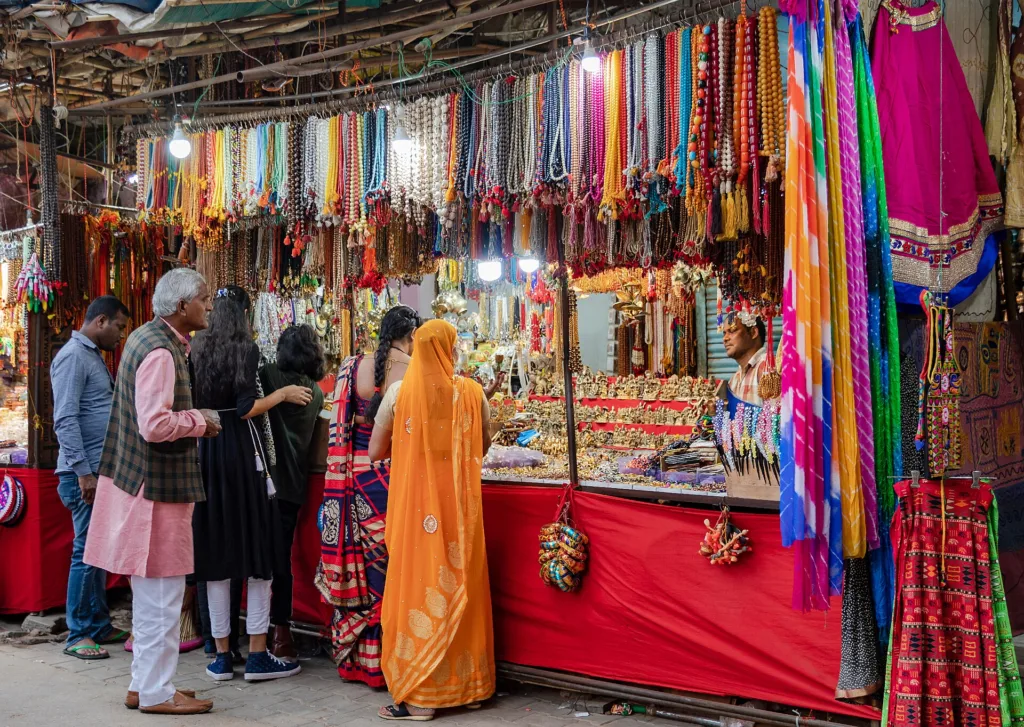
Day one is the drive from Jaipur to Ajmer and on to Pushkar, with time in the evening at the lake ghats as the lamps are lit. Day two is a full day on the mela ground, timed for the morning camel trading and the afternoon competitions. Day three covers the Brahma Temple and the bazaar in the morning, then returns to the fairground for the evening light and the folk performances. Day four is the drive back to Jaipur.
Distances here are short. Jaipur to Ajmer is about 135 kilometres on the NH48 expressway, and Ajmer to Pushkar is another 14 kilometres over the Nag Pahar hill road. The hill road is narrow and slow, and it is the one stretch where the schedule can slip, so all transfers are done in daylight.
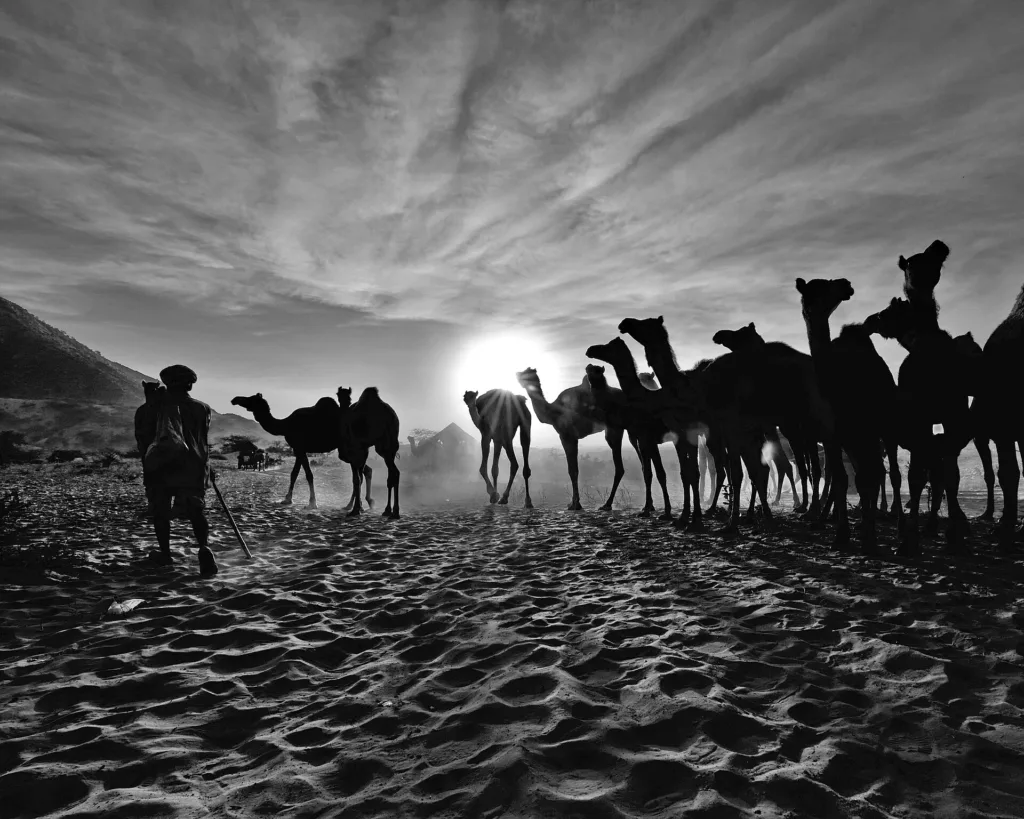
This trip suits travellers who want to see a working livestock fair rather than a staged show, and photographers who want the low desert light on the camels. There is no walking of any consequence and no altitude, so it works across a wide age range. It is a good fit for solo travellers because the group format and the shared meals make it easy to settle in, and for anyone who has already done the palace circuit and wants something less curated.
The price covers three nights of accommodation in Pushkar on twin sharing, breakfast and dinner on all days, the Jaipur transfers both ways, daily transport between the hotel and the mela ground, and a trip captain throughout.
The fair is anchored to the Hindu lunar month of Kartik and closes on Kartik Purnima, the full moon night of that month, so the Gregorian dates move each year. In 2026 it runs from 17 to 24 November, with Kartik Purnima on 24 November. This trip is built around the middle of that window, so the departures that fall inside it are the ones to book.
It is graded easy. Pushkar sits on the edge of the Aravalli range at low elevation, so there is no altitude concern at all, and the walking is limited to the fairground, the bazaar and the lake ghats. Anyone comfortable on their feet for a few hours a day will manage it.
A basic level. There is no trekking and no climb. The main physical demands are walking slowly around the mela ground for several hours at a time over sand and uneven ground, and standing in the bazaar. If you can walk for three or four hours with breaks, you are fit enough.
Yes. Shared accommodation on twin sharing, a trip captain throughout and communal meals make it easy for solo travellers, and the group format means you are never on your own unless you want to be. Couples and friend groups also fit well.
Three nights in a hotel in Pushkar on twin sharing, chosen for proximity to the lake and the fair road rather than for luxury. Rooms have attached bathrooms and hot water. Singles who want a room to themselves can pay a single supplement, subject to availability during fair week, when Pushkar fills up.
Indian citizens need no permit for Pushkar. Foreign nationals need a standard tourist visa, which is applied for before travel. Mobile coverage in Pushkar town is generally reliable, but it weakens on the Nag Pahar hill road and can be patchy on the mela ground when the fair is at its busiest. Treat the fair days as partly offline and download what you need in advance.
Explore related pages: All trips in Rajasthan · Browse all destinations · All activities · Pushkar and Ajmer destination guide · Trekking in India.
Photo credits. Photographs on this page are from Wikimedia Commons and are used under the licences listed below. Each image is credited to its photographer; the licence terms apply to reuse of the image.
Moon Peak Expedition – Conquer the Heights of the Dhauladhar Range The Moon Peak Expedition is a thrilling…
Sissu Manali Trip : A Journey Through Nature’s Paradise If you're craving a blend of majestic mountains, pristine…
Kodachadri Trek Kodachadri, located in the Western Ghats of Karnataka, is a popular destination for trekking enthusiasts due…

