
Moderate
McLeodGanj Triund Bir
Mcleodganj Triund Bir This itinerary combines the cultural exploration of Mcleodganj, the adventurous trek, and the paragliding experience…
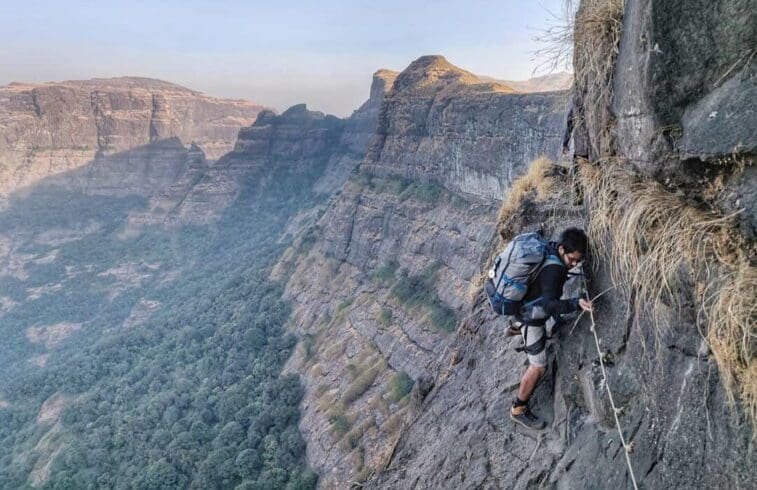
AMK – Alang Madan Kulang Trek runs 2 days in Maharashtra, graded Moderate, from Rs 3,000 per person.
Alang Fort: Standing tall at approximately 4852 feet (1478 meters) above sea level, Alang Fort offers a formidable climb. Clear skies and crisp air enhance visibility, allowing trekkers to enjoy panoramic views. Madan Fort: Madan Fort rises to an elevation of around 4841 feet (1475 meters). Historical Exploration: The forts of Alang, Madan, and Kulang are steeped in history, and exploring their remnants is like stepping back in time. Monsoon months (June to August) are generally not recommended for the AMK trek due to heavy rainfall, slippery trails, and challenging trekking conditions. Winter is another excellent time for the AMK trek, especially for those who enjoy cooler temperatures. Daytime temperatures are mild, ranging from comfortable to cool, providing pleasant trekking conditions. Camping on the Forts: One of the unique aspects of the AMK Trek is the opportunity to camp on the forts. Kulang Fort: Kulang Fort is the highest of the trio, towering at about 4822 feet (1470 meters) above sea level. Clear skies offer stunning views of the surrounding Sahyadri mountains. Sense of Accomplishment: Completing the AMK Trek is a badge of honor for trekkers. Technical Ascents and Descents: The trek involves technical sections that require rock climbing and rappelling skills. Breathtaking Panoramas: The trek offers panoramic views of the Sahyadris, with rolling hills, deep valleys, and meandering rivers forming a spectacular canvas. The weather is relatively cool, making the trek enjoyable without extreme temperatures. The landscape may not be as lush as in the post-monsoon season, but the trek still offers an enjoyable experience. Early spring to pre-monsoon is also a viable time for the AMK trek.
At this height the limit on the AMK – Alang Madan Kulang Trek is fitness and heat rather than oxygen, which makes the descent the part people underestimate.
The published window for the AMK – Alang Madan Kulang Trek is for AMK – Alang Madan Kulang Trek The best time for the Alang Madan Kulang (AMK) trek is during the post-monsoon and winter months when the weather is favorabl. Outside that window the AMK – Alang Madan Kulang Trek becomes a different landscape rather than simply worse weather.
The AMK – Alang Madan Kulang Trek assembles at Pune, and the day numbering runs from that point. Reporting times and the exact pickup point for the AMK – Alang Madan Kulang Trek are confirmed on booking.
The AMK – Alang Madan Kulang Trek suits people who already walk but have not necessarily trekked, since its 2 days ask for stamina rather than skill. A fit beginner who prepares gets through the AMK – Alang Madan Kulang Trek; someone treating it as a stroll does not. Solo travellers move inside a led group on the AMK – Alang Madan Kulang Trek, so the pace is collective rather than personal.
Heat and sun are bigger risks than cold on the AMK – Alang Madan Kulang Trek, so a cap, sunscreen and more water than feels necessary matter most. Footwear decides the day on the AMK – Alang Madan Kulang Trek: loose stone and wet ground cause most slips, and a worn sole is the usual reason people struggle on the descent. Carry two litres of water each on the AMK – Alang Madan Kulang Trek, a small first-aid kit, a head torch for pre-dawn walking, and food already tested on a training walk.
The main risks on the AMK – Alang Madan Kulang Trek at this height are slips on wet sections and dehydration on exposed stretches, both prevented by steady pacing. A certified leader carries first aid and safety kit on the AMK – Alang Madan Kulang Trek and reviews the forecast each morning, so the plan stays provisional until conditions are known. Travel insurance that covers trekking at this altitude is worth the small extra cost and is not part of the AMK – Alang Madan Kulang Trek price.
The Rs 3,000 price of the AMK – Alang Madan Kulang Trek covers accommodation on the itinerary, the listed meals, a certified leader with support crew, applicable permits and entry fees, and the safety equipment carried. Excluded from the AMK – Alang Madan Kulang Trek are travel to the assembly point unless the itinerary says otherwise, personal kit and clothing, insurance, and anything the inclusions list does not name.
Check weather forecasts before planning your trek to ensure optimal conditions. The monsoon rains have subsided, leaving the landscape lush and vibrant. This period is considered one of the best times for the AMK trek. The temperatures start to rise, creating a more moderate climate. Be prepared for cooler temperatures, especially during the night, by carrying appropriate clothing and gear. Camping Ethics: Camping on the forts is a unique experience, but campers must adhere to ethical camping practices, respecting the historical structures and leaving no impact on the environment. Physical Fitness: Due to the challenging terrain, a good level of physical fitness is recommended for trekkers attempting the AMK trek. The ascent to Kulang is challenging but rewards trekkers with panoramic views of the surrounding landscapes. The trilogy challenges both physical endurance and mental resilience, and standing atop each fort, looking at the conquered peaks, instills a profound sense of accomplishment. Proper Gear: Invest in sturdy trekking shoes, comfortable clothing, and essential gear to ensure a safe and enjoyable trek.
Browsing by region or activity is often faster than reading individual pages, so start with India and Trekking. The closest alternatives to the AMK – Alang Madan Kulang Trek are Kodachadri Trek, Mcleodganj Triund Trek and Kashmir Great Lakes Trek, which suit anyone comparing dates or a slightly different grade.
Nestled in the heart of the Sahyadri Range in Maharashtra, the Alang Madan Kulang (AMK) Trek stands as a testament to the rugged beauty and adventurous spirit of the Western Ghats. Comprising three formidable forts—Alang, Madan, and Kulang—this trek is not for the faint-hearted. It offers a challenging yet rewarding experience for trekkers, promising panoramic views, historical intrigue, and the thrill of conquering the Sahyadris Trilogy. Join us on a virtual journey as we explore the mystique and grandeur of the AMK Trek.
The AMK Trek is a trifecta of adventure, encompassing three distinct forts that together form the Sahyadris Trilogy. Each fort has its own unique character, historical significance, and challenges for trekkers.
Alang Fort, the first in the trilogy, is known for its formidable structure and historical importance. Perched at an elevation of approximately 4852 feet, Alang Fort stands as a sentinel guarding the ancient trade route between Kalyan and Nasik.
The trek to Alang involves navigating through dense forests, steep rock patches, and ascending treacherous ladders. The fort’s architecture includes massive walls, intricate doorways, and secret passages, echoing the tales of Maratha warriors who once defended this strategic stronghold.
Madan Fort, the second installment in the trilogy, is an imposing structure that overlooks the scenic landscape below. Rising to an elevation of around 4841 feet, Madan Fort offers breathtaking views of the surrounding hills and valleys.
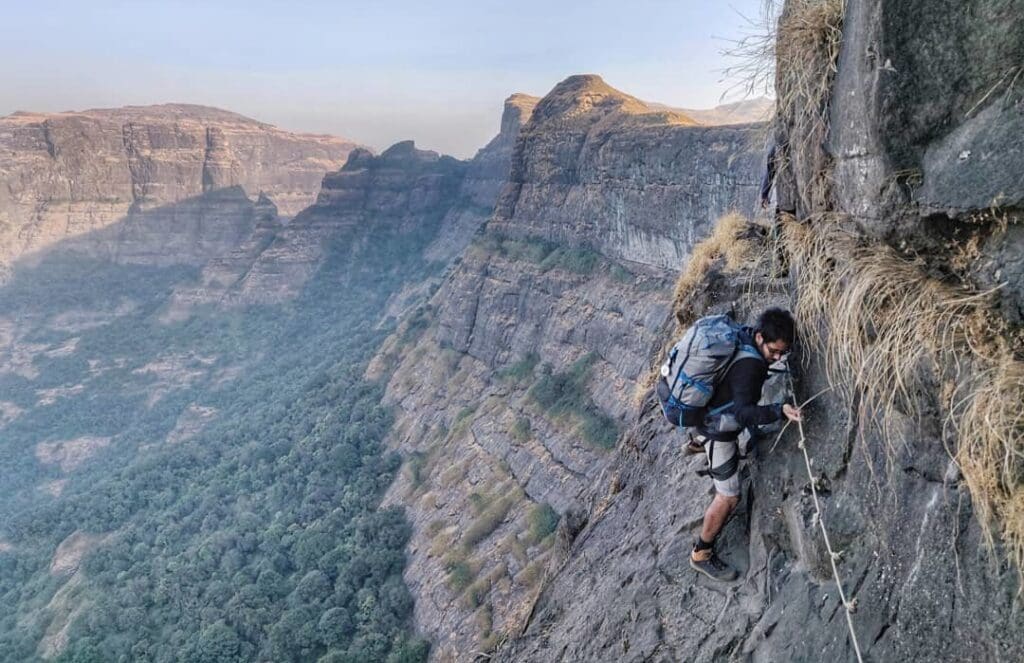
The trek to Madan involves traversing rocky outcrops, negotiating steep ascents, and tackling exposed sections that demand a steady nerve. The fort’s ruins speak of a bygone era, and trekkers are rewarded with a sense of accomplishment upon reaching the pinnacle.
Kulang Fort, the final chapter in the Sahyadris Trilogy, is often referred to as the “Crown of the Forts.” At an elevation of approximately 4822 feet, Kulang offers a unique blend of history and natural beauty.
The trek to Kulang is characterized by dense forests, challenging rock climbs, and the ascent of the famous ‘Rock Cut Steps.’ The fort features ancient rock-cut caves, water cisterns, and panoramic viewpoints that make it a captivating destination for history enthusiasts and nature lovers alike.
The AMK Trek is renowned for its challenges, both physical and mental. The rugged terrains, steep ascents, and exposed sections demand a certain level of fitness, agility, and determination. However, the rewards for those who undertake this journey are nothing short of spectacular.
The AMK trek is situated in the Igatpuri region of Maharashtra, India. This trio of forts—Alang, Madan, and Kulang—stands proudly amid the lush greenery of the Sahyadris, offering a challenging yet rewarding trekking experience. Igatpuri serves as the base village for this expedition, providing a scenic starting point for the adventure that lies ahead.
As the popularity of the AMK Trek grows, so does the need for responsible trekking practices. Local trekking communities, environmentalists, and authorities emphasize the importance of preserving the pristine beauty of the Sahyadris. Responsible trekking includes:
Conclusion
The AMK Trek is not just a physical journey; it’s an odyssey through time, nature, and personal limits. The Sahyadris Trilogy—Alang, Madan, and Kulang—offers trekkers an immersive experience that combines adventure, history, and the unspoiled beauty of the Western Ghats.
As you ascend the rocky paths, traverse the ancient forts, and stand at the summit with the wind whispering through the ruins, you become part of a legacy that spans centuries. The AMK Trek is a tribute to the Sahyadris, a landscape that has witnessed the passage of time and the footsteps of those who sought adventure and solace in its folds.
For those willing to accept the challenge, the AMK Trek is an invitation to explore the raw, untamed beauty of the Sahyadris, to connect with history in its most rugged form, and to emerge from the journey with a newfound respect for the majesty of nature and the indomitable spirit of adventure.
Similar Treks To Do
Conquering the Mighty Kumara Parvatha Trek
The AMK – Alang Madan Kulang Trek runs for 2 days. The day-by-day itinerary above lists each stage, walking distance and overnight stay.
The AMK – Alang Madan Kulang Trek is rated Moderate by WDRLUST. It suits trekkers with some prior walking experience and steady fitness. Training with 45 to 60 minutes of cardio three times a week for six weeks before departure is enough for most people.
The AMK – Alang Madan Kulang Trek starts at Rs 3,000 per person. The price covers the inclusions listed on this page. Transport to the starting point, personal gear and anything not listed under inclusions are extra.
The route reaches approximately 1478 m. Walk slowly, drink water and report any headache or nausea to your trek leader.
The AMK – Alang Madan Kulang Trek starts from the base location described in the itinerary above. WDRLUST shares exact meeting points, reporting times and transport options on booking confirmation. The nearest major access region is Pune.
Yes. Solo travellers join a led group, so you are never walking alone. Trek leaders carry a first-aid kit and oxygen where the altitude requires it, and the team tracks weather daily.
The three forts of Alang, Madan and Kulang sit on a single ridge in the Sahyadris above Kalsubai, and trekkers refer to the traverse as AMK. It is the classic Maharashtra ridge walk and, from Bengaluru, a fly-in trip with a demanding two days on the hill.
The trek fee is Rs 3,000 per person:
Expect Rs 12,000 to Rs 18,000 all-in. As with Kalsubai, the flight dominates and the trek fee is marginal.
Rated Moderate, which understates the effort. The route involves repeated ascents and descents along a ridge, with rock steps cut into the forts, a few sections of easy scrambling, and long stretches of exposed ground. Total walking across the two days is in the region of 18 to 22 km with considerable cumulative gain.
The forts themselves are ruined and the paths between them are not always obvious, which is why most people do this with a guide. Doing AMK as your first Sahyadri trek is ambitious; it is better as a second or third.
Monsoon on the Sahyadri ridge means wind, cloud and slick basalt. The rock cut steps hold water, the grass is saturated, and visibility can drop to nothing, which matters on a ridge where the path is defined by the terrain around it. Lightning on an exposed ridge is a genuine hazard and groups do shelter below the forts when storms build.
In the dry months the opposite problem appears: no water. Carry two to three litres per person per day regardless of season, and more in March and April.
Fly to Mumbai or Pune on Friday night, drive to the base and sleep, trek both days across the weekend, and fly back Sunday night or Monday morning. The Sunday night return is tight if the descent runs late, so most people book a Monday flight and lose a working day. That cost, not the trek fee, is the real barrier for Bengaluru trekkers on this one.
Explore related pages: All treks in Pune · Treks in Maharashtra · Trekking in India · Browse all destinations · All activities.
01:20 am Meet out team at Kasara station, freshen up
n01:30 am Leave for base village in a private taxi
n04:15 am Reach base village
n05:30 am Have Breakfast
n05:30 am Introduction round and brief on rules and regulations
n06:00 am Start the trek with a small warm up walk.
n10:30 am Reach top, Explore the Alang fort
n11:30 am Have lunch and take some rest
n01:30 pm Start descend of Alang and move towards tha Madan
n05:00 pm After Rock Climbing Reach Madan top
n05:30 pm Explore the fort, Enjoy the view of the surrounding
n08:00 pm Dinner time and stay in the cave of Madangad
n
05:00 am Wake up call, freshen up and recharge with the breakfast.
n06:30 am Get ready for the descend and move towards the Kulang
n11:00 am Reach Kulang, Have Lunch and Explore Fort
n02:30 pm Start Descending down
n05:00 pm Reach Base Village
n05:10 pm Start the return Journey towards Kasara Railway Station
n06:00 pm Reach Kasara station and take a return train (06:18 pm) to mumbai
n08:30 pm Reach Mumbai and bid adieu with a promise to meet soon
n
Mcleodganj Triund Bir This itinerary combines the cultural exploration of Mcleodganj, the adventurous trek, and the paragliding experience…
Andaman Islands beach trip, 7D/6N from Port Blair, graded Easy, from Rs 23,500. Radhanagar, Elephant Beach, Neil Island…
Chhath Puja Bihar tour, 3N/4D from Patna, graded Easy, from Rs 6,800. The four-day Sun worship on the…