
Moderate
Japfu Peak Trek
Overview of the Japfu Peak Trek The Japfu Peak Trek is a 3-day, 2-night moderate trek in Nagaland…
Next Departure
20/11/2026
12 seats left
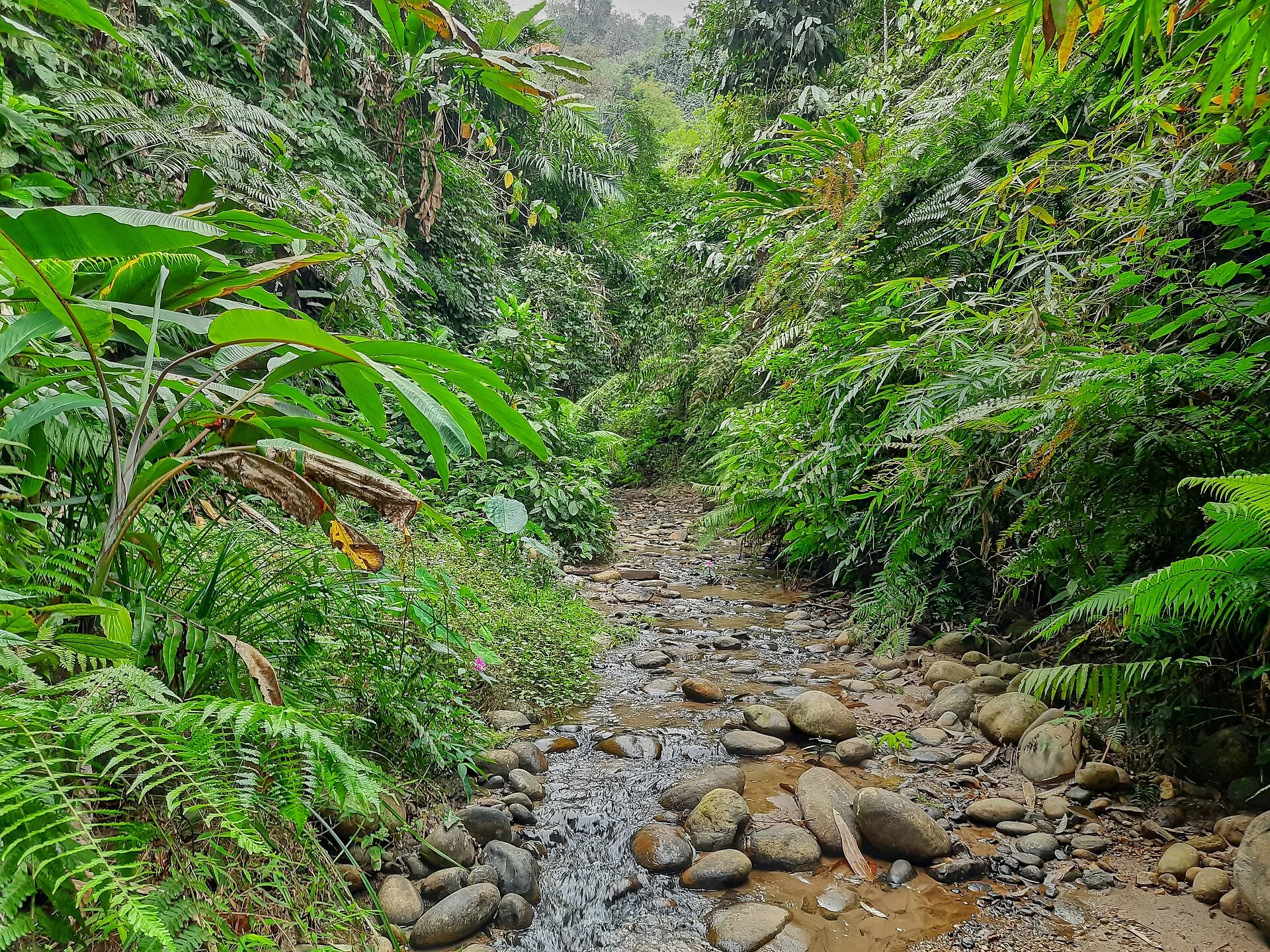
The Namdapha Rainforest Trek is a 5-day, 4-night moderate trek in Arunachal Pradesh priced from Rs 9,800 per person, running Miao to Deban, then up the Noa Dihing river through Firmbase to the Hornbill camp and back.
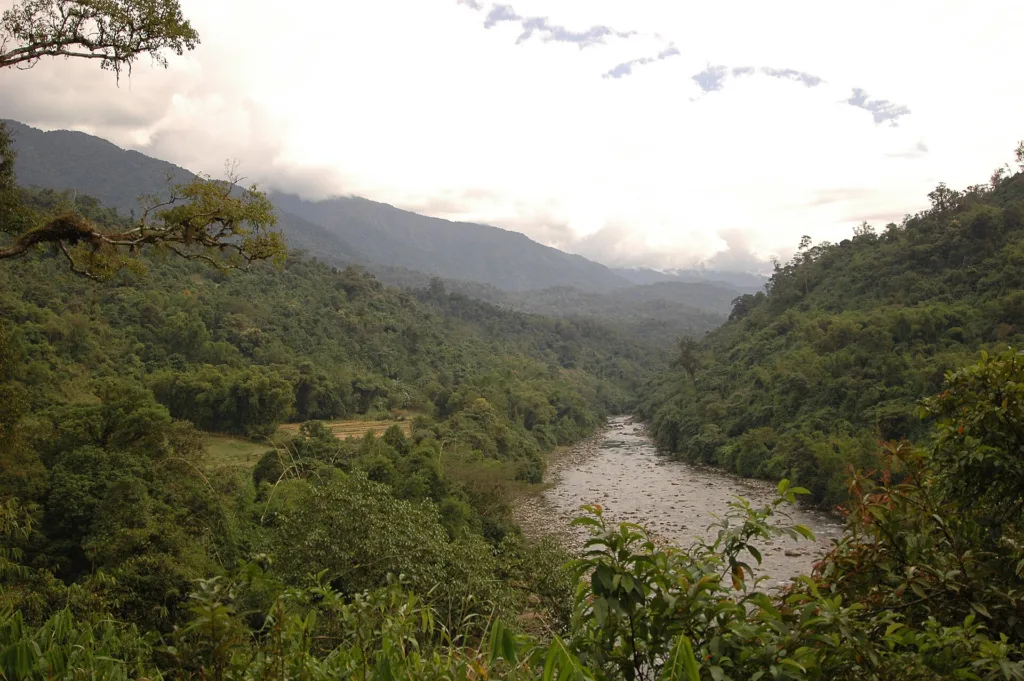
Namdapha is the largest protected area in the eastern Himalaya and one of the very few places on earth that holds four big cats — tiger, leopard, clouded leopard and snow leopard — inside a single reserve. The park runs from about 200 m at the Noa Dihing river up to 4,571 m on the Dapha Bum ridge, which is why tropical evergreen forest, temperate broadleaf and alpine meadow all sit within one boundary.
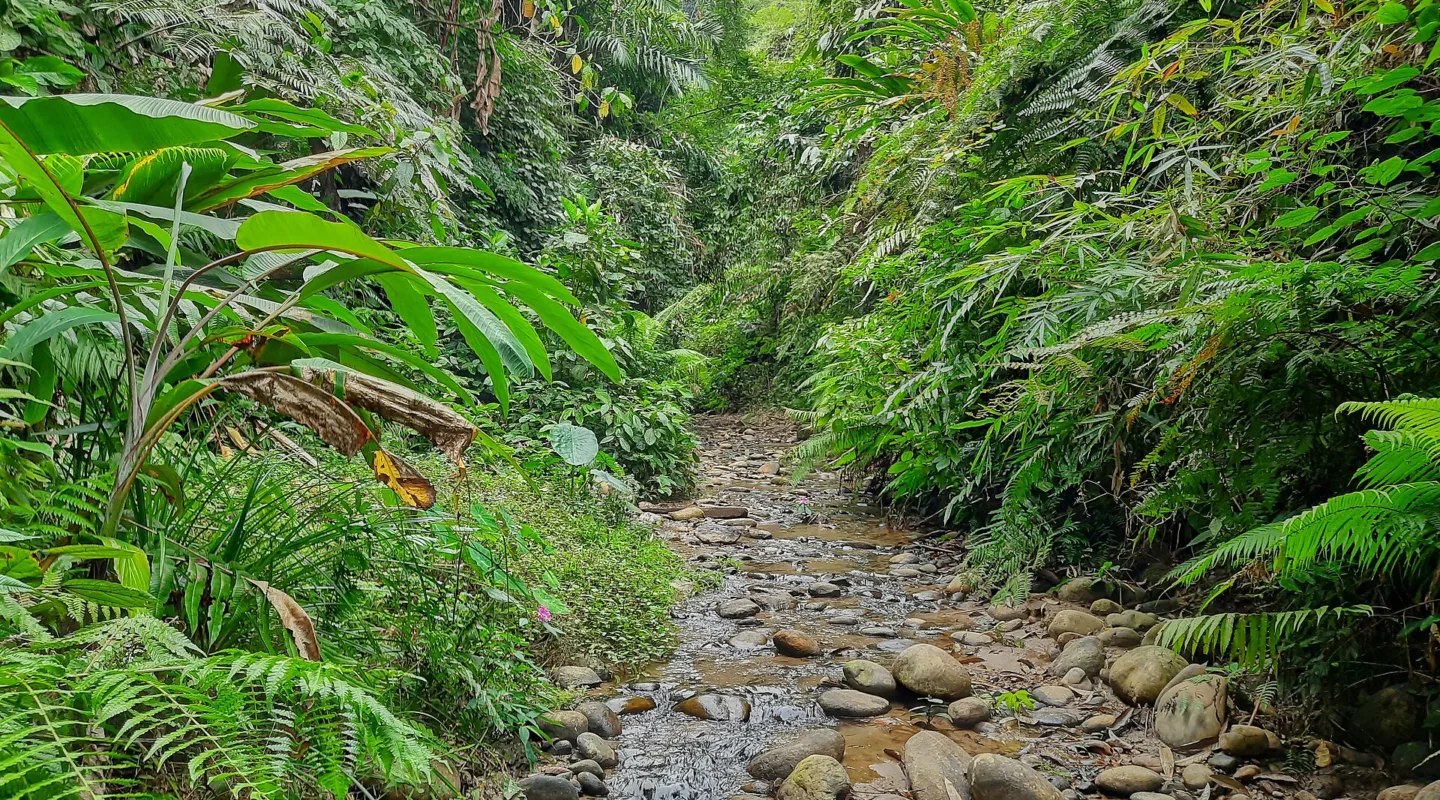
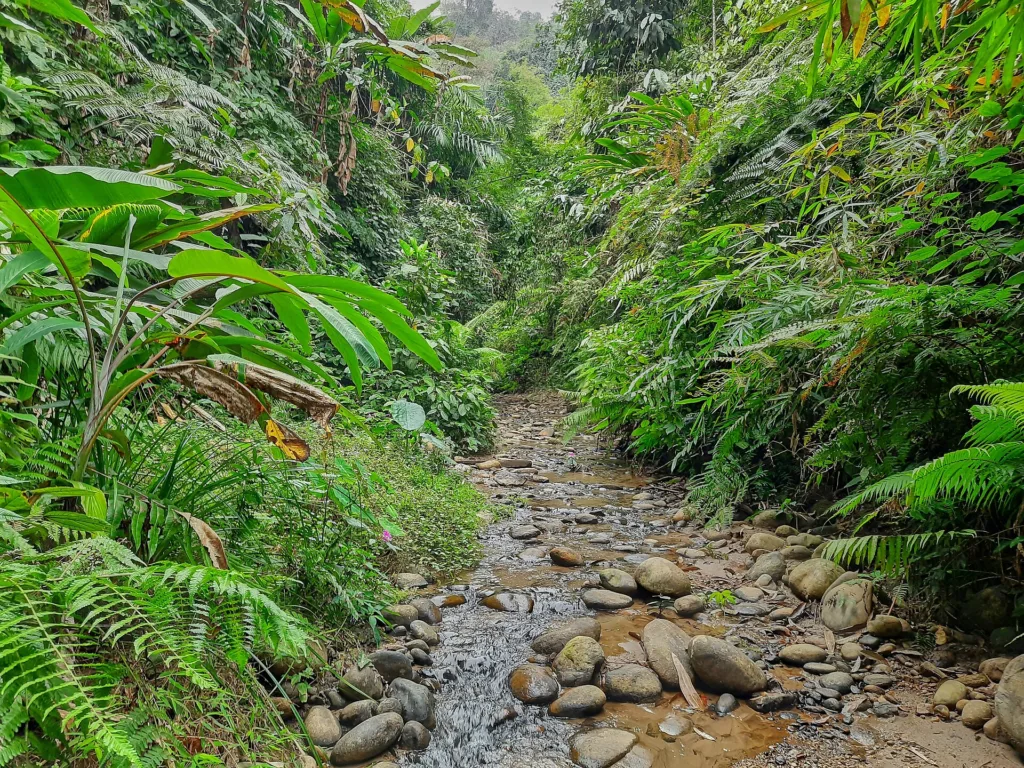
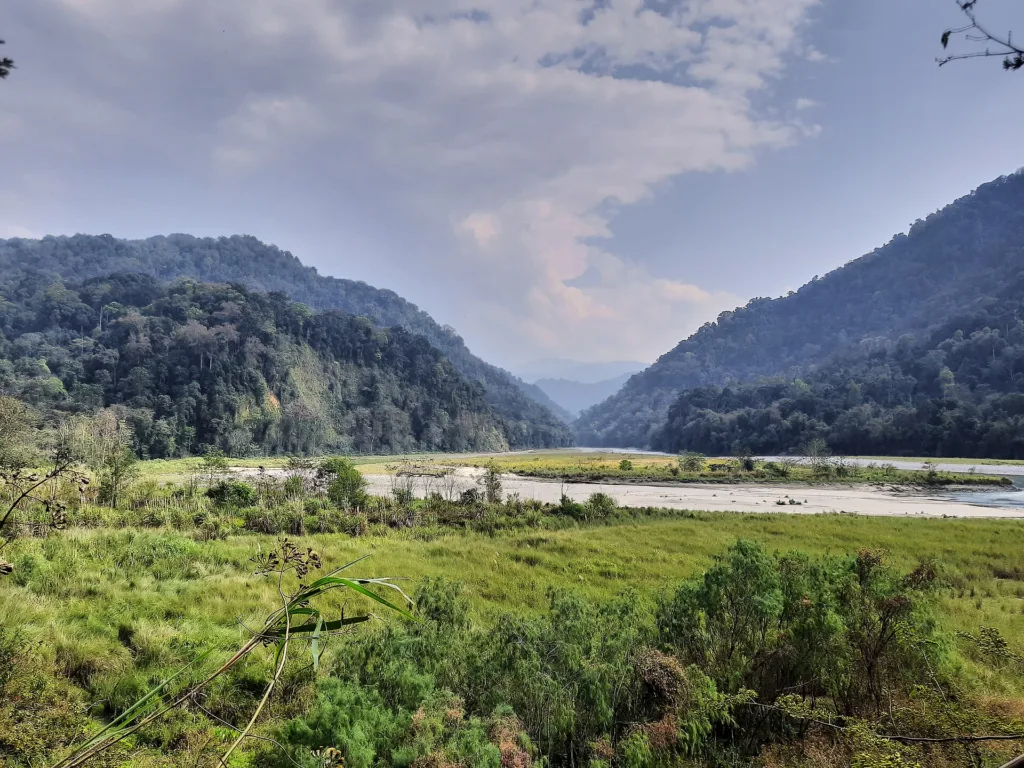
This trek stays low. It follows the Noa Dihing from the park headquarters at Deban up to Firmbase and the Hornbill camp, gaining only a few hundred metres over five days. The point is not altitude but immersion: you are walking through some of the least-visited rainforest in India, and the wildlife is the reason to come.
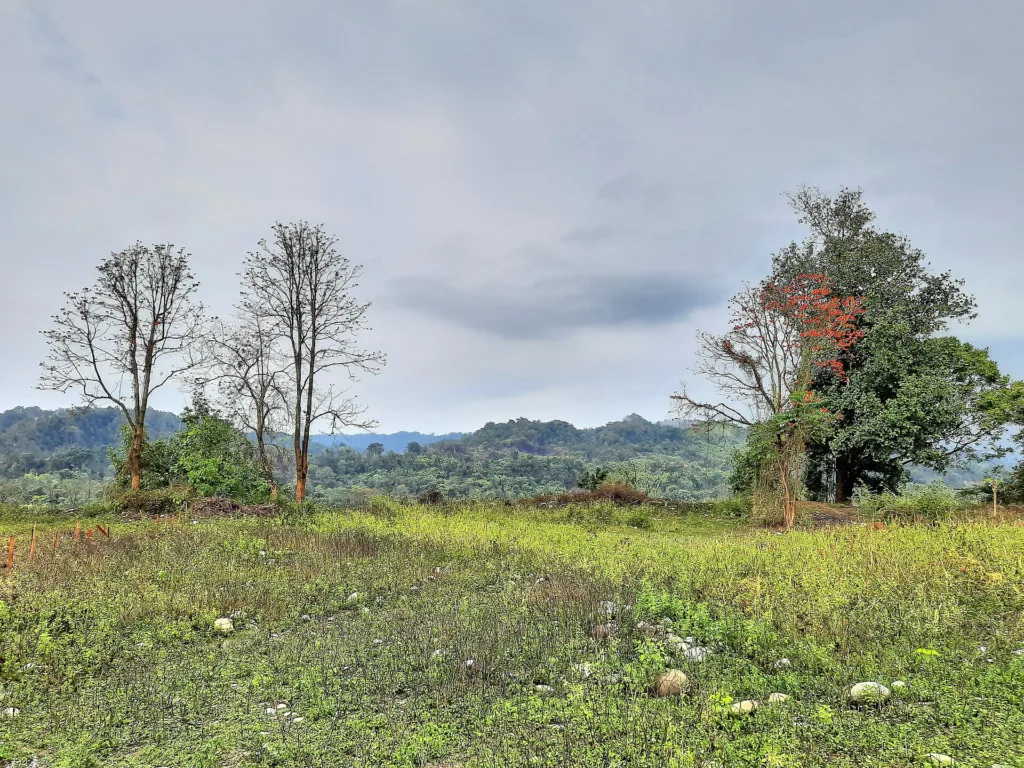
Namdapha is in Changlang district, close to the Myanmar border, and access is controlled. Indian nationals need an Inner Line Permit, which we arrange. The park is closed to visitors outside the November-to-March window.
For the wider region, see our Arunachal Pradesh destination hub and the full destination index.
The gateway is Miao, a small town about 4 hours by road from Dibrugarh. From Miao a forest road runs 25 km to Deban, the park headquarters on the Noa Dihing, where permits are checked and guides assigned.
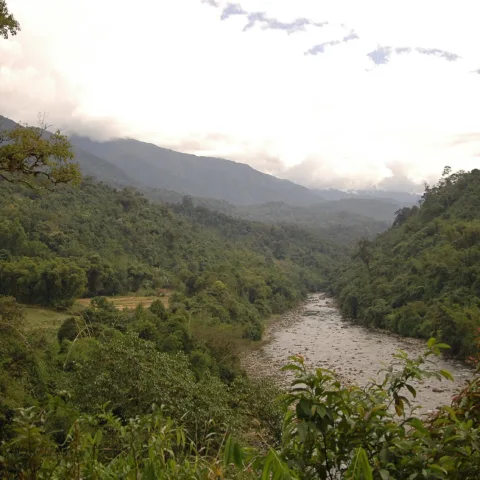
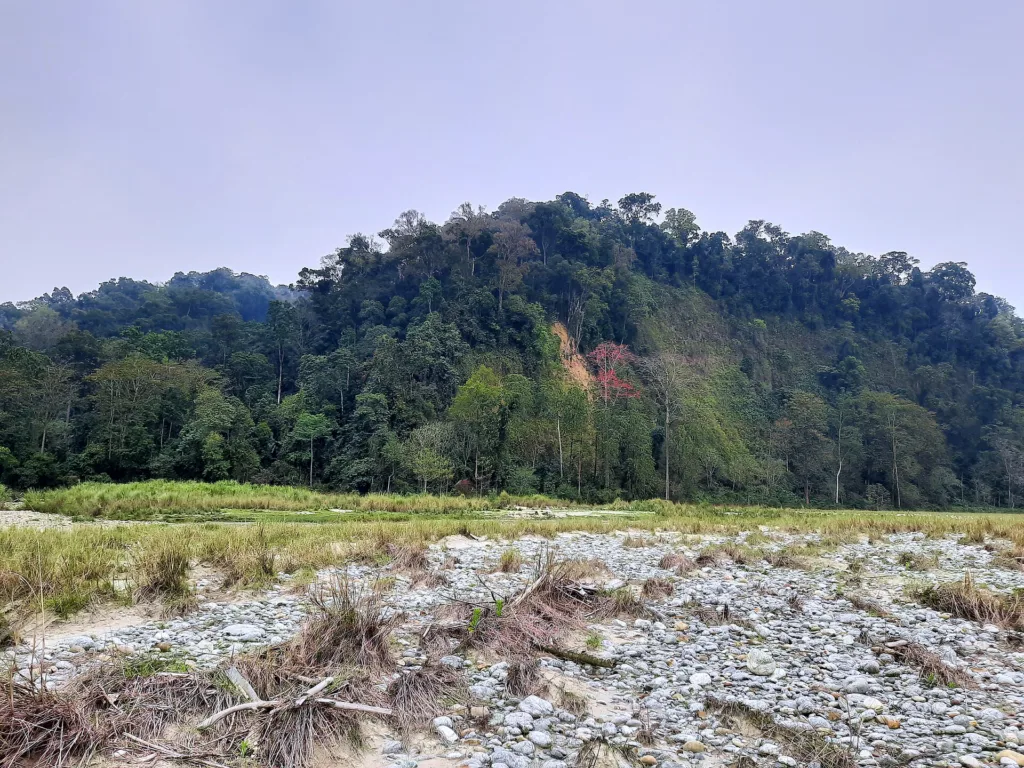
From Deban the route is a river trail. Day two walks to Firmbase, a forest camp about 12 km upstream, crossing several side streams on log bridges. Day three continues to the Hornbill camp, the usual turnaround for a five-day itinerary, where the forest opens slightly and hornbills are regularly seen at first light.
Day four retraces the route to Deban and day five drives back out to Dibrugarh. There is no technical ground and no significant ascent, but the trail is often muddy and the humidity is high year-round.
This trek is for people who want forest rather than summits — birders, wildlife photographers and anyone who would rather spend an hour watching a mixed-species flock than bag a peak. It is also a good fit for travellers who have already done the Himalayan classics and want something genuinely remote.
It is not a good first trek for someone who needs a view at the end of every day, and it is not suitable for children under 12. Leeches are present after rain even in the dry season, and the walking is flat but long.
November to March. The park is formally closed to visitors outside that window, and the monsoon makes the river trail impassable in places. December and January are the driest and coolest months, with the best birding.
This itinerary stays between 200 m at Deban and about 1,100 m near the Hornbill camp. There is no altitude risk at all. The park itself rises to 4,571 m on the Dapha Bum ridge, but that requires a much longer expedition and special permission.
You need to walk 5 to 6 hours on flat but muddy ground carrying a day pack, on consecutive days. Distance matters more than gradient here. Anyone comfortable with a 12 km forest walk will manage; the humidity is the real challenge.
Yes, solo travellers join a small group of up to 10. Note that the Forest Department requires a registered guide and, in some zones, an armed forest guard, so independent unguided walking is not permitted inside Namdapha.
Three nights are in forest camps with tents and sleeping mats provided, and one night is at the Deban forest rest house in basic rooms. Toilets are shared and basic throughout. There is no hot water at the camps.
Yes — Indian nationals need an Inner Line Permit for Arunachal Pradesh, which we arrange as part of the package. There is no mobile signal beyond Miao, and none at all inside the park. Plan to be offline for the full five days.
Rs 9,800 for five days reflects the logistics of a park that has almost no tourism infrastructure. Everything — food, fuel, tents, staff — is carried in from Miao, and the Forest Department requires a guide plus, in some zones, an armed guard. The Inner Line Permit and park fees are included, and they are not trivial.
The other cost driver is the drive. Dibrugarh to Miao is four hours on a good day, and the 25 km forest road from Miao to Deban is slow. You are paying for a vehicle and a driver for two full days at each end of the trek.
The park is only open to visitors from November to March, so the choice is narrower than on most Indian treks. December and January are the driest and coolest, with the best birding and the fewest leeches. November can still be wet at the tail of the monsoon, and March starts to heat up in the low forest.
Do not plan around the monsoon. The Noa Dihing rises fast, the side streams become impassable, and the park closes. Even in the dry season, expect mud — this is rainforest, not a Himalayan meadow.
There is almost no ascent on this route, which surprises people who book it expecting a Himalayan trek. The trail from Deban to the Hornbill camp gains only a few hundred metres over 20 km. The difficulty is entirely in the surface and the climate: flat, muddy, humid, and long.
Twelve kilometres of river trail in 30-degree heat with 90 per cent humidity is harder than 12 km of Himalayan switchbacks. Carry more water than you think you need, and plan on walking slower than your usual pace.
Namdapha holds tiger, leopard, clouded leopard and snow leopard within one boundary — the only reserve in India where that is true — but sightings of any of them are rare. What you will almost certainly see is birdlife: the park’s list runs past 500 species, including four species of hornbill, the Namdapha flying squirrel’s forest, and Hoolock gibbon calling at dawn.
The park is also botanically extraordinary, with more than 1,000 flowering plant species recorded. A guide who knows the forest is worth far more here than on a summit trek, because most of what there is to see is not obvious.
Start with the Arunachal Pradesh destination hub, browse the full destination index and our activities pages, then compare this route with the rest of our trekking collection.
Photographs on this page are licensed from Wikimedia Commons. Full attribution and licence for each image is listed below.
Overview of the Japfu Peak Trek The Japfu Peak Trek is a 3-day, 2-night moderate trek in Nagaland…
Hampta Valley Snow Trek Winter transforms Hampta Valley into a breathtaking wonderland, where nature's beauty is on full…
Overview of the Ladakh Bike Trip Ladakh Bike Trip runs 7 days in Ladakh, graded Moderate, from Rs…