


Moderate
Tosh Kutla Trek
A Hidden Gem in Parvati Valley The Tosh Kutla Trek is a scenic offbeat trail located in the…
Friendship Peak Expedition runs 8 days in Himachal Pradesh, graded Moderate, from Rs 22,499 per person.
Technical Aspects: The ascent involves negotiating glacial terrain and snowfields, making it essential for trekkers to be equipped with basic mountaineering skills. Autumn (September to October) Clear skies and panoramic views characterize the autumn months. Spring (May to June): The landscape blooms with vibrant alpine flowers. Steep Climbs and Descents: Trekkers encounter steep ascents and descents during the trek, demanding physical endurance and careful footwork. The weather is generally mild, offering pleasant trekking conditions. The temperatures are cool, creating favorable trekking weather. Weather Conditions: Weather in the Himalayas can be unpredictable. Trekkers should be prepared for sudden changes in weather, including snowfall.
Friendship Peak rises to about 5,289 m (17,350 ft) in the Pir Panjal range above Manali. The expedition is usually run over eight days from Manali. It is graded difficult and is semi-technical, involving moraine, glacier, crevasses and patches of ice. The route goes through the Beas Kund area, with a drive to Dhundi and a walk to Bakarthach at around 3,300 m. Friendship Peak is one of the open peaks in the Kullu-Manali district, so no IMF climbing fee applies. It is treated as a first expedition peak rather than a technical climb, which is why it suits trekkers stepping up from high-altitude walking. A base of at least two Himalayan treks above 4,000 m is the usual prerequisite. The summit gives a wide view across the surrounding peaks of the Pir Panjal, including Hanuman Tibba. Bakarthach is the first camp, at around 3,300 m, reached by a four to five hour walk from Dhundi. The approach follows the Beas Kund trail before turning towards the peak. Rope, crampons and an ice axe are used on the upper glacier section. The summit push starts from a high camp and is timed for early morning, before the snow softens. Manali is the base town, and the drive to Dhundi at the road head takes about an hour and a half. The glacier section is crossed on rope, which is why the expedition is graded semi-technical rather than a trek.
At 5,289 m the thin air is the real constraint on the Friendship Peak Expedition, so the upper stretch is walked slowly and altitude symptoms are reported early.
The published window for the Friendship Peak Expedition is to Visit Friendship Peak Choosing the right time to undertake the Friendship Peak trek is crucial for a rewarding and safe experience. Outside that window the Friendship Peak Expedition becomes a different landscape rather than simply worse weather.
The Friendship Peak Expedition assembles at Manali, and the day numbering runs from that point. Reporting times and the exact pickup point for the Friendship Peak Expedition are confirmed on booking.
The Friendship Peak Expedition suits people who already walk but have not necessarily trekked, since its 8 days ask for stamina rather than skill. A fit beginner who prepares gets through the Friendship Peak Expedition; someone treating it as a stroll does not. Solo travellers move inside a led group on the Friendship Peak Expedition, so the pace is collective rather than personal.
Layers do more work than any single jacket on the Friendship Peak Expedition, because the temperature at 5,289 m bears little relation to the trailhead. Footwear decides the day on the Friendship Peak Expedition: loose stone and wet ground cause most slips, and a worn sole is the usual reason people struggle on the descent. Carry two litres of water each on the Friendship Peak Expedition, a small first-aid kit, a head torch for pre-dawn walking, and food already tested on a training walk.
At 5,289 m on the Friendship Peak Expedition, altitude illness is the main risk rather than the ground, so walk slowly and report a persistent headache or nausea immediately. A certified leader carries first aid and safety kit on the Friendship Peak Expedition and reviews the forecast each morning, so the plan stays provisional until conditions are known. Travel insurance that covers trekking at this altitude is worth the small extra cost and is not part of the Friendship Peak Expedition price.
The Rs 22,499 price of the Friendship Peak Expedition covers accommodation on the itinerary, the listed meals, a certified leader with support crew, applicable permits and entry fees, and the safety equipment carried. Excluded from the Friendship Peak Expedition are travel to the assembly point unless the itinerary says otherwise, personal kit and clothing, insurance, and anything the inclusions list does not name.
Browsing by region or activity is often faster than reading individual pages, so start with Himachal Pradesh and Expedition. The closest alternatives to the Friendship Peak Expedition are Mcleodganj Triund Trek, Bhrigu Lake Trek and Beas Kund Trek, which suit anyone comparing dates or a slightly different grade.
Friendship Peak, standing tall at an elevation of 5,289 meters (17,356 feet) in the Pir Panjal range of the Indian Himalayas, is not just a majestic mountain but a symbol of camaraderie and adventure.
The Friendship Peak Expedition is a thrilling journey that beckons adventurers to push their limits, both physically and mentally, while forging bonds that withstand the test of altitude and time.
The allure of Friendship Peak lies not just in its challenging ascent but also in the breathtaking beauty of the surrounding landscape.
Aspiring mountaineers are drawn to this expedition not only for the physical challenge but also for the opportunity to witness the awe-inspiring views of the Pir Panjal and Dhauladhar ranges.
The journey typically begins in the quaint town of Manali, where trekkers and climbers converge to embark on an adventure of a lifetime.
The trek to the base camp is a prelude to the main climb, taking participants through lush meadows, dense forests, and pristine alpine lakes. As the altitude gradually increases, so does the sense of anticipation and excitement.
One of the unique aspects of the Friendship Peak Expedition is the emphasis on teamwork and camaraderie.
The trail serves as a natural crucible, forging lasting friendships among participants. As they navigate challenging terrains and overcome obstacles together, bonds are created that extend beyond the summit.
Camping under the starlit Himalayan sky, sharing stories around a bonfire, and facing the elements as a unified team create an environment where friendships flourish.
The shared hardships and triumphs become the foundation for a community of like-minded individuals who understand the true essence of mountaineering.
Friendship Peak is not for the faint of heart. As climbers approach the summit, the terrain becomes more technical, requiring skills in ice and rock climbing.
The ascent involves traversing glaciers, negotiating crevasses, and overcoming steep rock faces, making it a test of both physical strength and mental resilience.
Participants undergo rigorous training before attempting the climb, ensuring that they are well-equipped to handle the challenges that the mountain throws at them.
Safety is paramount, and expert guides lead the way, providing invaluable knowledge and support to ensure a successful ascent.
Standing on the summit of Friendship Peak is a moment of triumph and reflection.
The panoramic views of snow-capped peaks, deep valleys, and vast expanses of untouched wilderness reward climbers for their perseverance.
The sense of accomplishment is amplified by the realization that the journey to the top was not a solo endeavor but a collective effort fueled by friendship and shared goals.
Descending from the summit, climbers carry not only the memories of their achievement but also the enduring friendships forged during the expedition.
The bonds created on the mountain are a testament to the power of shared experiences in overcoming challenges and embracing the spirit of adventure.
Friendship Peak Expedition is not just about conquering a mountain; it’s about personal growth, self-discovery, and the development of lifelong friendships.
The lessons learned on the trail – resilience, teamwork, and adaptability – extend far beyond the realm of mountaineering, influencing participants in their everyday lives.
The expedition also has a positive impact on the local communities along the route.
Responsible tourism practices ensure that the natural beauty of the Himalayas is preserved, and the local economy receives a boost from the influx of adventurers seeking the thrill of the climb.
Choosing the right time to undertake the Friendship Peak trek is crucial for a rewarding and safe experience. The ideal months for this adventure are from May to June and September to October. During these periods:
The Friendship Peak trek is graded as a moderately challenging trek, making it suitable for both experienced trekkers and those seeking to push their limits. Key factors contributing to its difficulty include:
The summit of Friendship Peak stands tall at an impressive height of approximately 5,289 meters (17,350 feet) above sea level. Reaching this pinnacle is not just a physical accomplishment; it symbolizes the triumph of camaraderie and shared experiences among trekkers.
The Friendship Peak Expedition is more than just a climb; it’s a transformative journey that leaves an indelible mark on the hearts and minds of those who embark on it.
The camaraderie formed, the challenges faced, and the triumphs celebrated create a tapestry of memories that endure long after the descent from the mountain.
Friendship Peak stands as a testament to the human spirit’s capacity for adventure, friendship, and the pursuit of lofty goals.
As climbers return from the expedition, they carry with them not only the satisfaction of reaching the summit but also the enduring bonds of friendship that elevate the experience from a mere adventure to a lifelong chapter in their personal stories.
Similar Trek in Manali
Hampta Pass Trek With ChandraTaal
The Friendship Peak Expedition runs for 8 days. The day-by-day itinerary above lists each stage, walking distance and overnight stay.
The Friendship Peak Expedition is rated Moderate by WDRLUST. It suits trekkers with some prior walking experience and steady fitness. Training with 45 to 60 minutes of cardio three times a week for six weeks before departure is enough for most people.
The Friendship Peak Expedition starts at Rs 22,499 per person. The price covers the inclusions listed on this page. Transport to the starting point, personal gear and anything not listed under inclusions are extra.
The route reaches approximately 5,289 m. Walk slowly, drink water and report any headache or nausea to your trek leader.
Group size is capped at Max 12 trekkers per departure, with a certified trek leader. Smaller groups mean faster head counts and more attention on the trail.
The Friendship Peak Expedition starts from the base location described in the itinerary above. WDRLUST shares exact meeting points, reporting times and transport options on booking confirmation. The nearest major access region is Manali.
Friendship Peak at 5,289 m is a proper expedition in the Manali region, above the Beas Kund glacier, and it is the step up from trekking into mountaineering. It requires crampons, an ice axe, rope work and a summit bid from a high camp, and it is priced and planned accordingly.
The trek fee is Rs 22,499 per person:
Expect Rs 40,000 to Rs 52,000 all-in from Bengaluru. This is the top of the range on this site, and the fee reflects the equipment, the guide ratio and the eight-day duration.
Rated Moderate, which is the site’s grading for the walking, not for the summit. The approach is a trek; the summit day is a glacier climb with a roped section, crampons and a pre-dawn start, and it demands prior altitude experience and real fitness.
Do not book this as a first Himalayan trip. The appropriate preparation is at least one 4,500 m plus trek behind you, comfort with crampons on a slope, and a base of regular training. Bengaluru’s flat terrain gives you none of that by default, so the three months before departure matter.
On a glacier at 5,000 m plus, the relevant risk is not rain but snow conditions, wind and whiteout. A summit bid can be called off for any of them, and the guide’s decision is final. Fresh snow raises avalanche concern on the approach slopes and can close the route for days.
Below the glacier, monsoon rain makes the Beas Kund approach muddy and the stream crossings higher. In the shoulder season you can get rain at Solang and snow at camp on the same day.
Fly to Delhi or Chandigarh, drive to Manali, acclimatise a day, then eight days on the mountain. Reversing the chain adds two more days. That is eleven or twelve nights away from Bengaluru, and the expedition should be treated as the centrepiece of a longer trip rather than a weekend extension.
Explore related pages: All treks in Manali · Treks in Himachal Pradesh · Expedition in India · Browse all destinations · All activities.
Wake up early in the morning. Today's drive will take you to Dhundi and then on a trek to 1st base camp at Raoli Thach.
The trek will start from Dhundi.
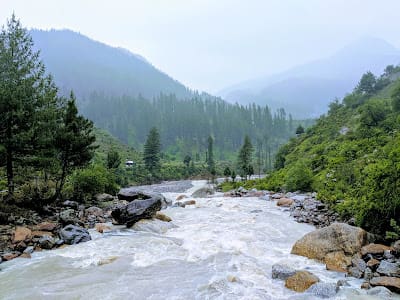
Meanwhile, enjoy the scenic view of the mountains and the Beas River flowing beside you.
After about 2 hours of hiking over small boulders, you will reach Raoli Thatch.
Rest here and we' will settle in for the day at the campsite.


A Hidden Gem in Parvati Valley The Tosh Kutla Trek is a scenic offbeat trail located in the…
A folklore-rich crossing above Naggar's ancient castle town, said to be the path a mountain goddess once walked,…
Grahan Trek: A Hidden Gem in the Parvati Valley If you love trekking and want to experience a…

