
Moderate

Sangla Holi Trip
Vibrant Sangla Holi – A Unique Experience in the Himalayas Why Celebrate Holi in Sangla? Scenic Beauty :…
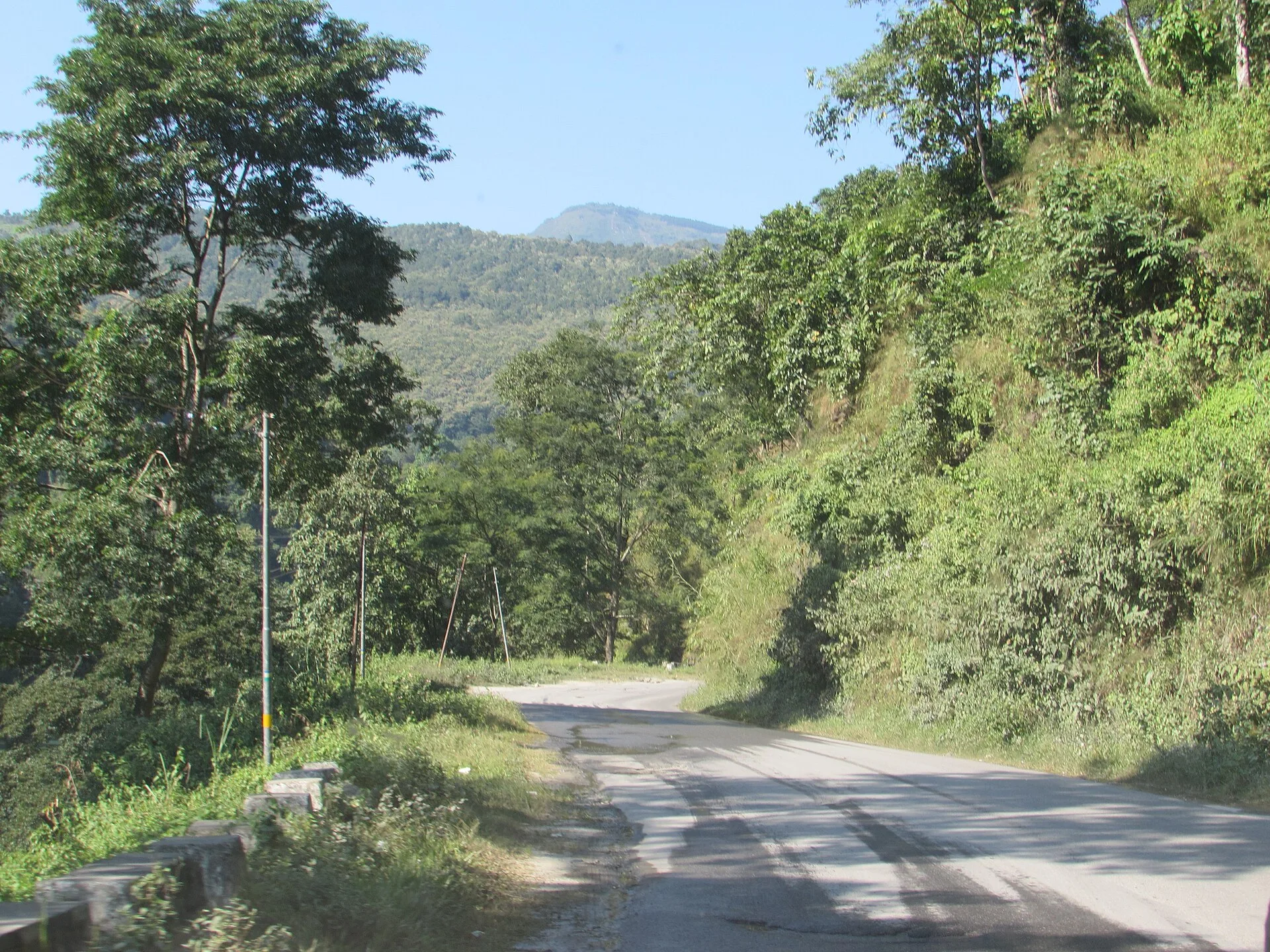
The Maenam Hill Trek is a 3-day, 2-night moderate trek in Sikkim priced from Rs 6,200 per person, climbing from Ravangla at 2,100 m through Maenam Wildlife Sanctuary to the Maenam ridge at about 3,200 m.
Maenam is the long forested ridge that stands directly above Ravangla in South Sikkim, and the walk up it is the shortest route in the state to a genuine high-Himalayan view. The trail starts at about 2,100 m on the edge of Ravangla and climbs through Maenam Wildlife Sanctuary, a protected area of roughly 35 square kilometres established in 1987, to a summit ridge at around 3,200 m. Oak, rhododendron and magnolia give way to stunted bamboo and open ground near the top.
The sanctuary is not a formality. It holds red panda, Himalayan black bear, serow, blood pheasant and satyr tragopan, and the birdlife on the upper ridge is the reason some people carry binoculars up instead of a second jacket. You will not see a red panda, because almost nobody does, but you will hear enough in the bamboo to understand that the forest is occupied.
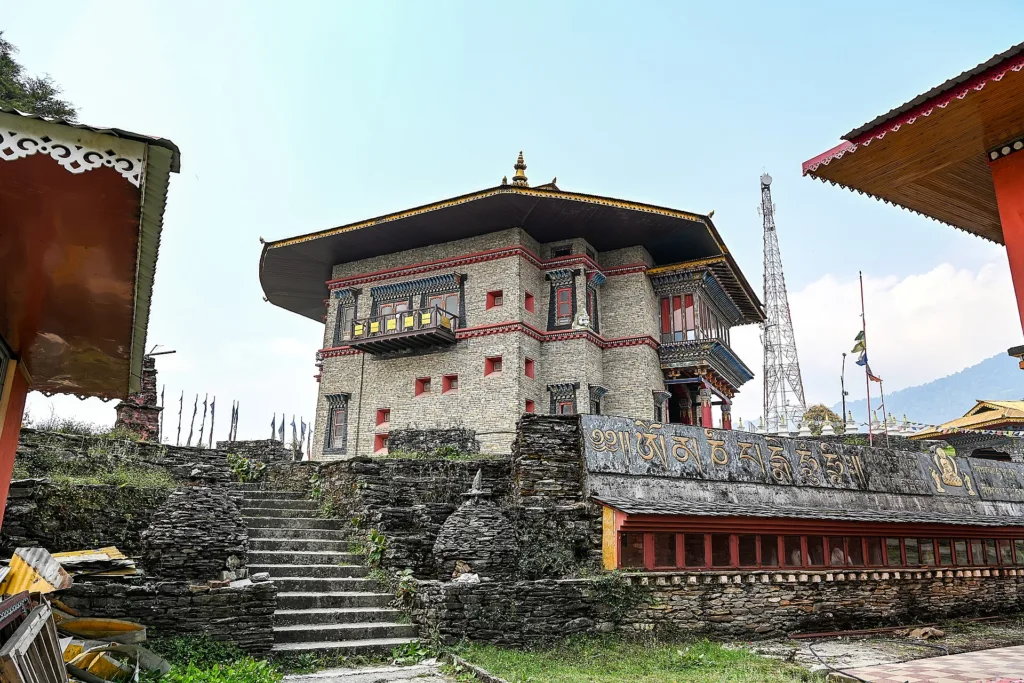
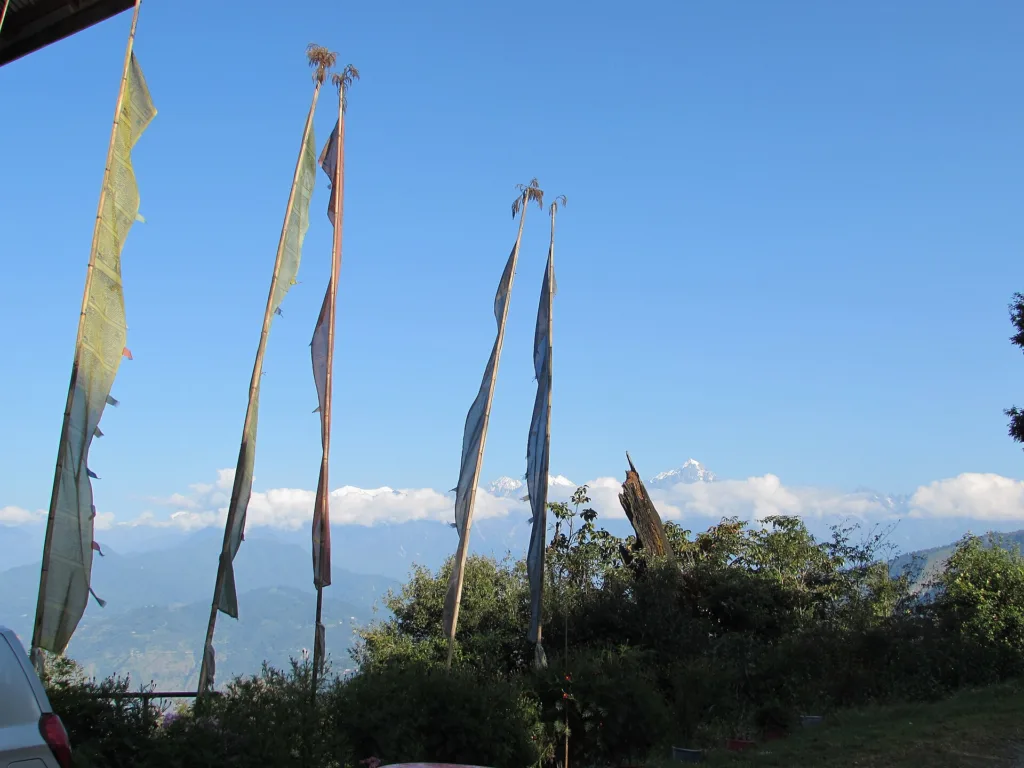
The reward at the top is one of the cleanest views of Kanchenjunga in Sikkim. The massif sits close and unobstructed, with Pandim, Kabru and Simvo lined up beside it, and on a clear morning the whole range turns from grey to gold in about four minutes. Just below the summit is Maenam Gompa, a small monastery that monks have used for meditation retreats for generations. The walk is a pilgrimage as much as a trek, and it is treated as one by the people who live on this ridge.
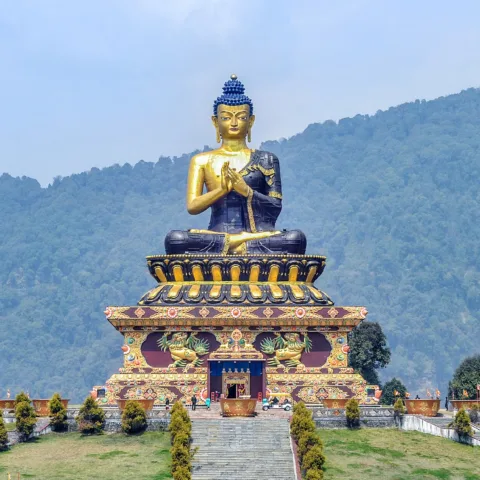
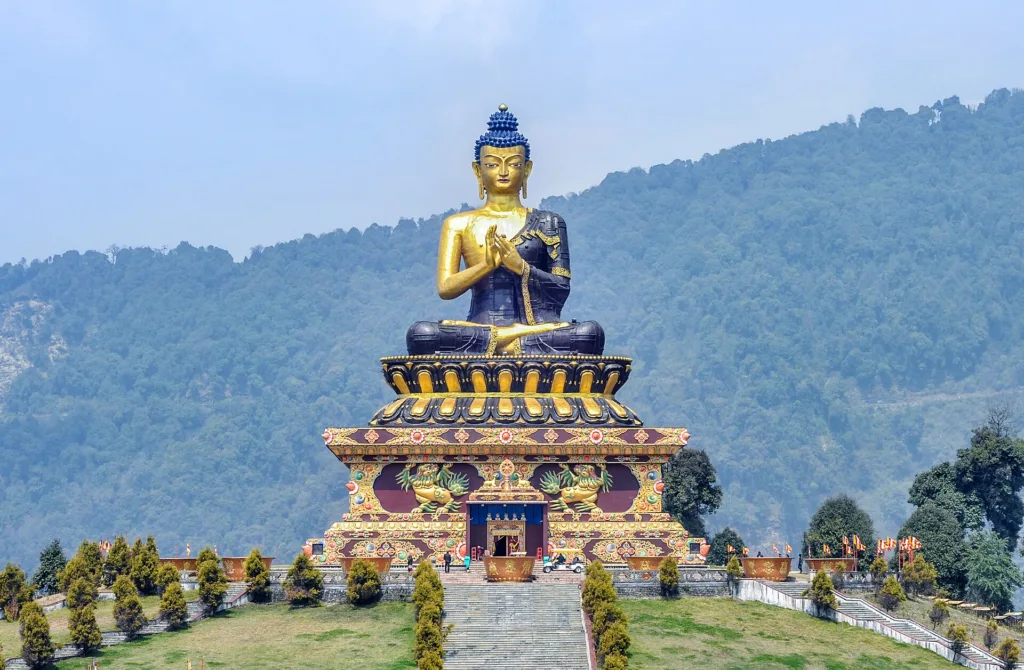
Ravangla itself is worth the two nights. The Buddha Park holds a 130-foot statue of the Buddha with the Kanchenjunga range behind it, the Rabong Monastery is a short walk from the bazaar, and the Ralang monasteries are an easy drive away. For the wider region, see our Sikkim destination hub and the full destination index.
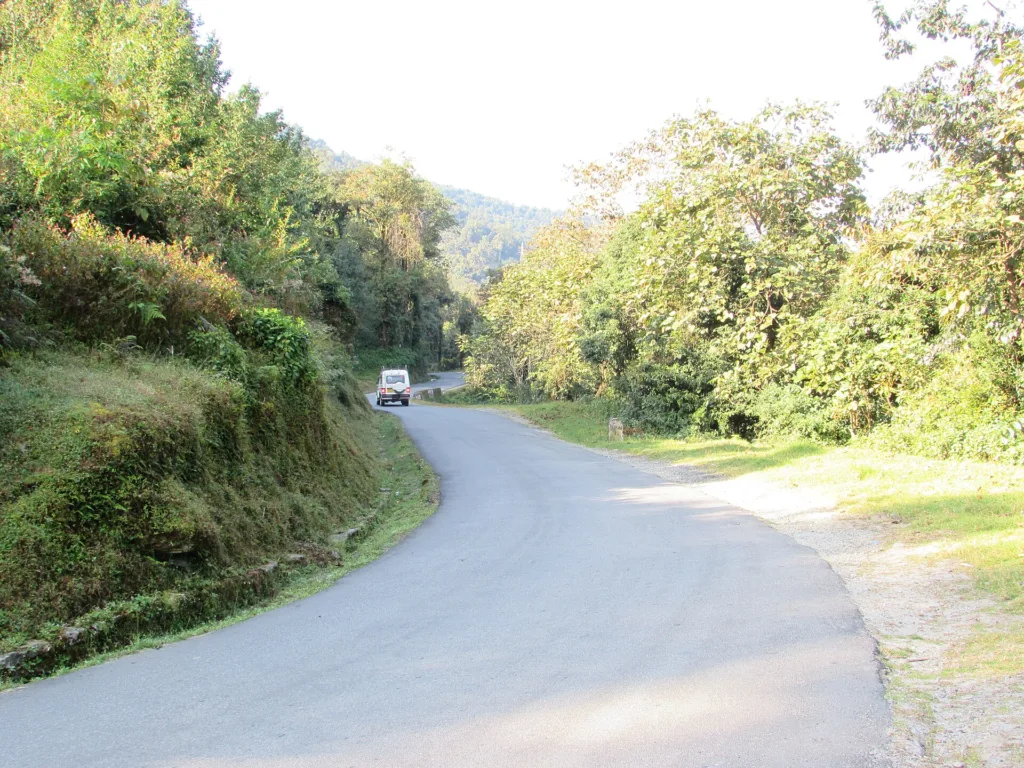
The trail leaves Ravangla from the upper edge of the town and enters the sanctuary almost immediately, climbing steadily through mixed forest on a well-defined path. The first two hours are the steepest. After that the gradient eases and the path runs along the ridge through rhododendron and bamboo, with the Kanchenjunga range appearing and disappearing through the trees on your left.
The climb to the summit ridge takes 4 to 5 hours at a walking pace, and the descent takes 3 to 4. There is a forest trekker hut and a small tea stall near the top, and the gompa sits a short way below the highest point. We walk up and back on the same day, which is how the trek is normally done, and spend both nights in Ravangla rather than camping inside the sanctuary, where overnight camping is not permitted.
The second day is deliberately left light. Ravangla to Bagdogra is a five-hour drive on a mountain road, and doing it straight after a 3,200 m summit day is how people end up carsick and miserable. The Buddha Park and the monastery walk are not filler; they are the reason Ravangla is worth more than a night.
Maenam suits trekkers who want a real Himalayan view without a multi-day expedition, and travellers who are already in Sikkim for Gangtok or Pelling and want one proper walk added to the itinerary. The single summit day is 4 to 5 hours up and 3 to 4 down, which is a long day but not a technical one. There is no scrambling and no exposure. If you can walk uphill for five hours at a slow, steady pace, you can do this. It is not a first trek for someone who has never walked a hill, because 1,100 m of gain in a day is a real ask.
Rs 6,200 covers two nights in Ravangla, all meals, the sanctuary entry fee, a local guide and the road transfers from Bagdogra or New Jalpaiguri. It does not cover the flight or train to Siliguri, or the optional drive to the Ralang monasteries.
March to May and October to December. Spring gives rhododendron on the lower trail and the clearest mornings for Kanchenjunga. October and November are the most reliable months for the view, with stable air and little cloud. December to February is possible but the upper ridge can be under snow and the path icy, and the monsoon from June to September brings leeches and cloud that hides the range entirely.
The summit ridge is about 3,200 m and you sleep at 2,100 m in Ravangla. At this height altitude sickness is uncommon, but the gain of 1,100 m in a single day is enough to make some people breathless and headachy. The two nights at Ravangla before and after the summit day help, and the guide carries an oximeter.
You should manage 4 to 5 hours of continuous uphill walking with a day pack, then 3 to 4 hours down. There is no scrambling and no exposure. The altitude is what makes it feel harder than the distance suggests, so walk slowly and steadily rather than fast and stop-start.
Yes. Solo travellers join a group of up to 12 and share twin rooms in Ravangla. The sanctuary requires a guide for groups, and we do not run the summit day unguided. A single supplement is available if you would rather not share.
Two nights in a hotel or good homestay in Ravangla on twin sharing, with attached bathrooms and hot water. There is no overnight camping inside Maenam Wildlife Sanctuary, which is why the summit is done as a long day rather than with a night on the ridge. There is a forest trekker hut and a tea stall near the top for a mid-day stop.
Ravangla has reliable 4G on most networks. Signal fades within the first hour of the trail and is gone for most of the climb, returning patchily near the summit ridge. Expect to be offline for the six to eight hours of the summit day.
Start with the Sikkim destination hub, browse the full destination index and our activities pages, then compare this route with the rest of our trekking collection. The nearest destination guide is Ravangla.
Photographs on this page are licensed from Wikimedia Commons. Full attribution and licence for each image is listed below.
Vibrant Sangla Holi – A Unique Experience in the Himalayas Why Celebrate Holi in Sangla? Scenic Beauty :…
Conquer the Heights of Spiti Valley If you’re craving a high-altitude adventure, the Kanamo Peak Trek is an…
Kedarkantha trek Do you want to experience the thrill of summiting a mountain in the winter? The Kedarkantha…