
Difficult

Annapurna Base Camp Trek
A classic Nepal trek through Gurung villages, rhododendron forest, and hot springs, culminating in a natural amphitheatre of…
Unakoti Trek runs 3D/2N from Agartala, graded Easy, from Rs 7,200 per person. Route: Agartala – Kailashahar – Unakoti – Raghunandan Hills – Agartala.
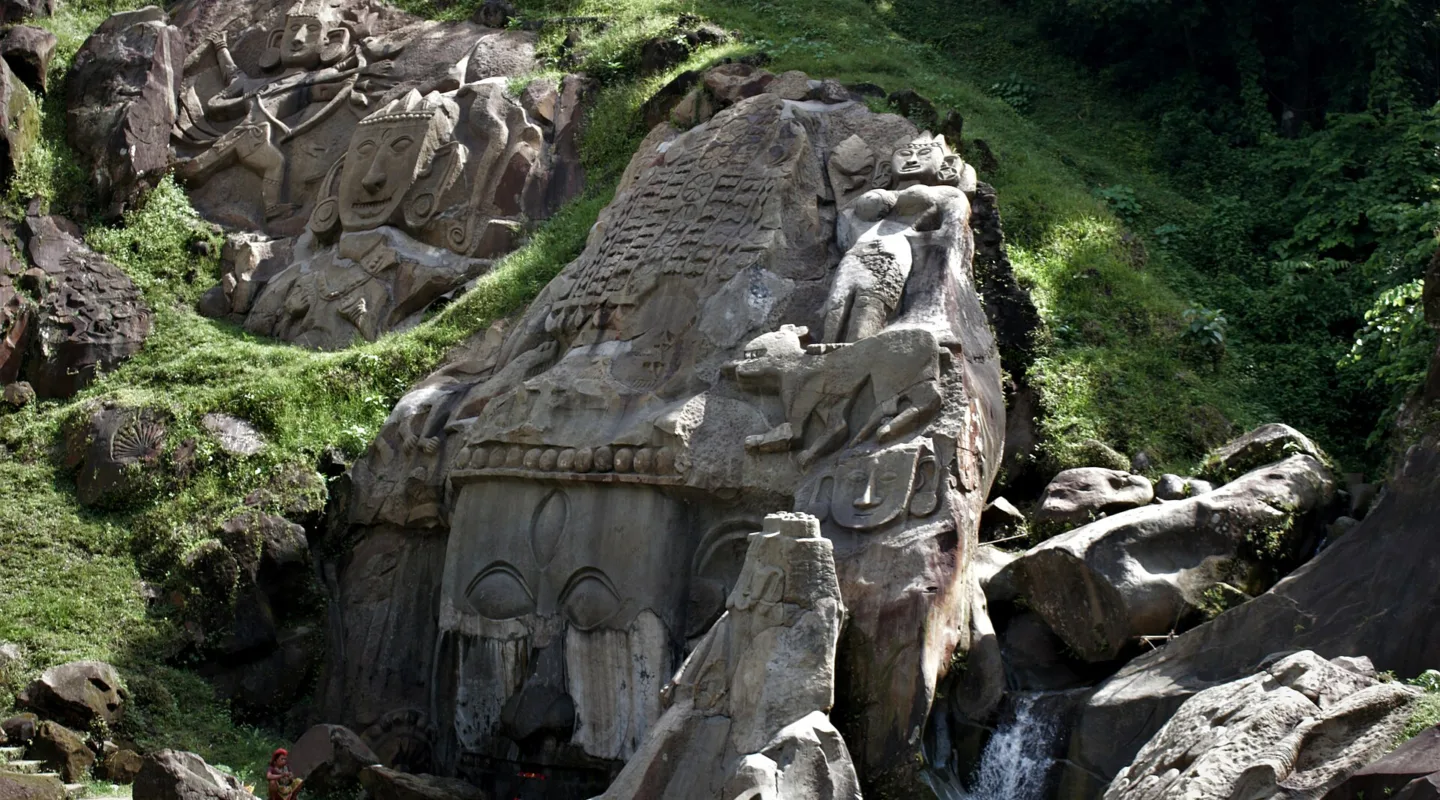
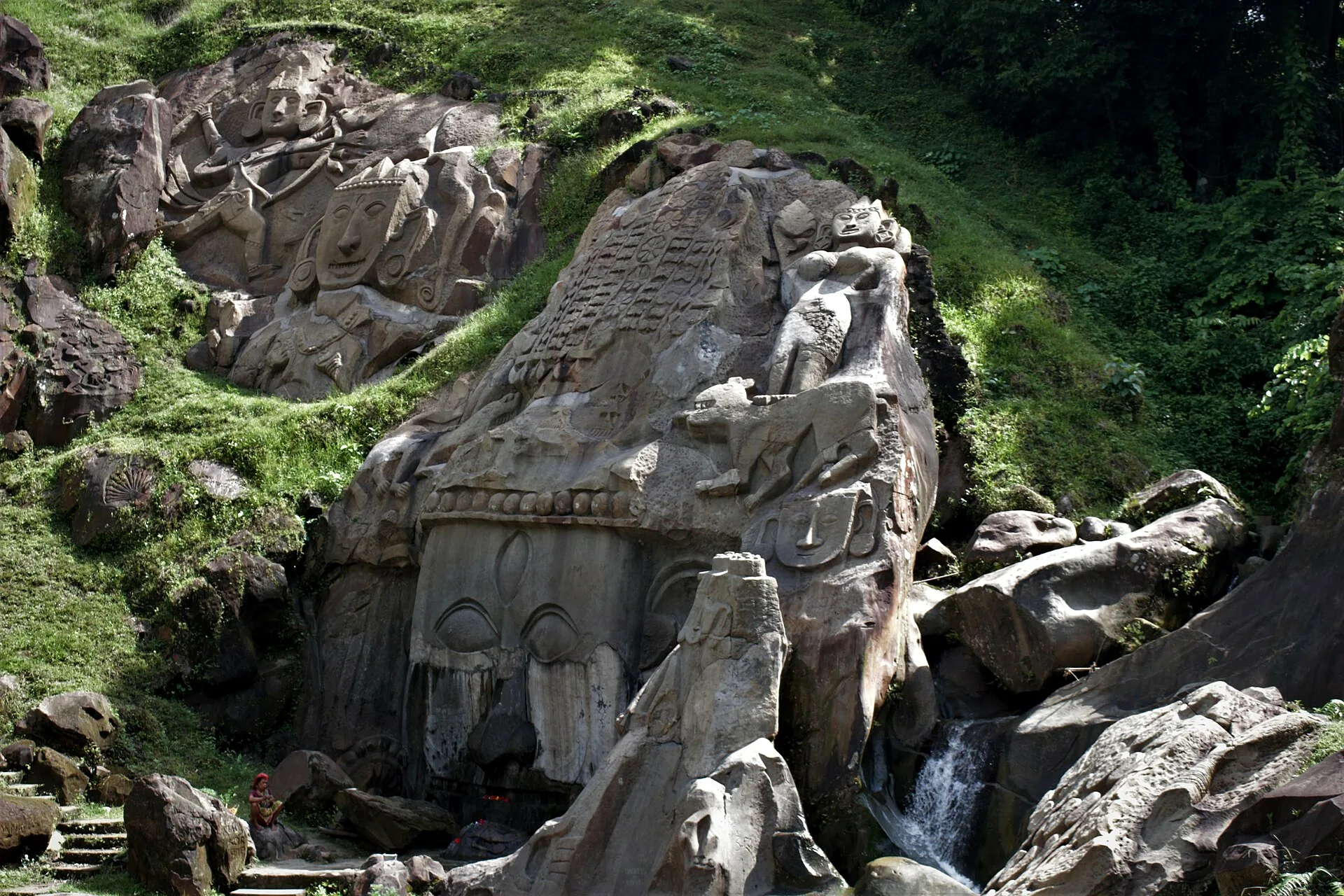
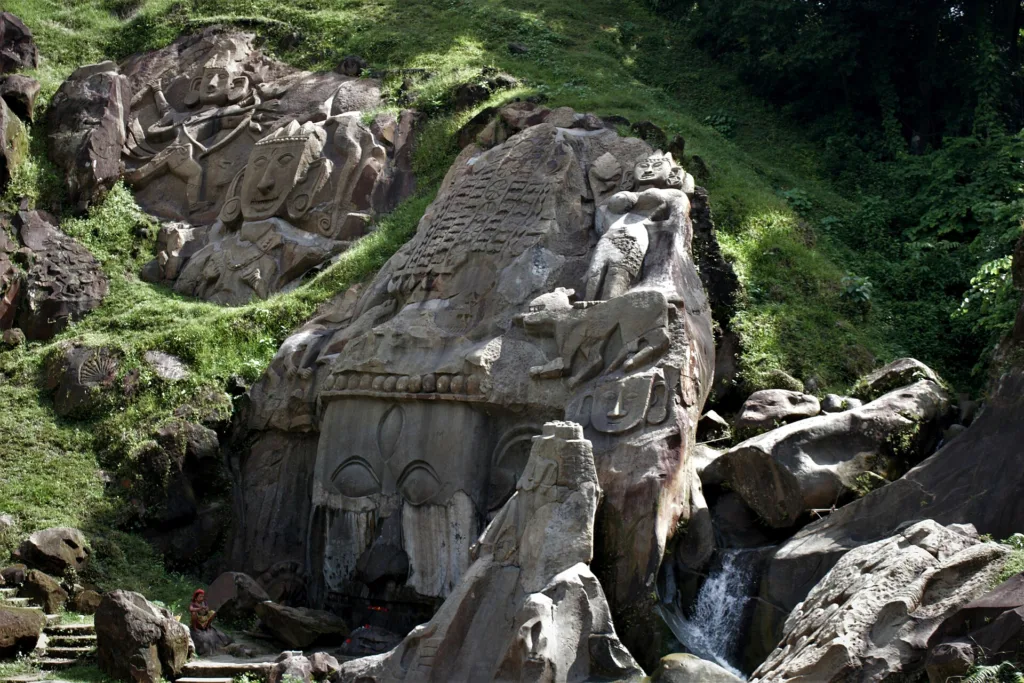
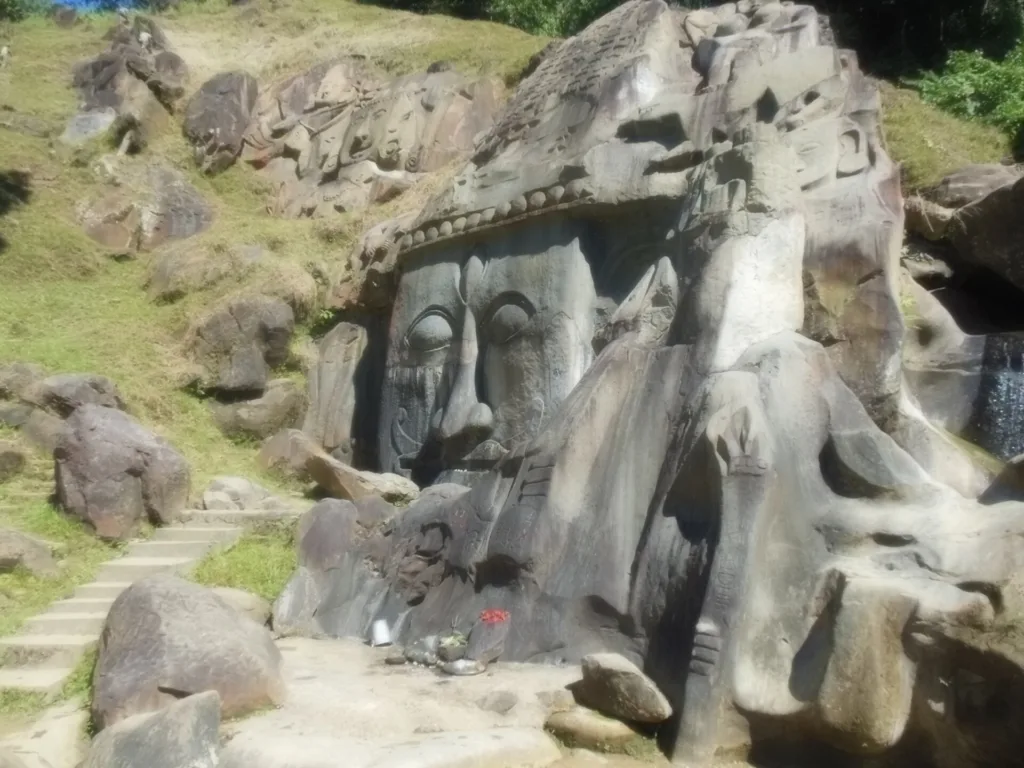
Unakoti is a hillside covered in rock-cut sculpture, and it is one of the least visited major archaeological sites in India. The reliefs are cut into the vertical face of the Raghunandan Hills in northern Tripura, about eight kilometres from Kailashahar and 185 kilometres from Agartala, and they are ascribed on stylistic grounds to the 8th and 9th centuries CE, from the pre-Manikya period. The patronage is usually attributed to the Deva dynasty of Sribhumi.
The name means one less than a crore, and the legend is that Shiva was travelling to Kashi with a crore of gods and stopped here for the night, promising to leave at dawn. When only Shiva woke, he left the rest behind and turned them to stone. The site is still an active Shaivite pilgrimage, and the annual Ashokastami Mela in March or April brings pilgrims from across Tripura and Bangladesh.
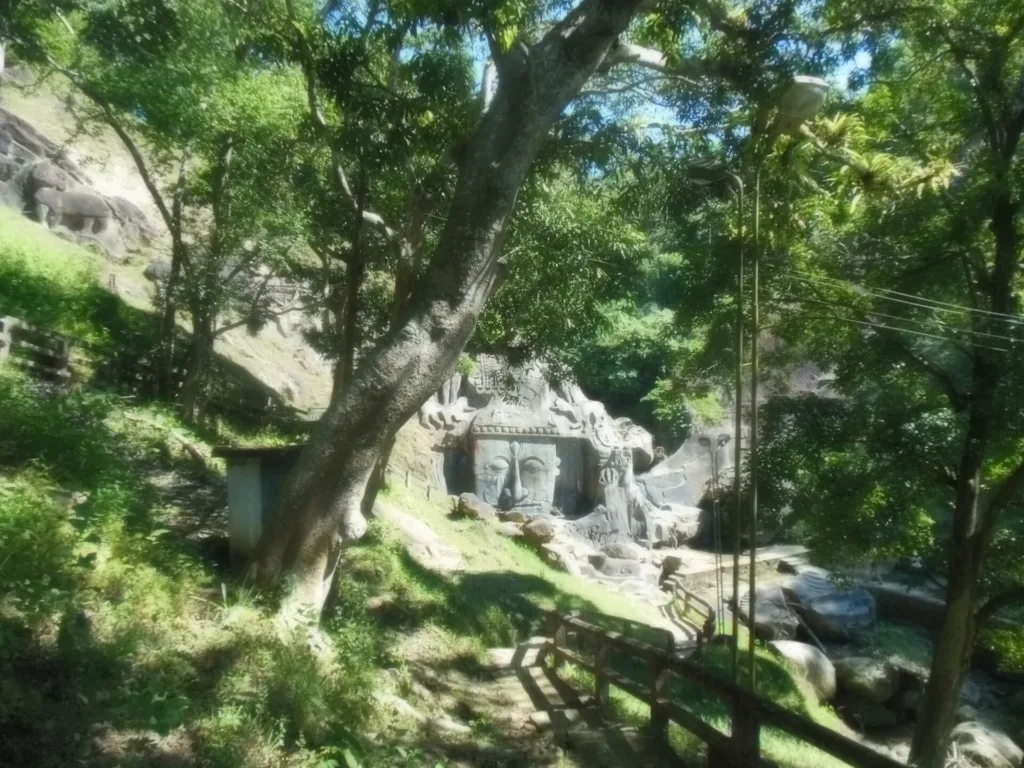
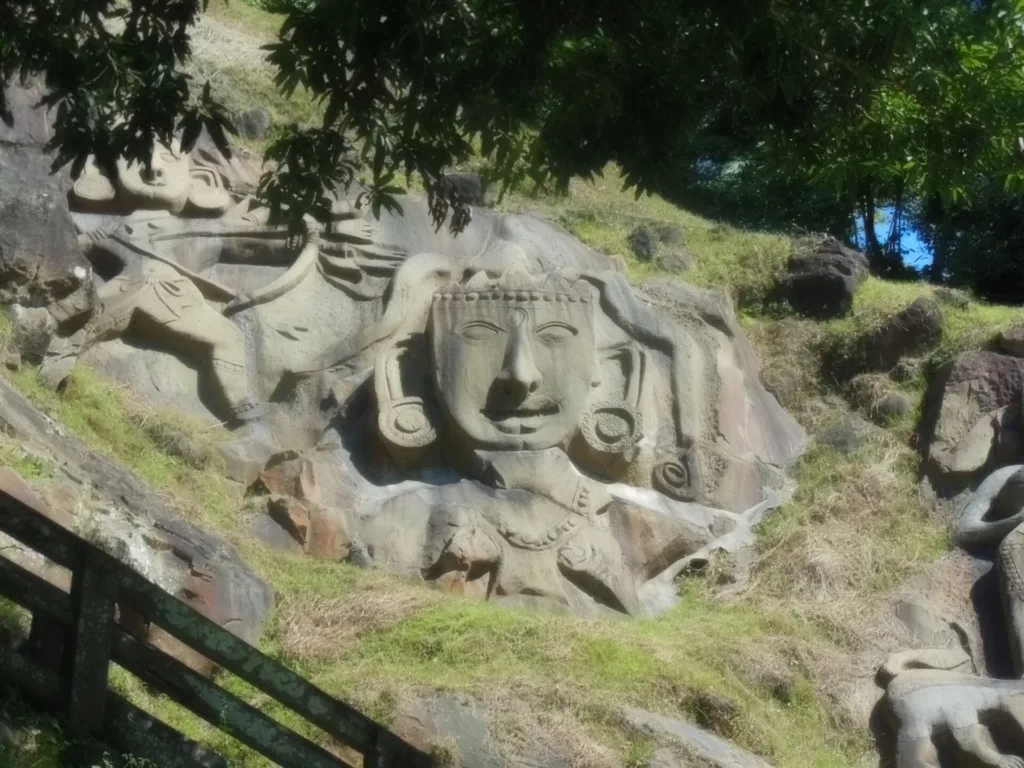
The centrepiece is the Unakotiswara Kal Bhairava, a colossal central Shiva head about nine metres high including a head-dress that is itself three metres tall, flanked by full-size figures of Durga on a lion and another female figure. Beside it is a gigantic Ganesha. The reliefs are among the tallest bas-reliefs in India, and the site is on UNESCO’s tentative list.
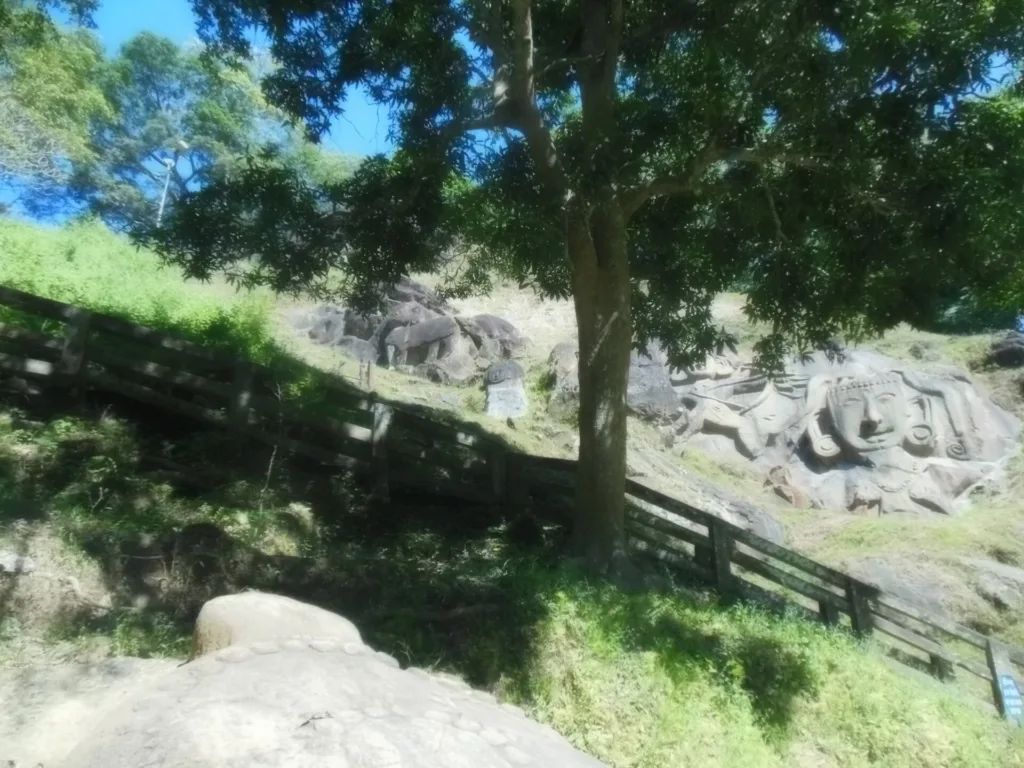
The walking is easy and short. The hill is low, around 250 metres, and the paths between the sculpture groups are paved and stepped. What makes the trek worth three days is the combination: the archaeology, the forest and streams of the Raghunandan Hills, and the Jampui Hills tea country to the east.
Day one is the drive from Agartala, about 185 kilometres north-east through Dharmanagar and Kailashahar. The road is good and the country changes from the Bengal plain to low forested hills. You reach Kailashahar by evening.
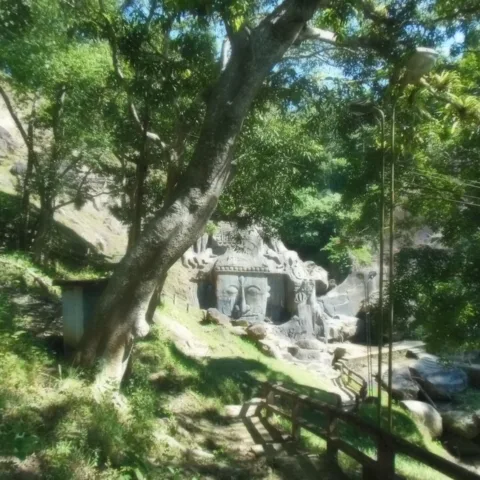
Day two is Unakoti. An early start to be at the site before the day’s pilgrims, then a slow walk through the sculpture groups: the central Shiva head, the Ganesha, the Nandi bull, the Durga panel and the smaller figures scattered along the stream. The site is compact, about two kilometres of walking, but the ground is stepped and uneven. The afternoon is a forest walk on the Raghunandan ridge above the carvings.
Day three is the return, with a stop at the Jampui Hills viewpoint and the tea gardens on the way back to Agartala.
This trip suits travellers interested in archaeology, temple architecture and the north-east, and it works well for photographers and for anyone who wants a short, low-effort trip with real substance. The walking is two to four kilometres a day on paved and stepped paths.
It is not a physical challenge. Anyone who can manage steps and uneven stone will be comfortable. The site is an active place of worship, so shoulders and knees should be covered, and shoes come off at some of the shrines.
The price covers three days from Agartala, including road transport, two nights of accommodation in Kailashahar on twin sharing, all meals, a trek leader and a local guide at the site, and the site entry fees.
It does not cover travel to Agartala, personal expenses, insurance, or the camera fee at the archaeological site. Anything caused by weather or road closure is outside the price.
October to March is the most comfortable window, with dry weather and cool mornings. The Ashokastami Mela in March or April is the site’s biggest festival and worth seeing, but it is crowded and accommodation in Kailashahar fills up. The monsoon, June to September, makes the stream and the forest lush but the stone paths slippery.
Easy. The Raghunandan Hills here are low, around 250 metres, and the walking is two to four kilometres a day on paved and stepped paths. There is no sustained climb. The only care needed is on wet stone, which is slippery after rain.
A basic level of fitness is enough. If you can manage steps and walk for an hour or two at a time, you will be comfortable. The site involves standing and looking as much as walking.
Yes. Groups are capped at sixteen and departures usually carry a mix of solo travellers and couples. Accommodation is on twin sharing in Kailashahar, and a single supplement is available on request. The site itself is safe and well used by pilgrims.
Two nights in a hotel or guesthouse in Kailashahar on twin sharing, with attached bathrooms and hot water. Kailashahar is a small district town and the properties are functional rather than luxurious. Power is generally reliable.
No permit is needed for Indian nationals; the site is open and charges a small entry fee, which is included. Foreign nationals should carry ID. Mobile coverage in Kailashahar is usable, but it weakens at the site itself, which sits in a forested hollow. Treat the Unakoti day as partly offline.
Unakoti Trek is one of the treks we run in Tripura. Browse the full destination index for other states, or see all activities and the trekking collection. For a shorter version of this trip, ask us about a private departure.
Photographs on this page are licensed under Creative Commons and are credited below. They are used unmodified apart from resizing.
A classic Nepal trek through Gurung villages, rhododendron forest, and hot springs, culminating in a natural amphitheatre of…
The Indrahar Pass grants you to unwind within the great thing about the mighty Dhauladhar range of Himalayas.…
Lambasingi and Araku Valley trek from Visakhapatnam, 3D/2N. Misty hill trails, coffee plantations, Galikonda viewpoint and Borra Caves.…