
Easy
Bhrigu Lake Trek From Delhi
The Bhrigu Lake Trek, located in the picturesque state of Himachal Pradesh, is a renowned trekking destination that…
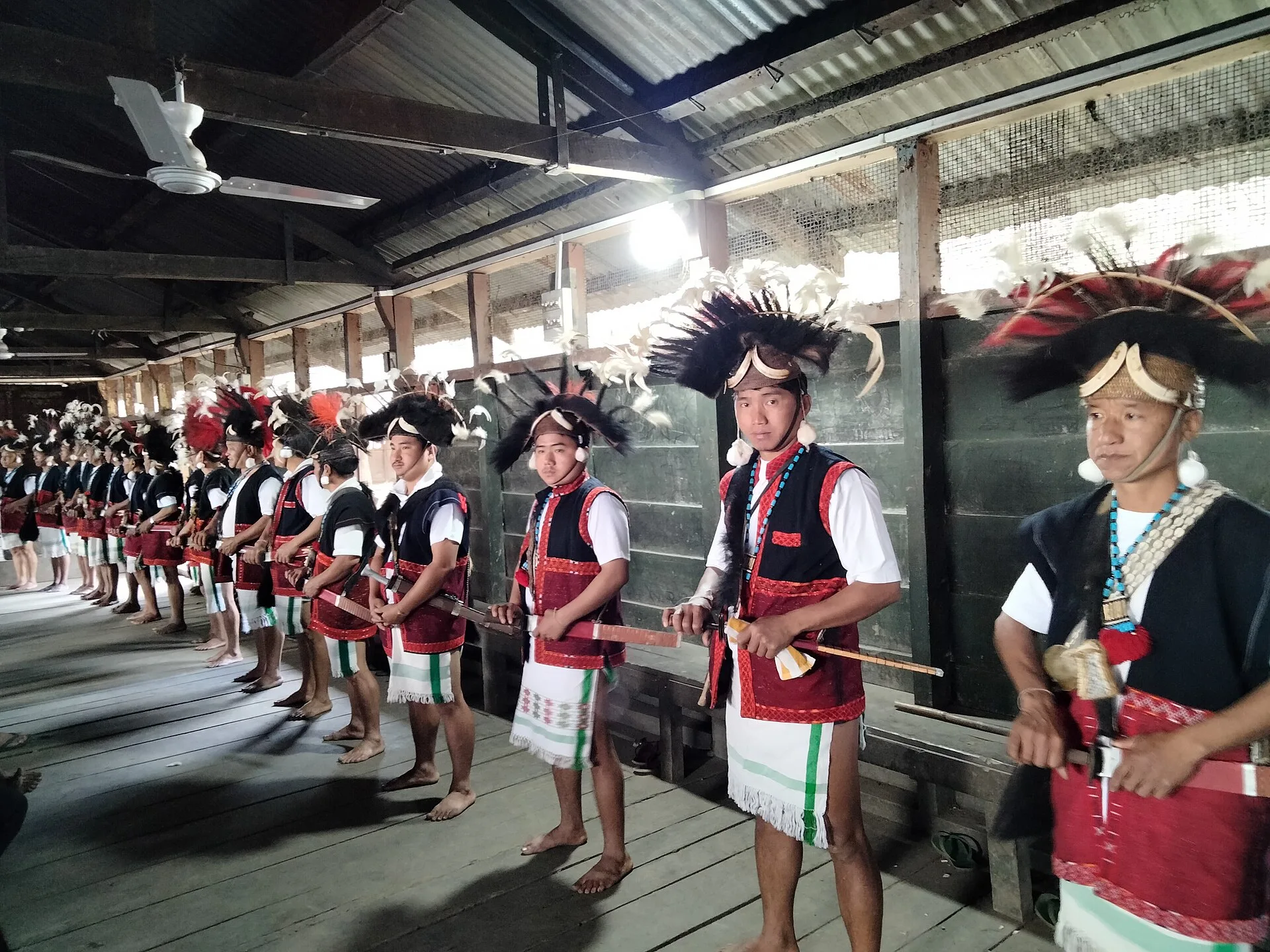
The Solung Festival Siang runs 4N/5D from Pasighat, graded Easy, from Rs 10,800 per person. Route: Dibrugarh – Pasighat – Rengging – Pasighat – Dibrugarh.
Most travellers who reach Arunachal Pradesh go north to Tawang or west to Ziro. Very few go east to Pasighat, which is the oldest town in the state and the doorway to the Siang, the river that becomes the Brahmaputra when it reaches Assam. In the first week of September that town and the Adi villages around it keep Solung, and the festival is the reason to be there.
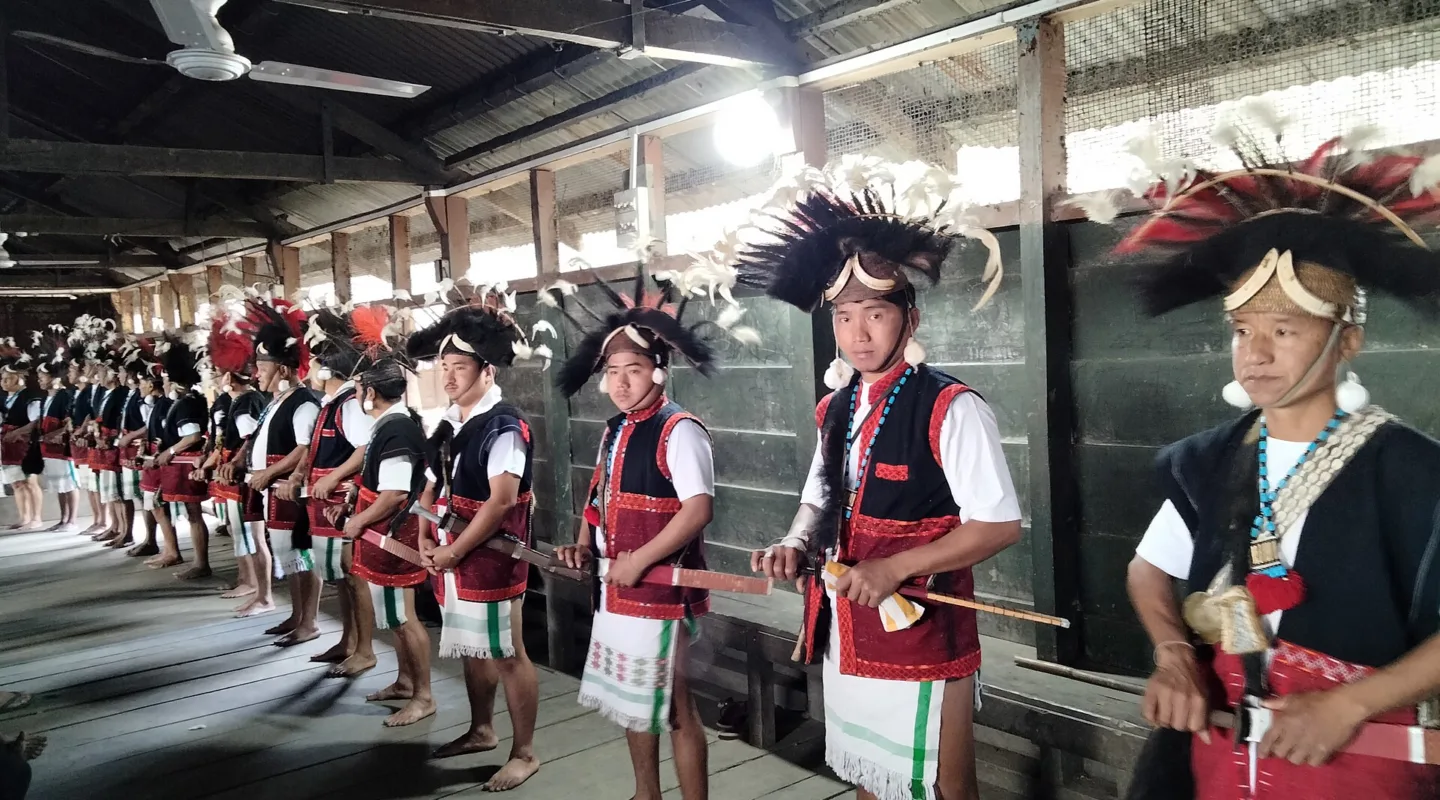
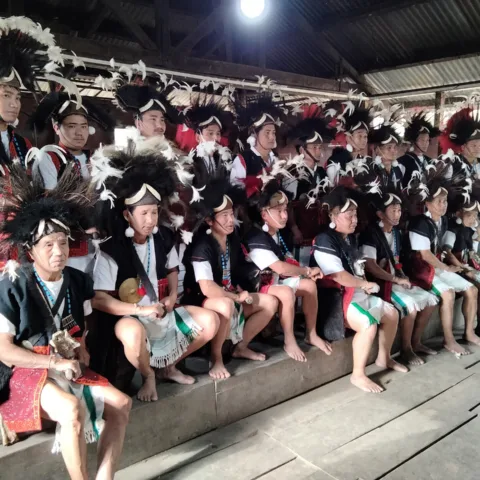
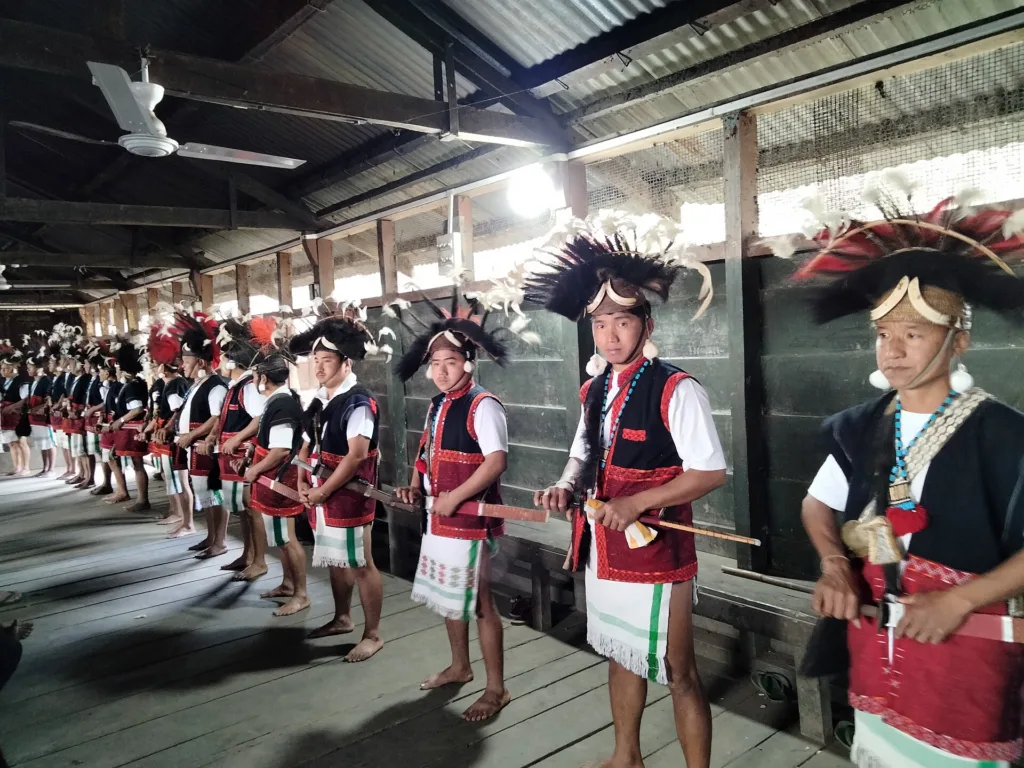
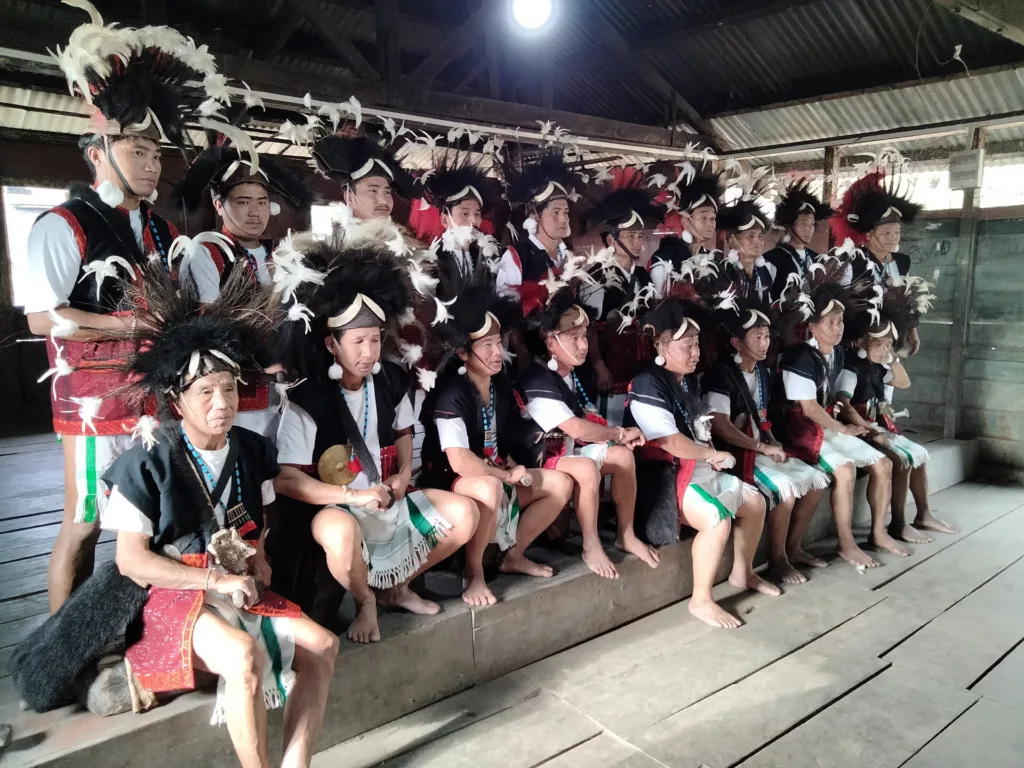
Solung is the Adi harvest festival, and it is not staged for visitors. The Adi are one of the larger tribal groups of Arunachal Pradesh, spread across East Siang, West Siang, Upper Siang and Siang districts, and their festival is a sequence of rituals tied to the agricultural year, performed in village moshup — the long communal houses — and on the village ground. It is one of the few large tribal festivals in India that a visitor can still attend largely on the community’s own terms.
The Adi name for the festival carries its own meaning: e-so, the mithun, and a-lung, a herd, which ties the celebration to the semi-domesticated gaur that is central to Adi exchange and sacrifice. Solung honours Kine Nane, the goddess of crops, Doying Bote, the god of heaven and wisdom, and Dadi Bote, the god of domestic animals. The state fixed 1 September as the official start, and the public celebration at Pasighat runs over the first days of the month, while individual villages keep their own rites on locally chosen dates through August and September.
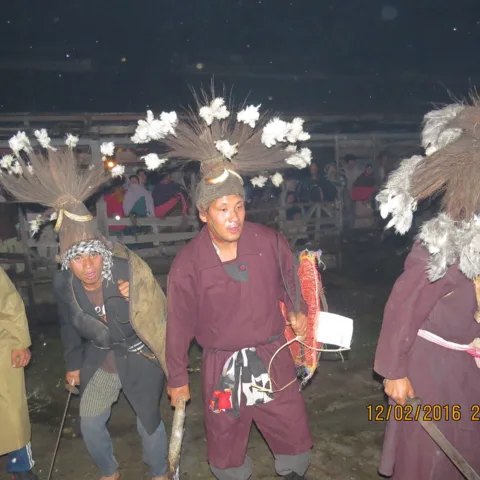
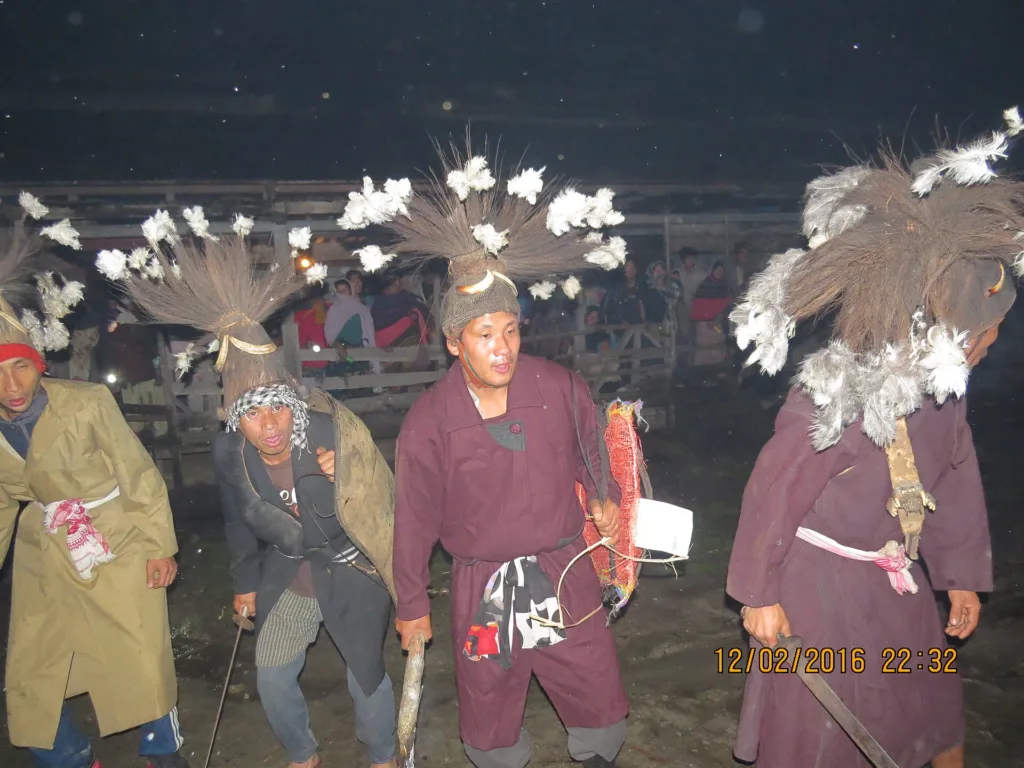
The festival has three parts. Sopi-Yekpi is the opening, and the sacrificial day. Binyat is the offering to Kine Nane, asking for a full harvest. Ekop, also called Taktor, is the rite of protection against harm from evil spirits. It is in Ekop that the miri — the shaman and lead singer — recites the Solung Etor, the origin myth, a narrative of Abotani, the mythological forefather of the Adi and the wider Tani peoples. The recitation is sung as much as spoken and goes on through the night, and it is the single most important thing to witness if you are there for the festival rather than for the photographs.
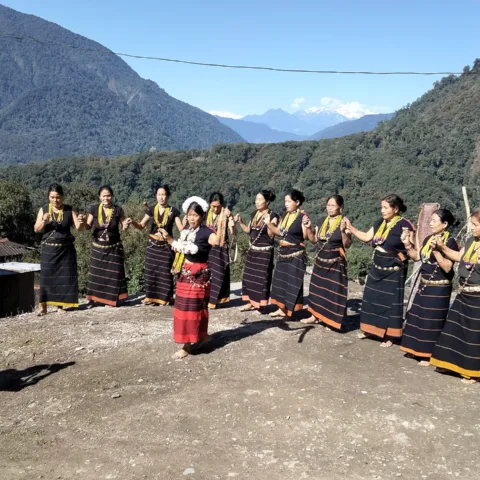
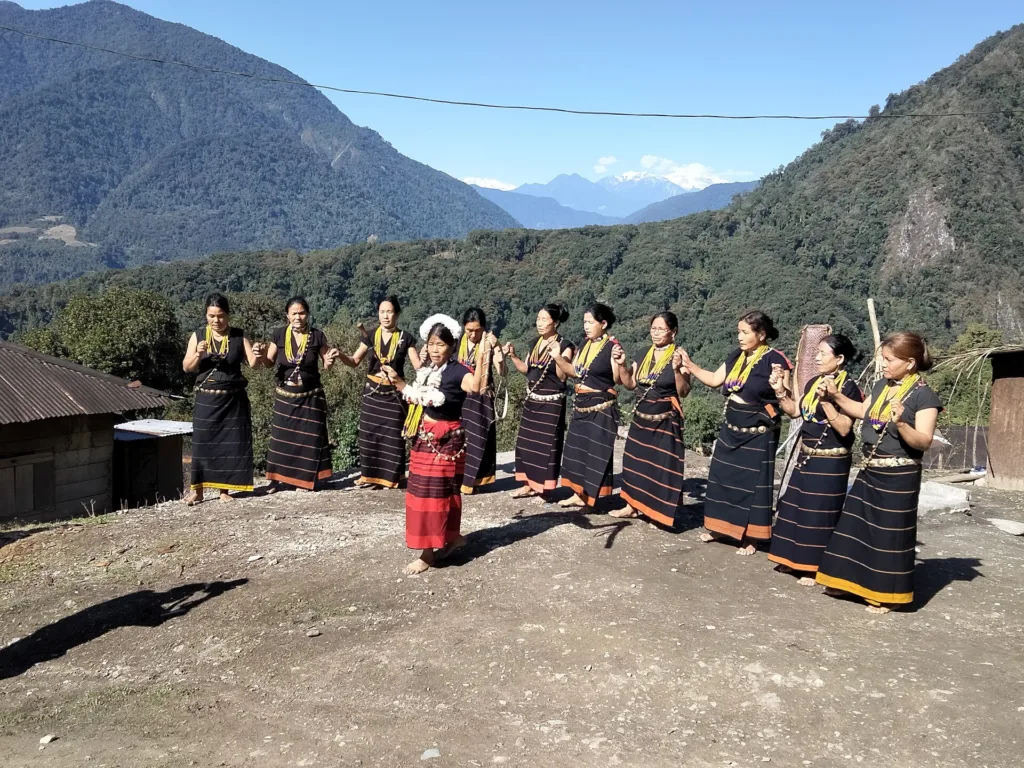
The Ponung is the dance most associated with Solung. Unmarried Adi women dance in a slow circle, arms linked, around the miri, and the circle moves through the night while the recitation continues. It is not a performance with a beginning and an end and an audience; it is the accompaniment to the ritual, and it lasts as long as the ritual does.
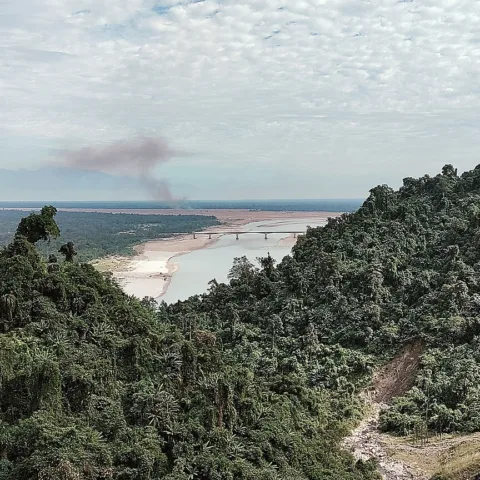
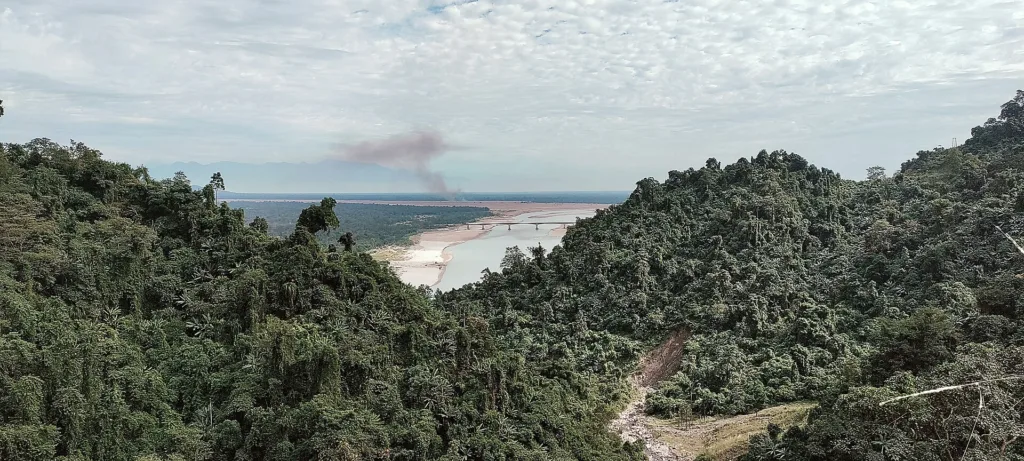
Pasighat sits at about 155 metres on the right bank of the Siang, where the river comes out of the hills onto the Assam plain. It was the first administrative outpost the British established in the area, in the 1880s, and the town is still built around a few straight roads and a market that draws Adi, Minyong, Galo and Mishing traders. Above the town the Siang runs in a wide braided bed of pale stone, and the water in September is high and grey with monsoon silt.
September in the Siang valley is the retreating monsoon. Days are humid and warm, 26 to 31 degrees, with the occasional heavy shower and mist on the hills. The river is at its fullest. It is not the season for trekking in the hills, and this trip does not attempt it: the travel is by road and the walking is in villages and along the river.
The group flies into Dibrugarh in Assam and crosses the Brahmaputra, then drives north-east to Pasighat, about 150 kilometres and four hours on a road that is good in stretches and slow in others. The first evening is in Pasighat. The second and third days are the Solung celebrations, moving between the public ground and the villages around the town.
The fourth day goes up the Siang to Rengging and the villages on the left bank, where the festival is kept in a smaller and more domestic form, and returns to Pasighat in the evening. The fifth day drives back to Dibrugarh for the flight out.
The road from Pasighat up the Siang is the state highway towards Yingkiong, and it is the reason Upper Siang is reachable at all. Distances are short in kilometres and long in time: Rengging is about 30 kilometres and takes over an hour. Anyone continuing further up the Siang needs an inner line permit and considerably more time.
This trip suits travellers with a genuine interest in tribal culture and anthropology, and photographers who are comfortable working respectfully in a community that is not performing for them. It also suits anyone who has been to Arunachal before and wants the eastern half of the state rather than the Tawang circuit.
It is not suited to travellers who need a fixed programme with a schedule. The festival runs on the community’s clock, the miri’s recitation may start at midnight, and the plan for a day can change in the afternoon. It is also not a comfortable trip in the resort sense: the roads are rough, the hotels are plain, and September is humid.
The price covers four nights in a hotel in Pasighat on twin sharing, breakfast and dinner daily, all road transport from Dibrugarh and back, the village drives up the Siang, inner line permits, a local Adi guide who can interpret the ritual, and a contribution to each village visited.
It does not cover the flight to Dibrugarh, lunch, or the optional Brahmaputra ferry. Budget separately for mithun and rice beer if a village invites you to eat, though the offering is usually made on the group’s behalf.
Solung is kept in the first week of September, with 1 September fixed as the state-level start and public celebrations at Pasighat running over the following days. Individual villages keep their own rites on locally chosen dates through August and September, so the exact days differ from village to village. We confirm the year’s programme before departure and tell the group in the pre-trip note.
It is graded easy, and there is no altitude concern at all. Pasighat sits at about 155 metres, on the plain where the Siang comes out of the hills. The walking is village ground and riverbank, with some uneven stone.
A basic level. There is no trekking. The demands are long days in humid heat, rough road travel, and late nights if you stay for the Ekop recitation. If you can manage a hot, wet day and a slow road, you are fit enough.
Yes, and the small group size helps. Twin-sharing accommodation, a trip captain throughout and communal meals make it easy for solo travellers. The group is capped at twelve, which matters in villages where a large party would overwhelm the gathering.
Four nights in a hotel in Pasighat on twin sharing, among the best the town has, which is plain and clean rather than luxurious. Rooms have attached bathrooms and hot water. Singles who want a room to themselves can pay a single supplement, subject to availability.
Indian citizens need an inner line permit for Arunachal Pradesh, which we arrange for the whole group in advance. Foreign nationals need a protected area permit, also arranged in advance, along with a standard tourist visa. Mobile coverage in Pasighat is workable for calls, and data is slow. The signal drops on the village roads up the Siang, so download what you need before you leave.
Explore related pages: All trips in Arunachal Pradesh · Browse all destinations · All activities · Pasighat destination guide · Cultural tours in India.
Photo credits. Photographs on this page are from Wikimedia Commons and are used under the licences listed below. Each image is credited to its photographer; the licence terms apply to reuse of the image.
The Bhrigu Lake Trek, located in the picturesque state of Himachal Pradesh, is a renowned trekking destination that…
Coorg's highest peak — a trek through mist-wrapped coffee estates and shola grassland to a summit famous for…
Khajuraho Dance Festival tour, 4D/3N from Jhansi, graded Easy, from Rs 6,800. Classical dance at the UNESCO temples,…