
Easy
Kodaikanal Group Trip from Bangalore
Overview of the Kodaikanal Group Trip from Bangalore Kodaikanal Group Trip from Bangalore runs 1N/2D from Bangalore, graded…
Next Departure
27/11/2026
20 seats left
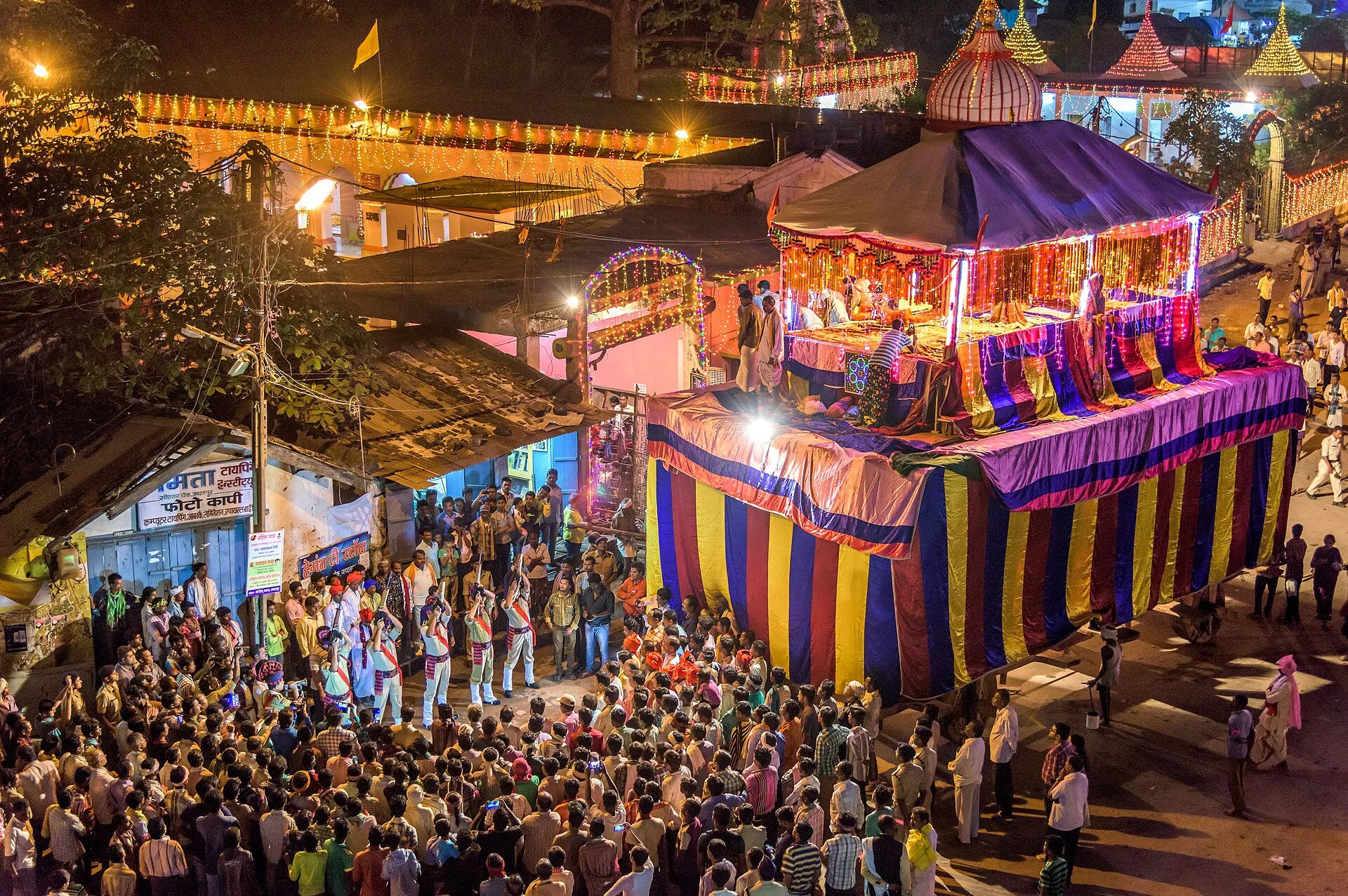
The Bastar Dussehra Chhattisgarh runs 3N/4D from Jagdalpur, graded Easy, from Rs 7,200 per person. Route: Jagdalpur – Dantewada – Chitrakote – Tirathgarh – Jagdalpur.
Bastar Dussehra is the longest festival in India and one of the longest in the world. It runs for 75 days, and it has nothing to do with the Dussehra of the plains. There is no Ramlila and no effigy of Ravana is burned. The festival is dedicated to Danteshwari, the presiding goddess of Bastar, and it is a tribal observance of the Muria and Dhurwa communities rather than a Hindu epic retold.
That is the reason to travel for it. Bastar is one of the few districts in India where the majority population is Adivasi, and the Dussehra here is the district’s own calendar rather than an import. The rituals are not staged for visitors and there is no ticketed enclosure.
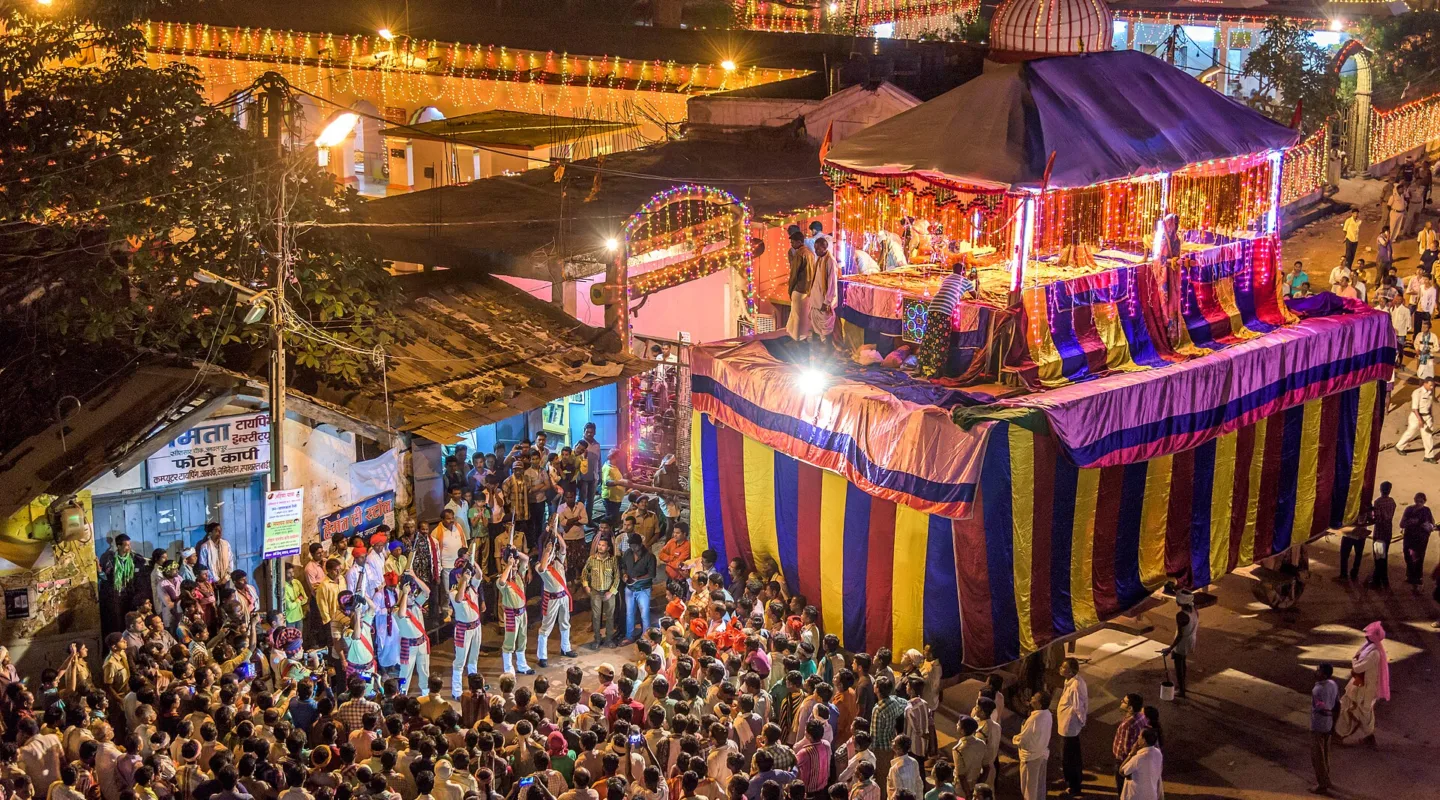
The festival opens with Pat Jatra, when wood is brought from the forest and worshipped before the chariot is built. From there the sequence runs through Deri Gadai, the chariot construction; Kachhin Gadi, when permission for the festival is sought from Kachhin Devi; Jogi Bithai, a nine-day ritual; the arrival of deities from across the region; Mavli Parghav; the chariot procession itself; Bhitar Raini and Bahar Raini; Nisha Jatra; and finally the Muria Darbar, where the tribal chiefs assemble.
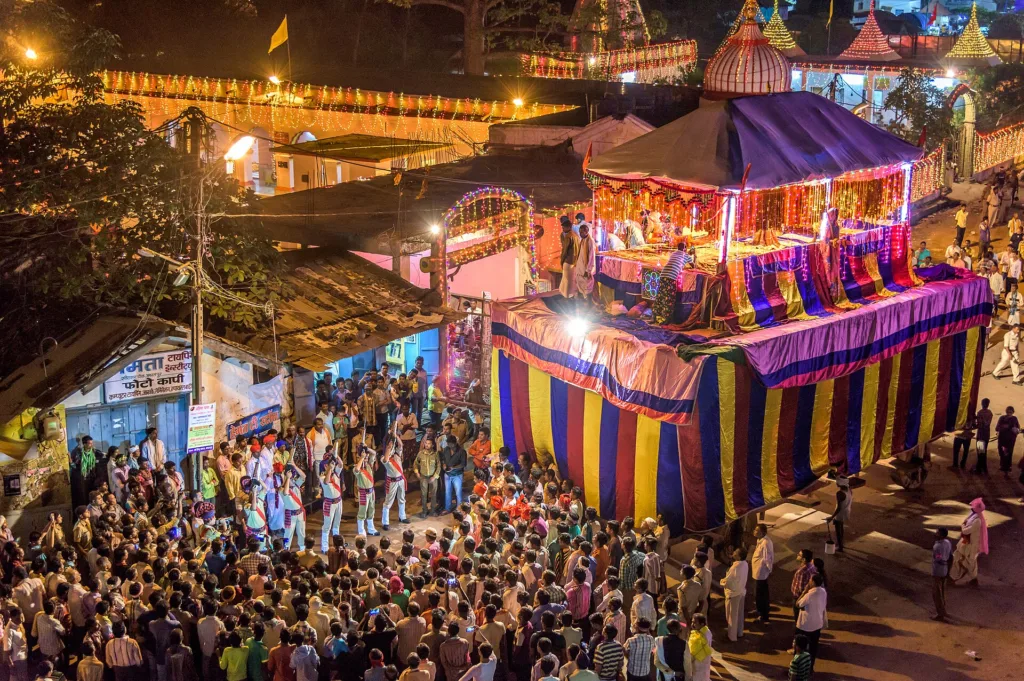
The centre of it is the rath, a chariot of enormous size that is built fresh each year and pulled by hand through Jagdalpur. It is not a small cart. The wheels are taller than a person, and the pulling is done by hundreds of men and boys on ropes, with the whole town turned out to watch. The chariot is rebuilt and moved several times across the festival, and the final procession is the one most visitors come for.
Jagdalpur is the district headquarters, a town of about a hundred thousand people on the Indravati river plain, ringed by sal forest and low hills. It is the practical base for the region: the road south to Dantewada and the Danteshwari temple, the road west to Chitrakote, and the Kanger Valley National Park to the south-east are all day trips from here.
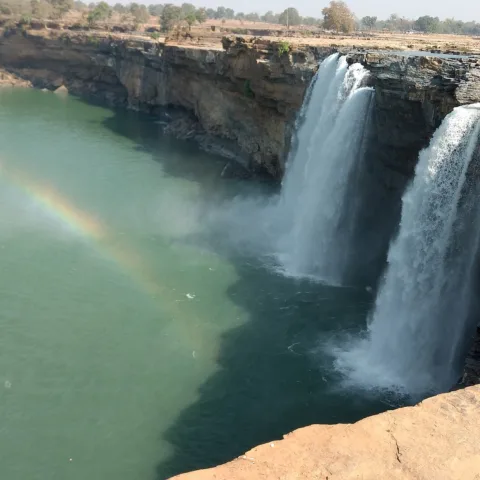
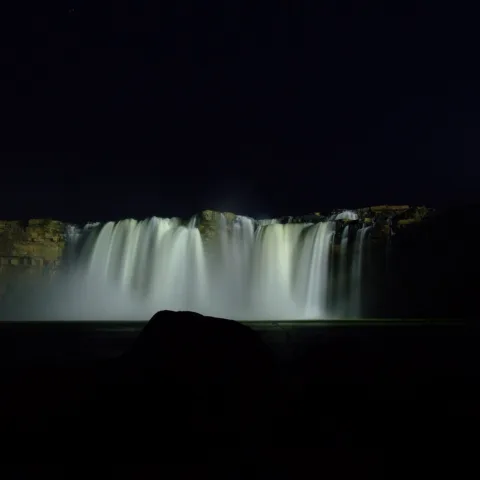
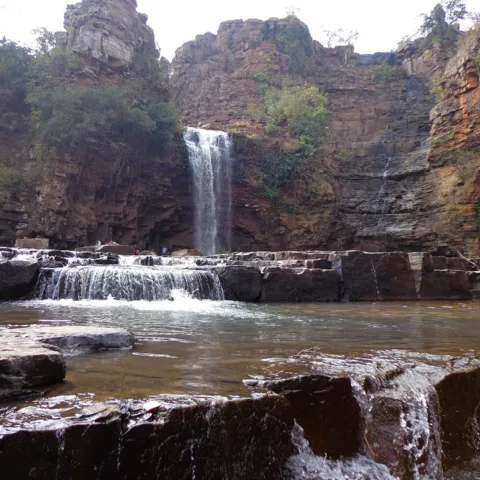
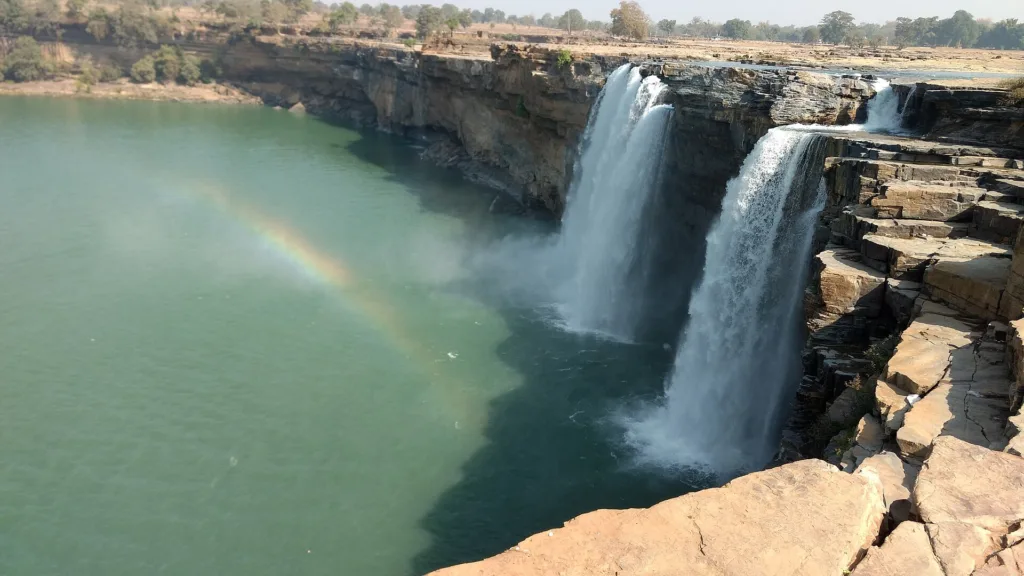
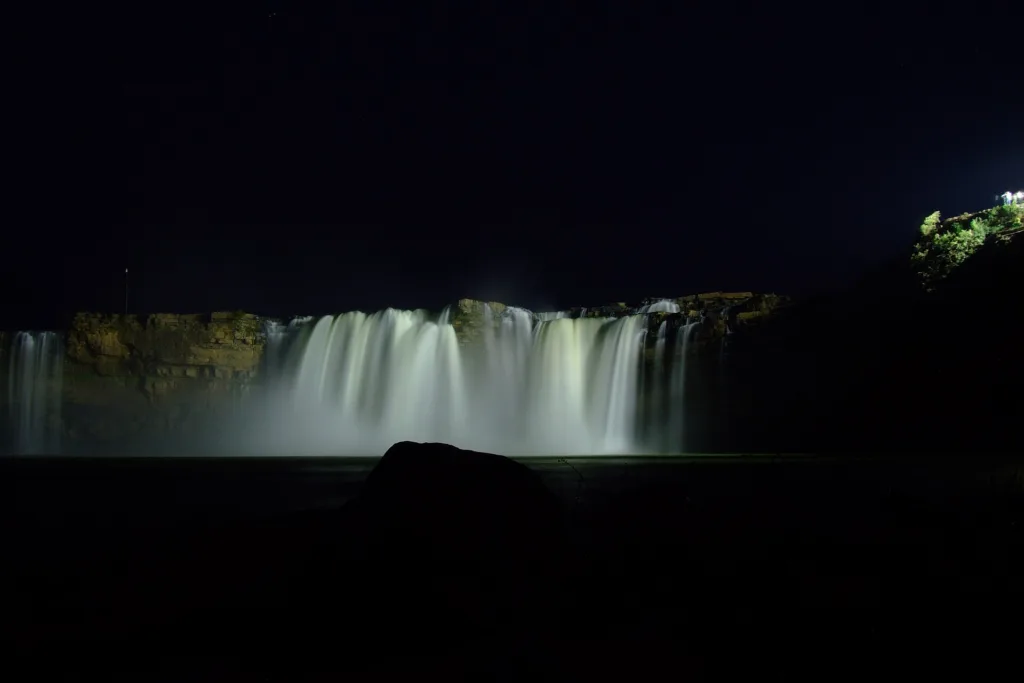
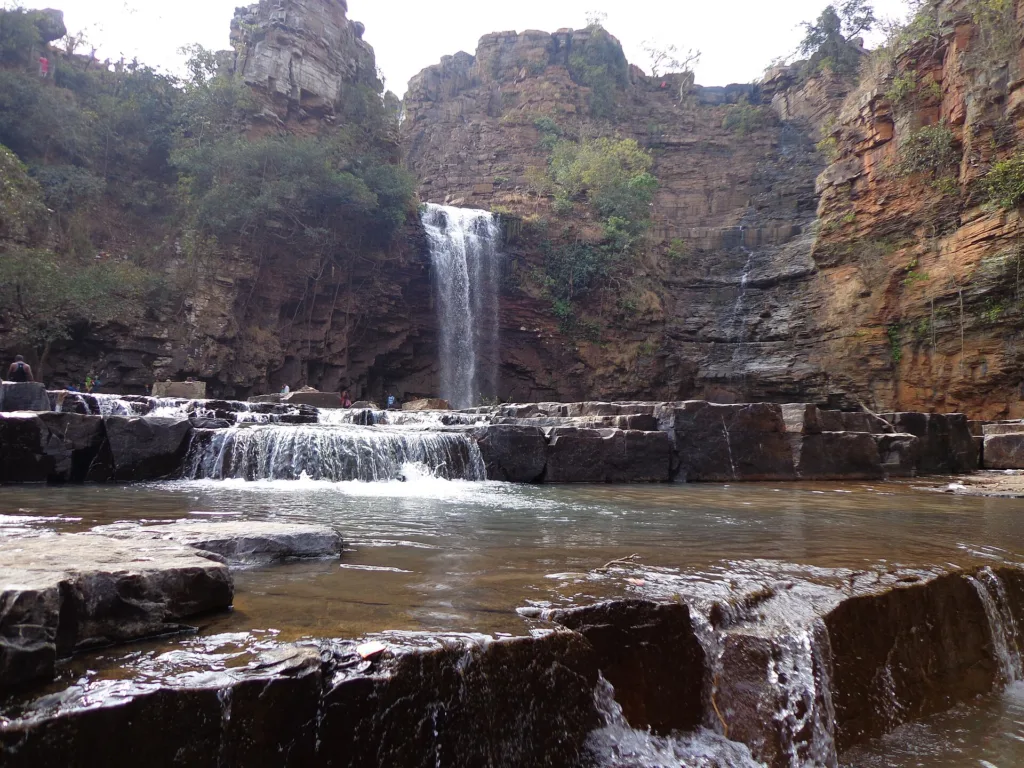
Chitrakote is the widest waterfall in India, on the Indravati, about 38 km west of Jagdalpur. In the monsoon and just after it, the river runs across the full width of the horseshoe and the fall is at its most impressive; by March it has narrowed to a few channels. Tirathgarh, in the Kanger Valley, is a different shape entirely — a broad curtain of water over stepped rock, with a bathing pool below.
The Kanger Valley National Park, south-east of Jagdalpur, is one of the last patches of undisturbed sal forest in central India, and it holds the Kutumsar and Kailash limestone caves. Kutumsar runs for several hundred metres underground, with stalactites and a colony of blind cave fish, and it is closed during the monsoon when the water table rises. The park is also where the hill myna and the Bastar hill myna are found, and the forest is dense enough that the road through it feels like a tunnel.
It is worth being clear about what Bastar is not. There is no luxury accommodation, the roads outside the main highways are slow, and the district has had a long and difficult history of left-wing insurgency that kept tourists away for two decades. That has changed a great deal, and the areas this trip covers are routinely travelled, but it is not a place to arrive without a local guide. That is precisely why the festival has kept its character.
Jagdalpur is reached by air to Raipur and then a drive of about 300 km, or by the direct train from Raipur. The trip is based in Jagdalpur for all three nights, which keeps the driving to day trips.
The first day is arrival and the town, including the Danteshwari temple in Jagdalpur and the palace of the Bastar rajas. The second day is the festival day, built around the chariot procession and the rituals at the Danteshwari temple, with time at the Muria Darbar if the dates line up. The third day runs west to Chitrakote and south-east to Tirathgarh and the Kanger Valley, with the limestone caves at Kutumsar if the park is open. The fourth day is departure.
This trip suits travellers who want a festival that has not been packaged, and who are willing to travel to a district that sees very few tourists. It is a strong fit for photographers, for anyone interested in Adivasi culture, and for travellers who have already done the well-known Indian festivals and want something genuinely different.
It is not a trek and there is no walking of consequence. The demands are time on your feet at the procession and a fair amount of driving on the day trips. Families with older children do well on this departure.
The price covers three nights of accommodation in a hotel in Jagdalpur on twin sharing, breakfast and dinner on all days, and all road transport from Jagdalpur and back, in an air-conditioned vehicle. The full list is set out below.
It does not cover the journey to Jagdalpur, lunch, or the optional extras. Budget separately for those, and for shopping and tips.
Bastar Dussehra runs for 75 days, beginning in the Hindu month of Shravana and ending around Vijayadashami, so it falls between roughly August and October. The chariot procession and the Muria Darbar are the two dates most visitors plan around. We confirm the year’s ritual dates before departure and tell the group in the pre-trip note.
It is graded easy. Jagdalpur sits at about 550 metres and Chitrakote at about 500 metres, so there is no altitude to consider. The walking is on town streets, temple grounds and the paths at the falls, with some uneven and wet ground at Chitrakote and Tirathgarh.
A basic level. There is no trekking. The demands are standing at the procession for a few hours and walking down to the falls viewpoints, which involves steps. If you can manage a long day of sightseeing with some stairs, you are fit enough.
Yes. Twin-sharing accommodation, a trip captain throughout and communal meals make it easy for solo travellers, and the group format means you have company at the festival. Couples and families travel on the same departure.
Three nights in a hotel in Jagdalpur on twin sharing. Rooms have attached bathrooms and hot water. Jagdalpur is a district town rather than a tourist centre, so the hotels are comfortable and functional rather than luxurious. Singles who want a room to themselves can pay a single supplement, subject to availability.
Indian citizens need no permit for Bastar. Foreign nationals need a standard tourist visa, applied for before travel, and should check the current advisory for the district before booking. Mobile coverage in Jagdalpur is reliable for calls and data, and it is patchy on the road to Chitrakote and inside the Kanger Valley.
Explore related pages: All trips in Chhattisgarh · Browse all destinations · All activities · Jagdalpur destination guide · Cultural tours in India.
Photo credits. Photographs on this page are from Wikimedia Commons and are used under the licences listed below. Each image is credited to its photographer; the licence terms apply to reuse of the image.
Overview of the Kodaikanal Group Trip from Bangalore Kodaikanal Group Trip from Bangalore runs 1N/2D from Bangalore, graded…
Overview of the Dev Deepawali Varanasi 2025 Dev Deepawali Varanasi 2025 runs 5 days in India, graded Moderate,…
Grahan Trek: A Hidden Gem in the Parvati Valley If you love trekking and want to experience a…