
Difficult
Rupin Pass Trek
A dramatic high-altitude crossing linking Uttarakhand and Himachal, famous for its hanging villages, a near-vertical snow wall, and…
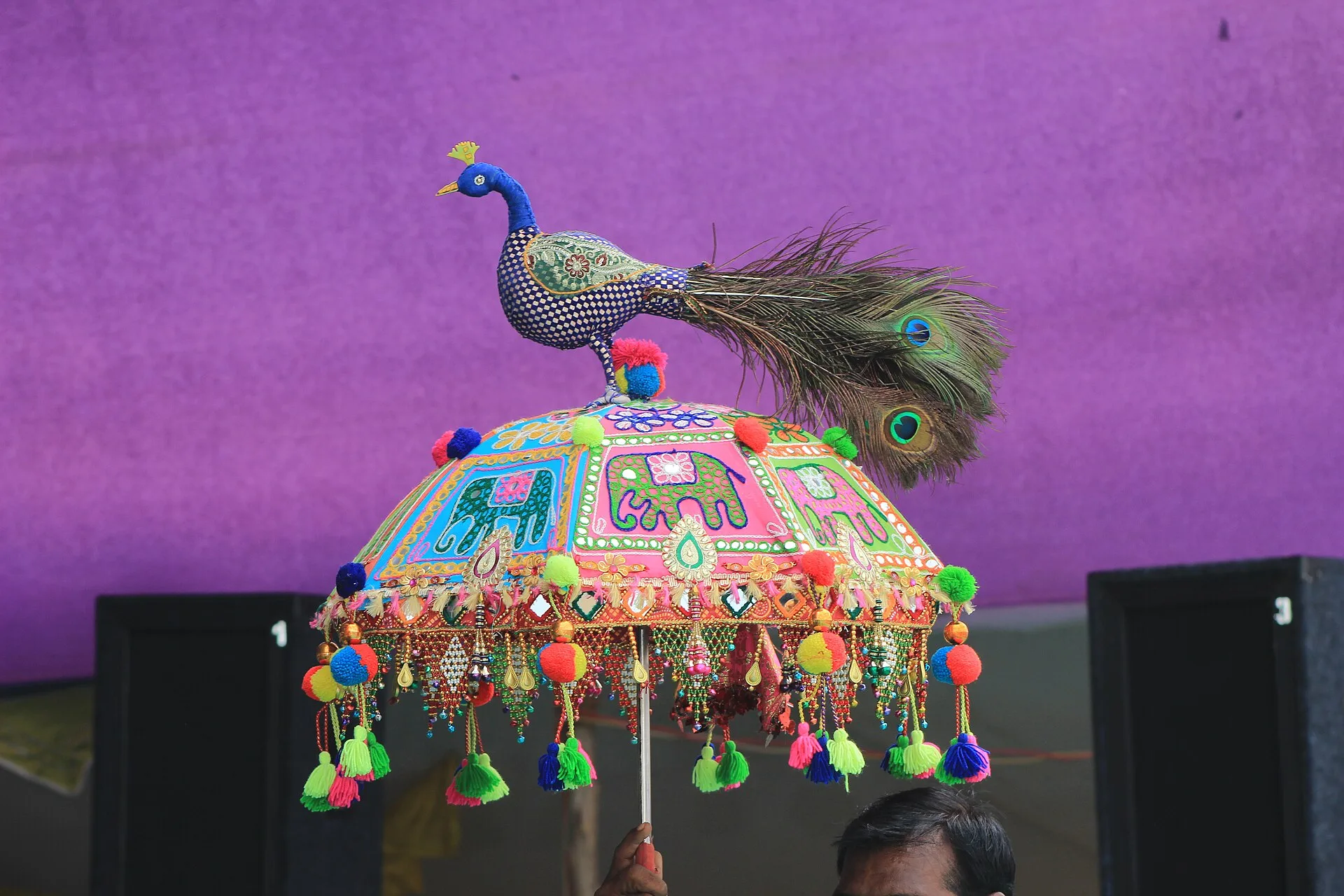
The Tarnetar Fair Trip runs 4 days and 3 nights from Ahmedabad, graded Easy, from Rs 7,200 per person, following the route Ahmedabad – Surendranagar – Tarnetar – Chotila – Ahmedabad around the annual fair at Trinetreshwar.
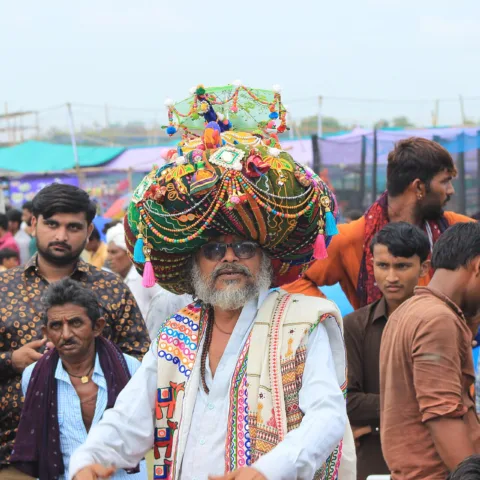
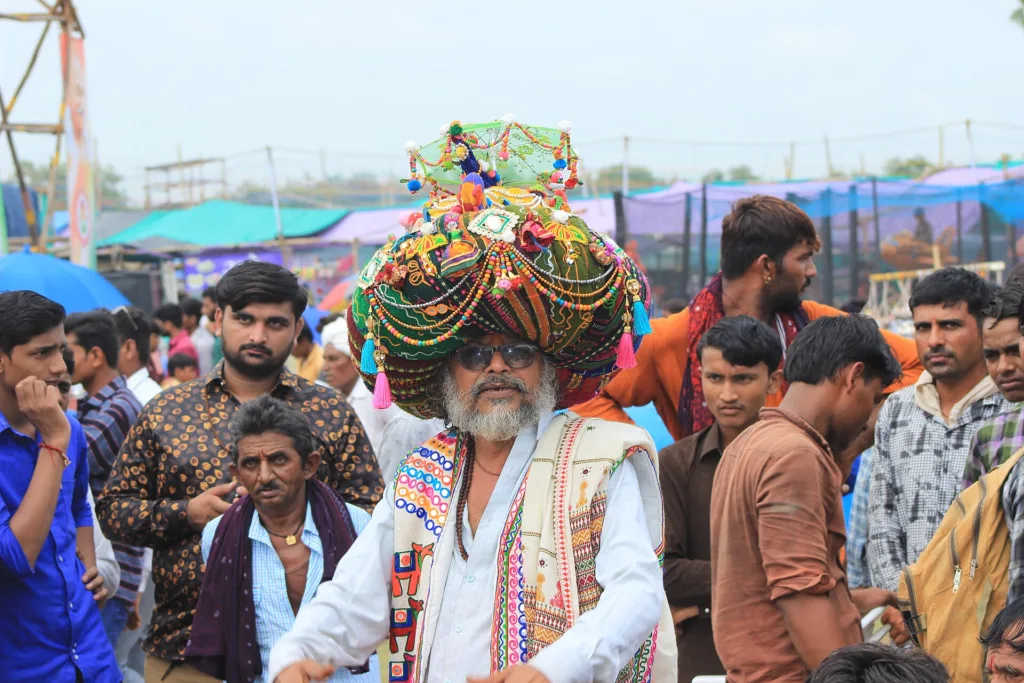
Tarnetar is a small village in Surendranagar district, about eight kilometres from the town of Thangadh, and for three or four days each Bhadrapada it becomes one of Saurashtra’s largest gatherings. The fair is held at the Trinetreshwar Mahadev temple, named for the three-eyed form of Shiva, and the ground around it fills with cattle traders, craftsmen, dancers and families who have been coming for generations.
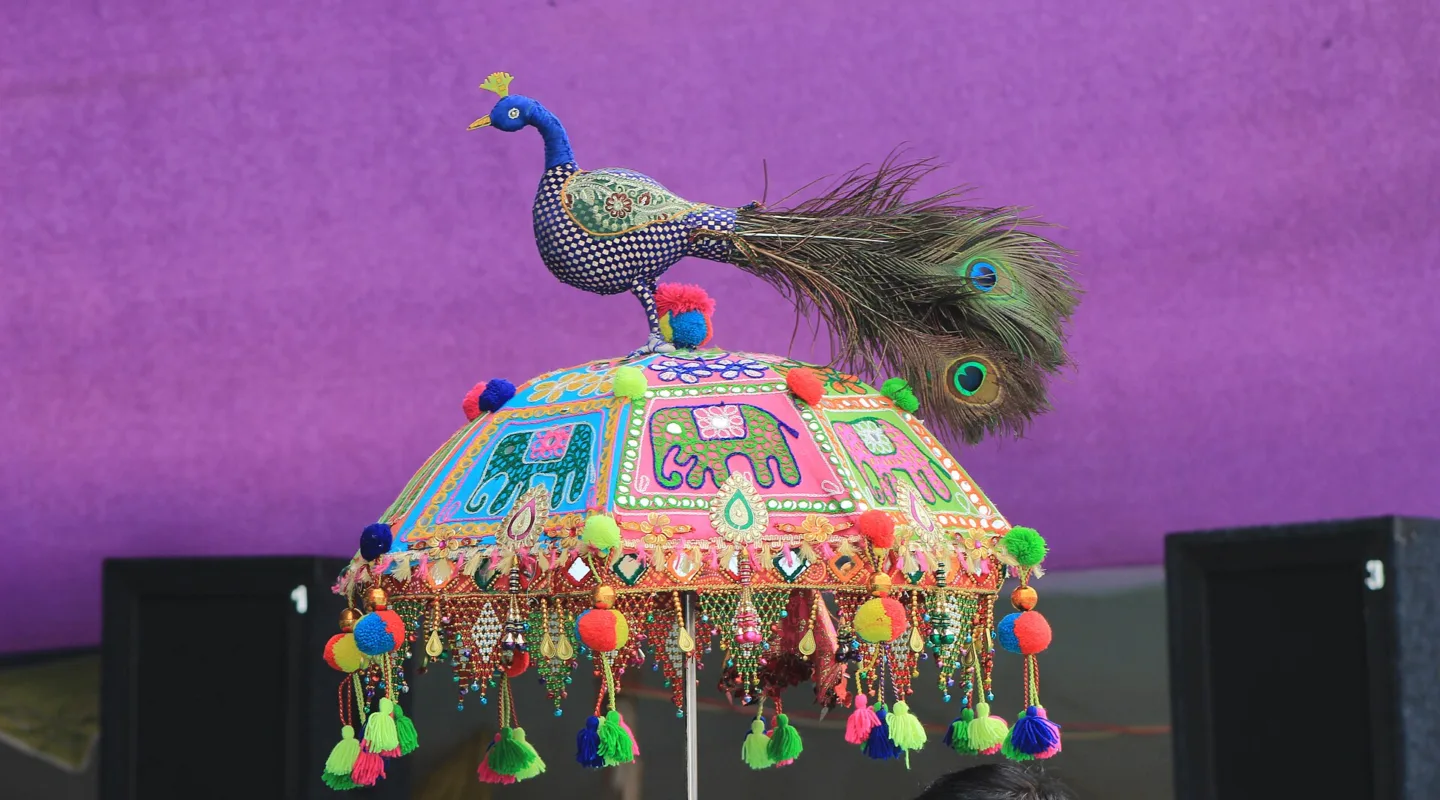
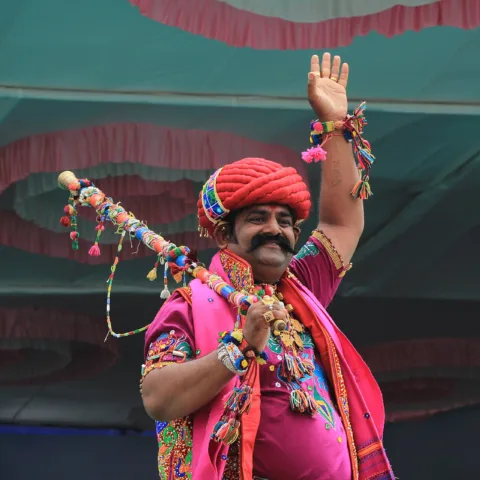
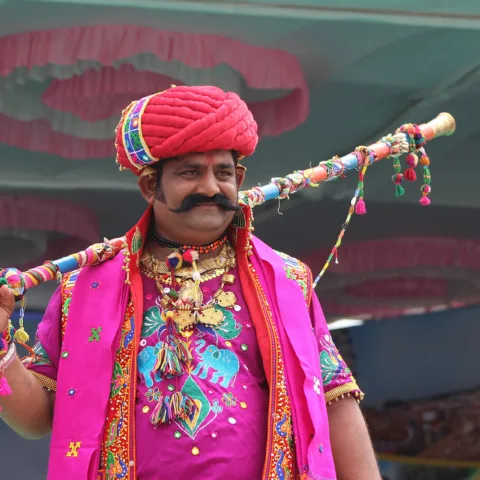
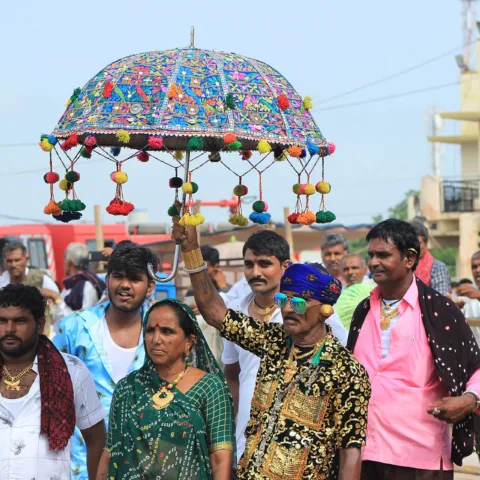
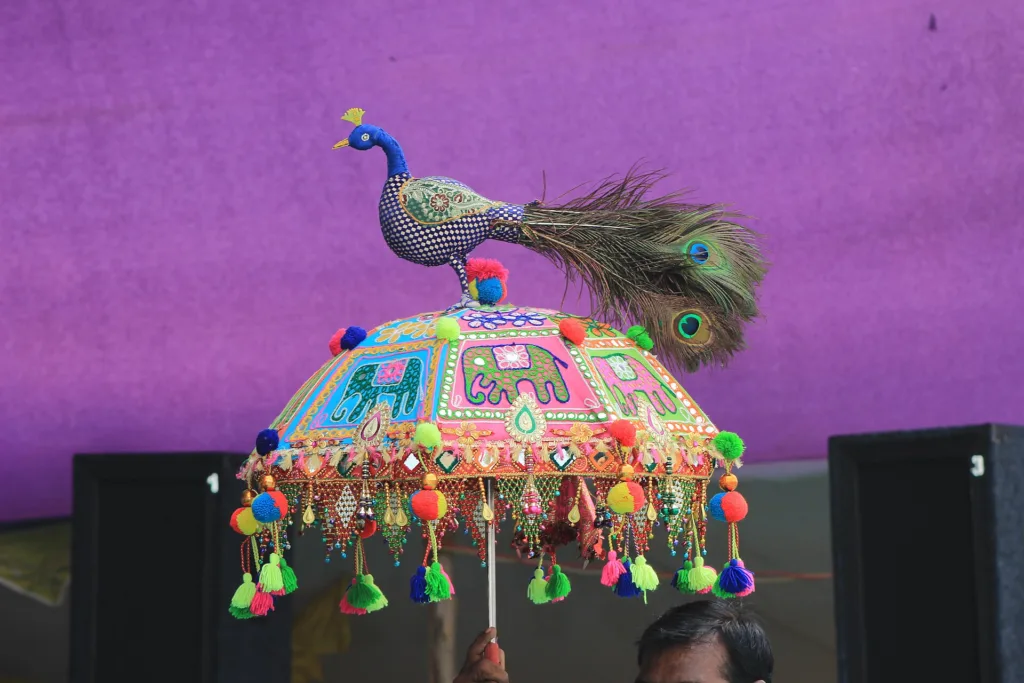
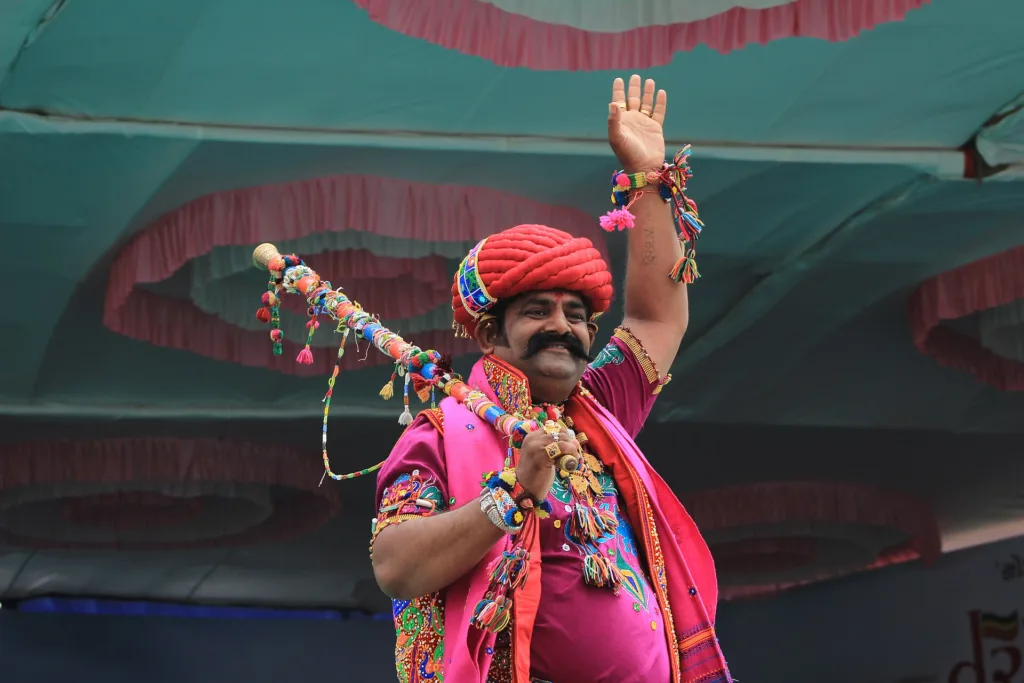
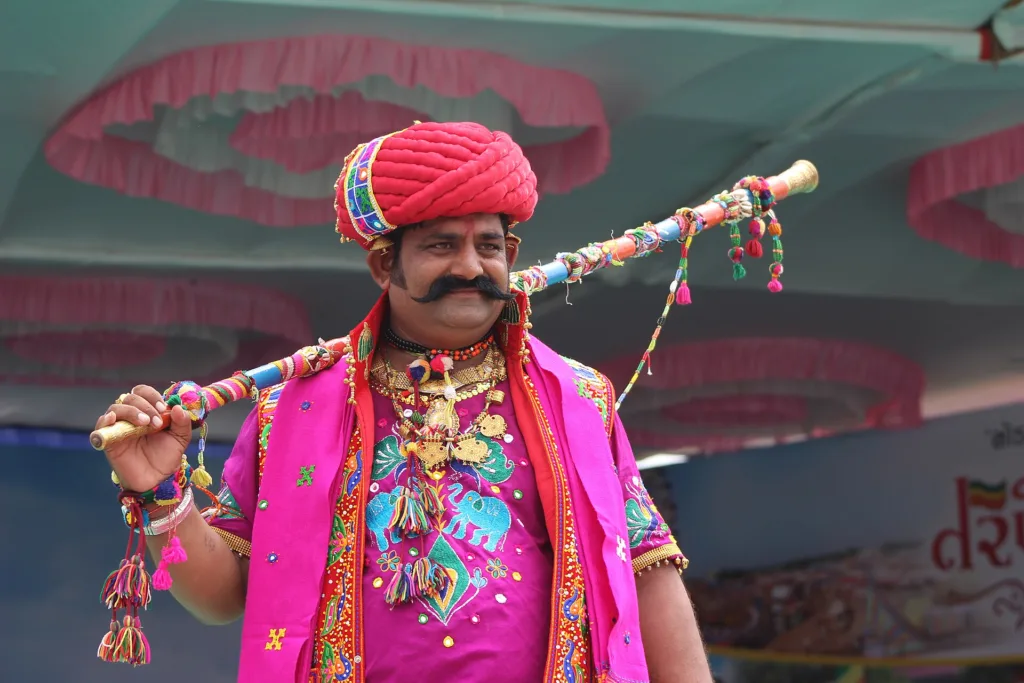
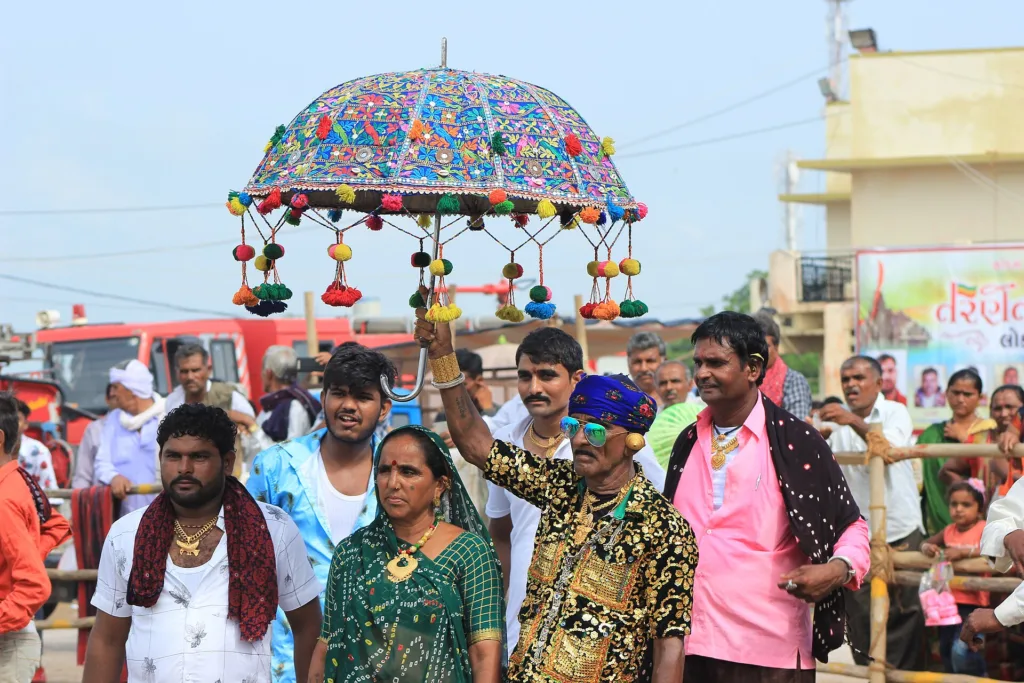
The fair’s reputation rests on two things. The first is the umbrellas: embroidered, mirrored and brightly coloured, made by Rabari and Kanbi families and carried by young men as they walk the grounds. The second is the dance. Groups form in circles through the afternoon and into the night, the hudo of the Bharwad community among them, with clapping and drumming that carries across the whole ground.
There is a well-known story attached to the site, that the fair marks the swayamvara of Draupadi from the Mahabharata, where Arjuna won her by striking a fish’s eye while looking only at its reflection. Whether or not you take the legend literally, it explains why the fair has always been as much a place for meeting and matchmaking as for trade, and why the atmosphere is so different from a modern exhibition ground.
The drive from Ahmedabad to Surendranagar takes around three hours on good highway, and the itinerary uses the first afternoon to reach the district and settle in rather than pushing straight into the fair. That leaves the second day free for the ground itself, which is when the umbrellas are out and the dance circles form.
The second day is spent entirely at Tarnetar. Mornings are quieter and better for the craft stalls and the cattle lines; the afternoons and evenings are when the dancing starts and the ground is at its liveliest. The third day adds Chotila, about 25 kilometres away, where a hilltop temple sits above the plain and the climb gives a view across the whole district.
The final morning is the return to Ahmedabad, with a stop for the region’s textile and embroidery work on the way. It is a short trip by design: the fair is intense, and three nights is enough to see it properly without running out of energy.
This trip suits travellers interested in living craft traditions and in seeing a rural Indian fair as it actually functions, rather than a staged version of one. The walking is easy and mostly on flat ground, the days are not long, and the group size is generous, so it works for photographers, for travellers who have already done the obvious Gujarat circuit, and for anyone travelling solo who wants company at a crowded event.
It is not a comfortable luxury weekend. The fairground is dusty, the crowds are dense in the evenings, and the accommodation is the best available in the district rather than a resort. If that trade-off is acceptable, the reward is one of the most distinctive cultural events in western India.
The price covers three nights of hotel accommodation on twin sharing in Surendranagar district, daily breakfast and dinner, all road transfers from Ahmedabad in an air-conditioned vehicle, the services of a trip captain, and the Chotila excursion. Fairground parking and entry arrangements are included; lunches, personal shopping and camera fees at individual stalls are not.
The fair is held over three or four days in the Hindu month of Bhadrapada, which usually falls between late August and mid-September. The exact dates shift each year with the lunar calendar, so the fair batch is fixed once they are announced. Outside the fair, Tarnetar is a quiet village and there is little reason to make the trip.
It is graded Easy. There is no trekking and no altitude involved. The walking is on flat ground at the fair, and the only climb is the optional one at Chotila, which is a stepped hill path that most travellers manage without difficulty.
Very little. You should be comfortable on your feet for three or four hours at a time and able to walk over uneven, dusty ground. The Chotila climb is the most demanding part of the itinerary and can be skipped if you would rather stay at the base.
Yes, and the fair is easier in a group than alone. The ground is crowded in the evenings, transport is limited, and having a trip captain who knows the layout makes a real difference. Solo travellers join the same departures as couples and small groups.
Three nights in the best available hotel in Surendranagar district on twin sharing, chosen for a reasonable drive to the fairground. This is a district town rather than a resort area, so expect clean and functional rather than luxurious. Single supplement is available on request.
Coverage in Surendranagar town is reliable on major networks, but it weakens at the fairground itself, especially in the evenings when the crowd is dense. Treat the fair days as partly offline and download anything you need beforehand. There are no permits required for this trip.
The Tarnetar fair is tied to the Hindu calendar rather than the Gregorian one, held over three or four days in the month of Bhadrapada, which usually lands between late August and mid-September. That is why the dates move each year and why the fair batch is announced only once Gujarat Tourism confirms them. The fairground sits beside the Trinetreshwar Mahadev temple, about eight kilometres from Thangadh in Surendranagar district, and the site is a working pilgrimage centre for the rest of the year.
The umbrellas are the fair’s signature and the reason photographers come. They are made by Rabari and Kanbi families, embroidered with mirrors, appliqué and stitch work in saturated colour, and carried by young men as they walk the ground. Traditionally the umbrella was a courtship signal as much as a sunshade, and the fair has always had a matchmaking function alongside its trade. The embroidered work is not made for tourists: the same families produce it for weddings and for their own use, and the fair is where the year’s output is shown.
The dance is the other half. Groups form circles through the afternoon and continue into the night, with the hudo of the Bharwad community the best known. The rhythm is set by drums and clapping, the circles expand and contract as people join, and there is no stage and no audience in the conventional sense. Visitors are welcome to watch and, in most circles, to join, though it is worth asking before you step in.
The cattle lines are easy to overlook and worth an hour. Tarnetar is a livestock fair as much as a cultural one, with Kankrej and Gir cattle, horses and camels brought in from across Saurashtra, and the bargaining is done in the old way, by handshake under a cloth. The mornings are the time for this, before the heat and before the dancing starts.
On cost, Rs 7,200 for four days is set by the accommodation rather than the fair, which is free to enter. Surendranagar district has a limited number of hotels, and they fill during the fair, so the price reflects scarcity in a small town rather than any premium on the event itself. On season, late August and early September in Saurashtra are hot and humid, with the monsoon tail still active, so light cotton and a rain layer are both sensible.
Explore related pages: All trips in Gujarat · Browse all destinations · All activities · Gujarat destination guide · Trekking in India.
Photo credits. Photographs on this page are from Wikimedia Commons and are used under the licences listed below. Each image is credited to its photographer; the licence terms apply to reuse of the image.
A dramatic high-altitude crossing linking Uttarakhand and Himachal, famous for its hanging villages, a near-vertical snow wall, and…
Kumara Parvatha Trek : A Trekker's Guide to Blissful Adventure Calling all adventure enthusiasts! Get ready to experience…
A remote highland valley on the Nagaland-Manipur border, famed for a short-lived carpet of endemic Dzukou lilies that…