
Moderate
Kasol Tosh Kheerganga
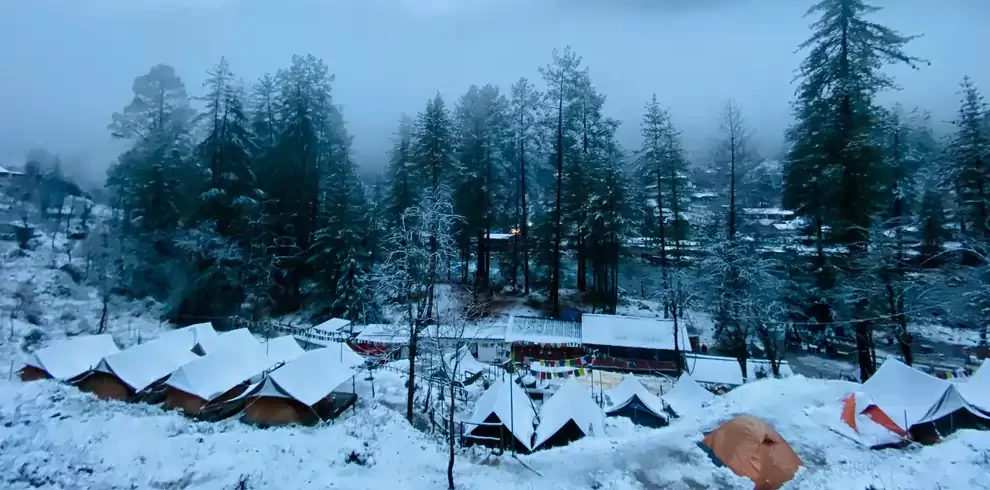
A 4-day, 3-night guided trek through Kasol, Tosh and Kheerganga in the Parvati Valley, with riverside camps, forest…
The Sarhul Festival Jharkhand trip runs 3N/4D from Ranchi, graded Easy, from Rs 7,200 per person. Route: Ranchi – Khunti – Sarna groves – Ranchi.
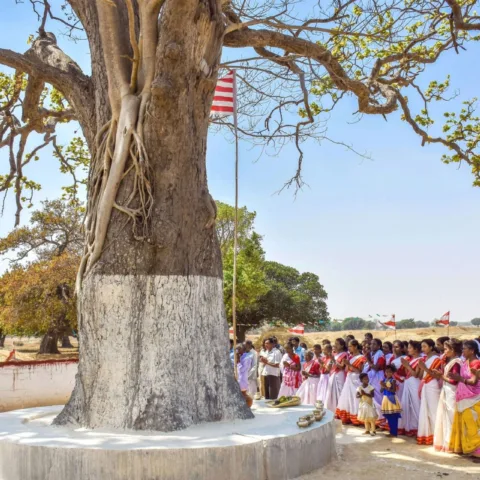
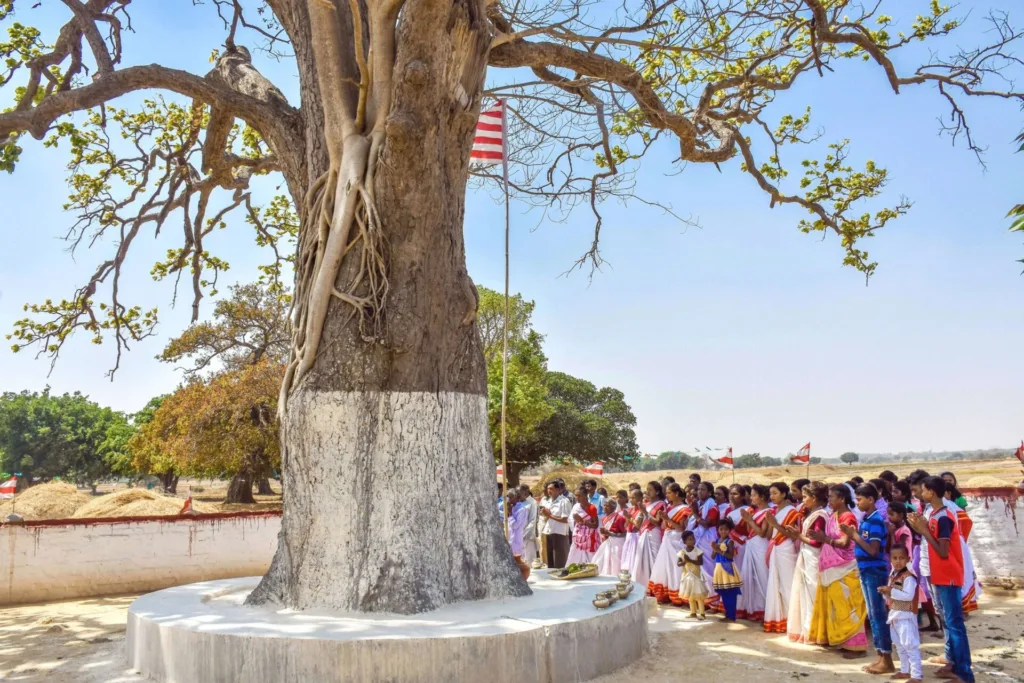
Sarhul is the spring festival of Jharkhand and the new year of the state’s tribal communities. It is celebrated in the Chaitra month, from the third day of the bright fortnight to Chaitra Purnima, and it lasts three days. It is not a temple festival. It is held in the sarna, the sacred grove of sal trees that stands at the edge of most villages, and the object of the worship is the sal tree itself.
The ritual is led by the pahan, the village priest, who offers sal flowers, fruits, vermilion and a sacrifice at the sarna for the prosperity of the village. Ploughing is forbidden on the festival day. The pahan places a water pot in the grove and, on the following day, reads the weather for the coming year from it, and then distributes the sal flowers among the villagers.
What makes Sarhul worth travelling for is that it is a living nature festival rather than a performance. The sarna groves are protected community forest, some of them centuries old, and the theology behind them is that the sal tree is the abode of the village deity. Jharkhand has thousands of these groves, and they are one of the least documented conservation systems in India.
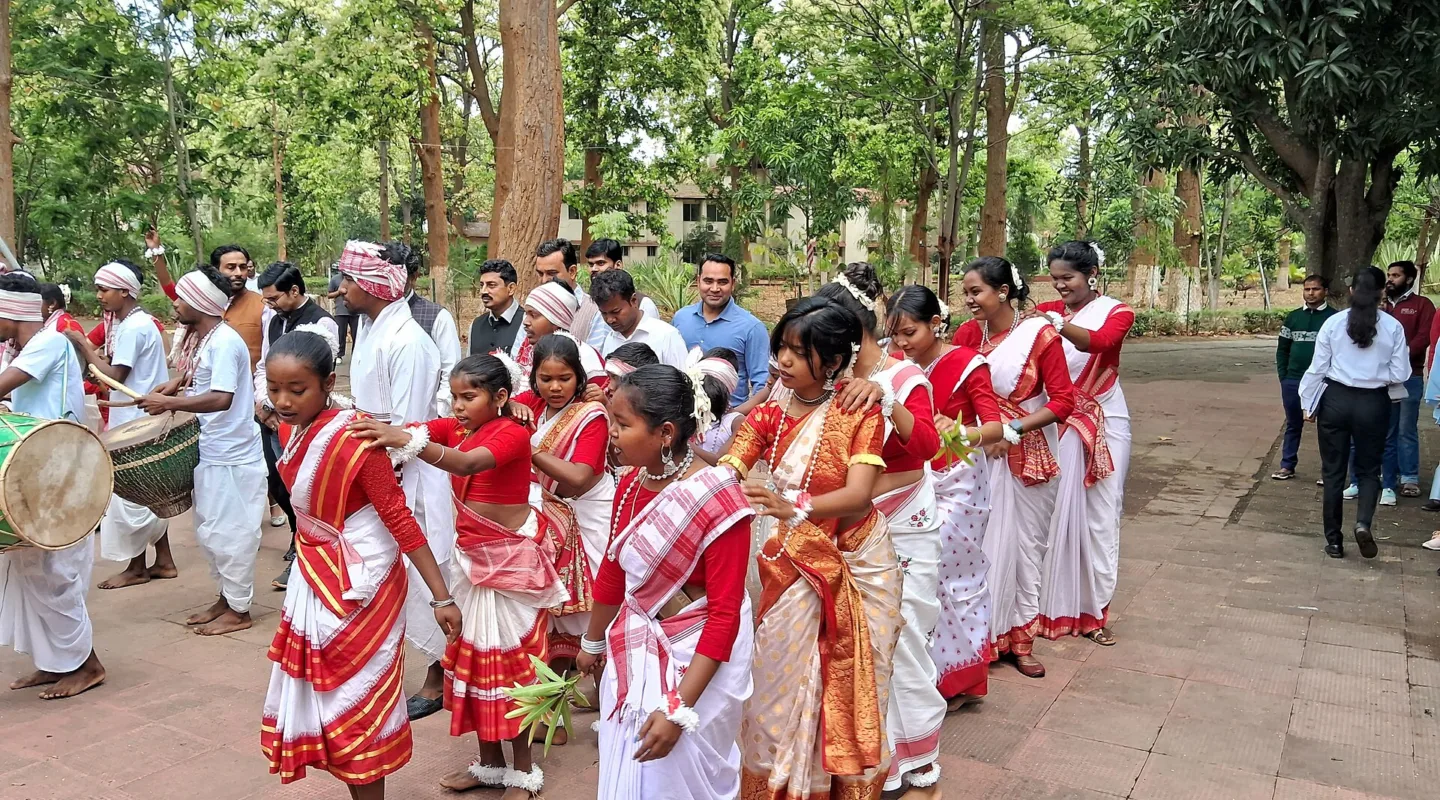
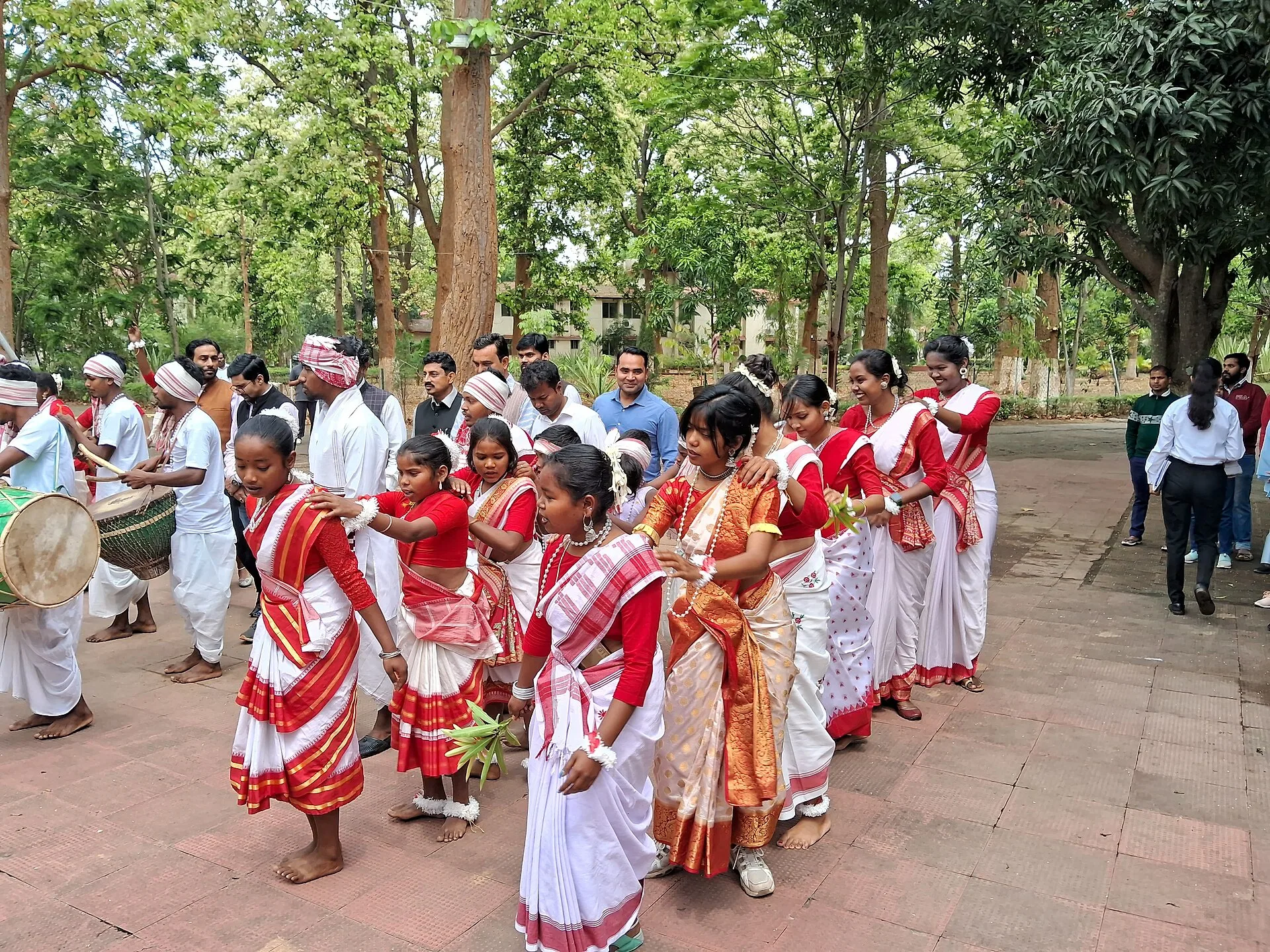
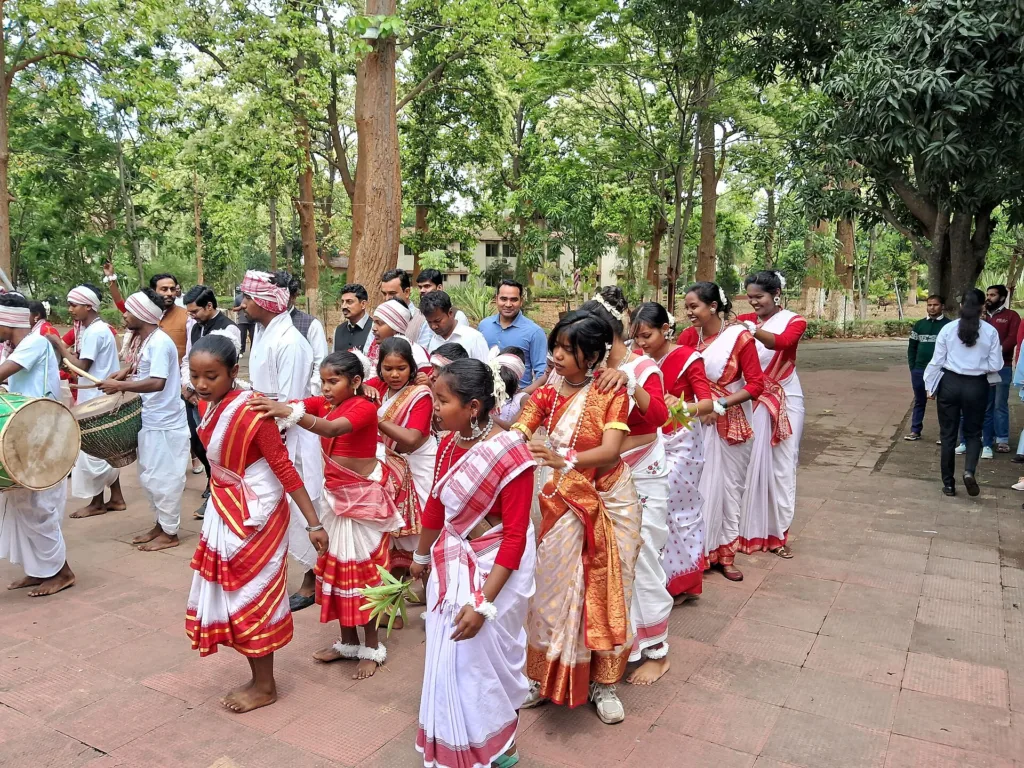
The festival is celebrated by the Munda, Oraon, Ho and Santal communities, among others, and the details vary from village to village while the shape stays the same. Young people go into the forest the day before to collect sal flowers, and also catch crabs and fish from the streams, which become part of the festival meal. On the day, the village walks to the sarna to the beat of the dhol, nagara and mandar.
The dancing is the visible part. Groups move in circles and lines, men and women together, to the drum ensemble, and the dancing continues for hours. The festival is also the occasion for the year’s marriages to be arranged in some communities, and for the village to settle its accounts.
The geography of the trip is the Chota Nagpur plateau, which covers most of Jharkhand and is a rolling upland of about 700 metres average elevation, made of ancient granite with sal and mahua forest over it. Ranchi, the capital, sits in the middle of it at about 650 metres, and the country around Khunti, about 40 km south, is the heartland of the Munda community and of the Sarhul celebrations.
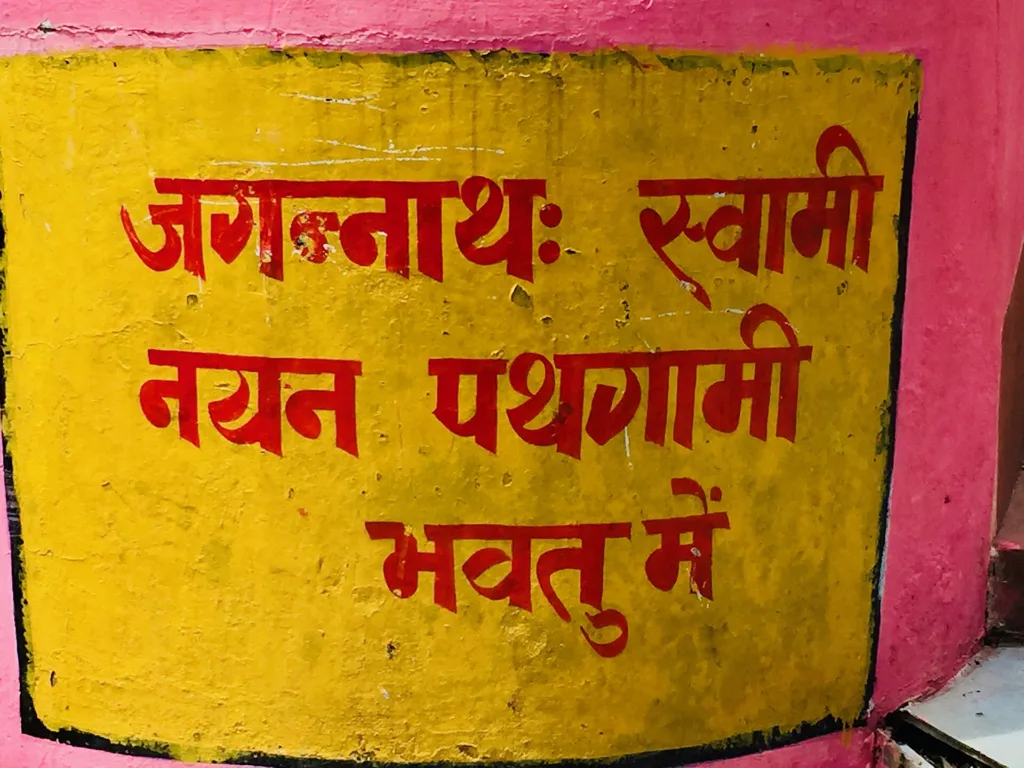
Ranchi itself has the Jagannath temple, a seventeenth-century shrine that is one of the few outside Puri to hold a Rath Yatra, and the Ranchi lake, dug in the nineteenth century. The state museum holds Pala-period sculpture from the region, including pieces from Icha Garh in Singhbhum, which is a useful primer before the village days.
The trip starts at Ranchi, which has the nearest airport and the main railhead. The first day is a short city day, with the state museum and the Jagannath temple, and a briefing on the sarna system and what the festival involves.
On the second day the group drives south to Khunti, about 40 km, and spends the day in the sarna belt. The base for two nights is Ranchi, which keeps the drives short and the hotel standard reliable.
The third day is the festival day proper: an early start to reach a village sarna for the pahan’s ritual, the sal flower offering, and the dancing that follows. The group stays through the afternoon and returns to Ranchi in the evening.
The fourth morning is free for the Ranchi lake and the local market, and the transfer to the airport or station is short enough to leave the afternoon free for a flight or train out the same day.
This trip suits travellers who want to see a festival that has not been staged for visitors, and who are comfortable being the only outsiders in a village. It is a strong fit for photographers, for anyone interested in indigenous culture and community conservation, and for travellers who have done the standard India circuit and want something genuinely unfamiliar.
It is not a trek. The walking is on village paths, forest tracks and the flat ground of the sarna, and the demands are early starts and a long day on your feet. Families with older children do fine on this departure.
It is not a good fit for anyone who needs a fixed schedule or a high level of comfort. Village days are informal, timings shift, and the best parts of Sarhul happen when they happen.
The price covers three nights of accommodation on twin sharing, breakfast and dinner on all days, all road transport from Ranchi and back in an air-conditioned vehicle, and the village and sarna arrangements with local hosts. The full list is set out below.
It does not cover the journey to Ranchi, lunch, or personal expenses. Budget separately for those, and for anything you buy in the village markets.
Sarhul is celebrated in the Chaitra month, from the third day of the bright fortnight to Chaitra Purnima, and it lasts three days. In the Gregorian calendar that falls in March or April. Because it follows the lunar calendar the dates move each year, and we confirm the exact dates before departure.
It is graded easy. Ranchi sits at about 650 metres on the Chota Nagpur plateau, and the Khunti belt is at a similar height, so there is no altitude to consider. The walking is on village paths, forest tracks and the open ground of the sarna.
A basic level. There is no trekking. The demands are early starts, a long day on your feet at the festival, and some walking on uneven village ground. If you can manage a full day of sightseeing with a fair amount of standing, you are fit enough.
Yes. The group format means you are never on your own in the village, and the festival is communal and welcoming to visitors. Twin-sharing accommodation and shared meals make it easy to join in. It is worth noting that this is a rural region where outsiders are unusual, so a group is the comfortable way to see it.
Three nights in a hotel in Ranchi on twin sharing. Rooms have attached bathrooms and hot water. Singles who want a room to themselves can pay a single supplement, subject to availability. We do not use village homestays on this trip.
Indian citizens need no permit for Jharkhand. Foreign nationals need a standard tourist visa, applied for before travel, and should carry a copy of it. Mobile coverage in Ranchi is reliable for calls and data. In the Khunti villages the signal is patchy and often drops to 2G, so plan to send photographs and messages after you are back in the city.
Start with the Jharkhand destination hub for the state’s other trips, then browse all destinations and all activities. The Ranchi destination guide covers arrival, transfers and the city’s own sights, and cultural tours in India lists the rest of the festival departures.
Photo credits. Photographs on this page are from Wikimedia Commons and are used under the licences listed below. Each image is credited to its photographer; the licence terms apply to reuse of the image.
A 4-day, 3-night guided trek through Kasol, Tosh and Kheerganga in the Parvati Valley, with riverside camps, forest…
Girnar trek from Ahmedabad, 2D/1N. Climb the 9,999 steps above Junagadh to the Dattatreya temple at 1,100 m,…
Seruvalsar Lake Trek – A Hidden Gem in the Himalayas Nestled amidst the lush green meadows and dense…