Altitude Sickness Prevention
Trekking in the Himalayas is a dream for many, but as you climb toward the majestic peaks of the Sar Pass or Kuari Pass, the air begins to thin. At 10,000 feet and beyond, your body enters a high-stakes game of adaptation.
One of the most common hurdles trekkers face is AMS (Acute Mountain Sickness). At WdrLust, your safety is our summit. In this guide, we’ll break down exactly what AMS is, how to spot the “Red Flags,” and the golden rules of acclimatization to ensure your 2026 trek is a success.
What is AMS (Acute Mountain Sickness)?
AMS is your body’s reaction to the lower oxygen levels and reduced air pressure at high altitudes. It typically occurs when you ascend too quickly, not giving your body enough time to produce more red blood cells to carry oxygen.
While most cases are mild, if ignored, AMS can progress into life-threatening conditions like HAPE (fluid in the lungs) or HACE (swelling of the brain).
The “Red Flag” Symptoms
If you are on a WdrLust trek and feel any of the following, inform your trek leader immediately:
- The Early Signs: A persistent, throbbing headache (usually the first sign), loss of appetite, and nausea.
- The Warning Signs: Dizziness, fatigue even while resting, and difficulty sleeping (insomnia).
- The Danger Zone: Confusion, loss of balance (staggering like you’re drunk), or a rattling sound in your chest while breathing.
5 Golden Rules to Prevent Altitude Sickness
1. The “Climb High, Sleep Low” Strategy
This is the most effective rule in mountaineering. During treks like Kuari Pass, we often hike to a higher ridge during the day and descend a few hundred feet to our campsite for the night. This exposes your body to higher altitudes to “trigger” adaptation but allows you to recover in a more oxygen-rich environment.
2. Hydrate Like Your Life Depends On It
At high altitudes, you lose water through rapid breathing and dry air.
- The Goal: Drink 4–5 liters of water daily.
- Pro Tip: Add ORS (Oral Rehydration Salts) or Electral to your water once a day to maintain your electrolyte balance. Avoid alcohol and excessive caffeine, as they dehydrate your body and mask AMS symptoms.
3. Pacing: The “Pahari” Walk
Trekking is not a race. We encourage our trekkers to adopt the slow, rhythmic pace of the local Himalayan people. If you find yourself gasping for breath, you are going too fast. A steady, “micro-step” pace keeps your heart rate stable and your oxygen levels consistent.
4. Load Up on Carbs
Digesting fats and proteins requires more oxygen. On the mountains, your body thrives on complex carbohydrates.
- What to eat: Oats, rice, dal, and local favorites like Siddu or Thukpa.
- Natural Remedies: Many local guides swear by Garlic Soup. Garlic is known to thin the blood and improve circulation, helping your body transport oxygen more efficiently.
5. Consider Prophylactic Medication (Diamox)
Many trekkers use Acetazolamide (Diamox) to speed up the acclimatization process.
- How it works: It makes your blood more acidic, which triggers your brain to breathe deeper and faster.
- Note: Always consult a doctor before your trek. Diamox is a sulfa-based drug, and if you have allergies, it can be dangerous.
Safety Protocols at WdrLust
When you trek with WdrLust, you aren’t just walking with a guide; you’re walking with a safety net.
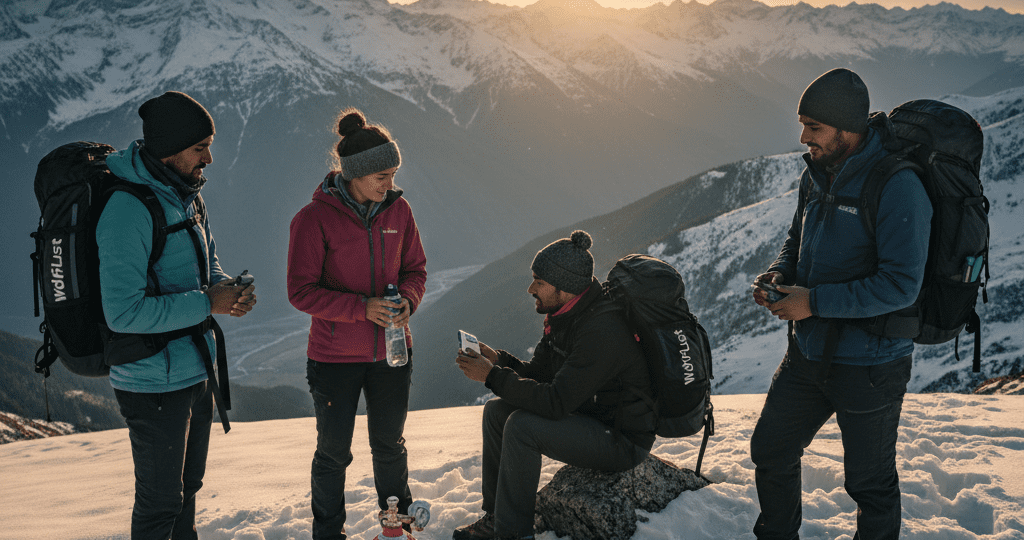
- Pulse Oximeters: Our trek leaders carry oximeters to monitor your blood oxygen levels ($SpO_2$) and heart rate twice a day.
- Medical Kits: Every expedition is equipped with high-altitude first aid kits, including emergency oxygen cylinders.
- The “Descent” Policy: We have a zero-ego policy. If a trekker shows signs of moderate AMS, our priority is an immediate descent to a lower altitude—the only 100% cure for altitude sickness.
Preparing Your Lungs Before the Trek
You can’t “practice” for low oxygen at sea level, but you can improve your lung capacity.
- Cardio: 4 weeks before your trek, start running or cycling for 45 minutes, 5 days a week.
- Breathing: Practice Pranayama or deep diaphragmatic breathing. The more efficiently your lungs work at home, the better they will handle the thin air of the Himalayas.