
Moderate

McLeodGanj Triund Bir
Mcleodganj Triund Bir This itinerary combines the cultural exploration of Mcleodganj, the adventurous trek, and the paragliding experience…
The Meghalaya Road Trip runs 5N/6D from Guwahati, graded Easy, from Rs 11,500 per person. Route: Guwahati – Shillong – Cherrapunji – Dawki – Mawlynnong – Shillong.
Meghalaya is the Khasi, Jaintia and Garo hill state that rises abruptly out of the Assam plain, and the road trip is the only sensible way to see it. The state is a plateau of rolling grassland and pine on top, with the south edge falling away in a escarpment of near-vertical cliffs to the Bangladesh plain below. That edge is where the rain is: Cherrapunji and Mawsynram, a few kilometres apart on the same ridge, trade the record for the wettest place on earth, and the escarpment is why. Moisture comes in off the Bay of Bengal, hits the wall, and drops. See all <a href=”https://wdrlust.in/destinations/meghalaya/”>trips in Meghalaya</a>, or browse the <a href=”https://wdrlust.in/destination/”>full destination index</a>.
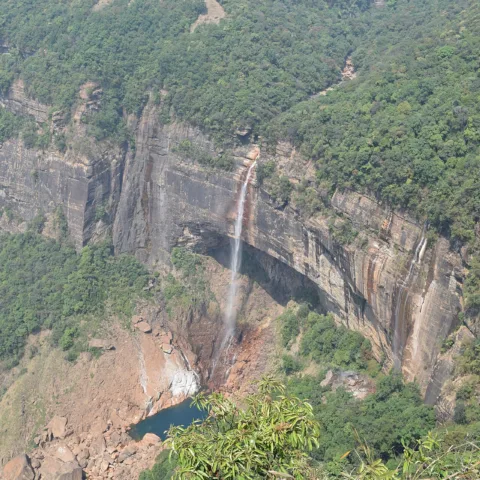
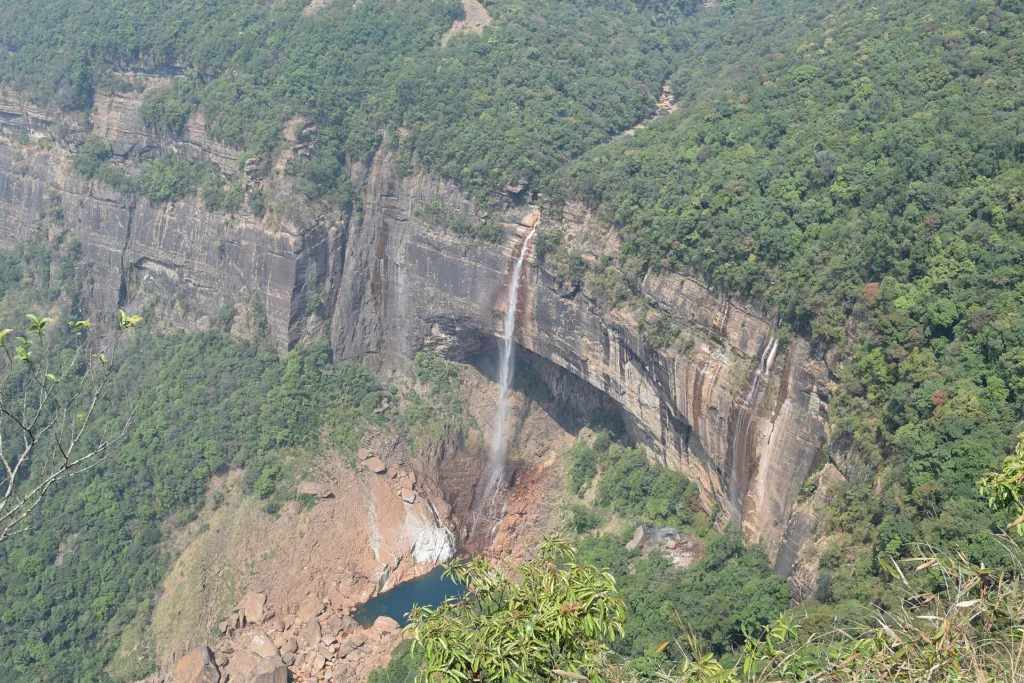
The consequence is a landscape of waterfalls and caves. Nohkalikai, just outside Cherrapunji, falls roughly 340 metres off the plateau edge into a green plunge pool, and it is at its best in the monsoon and the weeks after it, when the flow is heavy. The plateau is also limestone, and the same water that makes the falls has cut some of the longest cave systems in the country underneath — Mawsmai, near Cherrapunji, is the one that is lit and open to walkers.
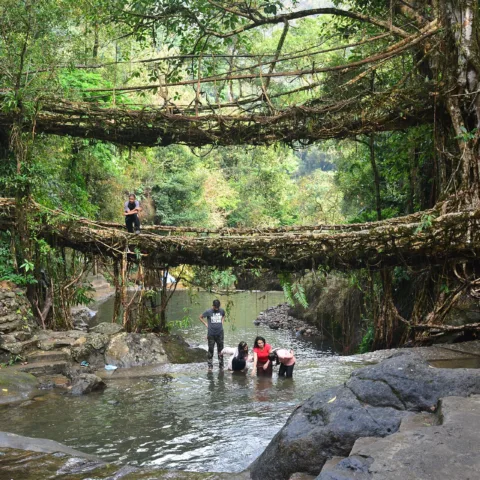
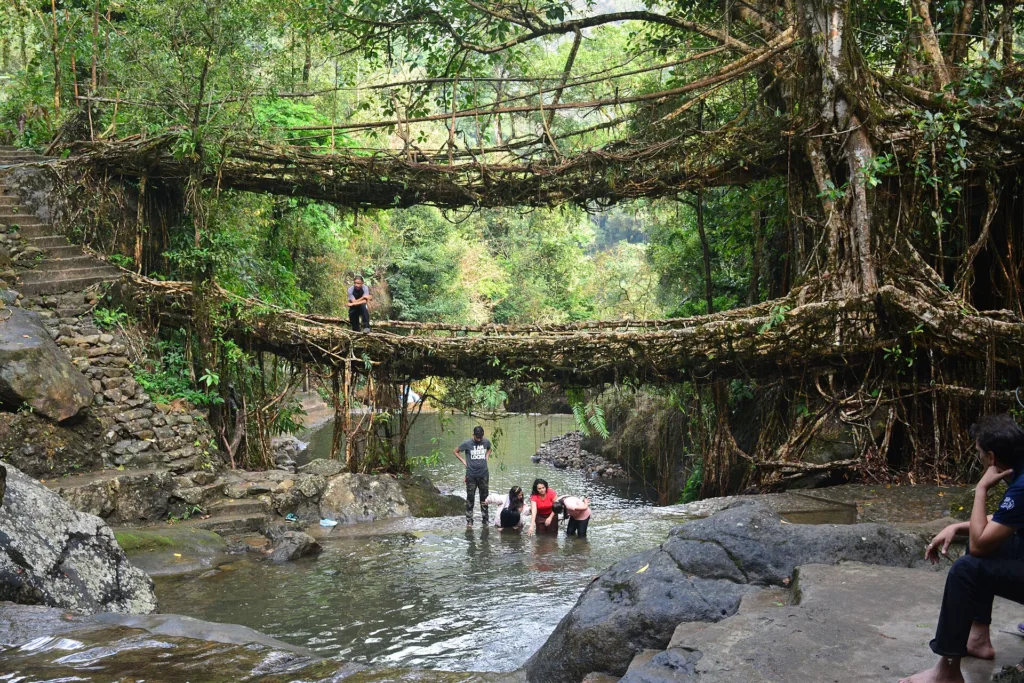
The living root bridges are the other thing Meghalaya is known for. In the Khasi hills, villagers have trained the aerial roots of the rubber fig across streams for generations, guiding them over a betel-nut trunk until they take hold on the far bank. The bridges grow, thicken and self-repair, and some are well over a century old. The double-decker at Nongriat, reached by a long descent of steps from Tyrna village, is the famous one; the single-span bridges around Mawlynnong and Riwai are easier to reach and just as real.
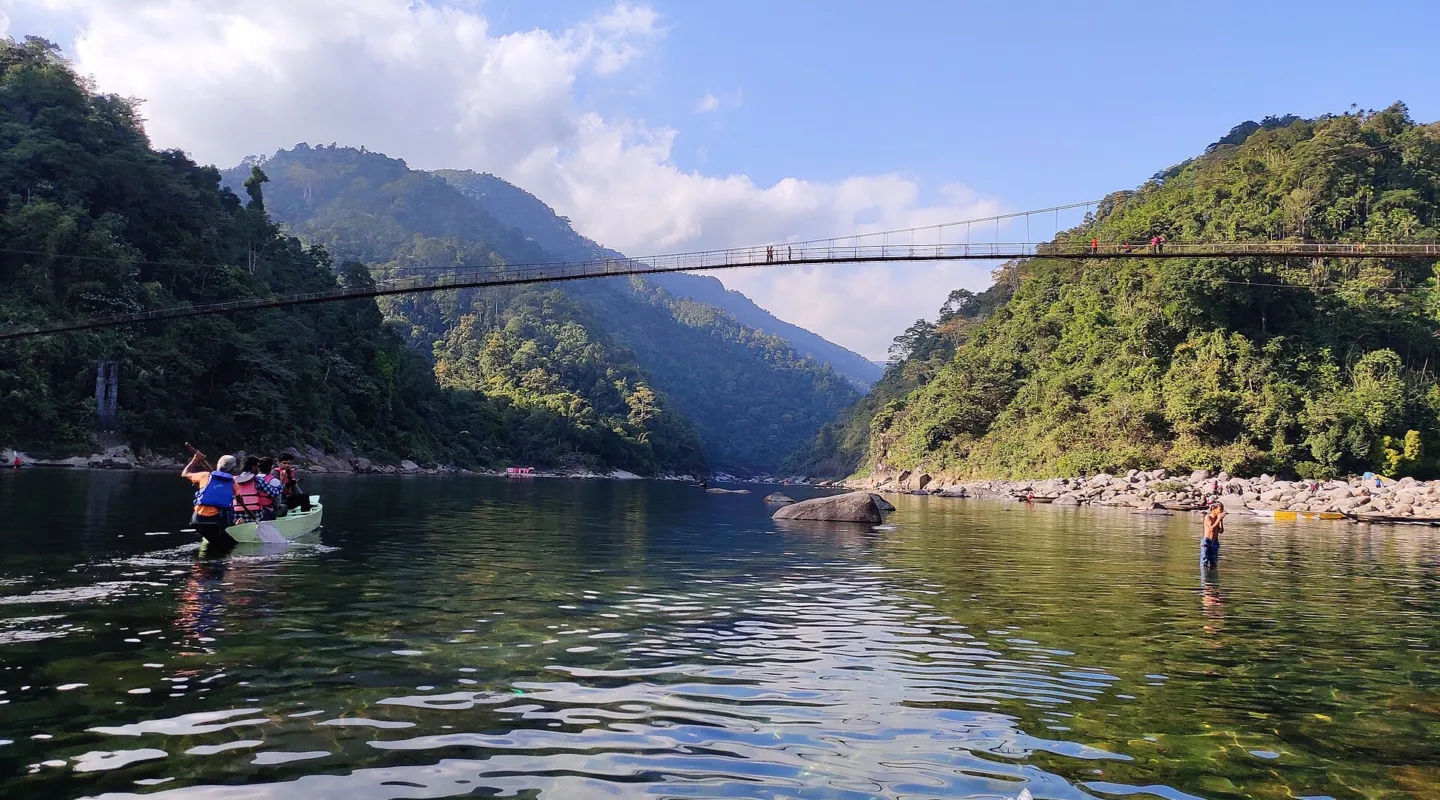
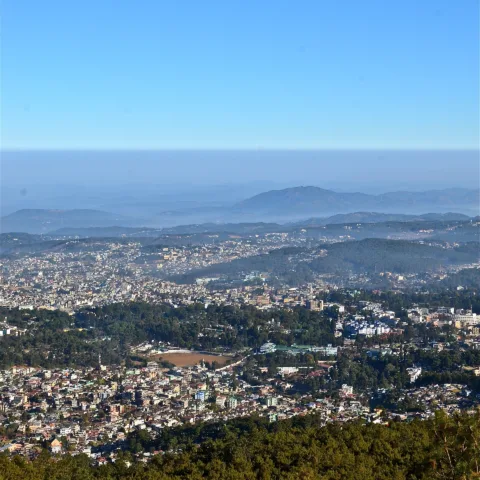
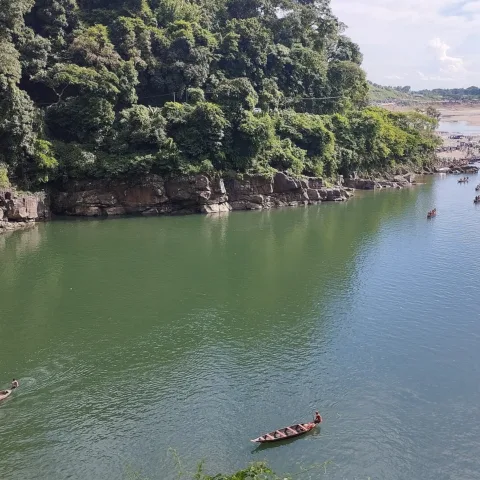
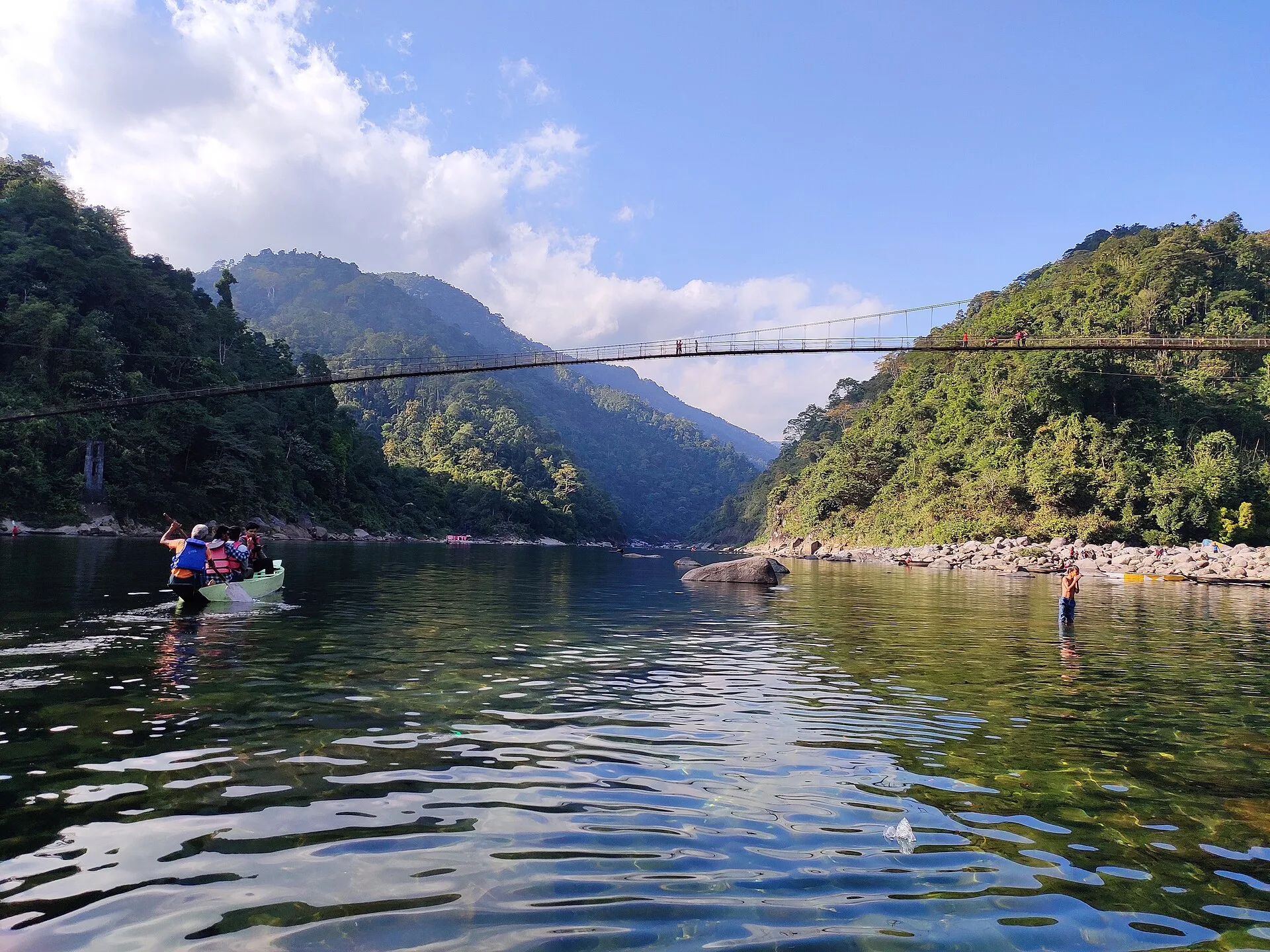
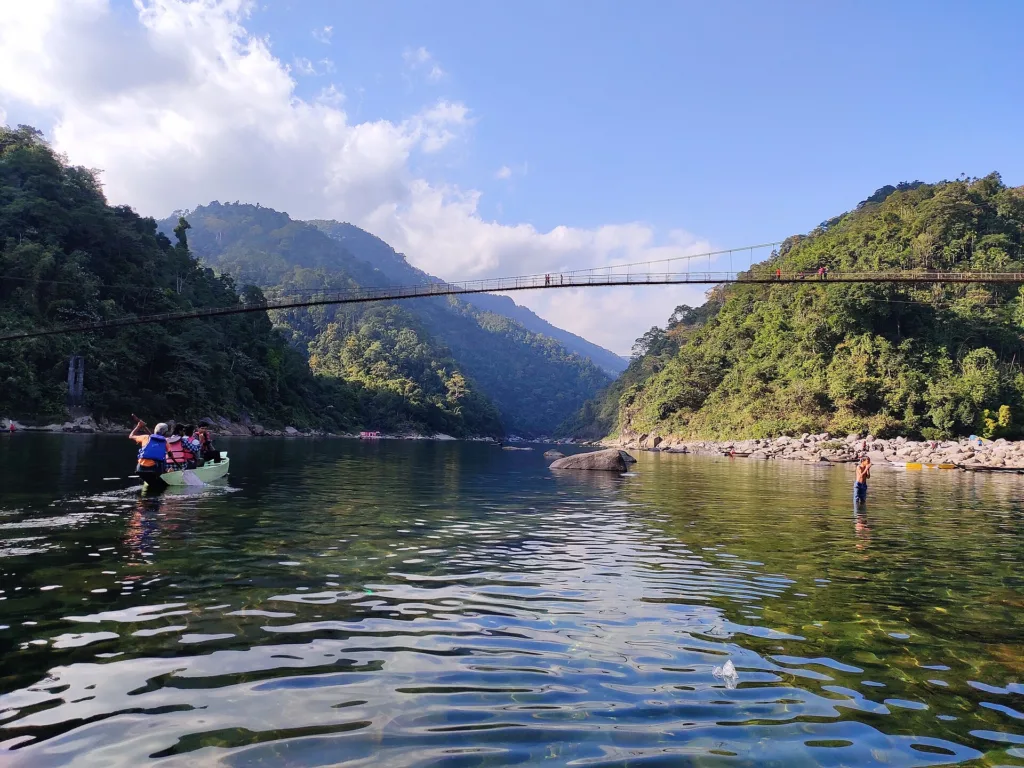
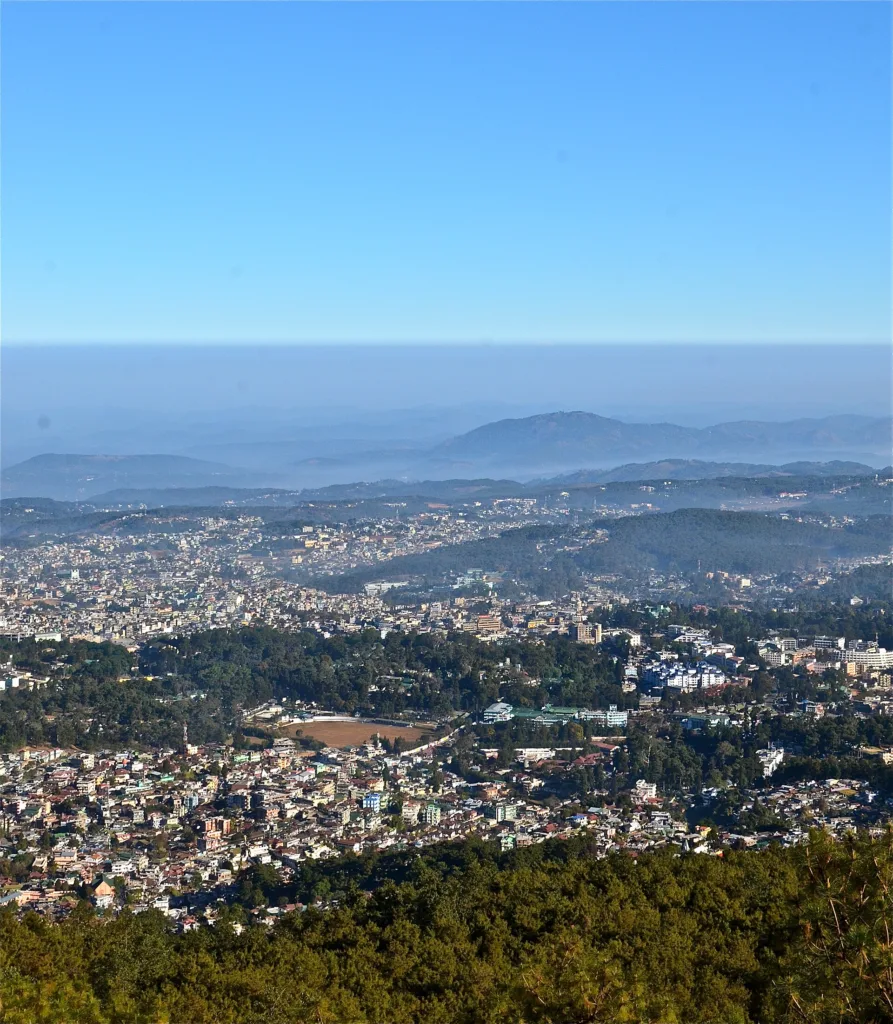
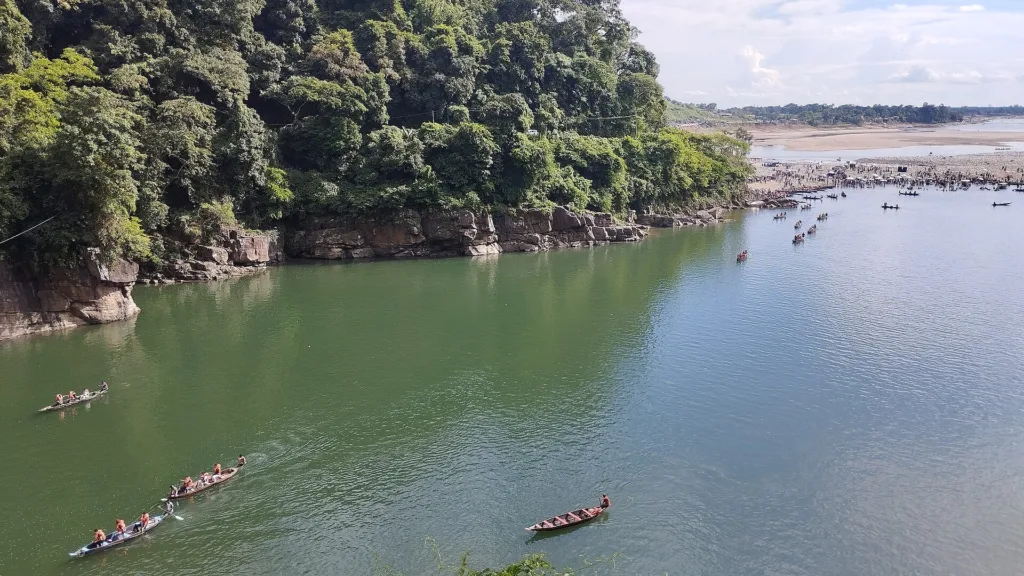
Dawki sits on the Bangladesh border, where the Umngot river runs clear enough that boats appear to float on air in the dry months. Mawlynnong, a little further west, is a Khasi village that has built its reputation on cleanliness and community upkeep, and it is genuinely tidy rather than staged. Shillong, the capital, is the base at either end: a hill town of churches, colonial-era bungalows and the busy Police Bazar, with Ward’s Lake in the middle of it.
The state is also a matrilineal society, which is unusual in India and shapes how the villages look and work. Among the Khasi, land and the family name pass down the youngest daughter, and the clan house stays with her. It is the kind of detail that is easy to read past, but it explains why the villages around Mawlynnong and Nongriat are laid out and kept the way they are, and why community upkeep — the cleanliness, the bridge maintenance, the path clearing — is organised at the village level rather than by any outside authority.
The drive starts at Guwahati, which is the airport and railhead for the whole state. The climb to Shillong is about 100 kilometres on the NH6, past the Umiam lake — Barapani — which is the first indication of what the plateau looks like. Shillong to Cherrapunji is another 55 kilometres south, climbing onto the escarpment, with the Mawkdok valley on the way.
From Cherrapunji the road drops off the plateau to Dawki, roughly 80 kilometres, and the last stretch is a series of hairpins down the face of the escarpment with the plain opening out below. Dawki to Mawlynnong is about 35 kilometres west along the border, and Mawlynnong back to Shillong is around 90 kilometres, climbing back up through Pynursla. Total driving across the six days is roughly 500 kilometres, which is a comfortable amount for the time — most days are three to four hours in the vehicle and the rest on foot.
This is for travellers who like a road trip with something at the end of each drive: a waterfall, a cave, a bridge, a river. Photographers get a lot out of it, particularly in the weeks after the monsoon when the falls are running and the Umngot is clearing. Couples and solo travellers both fit the group format, and the driving days are short enough that it does not become a slog.
It is graded easy, but it is not a trek and should not be sold as one. The one genuinely physical day is the Nongriat descent, which is optional and is a long set of steps down and back up. Anyone who wants high passes and camps should look at the Himalayan treks instead.
The price covers five nights on twin sharing across Shillong, Cherrapunji and Mawlynnong, breakfast and dinner daily, a private vehicle with driver for the whole loop, all fuel, tolls and parking, a trip captain throughout, and the Umngot boat ride at Dawki. It does not cover flights or trains to Guwahati, lunch, monument or cave entry fees, or the optional Nongriat guide.
October to April is the dry window, and it is when the driving and the viewpoints are at their easiest. The monsoon, roughly June to September, is when the waterfalls are at their heaviest and the Umngot is at its clearest, but the escarpment roads take landslides and the views close in. The weeks immediately after the monsoon, in October and early November, are the best compromise: the falls are still running and the roads have dried out.
It is graded easy. Shillong sits at about 1,500 metres and Cherrapunji slightly higher, which is high enough to be cool but nowhere near the altitude where sickness is a concern. The driving is on hill roads with hairpins, so anyone prone to motion sickness should carry something for it.
A basic level. Most of the trip is in a vehicle or walking short distances at viewpoints. The one genuinely physical option is the descent from Tyrna to the double-decker root bridge at Nongriat, which is a long set of steps down and back up and is optional. If you can walk for three or four hours with breaks, you can do everything on the standard route.
Yes. Shared accommodation on twin sharing, a trip captain throughout and communal meals make it easy for solo travellers, and the vehicle format means the group is together for most of the day. Couples also fit well, and the road trip suits friend pairs.
Five nights on twin sharing: two in Shillong, two in Cherrapunji and one in Mawlynnong. The Mawlynnong stay is in a village guesthouse rather than a hotel, which is part of the point of being there. All rooms have attached bathrooms and hot water.
Indian citizens need no permit for Shillong, Cherrapunji, Dawki or Mawlynnong. Foreign nationals need a standard tourist visa, applied for before travel. Mobile coverage is good in Shillong and Cherrapunji and patchy on the escarpment road and in Mawlynnong, where it comes and goes with the weather. Treat the driving days as partly offline.
Explore related pages: All trips in Meghalaya · Browse all destinations · All activities · Meghalaya destination guide · Trekking in India.
Photo credits. Photographs on this page are from Wikimedia Commons and are used under the licences listed below. Each image is credited to its photographer; the licence terms apply to reuse of the image.
Mcleodganj Triund Bir This itinerary combines the cultural exploration of Mcleodganj, the adventurous trek, and the paragliding experience…
Kasol Grahan Trek – Explore the Hidden Trails of Parvati Valley If you’re looking for a trek that…
Hampta Valley Snow Trek Winter transforms Hampta Valley into a breathtaking wonderland, where nature's beauty is on full…

