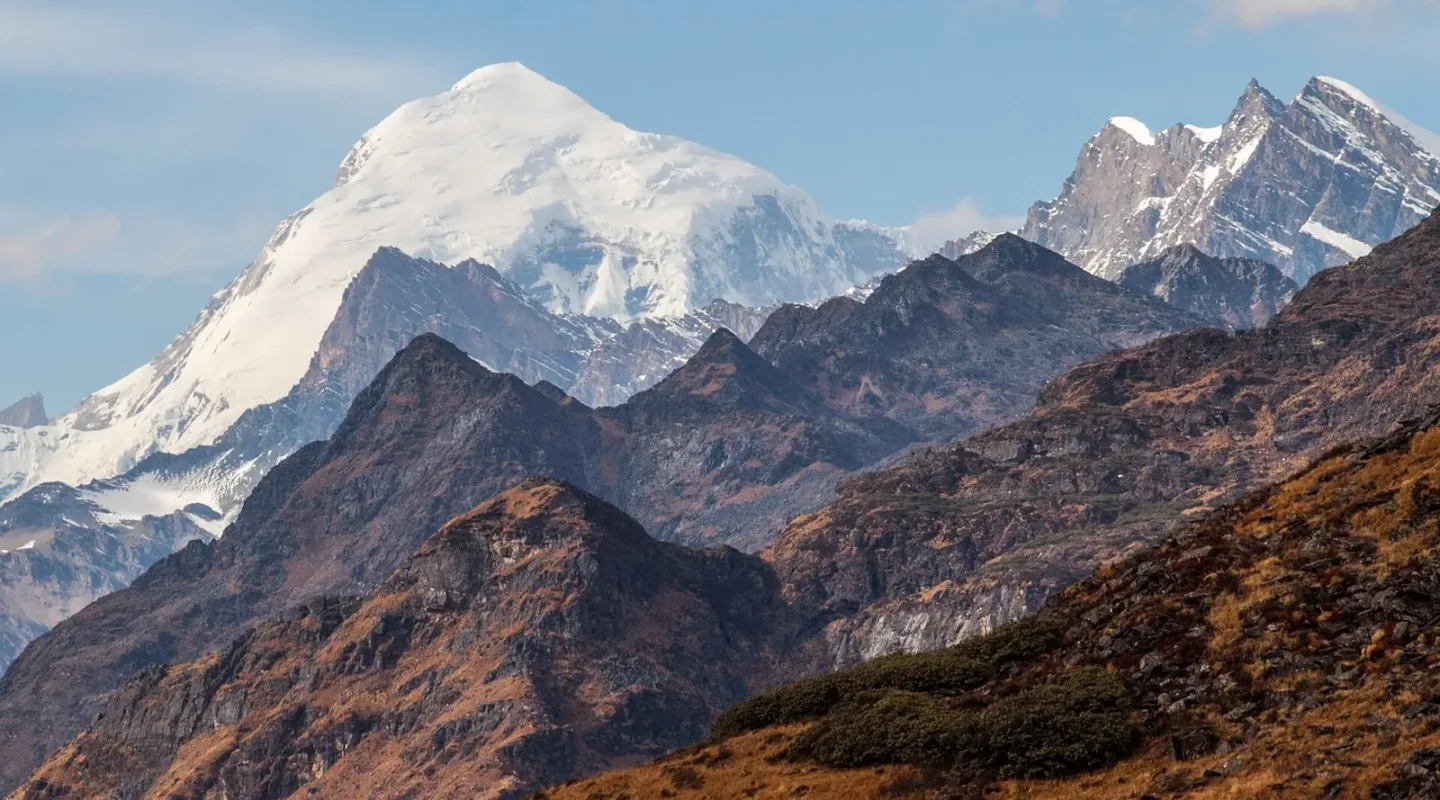

If you are going to walk the Druk Path trek this year, the calendar has already made the decision for you. Bhutan’s autumn window — the dry, bright stretch from mid-September to the first days of November — is closing, and what comes after it is a different mountain altogether. The Druk Path is the old high route between Paro and Thimphu, walked for centuries before anyone built a road between the two valleys, and it is the shortest way to see the Bhutan Himalaya on foot without committing to a two-week expedition.
We run it as a seven-day, six-night trip from Rs 21,000 per person, graded Moderate, maximum ten trekkers. This guide covers what that week looks like, what it costs on top of the trek price, and what the late-autumn timing does and does not give you.
Why the Druk Path trek is a November decision, not a December one
Bhutan’s trekking calendar has two reliable windows: mid-March to mid-May, and mid-September to early November. October is the peak of the second — bright skies, dry trails, the sharpest views of the year. November is the tail of it, and the tail is where the arithmetic gets interesting.
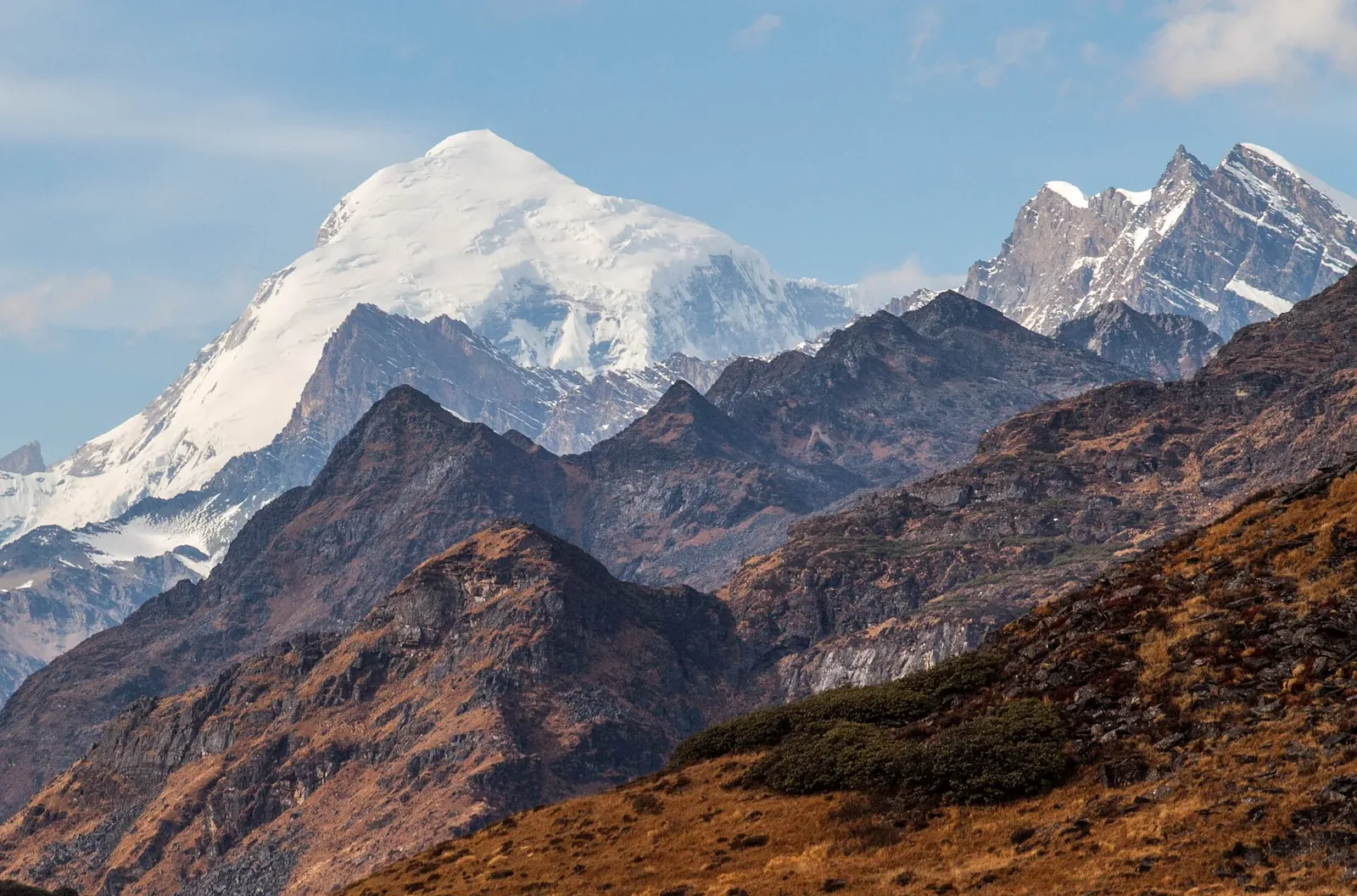
In the first half of November you are still inside the good weather. Daytime temperatures in the Paro and Thimphu valleys sit between 7°C and 15°C, rainfall drops to almost nothing, and mornings are clear enough that Jomolhari — the 7,326 m peak that dominates the northern skyline — is visible from the trail rather than hidden in cloud. By late November the pattern shifts. Snow becomes more likely on the high passes, and the Labana Pass at 4,235 m is exactly the kind of place where one night of snowfall turns a straightforward walk into a route that needs a decision.
The honest framing: the Druk Path is a late-autumn trek, not a winter trek. Dates in the first fortnight of November get the best version of it. Dates in December are a gamble on the pass, and the operators who know the route will tell you so.
What the Druk Path trek actually involves
The route runs Paro to Jele Dzong, on to Jangchulakha, then Jimilang Tsho, then Phajoding, finishing in Thimphu. It is seven days with six nights, of which roughly four and a half days are walking. The distances are not long — this is not a trek that punishes you with 20 km days — but the first day climbs more than 1,000 m, and you spend two nights above 3,500 m. That combination is why it is graded Moderate rather than Easy.
What makes the route unusual is the sequence of landscapes. You start among blue pine and dwarf rhododendron above Paro, climb through fir into bare rock and alpine pasture, pass a chain of high lakes where brown trout were introduced last century, and finish at Phajoding — a working monastery complex on a ridge above Thimphu. Very few treks of this length end somewhere still functioning as a religious site rather than a ruin.
Day by day, in outline
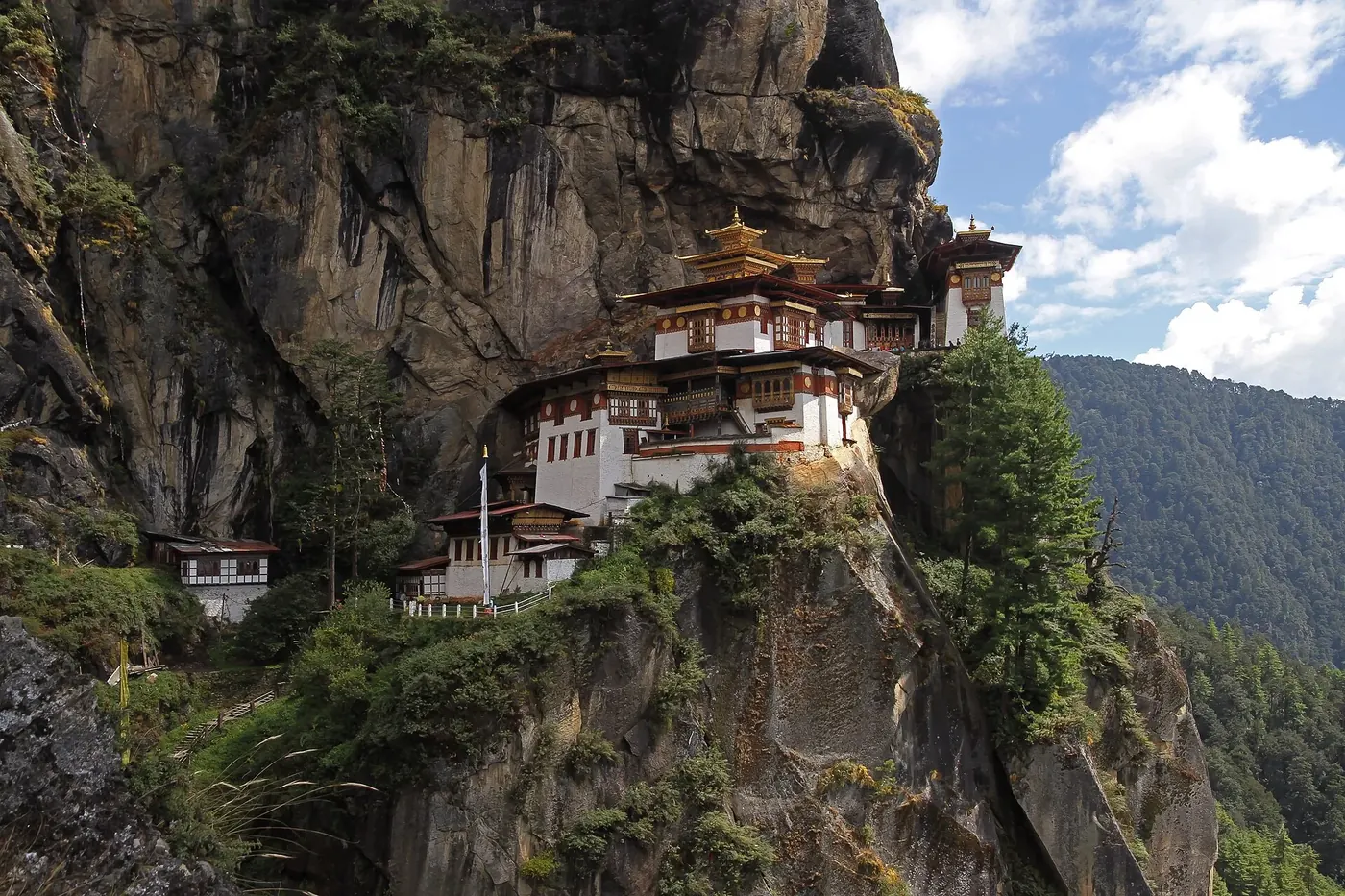
Day one is the climb to Jele Dzong, the hardest single day. Day two eases along a ridge to Jangchulakha at around 3,780 m. Day three is the lake day — Jimilang Tsho at roughly 3,870 m. Day four crosses the Labana Pass at 4,235 m before dropping to Phajoding. Day five walks down to Thimphu; the rest is the Paro arrival, the Taktsang hike and departure.
The Druk Path is not a hard trek. It is a cold one, at altitude, in a country where you cannot walk it alone — and those three facts shape every practical decision you make about it.
Druk Path trek compared with the other Bhutan options
| Trek | Duration | Grade | High point | From |
|---|---|---|---|---|
| Druk Path | 7 days / 6 nights | Moderate | Labana Pass, 4,235 m | Rs 21,000 |
| Druk Path, group size | Max 10 | Guided only | Jomolhari view, 7,326 m | SDF extra |
Full detail on inclusions and dates is on the Druk Path trek itinerary. If you are still deciding whether a trek of this grade suits you, our guide to packing for high-altitude treks is the better first read.
What is not good about the late-autumn window
The nights are genuinely cold. Two camps sit above 3,500 m, and in November the overnight temperature at Jangchulakha and Jimilang Tsho regularly drops below freezing. This is a camping trek — there are no tea houses on the Druk Path, unlike Nepal — so your sleeping system is doing real work. A three-season bag rated to −5°C is the minimum, and −10°C is not excessive.
The pass is the risk. Labana at 4,235 m is the one place where weather can stop the itinerary. Snow in late November is not unusual, and when it comes the guide decides, not the group. Build a buffer day into your travel plans rather than scheduling a flight the morning after the trek ends.
Costs, permits and the Sustainable Development Fee
The Rs 21,000 trek price is not the whole cost of a Bhutan trip. Bhutan charges every visitor a Sustainable Development Fee of US$100 per person per night for adults, plus a US$40 visa fee; Indian nationals pay a reduced 1,200 Ngultrum per night. The SDF is included in our package, but understand what it is — it is the single largest line item in a Bhutan budget, charged per night, not per trip.
All trekkers in Bhutan must also travel with a licensed guide — a condition of entry to the trails, and why the Druk Path is not a trek you can improvise. Our price includes the guide, the SDF, the camps, food and transport between Paro and Thimphu.
Frequently asked questions
Is the Druk Path trek suitable for a first Himalayan trek?
Yes, with conditions. Daily distances are short and the trail is well defined, but the first day climbs over 1,000 m and you sleep above 3,500 m twice. If you are reasonably fit and have walked at altitude before, it is a good first multi-day Himalayan trek.
How cold does it get on the Druk Path in November?
Daytime temperatures of 7°C to 15°C in the valleys, and overnight lows below freezing at the two high camps. The pass at 4,235 m is colder and windier than either camp.
Do I need a guide to walk the Druk Path?
Yes. Bhutan requires all trekkers to travel with a licensed guide, and the Sustainable Development Fee applies to every visitor. Both are included in our package.
What happens if it snows on Labana Pass?
The guide assesses the pass and either waits for conditions to improve or reroutes. This is why a buffer day at the end of the trip is worth building in.
How does the Druk Path compare with trekking in Nepal?
It is shorter, colder at night, and entirely camping — there are no tea houses. If you are weighing the two, our comparison of Nepal treks in November covers the equivalent late-autumn window on the other side of the border.
When should I book?
Autumn departures fill first and the group is capped at ten. If you are targeting the first half of November, book well ahead rather than assuming a late slot will remain.
For a completely different late-autumn option — the shola grasslands of the southern Western Ghats, where November means the northeast monsoon rather than the first snow — read our guide to Kerala high ranges treks.
