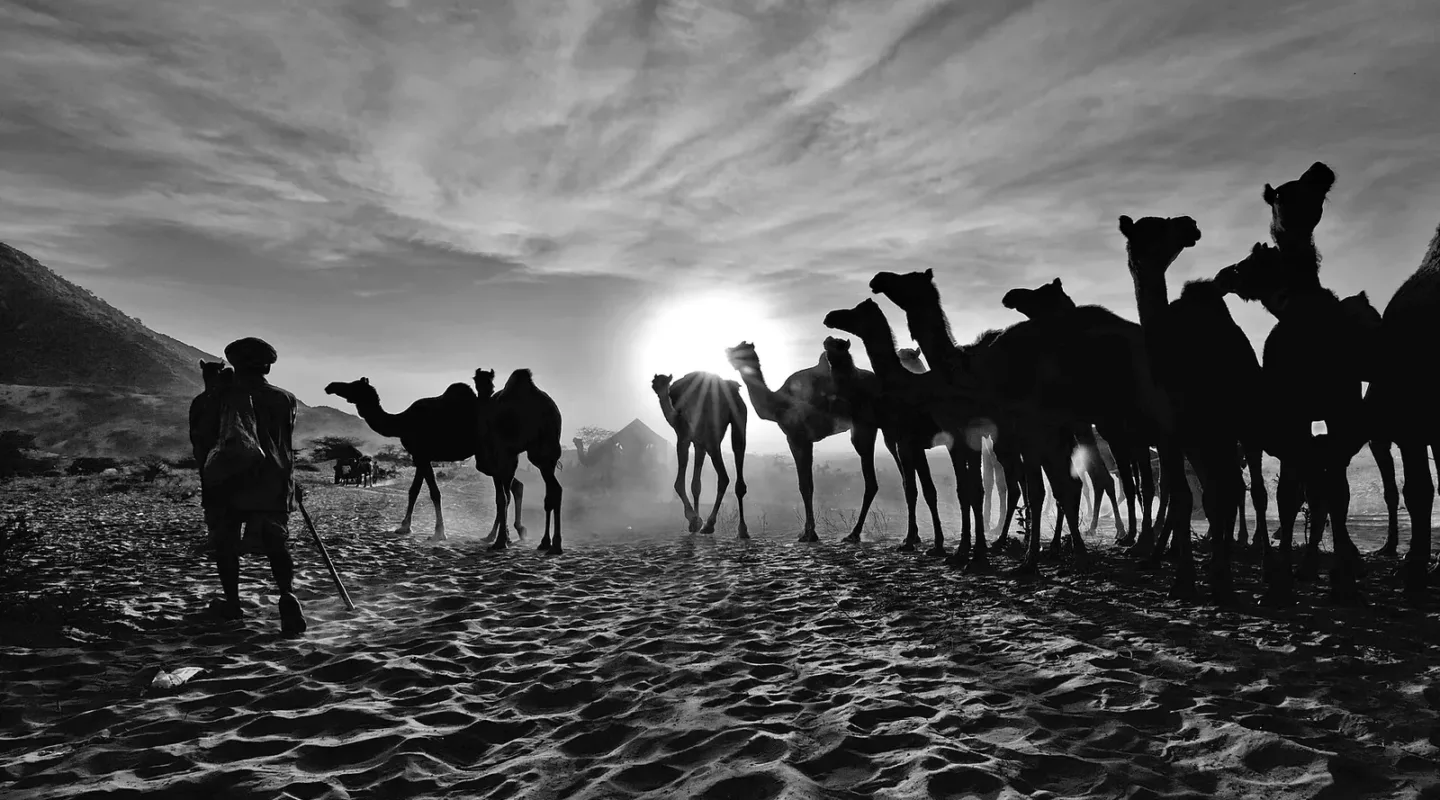

The Pushkar camel fair is in its final stretch. The 2026 edition opened on 17 November and closes on 24 November, Kartik Purnima, the full-moon night when pilgrims take a holy dip at Pushkar Lake. Read this on 22 November and you have three days of fair left, one of them the biggest religious day of the Pushkar calendar. That changes what you should do with the time.
We run this as a four-day trip from Jaipur, graded Easy, from Rs 7,200 per person, capped at 16 travellers. It is not a trek and there is no altitude: a working livestock market, a pilgrimage and a festival occupying one small town at once, and the last week is when the balance between those three shifts hardest.
The one thing to know before you book: the fair is anchored to the Hindu lunar month of Kartik, not to a fixed date. In 2026 it runs 17–24 November. Because the lunar calendar periodically inserts an extra month, the fair can move by up to a fortnight from one year to the next, which is why the dates are announced rather than assumed. Do not book flights for a date you found on an old page.
What the Pushkar Camel Fair actually is in 2026
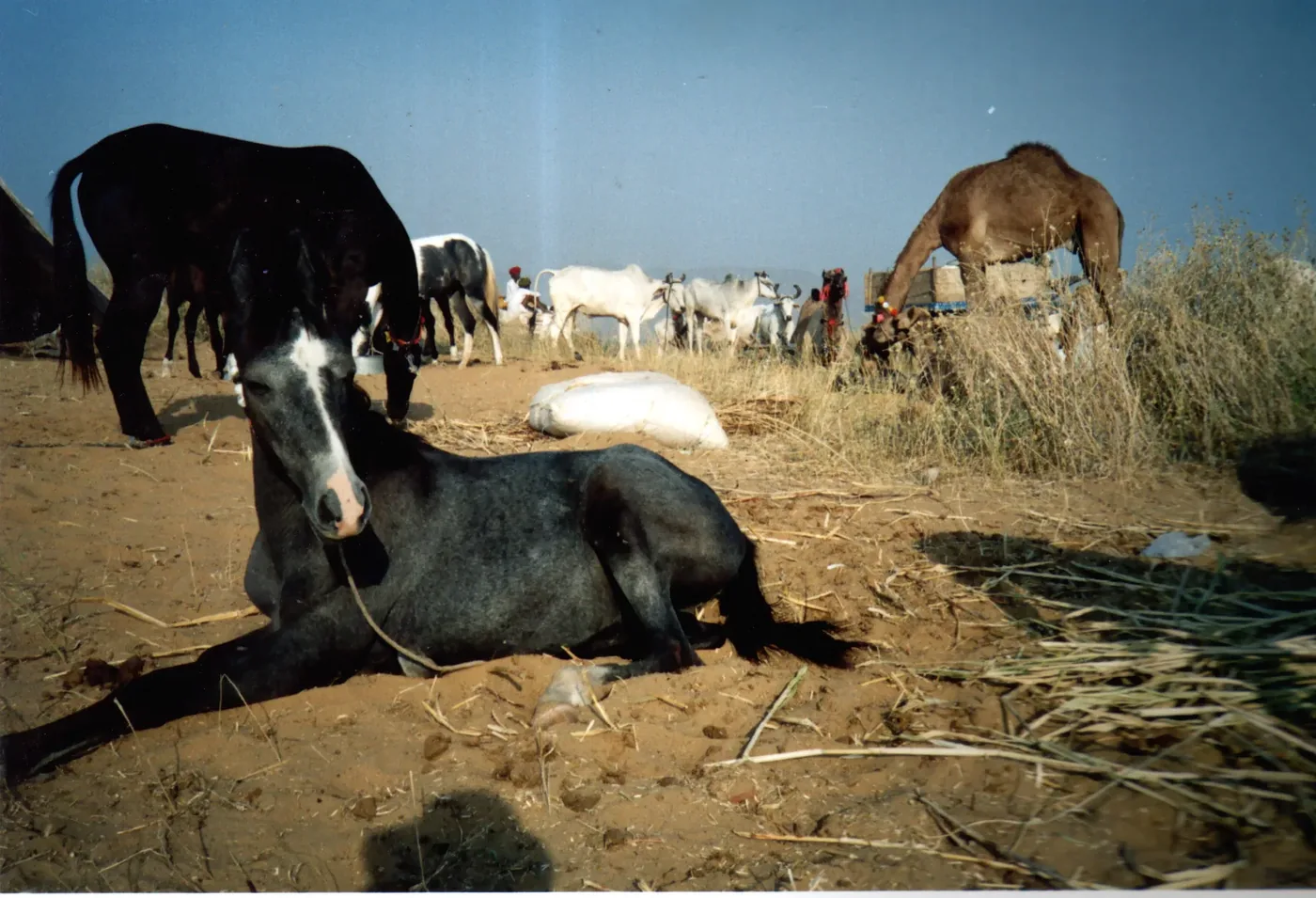
Two traditions meet in one place. The first is the Kartik Purnima pilgrimage to Pushkar Lake, centuries old: pilgrims bathe at the ghats on the full moon, and the town’s Brahma Temple, one of very few in India dedicated to Brahma, gives it real religious weight. The second is the seasonal livestock market pastoral communities hold after the monsoon, when the animals are in condition and the desert has greened. Rabari and Raika herders have traded camels, horses and cattle here for generations.
Rajasthan Tourism layered competitions and cultural programming on top in the late twentieth century, and the result is part market, part pilgrimage, part festival. The geography matters: the fairground sits on open ground at the edge of town, the lake and ghats at its centre. Trading happens on the mela ground; bathing rituals and temple crowds happen at the lake.
The last four days: what changes after 20 November
This is the part most guides get wrong. The fair does not build to a single climax of camel trading. It changes character.
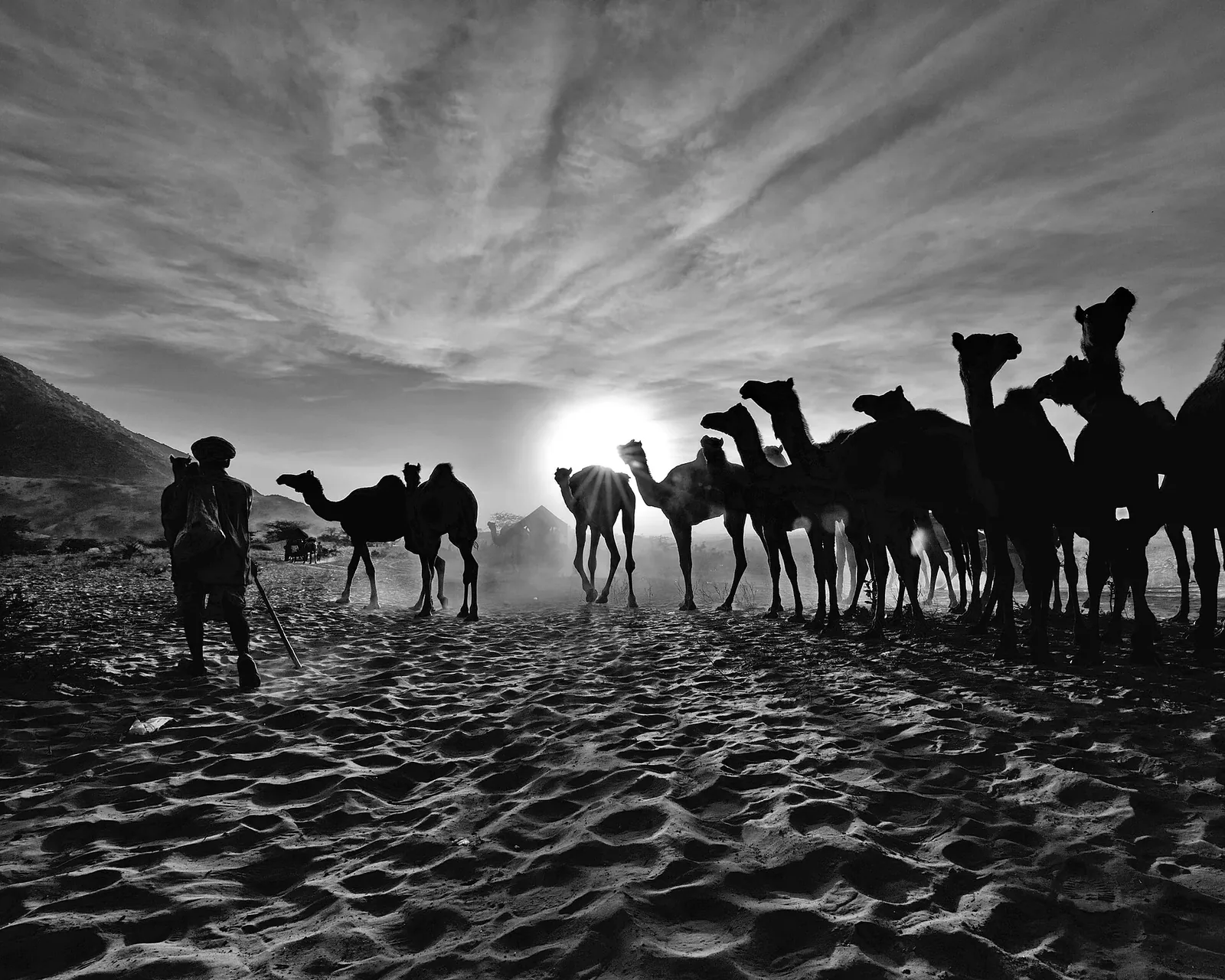
In the earlier days the mela ground is the centre of gravity: animals brought in, inspected and traded, competitions through the afternoon. By the final days the trading thins out and the focus moves to the religious ceremonies, the holy dip in Pushkar Lake and the Maha Aarti. Arrive on 22 or 23 November expecting the livestock market at full volume and you will find a quieter ground and a busier town centre. That is not a reason to skip it, only to plan differently: on the last days you want the ghats at dusk, not the mela ground at noon.
The fair is not a show that runs to a schedule. It is a market and a pilgrimage that happen to share a field, and the last week belongs more to the pilgrims than to the buyers.
Pushkar Camel Fair compared with the other November trips we run
Weighing Pushkar against something else this fortnight? All four below are real departures at the prices on our trip pages.
| Trip | Days | Grade | From | Best for |
|---|---|---|---|---|
| Pushkar Camel Fair | 4 | Easy | Rs 7,200 | The fair itself, photography, the Kartik Purnima dip |
| Rann Utsav Kutch | 4 | Easy | Rs 7,200 | The white salt desert, full-moon nights, quieter than Pushkar |
| Khajuraho Dance Festival | 4 | Easy | Rs 6,800 | Classical dance at the UNESCO temples, no crowds of this size |
| Girnar Trek | 2 | Moderate | Rs 4,200 | Actual walking: 9,999 steps up, if you want effort with your festival |
Pushkar and Kutch cost the same and run the same length, so the choice is temperament. Pushkar is dense, loud, crowded and religious; the Rann is empty, silent and horizontal. If you have already done a big Indian festival this year, the Rann is the better second trip.
What the fair is not
Honest expectation-setting, because this is where people come back disappointed.
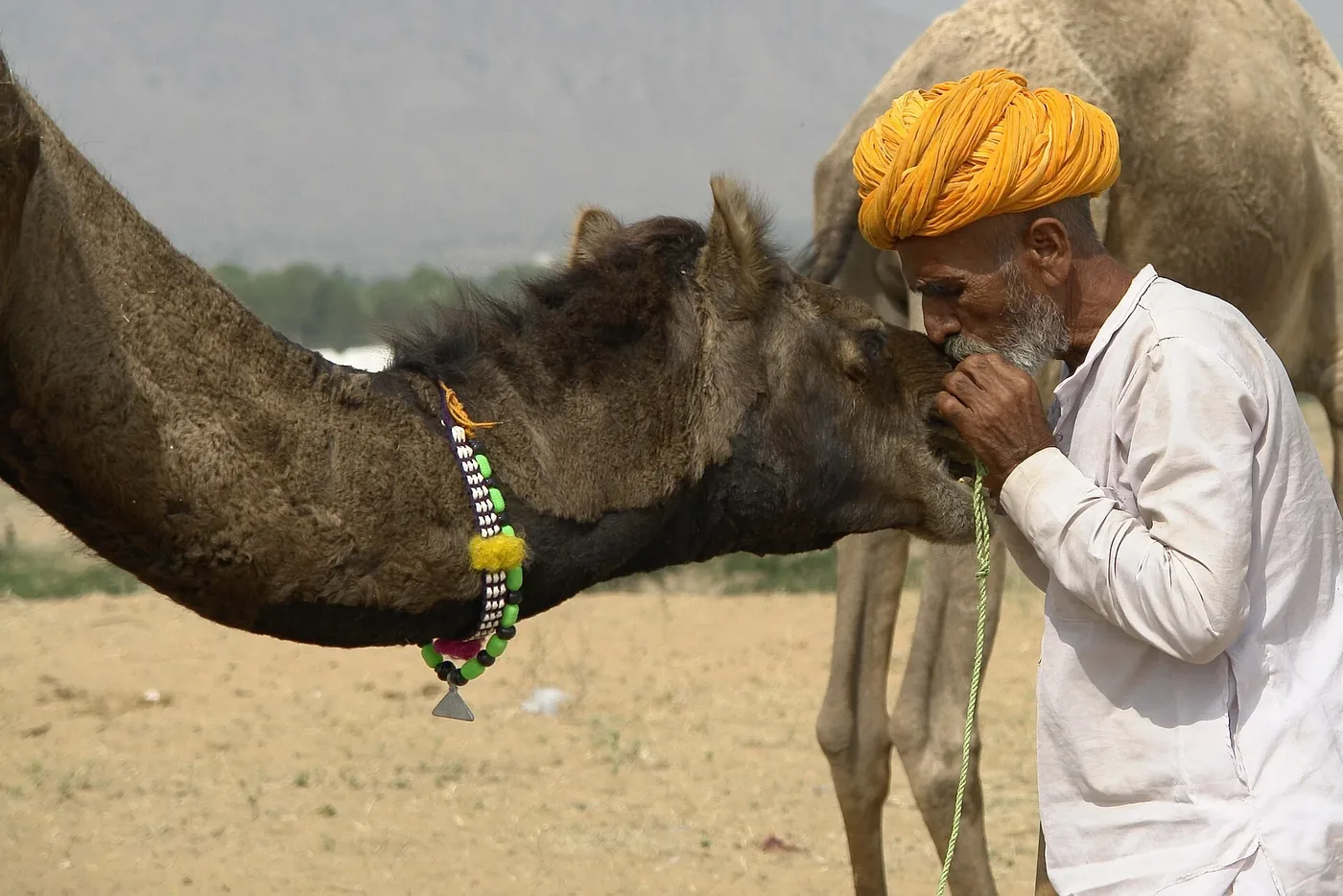
It is not a camel beauty pageant for tourists. The animals are working livestock, bought, sold, inspected and haggled over. Some of what you see is not picturesque, and the herders are not there to pose.
It is not comfortable. The mela ground is dust and, if it rains, mud, with very little shade. The town’s lanes are narrow and packed, and toilets on the ground are basic.
It is not quiet, and it is not a photography workshop. You will be jostled. The light is superb early and late and flat and harsh in between, which makes midday for the temple and the bazaar, not the camera.
It is not a place to be careless about the lake. Pushkar Lake is sacred: shoes off at the ghats, no photography of bathing pilgrims without asking, and be wary of anyone demanding money for a ritual you did not request.
The four days, hour by hour
Our itinerary is built so the driving happens in daylight and the fair gets the good light. Jaipur to Ajmer is about 135 km on the NH48; Ajmer to Pushkar is another 14 km over the narrow, slow Nag Pahar hill road, the one place the schedule can slip.
Day 1 is the drive from Jaipur, check-in, and the lake ghats at dusk as the lamps are lit. Day 2 is a full day on the mela ground, timed for morning trading and afternoon competitions. Day 3 covers the Brahma Temple and bazaar, then the fairground for evening light and folk performances. Day 4 is the drive back. On the final days we flip days 2 and 3 where the programme allows, so you get the ghats on the biggest evening.
What the price covers, and what it does not
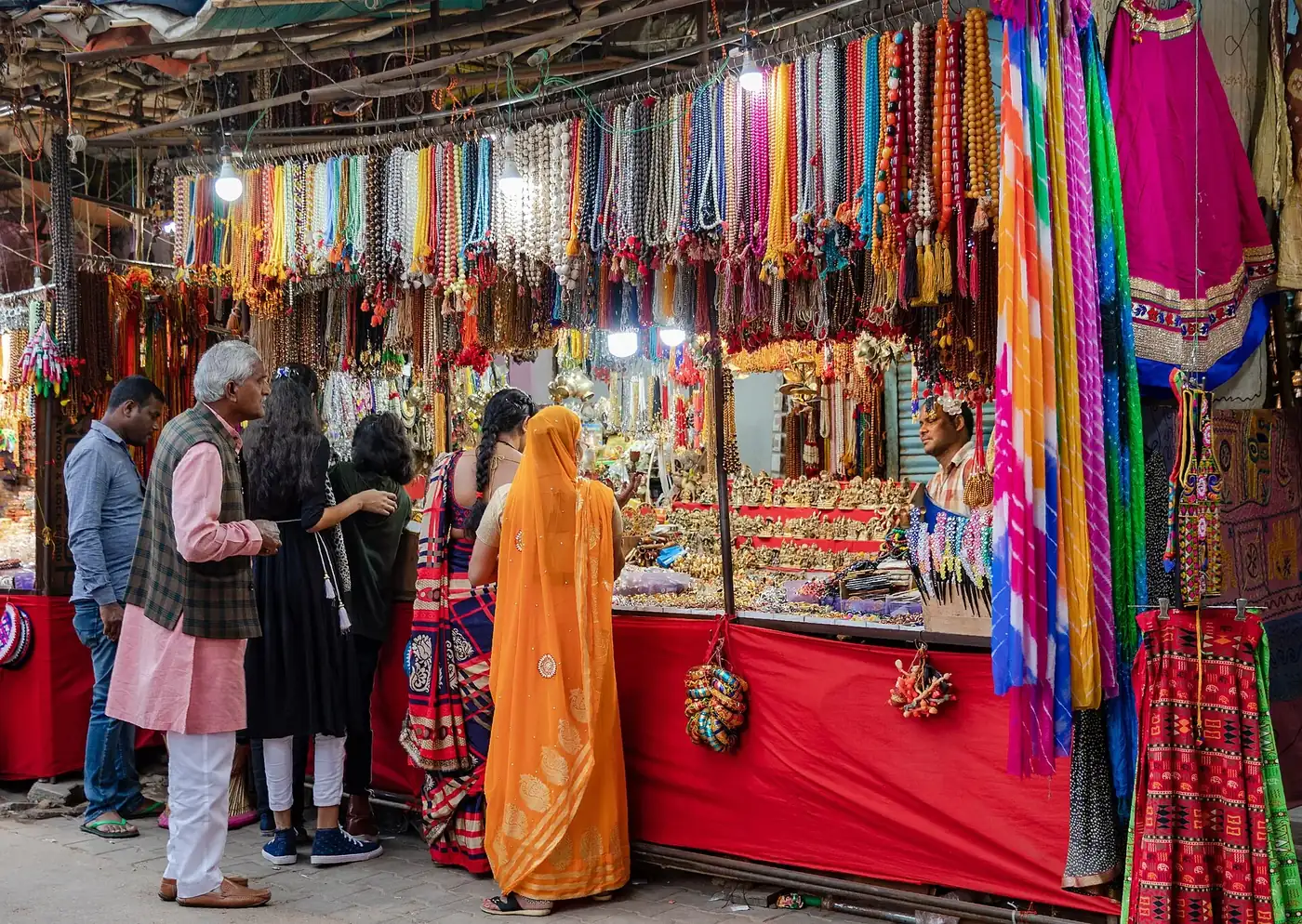
The Rs 7,200 covers three nights in Pushkar on twin sharing, breakfast and dinner on all days, Jaipur transfers both ways, daily transport to the mela ground, a trip captain, and all tolls, parking and driver charges. It does not cover travel to Jaipur, lunch, insurance, camera fees, or anything you buy at the fair. Budget separately for the bazaar: the textiles and brasswork are good and the prices are negotiable.
Frequently asked questions
When is the Pushkar Camel Fair in 2026?
17 to 24 November 2026, closing on Kartik Purnima, which falls on 24 November. The dates follow the Hindu lunar calendar, so they shift each year.
Is the last week of the fair worth it?
Yes, for different reasons than the first week. Trading thins out and the religious programme takes over. The Kartik Purnima dip at Pushkar Lake on 24 November is the biggest day of the fair.
How much does the Pushkar Camel Fair trip cost?
Rs 7,200 per person for four days and three nights from Jaipur, covering twin-sharing accommodation, breakfast and dinner, all transfers and a trip captain. Travel to Jaipur, lunch and insurance are extra.
How do I get to Pushkar?
Fly or train to Jaipur, then drive: 135 km to Ajmer on the NH48, then 14 km over the Nag Pahar hill road. We drive in daylight both ways.
Is Pushkar suitable for families and older travellers?
Yes. It is graded Easy, with no walking of consequence and no altitude. The caveats are crowds, dust and basic facilities rather than physical difficulty.
Read next
If the white desert appeals more than the camel market, our guide to Rann Utsav Kutch and its full-moon nights covers the same fortnight in Gujarat. For what else is running this month, see the November long-weekend treks worth booking. And if you want mountains rather than desert in the same cold, clear weather, read our Kashmir road trip guide for November.
Weather and road conditions change daily in November. Check the India Meteorological Department forecast and the Rajasthan Tourism fair page before you travel.
