
Meghalaya treks in December are the best-value window in the Indian northeast, and almost nobody books them. The monsoon has gone, the stone steps are dry, the leeches have retreated, and the state’s two signature walks — the descent to the double-decker living root bridge at Nongriat and the 16 km stone path of the David Scott Trail — are at their most walkable of the year. This is not a Himalayan trek. There is no altitude, no snow and no summit. What you get instead is rainforest, hand-laid stone, and a living engineering tradition that exists nowhere else on earth.
We run three Meghalaya routes, and December is when all three work. Here is what each one asks of you, what it costs, and what the season will not give you.
Why December is the right month for Meghalaya treks
Meghalaya runs on a different clock from the Himalaya. Cherrapunji and Mawsynram, a few kilometres apart on the same ridge, trade the record for the wettest place on earth, and the state’s whole character is built on that. Rain arrives off the Bay of Bengal, hits the escarpment, and drops. Between June and September that makes the trails genuinely dangerous: the stone staircases turn into water slides, the root bridges are slick, and the leeches are relentless.
By December the southwest monsoon is long gone. Rainfall drops to near nothing, daytime temperatures sit in the high teens to low twenties at Cherrapunji’s 1,480 m, and the forest is still green because the ground holds water. The steps dry out. That single fact is what makes the Nongriat descent a walk rather than a controlled fall.
The honest caveat: Meghalaya can rain in any month. December is dry on average, not guaranteed. Carry a rain jacket on every walk, and treat the stone underfoot as slippery whenever it is wet — because it is.
The three Meghalaya treks we run in December
1. Nongriat Living Root Bridge Trek — the descent that defines the state
The Nongriat Living Root Bridge Trek is 2 days, graded Moderate, from Rs 4,500 per person, with a maximum group of 15. It is the shortest of the three and the one with the most concentrated payoff.
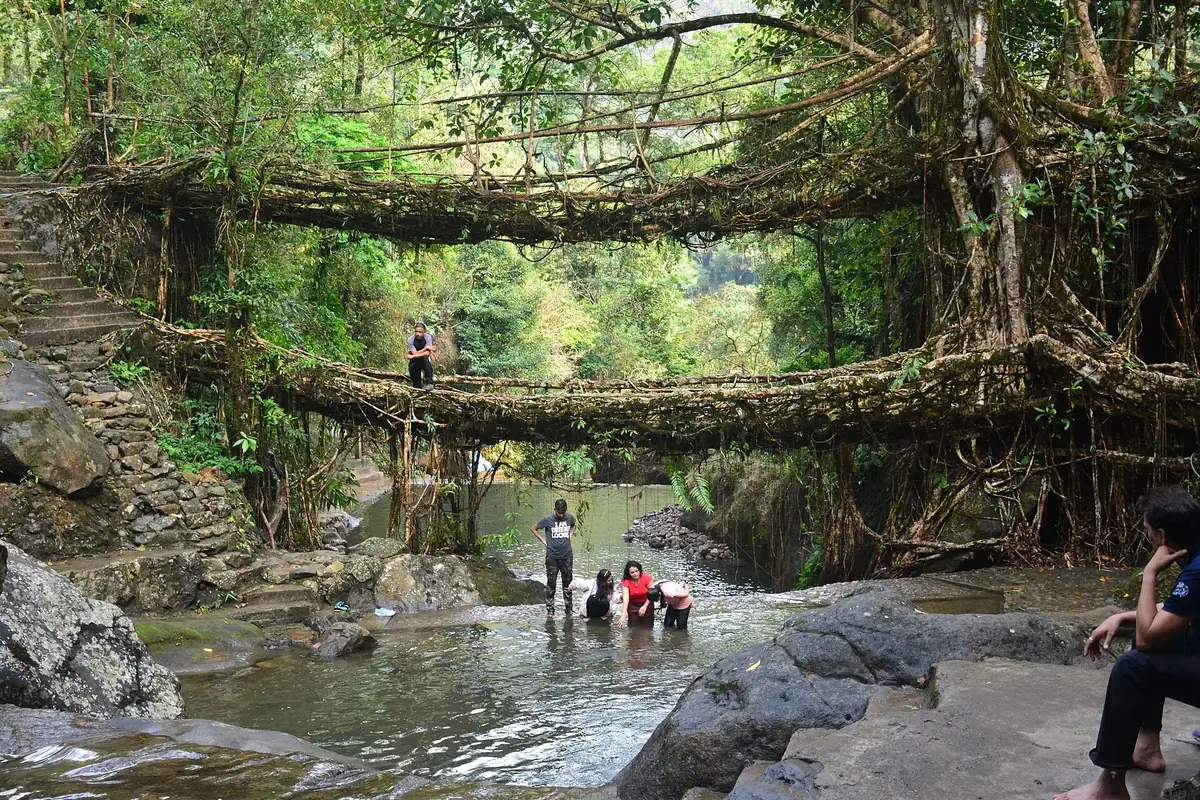
You start at Tyrna village, near Cherrapunji, and descend a stone staircase through rainforest to Nongriat. The step count is the thing nobody tells you plainly: roughly 3,000 to 3,500 steps down, and the same number back up the next morning. Down is harder on the knees than you expect. Up is harder on everything else. The double-decker bridge stacks two living structures one above the other, and it is still in daily use by villagers centuries after the oldest sections were trained into place.
What is not good about it: this is a there-and-back staircase, not a loop. If your knees dislike 3,000 consecutive descents, this trek will find that out. The village homestay is basic — clean, but basic. And the bridge is a photographed place; you will share it.
2. David Scott Trail Trek — the most civilised long walk in the northeast
The David Scott Trail Trek is 2 days, graded Easy, from Rs 3,800 per person, maximum 14. It covers 16 km of hand-laid stone flag from Mawphlang to Lad Mawphlang, the best-preserved stretch of a trade route that once ran around 100 km between the hills and the plains of Sylhet.
What is not good about it: there is no view to chase and no summit to bag. If you measure a trek by altitude gained, this one scores zero. It is also a point-to-point walk with a vehicle transfer at the end, so it does not loop back to where you started.
3. Meghalaya Road Trip — the version for people who do not want to trek
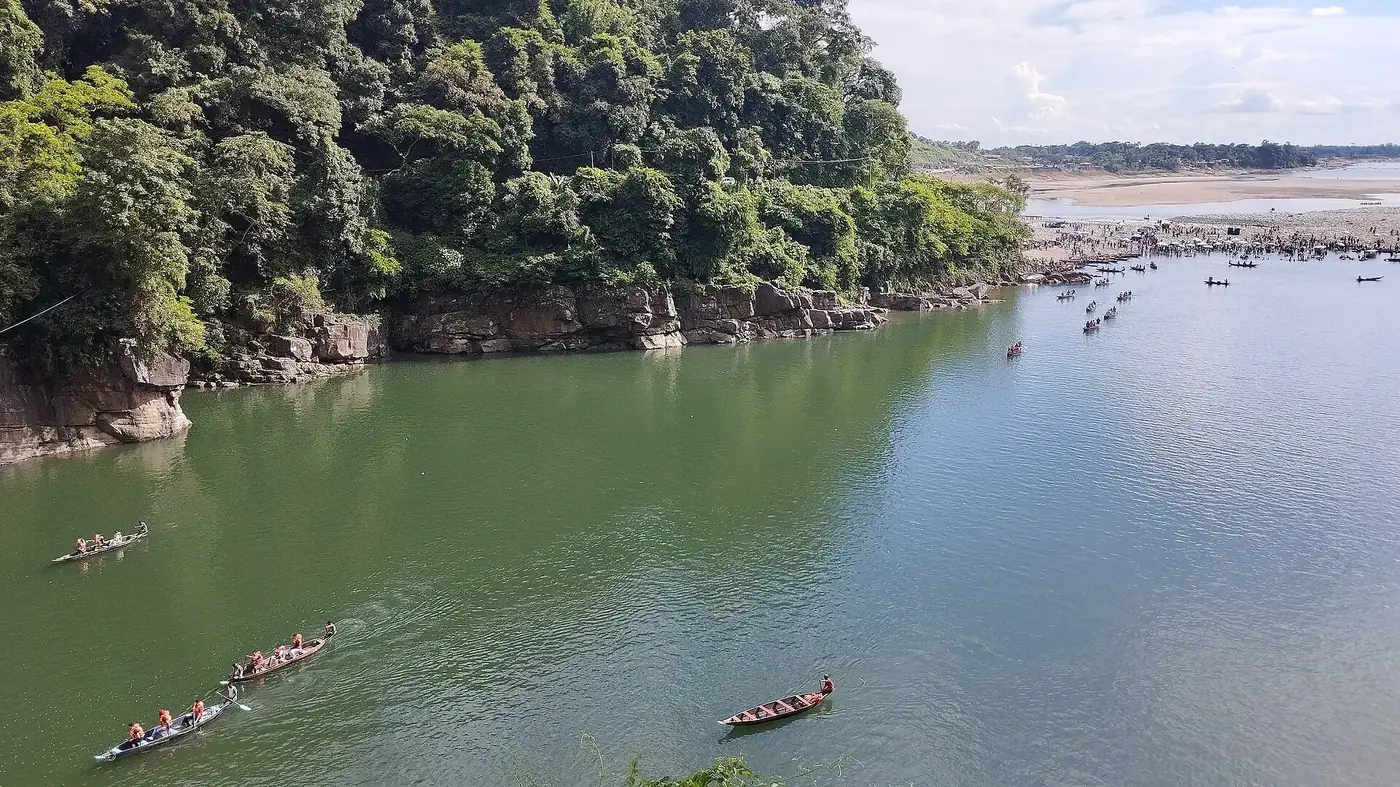
The Meghalaya Road Trip is 6 days, graded Easy, from Rs 11,500 per person, maximum 12. Route: Guwahati – Shillong – Cherrapunji – Dawki – Mawlynnong – Shillong, roughly 500 km of driving across the six days.
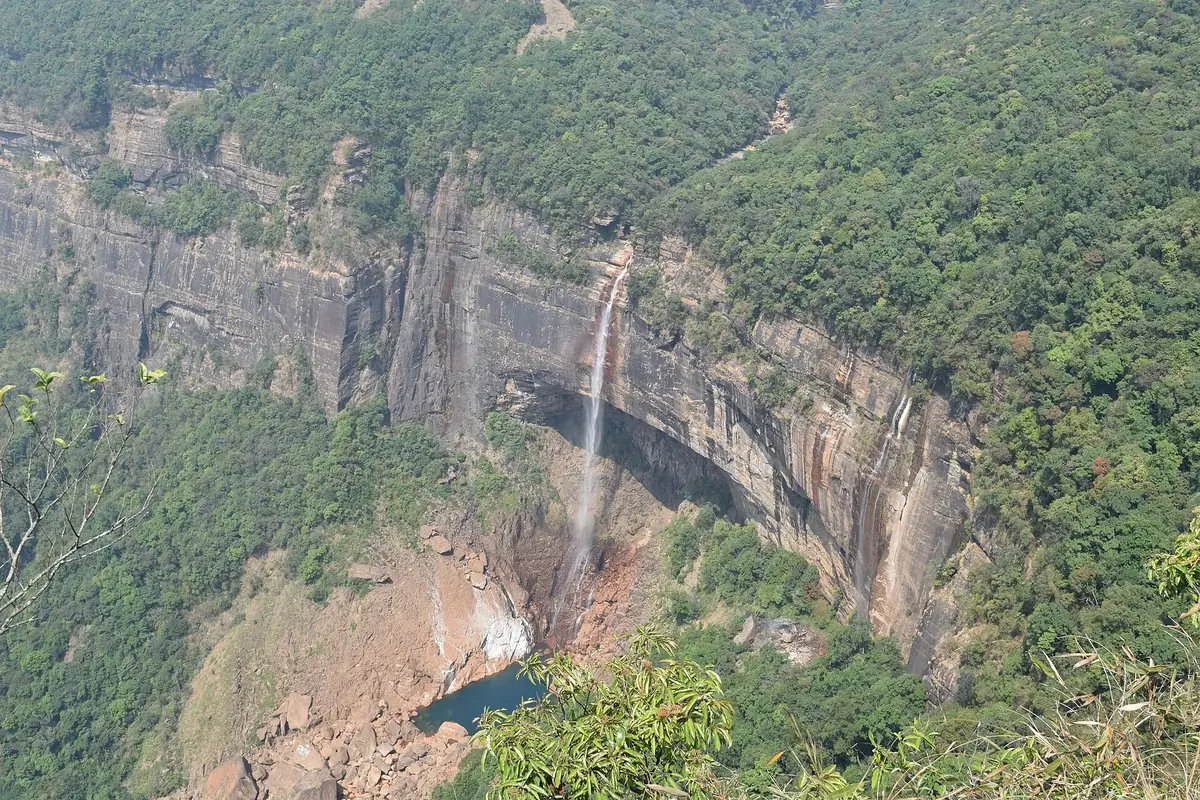
What is not good about it: the driving is the product. If you want to walk, book one of the two treks above instead. And the falls are at their heaviest in the monsoon and the weeks after it — by December Nohkalikai is running, but it is not the torrent you see in the photographs.
Meghalaya treks in December compared
| Trek | Duration | Grade | Price | Max group | Best for |
|---|---|---|---|---|---|
| Nongriat Living Root Bridge | 2 days | Moderate | Rs 4,500 | 15 | The bridge, and a real physical day |
| David Scott Trail | 2 days | Easy | Rs 3,800 | 14 | Long walk, no climb, sacred grove |
| Meghalaya Road Trip | 6 days | Easy | Rs 11,500 | 12 | Waterfalls, caves, river, no trekking |
What December costs you, honestly
The waterfalls are thinner. Nohkalikai and the Seven Sisters are monsoon features. In December they run, but at a fraction of the volume you see in the marketing photographs. If the falls are your reason for coming, come in late September or October instead.
The nights are cold, and the homestays are unheated. Cherrapunji sits at 1,480 m and Mawphlang at 1,400 m. December nights drop to single digits Celsius. The homestays give you blankets, not radiators. Pack a fleece for the evening even though the days are mild.
Permits, guides and the rule that changed
Meghalaya does not require an Inner Line Permit for Indian citizens, which is one of the reasons it is easier to reach than Arunachal Pradesh or Nagaland. What it does require, since 2025, is a registered guide for trekking in the East Khasi Hills district. That covers the Nongriat route and the David Scott Trail. Our prices include a local guide on both, and the David Scott Trail price also covers the sacred grove entry and custodian fee and the trail fee.
How to get there and how long to allow
Fly or train to Guwahati. Shillong is about 100 km and three hours up the NH6. Cherrapunji is another 55 km south of Shillong, climbing onto the escarpment. For the Nongriat trek, Tyrna is a short drive beyond Cherrapunji.
Where to go next
If you want a northeast trek with real altitude instead of rainforest, the Dzukou Valley Trek in Nagaland is the closest thing the region has to a high ridge walk. For the Himalayan version of December, read our guide to Sikkim in December, and for the wider northeast picture see Northeast India treks for November and December. If you are still working out what grade suits you, our guide to choosing the right trek difficulty is the honest starting point.
Frequently asked questions
Is December a good time for Meghalaya treks?
Yes. December is one of the two best months, along with November. Rainfall is minimal, the stone staircases are dry, the leeches are gone, and the trails are quiet. The trade-off is thinner waterfalls and cold nights at the homestays.
How hard is the Nongriat living root bridge trek?
It is graded Moderate, and the difficulty is entirely in the step count: roughly 3,000 to 3,500 steps down to the village and the same back up. There is no altitude and no technical ground.
Do I need a permit for Meghalaya?
Indian citizens do not need an Inner Line Permit for Meghalaya. A registered guide is mandatory for trekking in the East Khasi Hills district, and our trek prices include one.
Can I do the living root bridge without trekking?
Yes. The single-span root bridge at Riwai, near Mawlynnong, is a 10 to 15 minute walk each way and is included in the Meghalaya Road Trip. The double-decker bridge at Nongriat requires the descent.
Trail shoes with genuine grip — the stone is slippery when wet, and it can rain in any month. Two litres of water, refillable at the homestay. A rain jacket. A light fleece for the evening. A small day pack, since your main bag travels by vehicle. Cash, because there is no card machine on the trail.
How much does a Meghalaya trek cost?
Our three routes start at Rs 3,800 for the 2-day David Scott Trail, Rs 4,500 for the 2-day Nongriat Living Root Bridge Trek, and Rs 11,500 for the 6-day Meghalaya Road Trip. Prices are per person and exclude GST at 5%, travel to Guwahati, and personal expenses.
